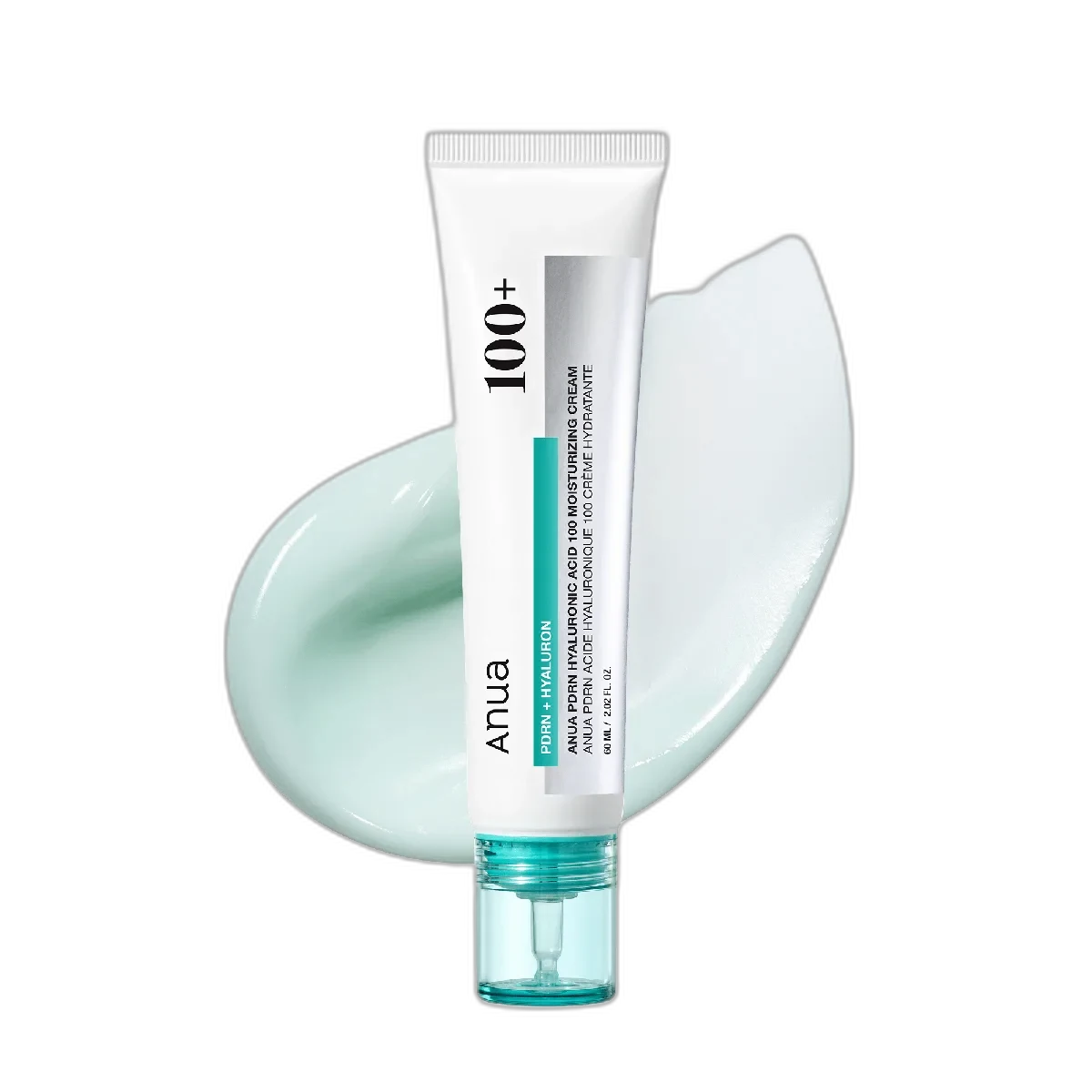
PDRN Hyaluronic Acid 100 Moisturizing Cream
K-Beauty Glass Skin Pick
 Verified reviewer
Pros & cons.
- +Ten distinct hyaluronic acid forms create multi-depth hydration that outperforms single-form HA products
- +Fragrance-free and alcohol-free formula suitable for sensitive and reactive skin
- +Lightweight, bouncy texture absorbs instantly for an immediate glass skin finish
- +Niacinamide at a meaningful concentration provides brightening and barrier support
- +Adenosine and centella actives complement the PDRN with established anti-aging and soothing benefits
- +Versatile formula that works well under makeup and layers seamlessly over active treatments
- −PDRN's topical cosmetic efficacy is still emerging — most evidence is for the injectable form
- −Very limited review data with fewer than 50 independent reviews available
- −Smaller 60mL size at $24 is less economical than Anua's 100mL ceramide cream at $20
- −Not vegan — contains salmon-derived PDRN and hydrolyzed collagen
- −May not be moisturizing enough for very dry skin as a standalone winter moisturizer
The full review.
PDRN — polydeoxyribonucleotides — is the ingredient behind many K-beauty products. Derived from salmon DNA, it started in Korean dermatology clinics, where injectable PDRN treatments heal wounds and regenerate skin. The beauty industry then adopted it, and many Korean moisturizers now list ‘salmon DNA’ alongside terms like ‘regeneration’ and ‘glass skin’.
Anua’s PDRN Hyaluronic Acid 100 Moisturizing Cream uses a formula that prioritizes substance over trends. Sodium DNA is seventh in the INCI list — after water, squalane, glycerin, niacinamide, and humectants — showing a meaningful amount rather than a tiny amount. However, the facts are specific: injectable PDRN has clinical evidence for tissue regeneration at high concentrations delivered to the dermis. Topical PDRN in a cosmetic cream must pass the skin barrier, and its efficacy at cosmetic concentrations in a wash-and-wear product is still being established. It is promising, but not proven at the level of the injectable.
The rest of this formula is thoroughly proven. The 10-type hyaluronic acid system provides the hydration. The INCI list shows distinct HA forms: regular sodium hyaluronate, hydrolyzed hyaluronic acid (smaller molecules for deeper penetration), hyaluronic acid crosspolymer (for extended surface moisture retention), hydroxypropyltrimonium hyaluronate (a cationic form that adheres to skin), dimethylsilanol hyaluronate (a silicone-conjugated form for film-forming protection), sodium acetylated hyaluronate (for enhanced penetration), and potassium hyaluronate. Each form hydrates at different depths and durations, creating a layered moisture system that single-form HA products cannot match.
Niacinamide is fourth in the INCI list, after squalane and glycerin. This suggests a concentration likely between 2-5% — enough for its proven brightening, barrier-strengthening, and sebum-regulating benefits without the flushing seen at higher percentages. Squalane provides a lightweight emollient layer that stops the hyaluronic acid from losing moisture to dry air.
The supporting ingredients include centella asiatica with individually listed madecassoside and asiaticoside (a standardized extract), adenosine (a Korean cosmetics-approved anti-wrinkle ingredient that works through the same A2A receptor as PDRN), and hydrolyzed collagen. The texture is a lightweight, bouncy gel-cream that absorbs in seconds and leaves a luminous, plumped finish without the stickiness some HA products produce.
The formula is fragrance-free and alcohol-free, making it accessible to sensitive skin. The botanical extracts (neem, turmeric, centella, aloe, corallina) are at tail-end concentrations that provide antioxidant support without irritation risk.
This product has been on the market for roughly a year, with fewer than fifty independent reviews across retailers. This is not enough data for confident claims about long-term performance. Most PDRN evidence involves the injectable form; the gap between a dermal injection and a cream applied to the face is substantial. The formula quality is high, and the hyaluronic acid system works. But PDRN-specific benefits at topical cosmetic concentrations remain unconfirmed.
The value is reasonable: $24 for 60mL of a well-formulated, fragrance-free moisturizer is competitive. However, the smaller size compared to the ceramide cream (60mL vs 100mL at $20) makes this the less economical Anua moisturizer ounce for ounce.
Anua makes K-beauty innovation accessible, and this cream follows that pattern. The formula is smart, the texture is beautiful, and the PDRN ingredient is interesting. Do not mistake interesting for proven — use the hydration from the rest of this excellent formula while waiting for science on topical PDRN to catch up to the marketing.
Ingredient analysis.
Full INCI list
Water, Squalane, Glycerin, Niacinamide, Pentylene Glycol, 1,2-Hexanediol, Sodium DNA, Hydrolyzed Collagen, Sodium Hyaluronate, Melia Azadirachta Leaf Extract, Hydrolyzed Hyaluronic Acid, Melia Azadirachta Flower Extract, Coccinia Indica Fruit Extract, Hyaluronic Acid, Aloe Barbadensis Flower Extract, Solanum Melongena Fruit Extract, Ocimum Sanctum Leaf Extract, Corallina Officinalis Extract, Curcuma Longa Root Extract, Centella Asiatica Leaf Extract, Diphenylsiloxy Phenyl Trimethicone, Pca Dimethicone, Butylene Glycol, Propanediol, Ammonium Acryloyldimethyltaurate/VP Copolymer, Diglycerin, Hydroxyethyl Acrylate/Sodium Acryloyldimethyl Taurate Copolymer, Acrylates/C10-30 Alkyl Acrylate Crosspolymer, C12-20 Alkyl Glucoside, Methylpropanediol, Ethylhexylglycerin, Adenosine, Sodium Phytate, Aminomethyl Propanediol, Pvm/Ma Copolymer, Madecassoside, C12-13 Alketh-9, Dimethylsilanol Hyaluronate, Hydrolyzed Sodium Hyaluronate, Asiaticoside, Potassium Hyaluronate, Hydroxypropyltrimonium Hyaluronate, Sodium Hyaluronate Crosspolymer, Sodium Hyaluronate Dimethylsilanol, Sodium Acetylated Hyaluronate, Behenyl Alcohol, C14-22 Alcohols, Carbomer
Skin match.
The science.
The Science
PDRN (polydeoxyribonucleotide) comes from purified salmon DNA fragments, usually with molecular weights between 50-1500 kDa. Research on injectable PDRN is extensive; a 2021 systematic review in the International Journal of Molecular Sciences shows injectable PDRN activates the A2A adenosine receptor, which stimulates collagen synthesis and VEGF-mediated tissue regeneration. Most clinical evidence focuses on injecting PDRN directly into the dermis, so topical PDRN literature at cosmetic concentrations is limited. Early in vitro studies show PDRN fragments provide nucleotide building blocks for DNA repair, but the stratum corneum makes topical penetration difficult for molecules of this size.
The multi-weight hyaluronic acid system has more topical evidence. A 2019 study in the Journal of Clinical and Aesthetic Dermatology shows that formulations using multiple molecular weights of hyaluronic acid (high, medium, low, and crosslinked) hydrate better than single-weight formulations. The crosspolymer form shows particularly long moisture retention on the skin surface.
Adenosine works through the same A2A adenosine receptor pathway as the PDRN. Research in the Journal of Dermatological Science (2009) confirms topical adenosine stimulates collagen production in human dermal fibroblasts. In Korea, adenosine is a functional cosmetic ingredient for anti-wrinkle claims and requires at least 0.04%. Adenosine and PDRN may create synergistic A2A receptor activation, but no controlled trials have studied this specific combination.
References
- Polydeoxyribonucleotide (PDRN): Overview of Biological Activities and Clinical Applications — International Journal of Molecular Sciences (2021)
Dermatologist Perspective
Dermatologists who know PDRN from Korean aesthetic clinic injectables view topical PDRN products with measured optimism. The ingredient is biologically plausible; PDRN fragments act as purine and pyrimidine donors that can theoretically support cell regeneration and DNA repair. However, board-certified dermatologists note that topical delivery is hard because the molecular weight of PDRN makes stratum corneum penetration difficult without specialized delivery systems. Dermatologists would likely recommend this product for its proven ingredients (niacinamide, multi-weight hyaluronic acid, centella, adenosine) and view the PDRN as a promising bonus instead of the primary therapeutic agent.
Where it fits in your routine.
Apply an appropriate amount to clean, dry skin after your skincare routine (before sunscreen in the morning). Press and pat gently into the skin to absorb it. Use morning and evening. The lightweight formula layers well under sunscreen and makeup. For more hydration, use a hyaluronic acid serum or the Anua PDRN serum underneath.
At $24 for 60mL, this cream's price is reasonable for a K-beauty moisturizer with these ingredients. But the PDRN cream costs more per ounce than Anua's Ceramide Panthenol Cream ($20 for 100mL). The PDRN ingredient costs more to source, which drives this premium. The multi-weight HA system justifies the purchase for consumers seeking hydration. For those seeking PDRN benefits, limited topical evidence means the premium is partly an investment in a trend — a calculated bet rather than a proven value.
This fragrance-free, lightweight moisturizer delivers hydration and a glass skin finish. It suits K-beauty enthusiasts wanting a well-formulated PDRN trend product. Combination and normal skin types get all-season hydration without heaviness. It offers the latest K-beauty innovation at an accessible price.
Strict vegans should avoid this product because it contains salmon-derived PDRN and hydrolyzed collagen. People with very dry skin may need a thicker cream, especially in winter. If you require extensive clinical proof before buying an ingredient, the limited topical PDRN evidence may not satisfy you — use the Anua Ceramide cream for a more evidence-backed option.
Product details.
This lightweight, bouncy gel-cream absorbs fast. It leaves a dewy, plumped finish without stickiness.
Unscented — no fragrance or essential oils added
Airless pump or jar in Anua's clean design aesthetic
The cream feels hydrating on application. Its bouncy, gel-like texture sinks into skin within seconds. It does not sting, feel heavy, or feel tacky. Skin looks more plumped and dewy immediately — the glass skin effect shows from the first use. The lightweight formula works for both morning and evening application.
2-3 months with twice-daily facial application
12 months
All Year
The backstory.
This cream arrives during the PDRN wave that has swept K-beauty, with salmon DNA-derived ingredients becoming the hottest trend in Korean skincare since snail mucin. Anua's entry combines the PDRN trend with their established expertise in hyaluronic acid formulations (their HA line was already a bestseller). The cream represents the brand's push into the premium dermacosmetic space, targeting consumers who want clinical innovation at accessible prices.
About Anua
Established Brand (5–20 years)A Korean brand incubator founded Anua in 2019. It is now the second-highest-ranked K-beauty brand globally, with over $500 million in retail sales. Anua entered Ulta Beauty stores nationwide in 2025. Anua has strong formulation capability, but its clinical skincare lines, including PDRN products, are new to the portfolio.
Common myths.
PDRN in skincare works like PDRN injections at a dermatologist's office
Injectable PDRN enters the dermis directly at high concentrations. Topical PDRN in cosmetic products hits the skin barrier; molecular weight and penetration differ. Topical PDRN offers surface-level benefits, but claiming equivalence to injectable PDRN treatments is misleading.
More types of hyaluronic acid always means better hydration
The 10-type approach provides multi-level hydration, but total concentration and the ratio between forms matter more than the number of variants. However, this formula's crosspolymer and cationic forms offer measurable advantages in moisture retention and skin adhesion over single-form HA products.
FAQ.
What is PDRN in the Anua moisturizing cream?
PDRN stands for polydeoxyribonucleotides, which are salmon-derived DNA fragments. Dermatologists use injectable PDRN for skin regeneration and wound healing. This cream uses PDRN at cosmetic concentrations to support cell renewal, though research on topical efficacy is less established than the injectable form.
Is the Anua PDRN cream suitable for oily skin?
Yes — the lightweight, gel-cream texture works for all skin types, including oily skin. It absorbs fast and leaves no greasy film, while the niacinamide regulates sebum production. Oily skin types can use it as a standalone moisturizer during warmer months.
Can I use the Anua PDRN cream with retinol?
Yes — this fragrance-free, gentle formula works well with retinol treatments. Apply retinol first, then layer this cream on top. The multi-weight hyaluronic acid and squalane counteract retinol-induced dryness while the niacinamide supports barrier function.
Is the Anua PDRN cream vegan?
No — salmon DNA provides the PDRN ingredient, and the formula also has hydrolyzed collagen. If you want a vegan Anua moisturizer, use the 3 Ceramide Panthenol Moisture Barrier Cream instead.
What does the '100' mean in the product name?
The '100' comes from the brand's clinical testing claim of 100-hour deep hydration. It also shows the '100%' moisturizing philosophy, using PDRN, hyaluronic acid, and collagen for comprehensive hydration.
How does the Anua PDRN cream compare to the Anua Ceramide cream?
The PDRN cream has a lighter texture. It uses a multi-weight hyaluronic acid system and regenerative PDRN to hydrate and plump. The Ceramide cream is thicker and focuses on barrier repair with three ceramides and 5% panthenol. Use the PDRN cream for dewy hydration and glass skin; use the Ceramide cream for barrier recovery and sensitive skin.
What the community says.
"Lightweight texture that absorbs quickly without greasiness"
"Immediate plumping effect and glass skin finish"
"Fragrance-free and gentle on sensitive skin"
"Keeps skin hydrated throughout the day"
"Too few reviews to establish reliable complaint patterns"
"PDRN is a trendy ingredient with limited topical cosmetic evidence"
"Smaller size (60mL) compared to the ceramide cream (100mL) at similar price"