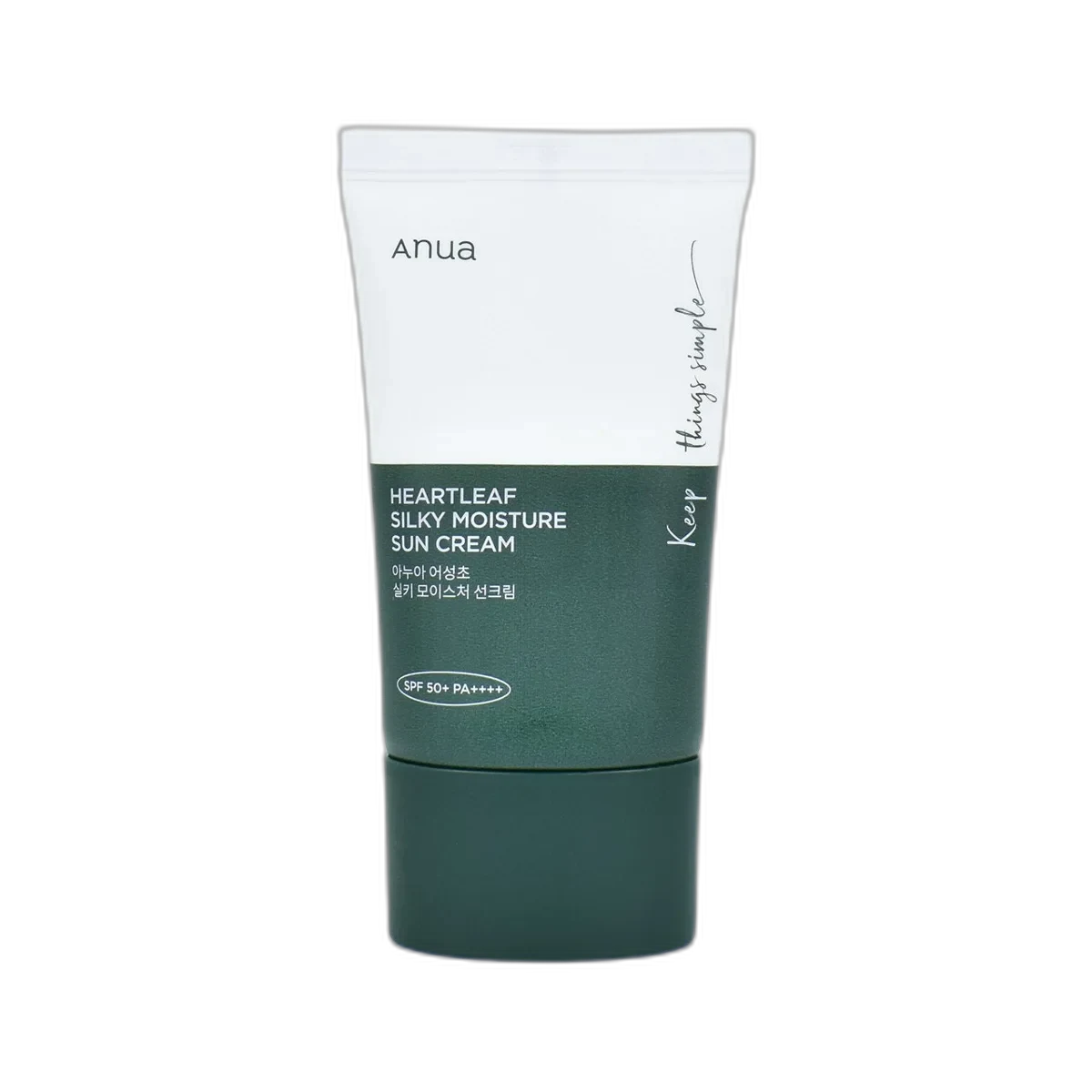
Heartleaf Silky Moisture Mild Sunscreen
K-Beauty Hydration Shield
 Verified reviewer
Pros & cons.
- +Seven forms of hyaluronic acid provide multi-depth hydration rarely seen in a sunscreen
- +Heartleaf extract genuinely soothes skin without being just a marketing ingredient
- +Silky texture absorbs in under a minute with zero pilling
- +Fragrance-free, vegan, silicone-free — clean formulation without compromising texture
- +No white cast on any skin tone thanks to purely chemical UV filter system
- +Excellent makeup base that doesn't cause foundation to slide or break up
- +FDA-regulated Broad Spectrum SPF 50+ provides reliable daily protection
- −Small 50ml tube runs out quickly with proper daily face and neck application
- −Moisturizing finish can feel heavy on oily skin types
- −Uses older-generation UV filters rather than newer alternatives like Tinosorb
- −Octocrylene content may concern environmentally-conscious consumers
- −Not widely available at mainstream US retailers yet
The full review.
There is a very specific frustration that anyone who has tried to find a hydrating chemical sunscreen knows intimately. You want moisture, but you do not want to look like you just emerged from a steam room. You want lightweight, but you do not want that tight, dried-out feeling by noon. Anua built this sunscreen around the idea that you should not have to choose, and the approach they took is, frankly, a little over-the-top in the best possible way: seven different forms of hyaluronic acid, all working at different molecular weights to hydrate the skin from multiple depths simultaneously.
The Heartleaf Silky Moisture Mild Sunscreen landed on the K-beauty scene in 2023 and quickly became an Olive Young bestseller, which in the Korean beauty world is roughly equivalent to getting a Michelin star. The formula centers on Anua’s signature Houttuynia cordata extract — heartleaf — a botanical that has been used in traditional Asian medicine for centuries and has accumulated a growing body of research supporting its anti-inflammatory and antioxidant properties. A 2022 study published in Antioxidants demonstrated that quercitrin and hyperoside, two of heartleaf’s key flavonoids, significantly reduced UVB-induced skin damage markers in cell models. In this sunscreen, the heartleaf works as the soothing backbone, keeping skin calm while four chemical UV filters — avobenzone, homosalate, octisalate, and octocrylene — handle the actual sun protection.
Let us talk about those UV filters for a moment, because this is where honest assessment matters. These are established, FDA-approved filters that provide reliable broad-spectrum SPF 50+ protection. They work. But they are not exactly the new generation. Homosalate and octocrylene have faced increasing scrutiny in recent years — not enough to warrant alarm, but enough that formulators who want to be at the absolute cutting edge have started moving toward newer alternatives. If you are someone who follows UV filter discourse closely, this is worth noting. If you are someone who just wants a sunscreen that works and feels nice, these filters have decades of safety data behind them.
The texture is genuinely lovely. It comes out of the tube as a slightly milky cream and immediately begins to melt on contact with skin. There is no dragging, no pilling, no awkward adjustment period where you are rubbing and hoping it blends. Within about thirty seconds, it has absorbed and left behind a finish that lands somewhere between dewy and natural — silky is actually the right word here, which is not always the case when brands use it. Under makeup, it behaves impeccably. Multiple user surveys have reported zero pilling and no foundation slide, which is a significant practical advantage for anyone building a morning routine that needs to survive a commute.
The hydration story is the real differentiator. Seven forms of hyaluronic acid sounds like marketing excess, but each variant genuinely serves a different function. Standard sodium hyaluronate provides surface hydration. The crosspolymer form creates a moisture reservoir effect, slowly releasing hydration throughout the day. Hydrolyzed versions penetrate more deeply. Acetylated hyaluronate has enhanced skin-binding ability. The practical result is that this sunscreen does not just sit on top of your skin — it actively contributes to your hydration levels, which makes it a genuine two-in-one for people with dry or dehydrated skin types.
Saccharomyces ferment adds another dimension, delivering fermented yeast-derived nutrients that support the skin microbiome. Acetyl glucosamine, a lesser-known but well-supported ingredient, promotes hyaluronic acid synthesis from within while offering gentle brightening over time. Panthenol rounds out the soothing profile. The ingredient list reads like someone sat down and asked: what does stressed, dehydrated skin actually need from its sunscreen beyond UV protection?
There are limitations worth acknowledging. At 50ml, this is a small tube, and if you are applying the recommended amount for face and neck daily, you will go through it in two to three months. At around twenty-two dollars, the per-milliliter cost is not unreasonable for K-beauty, but it is not a budget pick either. The moisturizing finish, while beautiful on dry and normal skin, can feel too much for truly oily skin types — if you produce significant sebum, this is not your sunscreen.
The fragrance-free, vegan, and cruelty-free formulation checks important boxes, and the fact that it is silicone-free while still achieving that silky finish is a genuine formulation achievement. Anua managed to create an elegant texture without the usual silicone slip, relying instead on the olivate emulsion system and nylon-12 for the sensory experience.
As a brand, Anua is still relatively young — founded in 2019, they have built their reputation primarily through social media virality and Olive Young rankings rather than decades of clinical research. This is not a criticism; it is context. The ingredients they use are well-studied, even if the specific formulations have not been independently validated through brand-sponsored clinical trials. For a sunscreen, the UV filters are FDA-regulated regardless, so the efficacy question really comes down to the supporting cast — and that supporting cast is genuinely impressive.
This sunscreen does what it promises. It hydrates meaningfully while providing solid broad-spectrum protection in a texture that makes daily SPF application feel like skincare rather than an obligation. For dry-to-normal skin types who want their sunscreen to actively contribute to their moisture levels, this is a strong contender that earns its Olive Young bestseller status through substance rather than hype alone.
Ingredient analysis.
Full INCI list
Active Ingredients: Avobenzone 3.0%, Homosalate 7.3%, Octisalate 5.0%, Octocrylene 9.0%. Inactive Ingredients: Water, Propanediol, Butyloctyl Salicylate, Ethylhexyl Methoxycrylene, Nylon-12, Silica, Sodium Acrylates Crosspolymer-2, 1,2-Hexanediol, Pentylene Glycol, Polyglyceryl-3 Distearate, Hydroxyethyl Urea, Cetearyl Olivate, Potassium Cetyl Phosphate, Butylene Glycol, Sorbitan Olivate, Cetyl Alcohol, Houttuynia Cordata Extract, Carbomer, Glycerin, Panthenol, Xanthan Gum, Glyceryl Stearate Citrate, Ethylhexylglycerin, Disodium EDTA, Acetyl Glucosamine, Sodium Hyaluronate, Cryptomeria Japonica Leaf Extract, Nelumbo Nucifera Leaf Extract, Saccharomyces Ferment, Hydroxyacetophenone, Cynanchum Atratum Extract, Sodium Hyaluronate Crosspolymer, Althaea Rosea Flower Extract, Tocopherol, Dimethylsilanol Hyaluronate, Hydrolyzed Hyaluronic Acid, Hydrolyzed Sodium Hyaluronate, Caprylyl Glycol, Hyaluronic Acid, Potassium Hyaluronate, Hydroxypropyltrimonium Hyaluronate, Sodium Hyaluronate Dimethylsilanol, Sodium Acetylated Hyaluronate
Skin match.
The science.
The Science
Houttuynia cordata extract drives the formula's soothing effects, backed by increasing dermatological research. A 2022 study in Antioxidants (Kim et al.) examined the roles of quercitrin and hyperoside—two flavonoids in heartleaf. The study shows both compounds reduce UVB-induced oxidative stress markers and pro-inflammatory cytokine expression in human keratinocyte cell models. This matters for sunscreens, as these anti-inflammatory compounds act as a secondary defense against UV radiation that passes the chemical filter barrier.
The seven-form hyaluronic acid approach has scientific merit. A 2019 study in the Journal of Clinical Medicine (Bukhari et al.) confirmed multi-molecular-weight hyaluronic acid formulations improve skin hydration, elasticity, and roughness more than single-weight versions. The sodium hyaluronate crosspolymer is notable; this modified form forms a mesh-like structure on the skin surface to release moisture steadily instead of evaporating quickly like standard hyaluronic acid. Sodium acetylated hyaluronate also penetrates the skin better than unmodified sodium hyaluronate.
Acetyl glucosamine provides evidence-based brightening. Research in the Journal of Cosmetic Dermatology shows N-acetyl glucosamine reduces melanin production and improves skin clarity. It also supports the skin's own hyaluronic acid synthesis, creating a synergistic loop with the external HA forms in this formula.
References
- Hyperoside and Quercitrin in Houttuynia cordata Extract Attenuate UVB-Induced Oxidative Stress — Antioxidants (2022)
Dermatologist Perspective
Dermatologists often favor chemical sunscreens with skincare benefits, especially for patients who skip daily SPF due to texture. The heartleaf extract and multi-hyaluronic acid approach matches dermatologist recommendations for dry or dehydrated skin patients needing motivation to wear sunscreen. Board-certified dermatologists note the soothing botanical profile helps post-procedure skin when mineral sunscreens feel too heavy. However, dermatologists advise that patients sensitive to chemical UV filters—specifically avobenzone—patch test first. The fragrance-free, silicone-free formulation is a plus, as it minimizes unnecessary sensitizing agents.
Guidance
Where it fits in your routine.
Apply generously as the final step of your morning skincare routine, after moisturizer and before makeup. Use approximately a nickel-sized amount for face and a similar amount for neck. Spread evenly and allow 30-60 seconds for absorption. Reapply every two hours during prolonged sun exposure, or after swimming, sweating, or toweling off. Can be used without a separate moisturizer underneath if your skin is normal to slightly dry — the hydrating formula often provides sufficient moisture on its own.
At about $22 for 50ml, this sits in the mid-range for K-beauty sunscreens — cheaper than premium Japanese SPFs but more than basic drugstore options. The seven-form hyaluronic acid complex and heartleaf extract show real formulation investment rather than trace marketing amounts. The value is highest for dry and normal skin types who usually use both a hydrating serum and a sunscreen in their morning routine — this does both. The small tube size reduces value; users who apply it generously to face and neck will replace it frequently.
Dry and normal skin types wanting sunscreen that hydrates instead of just protects. People who stopped daily SPF use because they hate the texture. Sensitive skin users seeking a fragrance-free chemical sunscreen with soothing ingredients.
Oily skin types wanting a matte or semi-matte finish. People with known sensitivities to avobenzone or octocrylene. Users who prefer mineral-only UV protection or need a reef-safe formula.
Product details.
Fragrance-free with a very faint product scent that dissipates quickly.
50ml white squeeze tube with a flip cap; easy to travel with. Minimal Anua branding in sage green. Dispenses the right amount easily. Finish dewynon-greasylightweight What to Expect on First Use The cream spreads easily and absorbs in 30-60 seconds. Skin feels hydrated and slightly dewy without stickiness. No tingling or stinging occurs. It works under makeup immediately without pilling. How Long It Lasts 2-3 months using the recommended amount on the face daily Period After Opening 12 months
All Year
The backstory.
Born from Anua's obsession with Houttuynia cordata (heartleaf), this sunscreen was developed to solve a common K-beauty complaint: that most hydrating sunscreens feel heavy and most lightweight ones dry out the skin. It became one of Olive Young's top-selling SPFs by bridging that gap with a multi-hyaluronic-acid approach.
About Anua
Emerging Brand (2–5 years)Anua launched in 2019 as a K-beauty brand centered on heartleaf (Houttuynia cordata) extract. It gained global traction via social media and Olive Young bestseller rankings. Anua uses well-studied botanical ingredients, but its specific formulations lack independent clinical validation and the brand's track record is short.
Common myths.
Chemical sunscreens always irritate sensitive skin.
Heartleaf extract and panthenol counteract potential irritation from the chemical UV filters. This soothing complex keeps sensitive skin calm, but individual tolerance to chemical filters like avobenzone varies.
K-beauty sunscreens lack enough UV protection for Western markets.
This US version is FDA-regulated with Broad Spectrum SPF 50+ designation, meaning it meets the same testing standards as any American sunscreen. The active ingredient concentrations are clearly listed on the DailyMed FDA database.
FAQ.
Does the Anua Heartleaf Silky Moisture Mild Sunscreen leave a white cast?
No. This 100% chemical sunscreen uses avobenzone, homosalate, octisalate, and octocrylene — none leave a white cast. It applies clear and works on all skin tones without visible residue.
Is this sunscreen good for sensitive skin?
The formula targets sensitive skin using heartleaf extract and panthenol to soothe. It contains chemical UV filters like avobenzone and octocrylene, which can cause reactions in some sensitive individuals. Patch testing is recommended if you have known chemical filter sensitivities.
Can I wear makeup over this sunscreen?
Yes — the silky finish works well as a makeup base. It absorbs fast without pilling, and user surveys show it doesn't cause makeup to slide off. Wait about one minute after application before you apply primer or foundation.
How many forms of hyaluronic acid does this sunscreen contain?
Seven forms: sodium hyaluronate, sodium hyaluronate crosspolymer, hydrolyzed hyaluronic acid, hydrolyzed sodium hyaluronate, potassium hyaluronate, hydroxypropyltrimonium hyaluronate, and sodium acetylated hyaluronate. This multi-weight approach hydrates different skin depths.
Is the Anua Heartleaf Sunscreen the same as the Anua Zero-Cast Sunscreen?
No — these are two different products. The Heartleaf Silky Moisture version hydrates for a dewy-natural finish, while the Zero-Cast version provides a matte, invisible finish. They use different UV filter systems and target different skin types.
Is this sunscreen reef-safe?
This sunscreen contains octocrylene, which some studies link to coral reef impact. It is not marketed as reef-safe. If reef safety is a priority, use a mineral sunscreen alternative.
What the community says.
"No white cast"
"Silky moisturizing finish"
"Lightweight and non-greasy"
"Pleasant texture under makeup"
"Doesn't sting eyes"
"Small tube size for the price"
"Can feel slightly heavy for very oily skin"
"Chemical filter concerns for some users"
"Limited availability outside K-beauty retailers"
People also looked at.