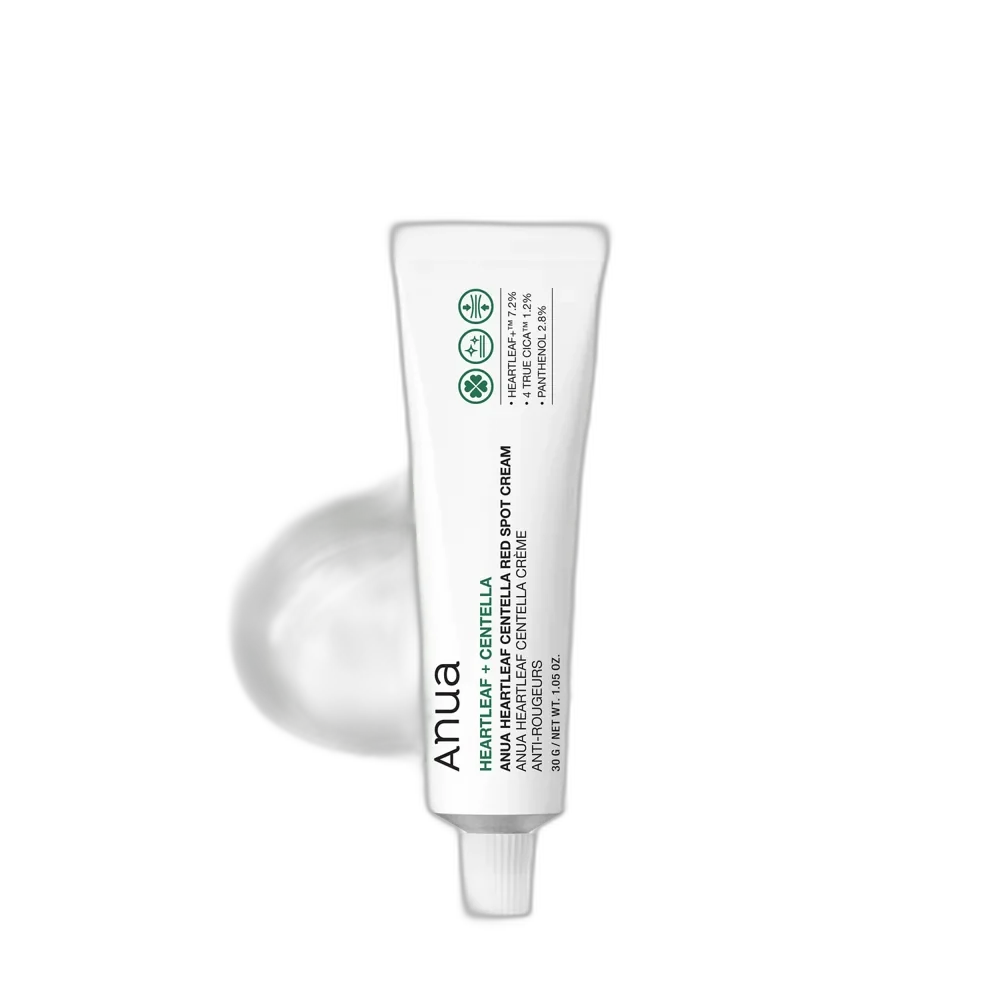
Heartleaf Centella Red Spot Cream
K-Beauty Red Spot Rescue
 Verified reviewer
Pros & cons.
- +Six-ceramide complex with cholesterol and phytosphingosine mirrors dermatological barrier repair formulations
- +5% panthenol at a clinically meaningful concentration for accelerating skin healing
- +Four isolated centella triterpenes provide targeted anti-inflammatory and repair activity
- +Lightweight gel-cream absorbs in seconds with no stickiness or greasiness
- +Fragrance-free, gentle formula suitable for highly reactive and sensitive skin
- +Versatile — works as both targeted spot treatment and all-over soothing cream
- −Only 30g for $22 — expensive per gram, especially if used as an all-over cream
- −Emerging brand with limited independent clinical validation of this specific product
- −Occasional pilling when layered under certain products
- −No larger size option available for better value
- −Brand clinical claims lack published methodology or third-party verification
The full review.
Most spot treatments follow one rule: find the problem, attack it, dry it out, and move on. The Anua Heartleaf Centella Red Spot Cream takes the opposite approach. Instead of treating a red spot as an enemy to eradicate, this cream treats it as a wound to heal—which matches the actual dermatological process.
The formulation mimics ideal skin repair conditions. Six ceramides—NP, NG, NS, AP, AS, and EOP—work with cholesterol and phytosphingosine to recreate the three key lipid classes of the stratum corneum’s mortar-and-brick structure. This uses the same ceramide architecture that made CeraVe famous, but applies it to a targeted treatment instead of a broad moisturizer. The logic holds: compromised barrier function around acne lesions and irritated areas increases transepidermal water loss, which prolongs inflammation. Rebuilding that barrier is step one.
Step two is the centella complex. Four isolated triterpenes—madecassic acid, asiaticoside, madecassoside, and asiatic acid—provide a full-spectrum approach to centella’s benefits. Each triterpene has a different mechanism. Asiaticoside stimulates type I collagen synthesis. Madecassoside inhibits inflammatory cytokines. Asiatic acid activates wound healing pathways. Including all four, rather than a generic extract with unknown triterpene ratios, gives this formula more precision than many cica products.
Anua’s signature heartleaf water adds a second botanical dimension at 7%. Houttuynia cordata has documented antibacterial properties against common skin pathogens and anti-inflammatory activity through pathways different from centella. Using both botanicals creates complementary coverage: centella for tissue repair and heartleaf for surface-level calming and antimicrobial action.
Panthenol at 5% is the unsung hero. This is not a token inclusion; 5% panthenol is a clinically validated concentration that improves skin hydration, reduces inflammation, and accelerates epithelial healing in multiple peer-reviewed studies. It converts to pantothenic acid in the skin, feeding the coenzyme A pathway that drives cellular repair. In a product focused on healing red spots, this concentration works.
The texture is a pleasant surprise for such an ingredient-dense formula. The gel-cream spreads smoothly, absorbs within seconds, and leaves a satin finish. It is not greasy, heavy, or sticky. You can apply it as a targeted spot treatment—a small dab on individual red marks—or spread a thin layer over broadly irritated areas. It layers cleanly under sunscreen and makeup, which matters for a product used morning and night.
Niacinamide, ninth in the ingredient list, adds brightening support for post-inflammatory hyperpigmentation that lingers after redness fades. Its position suggests a concentration in the 1-3% range, which provides benefit without the flushing risks of higher niacinamide concentrations.
The limitation is size and cost. Thirty grams for twenty-two dollars is a high per-gram price, especially for a brand that launched five years ago without extensive independent clinical validation. If you use this exclusively as a spot treatment—a dab on individual red marks—the tube lasts one to two months. If you use it as an all-over cream, you will finish it in two to three weeks, making the economics harder to justify.
Anua’s clinical testing data claims 115.78% moisture barrier enhancement and 32.37% sebum reduction. Because these are brand-funded studies without published methodology or third-party replication, treat them as supportive rather than definitive. The ingredient list provides stronger evidence than the marketing claims. A formula this well-constructed should not need inflated numbers to sell.
For anyone with post-acne redness, irritation from active treatments, or reactive skin, this cream offers a repair-first approach that most spot treatments neglect. It does not dry, sting, or punish the skin. It rebuilds the conditions for healing and gets out of the way. That philosophy is worth the premium—if you accept the premium.
Formula
Ingredient analysis.
Full INCI list
Water, Houttuynia Cordata Flower/Leaf/Stem Water, Glycerin, Butylene Glycol, Panthenol, 2,3-Butanediol, Dicaprylyl Carbonate, Methyl Trimethicone, Niacinamide, 1,2-Hexanediol, Pentylene Glycol, Squalane, Cetearyl Olivate, Sorbitan Olivate, Hydrogenated Olive Oil Decyl Esters, Candida Bombicola/Glucose/Methyl Rapeseedate Ferment, Hydrogenated Olive Oil Unsaponifiables, Melia Azadirachta Leaf Extract, Melia Azadirachta Flower Extract, Ocimum Sanctum Leaf Extract, Macadamia Ternifolia Seed Oil, Curcuma Longa (Turmeric) Root Extract, Corallina Officinalis Extract, Sorbitol, Diphenylsiloxy Phenyl Trimethicone, Sucrose Polystearate, Hydrogenated Polyisobutene, Poly C10-30 Alkyl Acrylate, Stearyl Dimethicone, Cetyl Palmitate, Acrylates/C10-30 Alkyl Acrylate Crosspolymer, Polyglyceryl-3 Distearate, Hydroxyethyl Acrylate/Sodium Acryloyldimethyl Taurate Copolymer, Sorbitan Palmitate, Aminomethyl Propanediol, Cellulose, Glyceryl Stearate, Sodium Acrylate/Sodium Acryloyldimethyl Taurate Copolymer, Polyisobutene, Polyglyceryl-6 Caprylate, Hydrogenated Lecithin, Ethylhexylglycerin, Polyglyceryl-4 Caprate, Adenosine, Sodium Phytate, Sorbitan Isostearate, Glyceryl Stearate Citrate, Beta-Sitosterol, Allantoin, Caprylyl/Capryl Glucoside, Sorbitan Oleate, Madecassic Acid, Asiaticoside, Madecassoside, Phytosterols, Stearic Acid, Asiatic Acid, Tocopherol, Ceramide NP, Cholesterol, Phytosphingosine, Ceramide NG, Ceramide NS, Ceramide AP, Ceramide AS, Ceramide EOP, Cetearyl Alcohol
Skin match.
The science.
The Science
The six-ceramide complex in this cream (NP, NG, NS, AP, AS, EOP) uses cholesterol and phytosphingosine to mimic the three-component lipid system research identifies as optimal for barrier repair.
A foundational study by Holleran et al. in the Journal of Clinical Investigation shows that combining ceramides, cholesterol, and free fatty acids in approximately equimolar ratios is necessary for lamellar body formation and barrier recovery. Phytosphingosine acts as a ceramide precursor and adds antimicrobial activity against C. acnes and a substrate for endogenous ceramide synthesis.
5% panthenol has robust clinical evidence. A 2002 study in the Journal of Dermatological Treatment shows 5% dexpanthenol improves stratum corneum hydration, reduces transepidermal water loss, and maintains skin softness and elasticity. It converts to pantothenic acid, which feeds coenzyme A synthesis—a critical cofactor in fatty acid metabolism and skin barrier lipid production.
The four centella triterpenes use distinct mechanisms for wound healing. Asiaticoside stimulates type I collagen synthesis via TGF-β signaling, per research in the Journal of Pharmacy and Pharmacology. Madecassoside inhibits NF-κB-mediated inflammatory pathways. A 2012 study in the International Journal of Molecular Sciences confirms the combination of all four triterpenes has superior wound healing activity compared to any individual triterpene, supporting the multi-extract strategy in this formula.
Houttuynia cordata has antibacterial activity against skin pathogens; research in the Journal of Ethnopharmacology shows anti-inflammatory effects via inhibition of prostaglandin E2 and nitric oxide production.
References
- Panthenol in dermatological treatment — Journal of Dermatological Treatment (2002)
- Asiaticoside-induced elevation of antioxidant levels in healing wounds — International Journal of Molecular Sciences (2012)
Dermatologist Perspective
Dermatologists often recommend centella-based products for post-procedure recovery and inflammatory skin conditions; this cream's multi-triterpene approach follows clinical best practices.
Board-certified dermatologists note the six-ceramide complex with cholesterol and phytosphingosine follows evidence-based barrier repair principles. The 5% panthenol is at a clinically active concentration. Dermatologists commonly recommend this repair-focused spot treatment for patients with post-inflammatory erythema (PIE)—the persistent red marks after acne heals—as an alternative to drying, irritating spot treatments that can prolong redness.
Where it fits in your routine.
Apply a small amount to red spots, acne marks, or irritated areas after serum and before moisturizer. Spread a thin layer across the entire area for broader irritation. Use morning and evening. Apply sunscreen in the AM. Layer over active treatments like retinol or exfoliating acids to buffer irritation. Wait 1-2 minutes for absorption before applying the next product.
At $22 for 30g, this spot treatment is priced at a premium, especially for an emerging K-beauty brand. The ingredient quality justifies the cost: a six-ceramide complex, four centella triterpenes, 5% panthenol, and niacinamide show high formulation investment. K-beauty retailers like YesStyle and Jolse sell it for $11-16, which improves the value. Only one size exists. Heritage brands charge similar prices for less complex spot treatments, but they have decades of clinical validation that Anua lacks. The price is fair for the ingredients; whether it is fair for the brand's maturity depends on how you weight track record versus formulation quality.
Use this for post-acne redness, irritation-induced red spots, or reactive skin. It works well as a soothing, repair-focused alternative to drying spot treatments. It also works as a calming buffer over retinol or acid treatments.
Users looking for a traditional spot treatment that actively dries out or kills acne — this cream soothes and repairs rather than attacks. Also not the best value for those who need an all-over calming cream, as the 30g tube won't last long with full-face application.
Product details.
Fragrance-free with minimal raw ingredient scent. Essentially unscented.
Anua's signature minimalist design uses a compact 30g squeeze tube. The screw cap and size make it travel-friendly.
On first application, the gel-cream spreads easily and absorbs within seconds, leaving a lightweight, comfortable film. No tingling, stinging, or warmth — the soothing effect is immediate. Active red spots appear visibly calmer within the first day. No purging or adjustment period.
1-2 months with targeted spot application; less if used as an all-over cream
12 months
All Year
The backstory.
Anua built its brand identity around heartleaf (Houttuynia Cordata) extract, and this red spot cream represents the most treatment-focused application of their hero ingredient. Launched in 2025, it merges the brand's heartleaf expertise with a comprehensive centella and ceramide system, targeting the specific concern of post-acne redness and irritation spots that drives much of the K-beauty treatment market.
About Anua
Emerging Brand (2–5 years)Anua launched in 2020 and grew globally via viral K-beauty products, specifically the Heartleaf Pore Control Cleansing Oil. The brand now offers targeted treatments, but lacks extensive independent clinical validation and a long track record compared to established dermocosmetic brands.
Common myths.
Spot treatments use drying actives like benzoyl peroxide or salicylic acid to clear red spots.
Acne red spots often last because of inflammation, not active infection. This cream focuses on repair. It uses centella and heartleaf to calm inflammation and ceramides and panthenol to rebuild the barrier. This approach works better for post-inflammatory redness than harsh drying agents.
Ceramides in a spot treatment are unnecessary — they only matter in moisturizers.
Red spots and acne lesions have a compromised skin barrier, which increases water loss and prolongs inflammation. The six-ceramide complex in this cream fixes barrier dysfunction at the injury site, helping the anti-inflammatory actives work better.
FAQ.
Does the Anua Red Spot Cream actually reduce redness?
Yes — four centella triterpenes, 7% heartleaf water, 5% panthenol, and niacinamide target redness through multiple pathways. Users see visible calming within 24 hours and consistent improvement over 2-4 weeks. Anua's clinical testing shows a 13.37% soothing effect and 4.31% clarity improvement after 4 weeks.
Can I use the Anua Red Spot Cream as a daily moisturizer?
The lightweight gel-cream texture and ingredient list (ceramides, panthenol, squalane, niacinamide) make this suitable for sensitive or irritated skin. But at 30g, the tube lasts 2-3 weeks with full-face daily use, so it is an expensive standalone moisturizer.
Is the Anua Red Spot Cream good for acne scars?
This cream targets post-inflammatory redness (PIE) and mild post-inflammatory hyperpigmentation (PIH) from recent breakouts. The centella triterpenes promote collagen synthesis and tissue repair, and niacinamide addresses pigmentation. Deeper or older acne scars may need targeted treatments like retinoids or professional procedures.
Can I layer this over retinol to reduce irritation?
Yes — 5% panthenol, a six-ceramide complex, and centella actives buffer retinol irritation well. Apply your retinol first, let it absorb, then layer this cream on top. The barrier-repair ingredients reduce the dryness and redness retinoids commonly cause.
How long does the 30g tube last?
Apply to 2-3 spots daily for 1-2 months of use. Use as a thin all-over cream to last about 2-3 weeks. Most users complain that the small size affects this product's value proposition.
What the community says.
"Visibly calms redness and irritation within 24 hours"
"Light gel-cream texture absorbs quickly without heaviness"
"Gentle enough for sensitive and reactive skin types"
"Non-sticky finish works well under other products and makeup"
"Fragrance-free with no detectable scent"
"Small 30g size feels expensive at $22 — runs out quickly"
"Occasional pilling when layered under certain products"
"Some users report disrupted oil-moisture balance with daily use"
"Limited availability outside K-beauty specialty retailers"
People also looked at.