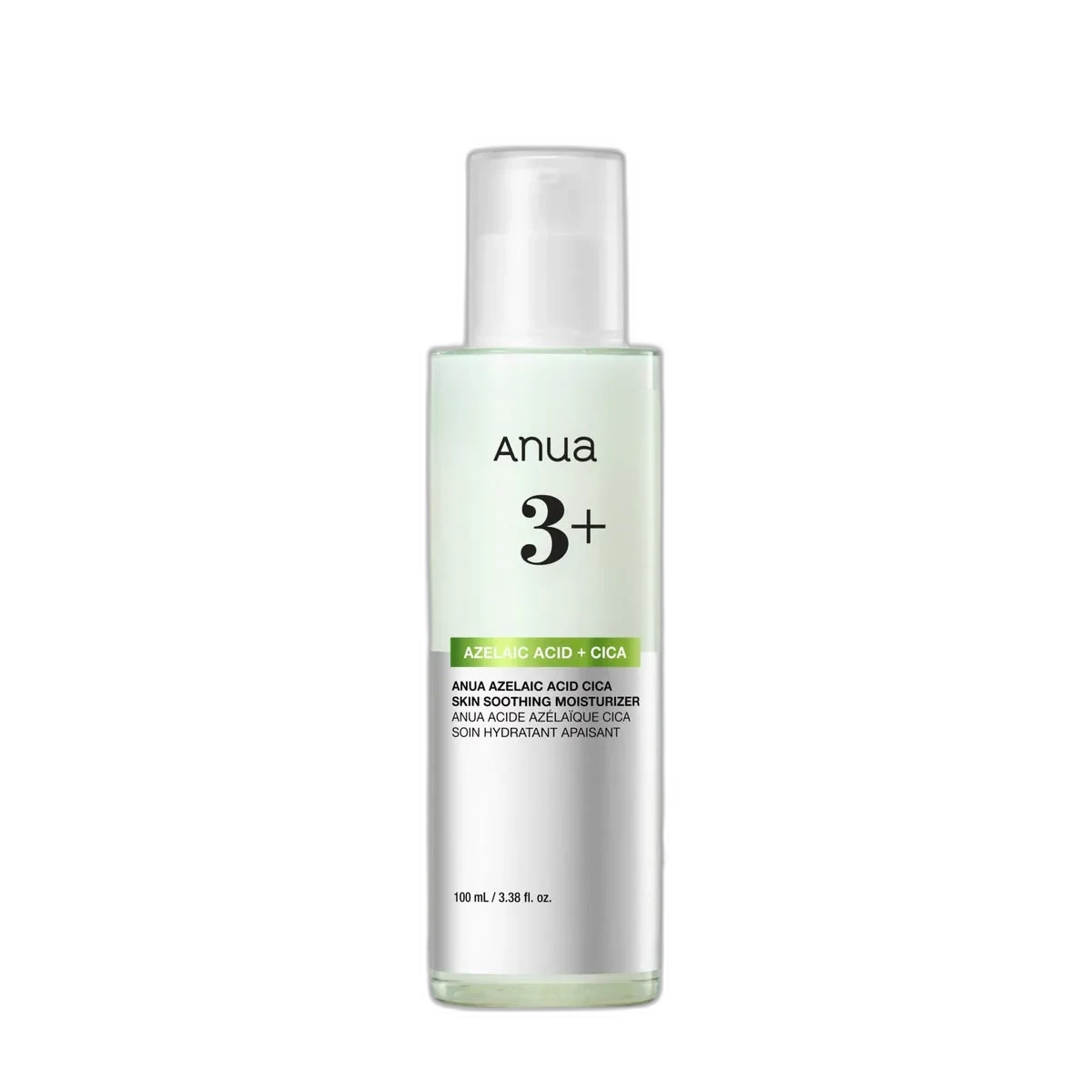
Azelaic Acid Cica Skin Soothing Moisturizer
Cica-Azelaic Dual Action
 Verified reviewer
Pros & cons.
- +Cyclodextrin-enhanced azelaic acid delivery improves bioavailability at 3% concentration
- +Comprehensive seven-ingredient centella complex goes beyond generic cica extracts
- +Glycerin-free formula accommodates users who break out from glycerin
- +Lightweight cream absorbs in seconds with zero stickiness or greasiness
- +Squalane-based emollient system provides non-comedogenic moisture
- +Layers cleanly under sunscreen and makeup without pilling
- +Fair price at $19 for the formulation complexity and active ingredient count
- −Contains four essential oils and four fragrance allergens in a product marketed for sensitive skin
- −Bergamot oil has phototoxic potential — concerning for a daytime moisturizer
- −3% azelaic acid is modest compared to prescription-strength 15-20% formulations
- −Very new product with limited independent reviews and real-world data
- −Some misleading fragrance-free marketing claims on certain retail platforms
The full review.
There is a particular kind of frustration reserved for skincare products that are almost excellent. The Anua Azelaic Acid Cica Skin Soothing Moisturizer has the bones of a genuinely smart formula — azelaic acid in a cyclodextrin delivery vehicle, seven centella-derived actives, a glycerin-free base that sidesteps a common breakout trigger — and then it adds four essential oils and their associated fragrance allergens to a product explicitly designed for irritated, sensitive skin. It is the skincare equivalent of building a beautiful house and then installing the front door backwards.
Let us start with what works, because quite a lot does. The 3% azelaic acid is paired with hydroxypropyl cyclodextrin, a molecular encapsulation agent that forms a ring-shaped complex around the azelaic acid molecule. This is not just a fancy label claim — cyclodextrin inclusion complexes genuinely improve the solubility and bioavailability of poorly water-soluble actives, which azelaic acid notoriously is. At 3%, you are working with an OTC concentration that sits well below the 15-20% prescription range, but the enhanced delivery system makes a reasonable case for improved efficacy per percentage point.
The centella complex is comprehensive in a way that most cica products are not. Rather than tossing in a generic centella extract and calling it a day, Anua includes seven distinct centella-derived ingredients: whole plant extract, leaf extract, root extract, and the four isolated triterpenes — madecassoside, asiaticoside, asiatic acid, and madecassic acid. Each triterpene has a slightly different mechanism of action, from collagen stimulation to anti-inflammatory signaling, and including all four alongside the whole-plant extracts provides the kind of full-spectrum coverage that single-extract products cannot match.
Squalane sits third in the ingredient list, suggesting a meaningful concentration. This was a smart choice for the emollient base — lightweight, non-comedogenic, and biomimetic enough to integrate with the skin’s own lipid structure. The decision to exclude glycerin is notable and deliberate. While glycerin is the workhorse humectant in most moisturizers, a subset of acne-prone users find it contributes to breakouts, and Anua clearly designed this product with that audience in mind. Nine forms of hyaluronic acid pick up the hydration duties instead.
The texture delivers on its promises. This is a lightweight cream that absorbs in seconds, leaving a barely-there satin finish with no stickiness or greasiness. It layers cleanly under sunscreen and makeup, which matters for a product you might use twice daily. The application experience is genuinely pleasant — smooth, fast, unobtrusive.
Now, the essential oils. Rosemary leaf oil, bergamot fruit oil, geranium flower oil, and grapefruit peel oil appear in the second half of the ingredient list, joined by the EU-mandated fragrance allergen declarations: limonene, citronellol, geraniol, and linalool. Bergamot oil is particularly concerning because it contains furanocoumarins that can cause phototoxic reactions — an unfortunate choice in a product that many users will wear during the day. The concentrations are likely low given their position in the INCI list, but for a product positioning itself as a soothing treatment for sensitive and redness-prone skin, any essential oil inclusion is a philosophical misstep, even if the practical impact may be minimal for most users.
This matters because the target audience — people dealing with rosacea, acne, and post-inflammatory hyperpigmentation — is disproportionately likely to have reactive skin that does not tolerate fragrance well. A product that calms with one hand (azelaic acid, centella) while potentially provoking with the other (essential oils) creates an unnecessary gamble for the very people it is trying to serve.
Anua is a brand that is still finding its footing in the actives space. Founded in 2020, they rocketed to fame on the strength of their heartleaf cleansing oil and have since been expanding rapidly into treatment categories. This azelaic acid line represents an ambitious leap from single-hero-ingredient products into multi-active formulations, and the ambition is evident in the formulation choices — cyclodextrin delivery, seven-form centella, glycerin-free architecture. The execution is about eighty percent of the way there.
For users who do not have fragrance sensitivity, this moisturizer offers a genuinely interesting approach to daily azelaic acid delivery. The lightweight texture, thoughtful active delivery system, and comprehensive cica support make it a competent daily moisturizer with mild treatment benefits. Just know that the 3% azelaic acid will work gradually — this is a marathon runner, not a sprinter. Expect subtle redness reduction and brightening over eight to twelve weeks of consistent use, not dramatic overnight transformation.
At nineteen dollars for 100ml, the price is fair for what you get. The formulation complexity — cyclodextrin encapsulation, seven centella extracts, nine HA forms — reflects genuine R&D investment. Whether that investment is well-directed given the essential oil inclusion is a question each buyer will answer based on their own skin’s tolerance.
Formula
About BrandName
Anua is a brand that is still finding its footing in the actives space. Founded in 2020, they rocketed to fame on the strength of their heartleaf cleansing oil and have since been expanding rapidly into treatment categories. This azelaic acid line represents an ambitious leap from single-hero-ingredient products into multi-active formulations, and the ambition is evident in the formulation choices — cyclodextrin delivery, seven-form centella, glycerin-free architecture. The execution is about eighty percent of the way there.
Texture
The texture delivers on its promises. This is a lightweight cream that absorbs in seconds, leaving a barely-there satin finish with no stickiness or greasiness. It layers cleanly under sunscreen and makeup, which matters for a product you might use twice daily. The application experience is genuinely pleasant — smooth, fast, unobtrusive.
Scent
Now, the essential oils. Rosemary leaf oil, bergamot fruit oil, geranium flower oil, and grapefruit peel oil appear in the second half of the ingredient list, joined by the EU-mandated fragrance allergen declarations: limonene, citronellol, geraniol, and linalool. Bergamot oil is particularly concerning because it contains furanocoumarins that can cause phototoxic reactions — an unfortunate choice in a product that many users will wear during the day. The concentrations are likely low given their position in the INCI list, but for a product positioning itself as a soothing treatment for sensitive and redness-prone skin, any essential oil inclusion is a philosophical misstep, even if the practical impact may be minimal for most users.
Common Complaints
This matters because the target audience — people dealing with rosacea, acne, and post-inflammatory hyperpigmentation — is disproportionately likely to have reactive skin that does not tolerate fragrance well. A product that calms with one hand (azelaic acid, centella) while potentially provoking with the other (essential oils) creates an unnecessary gamble for the very people it is trying to serve.
Best for
For users who do not have fragrance sensitivity, this moisturizer offers a genuinely interesting approach to daily azelaic acid delivery. The lightweight texture, thoughtful active delivery system, and comprehensive cica support make it a competent daily moisturizer with mild treatment benefits. Just know that the 3% azelaic acid will work gradually — this is a marathon runner, not a sprinter. Expect subtle redness reduction and brightening over eight to twelve weeks of consistent use, not dramatic overnight transformation.
Works for
The 3% azelaic acid is paired with hydroxypropyl cyclodextrin, a molecular encapsulation agent that forms a ring-shaped complex around the azelaic acid molecule. This is not just a fancy label claim — cyclodextrin inclusion complexes genuinely improve the solubility and bioavailability of poorly water-soluble actives, which azelaic acid notoriously is. At 3%, you are working with an OTC concentration that sits well below the 15-20% prescription range, but the enhanced delivery system makes a reasonable case for improved efficacy per percentage point.
The centella complex is comprehensive in a way that most cica products are not. Rather than tossing in a generic centella extract and calling it a day, Anua includes seven distinct centella-derived ingredients: whole plant extract, leaf extract, root extract, and the four isolated triterpenes — madecassoside, asiaticoside, asiatic acid, and madecassic acid. Each triterpene has a slightly different mechanism of action, from collagen stimulation to anti-inflammatory signaling, and including all four alongside the whole-plant extracts provides the kind of full-spectrum coverage that single-extract products cannot match.
Squalane sits third in the ingredient list, suggesting a meaningful concentration. This was a smart choice for the emollient base — lightweight, non-comedogenic, and biomimetic enough to integrate with the skin’s own lipid structure. The decision to exclude glycerin is notable and deliberate. While glycerin is the workhorse humectant in most moisturizers, a subset of acne-prone users find it contributes to breakouts, and Anua clearly designed this product with that audience in mind. Nine forms of hyaluronic acid pick up the hydration duties instead.
Not ideal for
For users who do not have fragrance sensitivity, this moisturizer offers a genuinely interesting approach to daily azelaic acid delivery. The lightweight texture, thoughtful active delivery system, and comprehensive cica support make it a competent daily moisturizer with mild treatment benefits. Just know that the 3% azelaic acid will work gradually — this is a marathon runner, not a sprinter. Expect subtle redness reduction and brightening over eight to twelve weeks of consistent use, not dramatic overnight transformation.
AM routine
For users who do not have fragrance sensitivity, this moisturizer offers a genuinely interesting approach to daily azelaic acid delivery. The lightweight texture, thoughtful active delivery system, and comprehensive cica support make it a competent daily moisturizer with mild treatment benefits. Just know that the 3% azelaic acid will work gradually — this is a marathon runner, not a sprinter. Expect subtle redness reduction and brightening over eight to twelve weeks of consistent use, not dramatic overnight transformation.
PM routine
For users who do not have fragrance sensitivity, this moisturizer offers a genuinely interesting approach to daily azelaic acid delivery. The lightweight texture, thoughtful active delivery system, and comprehensive cica support make it a competent daily moisturizer with mild treatment benefits. Just know that the 3% azelaic acid will work gradually — this is a marathon runner, not a sprinter. Expect subtle redness reduction and brightening over eight to twelve weeks of consistent use, not dramatic overnight transformation.
Formula
At nineteen dollars for 100ml, the price is fair for what you get. The formulation complexity — cyclodextrin encapsulation, seven centella extracts, nine HA forms — reflects genuine R&D investment. Whether that investment is well-directed given the essential oil inclusion is a question each buyer will answer based on their own skin’s tolerance.
Ingredient analysis.
Full INCI list
Water, Butylene Glycol, Squalane, Azelaic Acid, Pentylene Glycol, 1,2-Hexanediol, Caprylic/Capric Triglyceride, Hydroxypropyl Cyclodextrin, Disodium Phosphate, Ammonium Polyacryloyldimethyl Taurate, Cetearyl Olivate, PEG-150 Distearate, Polyglyceryl-3 Methylglucose Distearate, Vinyl Dimethicone, Behenyl Alcohol, Sorbitan Olivate, Maltodextrin, Glyceryl Stearate, Sodium Hyaluronate, Erythritol, Ethylhexylglycerin, Rosmarinus Officinalis (Rosemary) Leaf Oil, Dimethiconol, Limonene, Citrus Aurantium Bergamia (Bergamot) Fruit Oil, Pelargonium Graveolens Flower Oil, Citronellol, Geraniol, Linalool, Citrus Grandis (Grapefruit) Peel Oil, Tocopherol, Zinc Hydrolyzed Hyaluronate, Dipropylene Glycol, Totarol, Dimethylsilanol Hyaluronate, Hydrolyzed Hyaluronic Acid, Hydrolyzed Sodium Hyaluronate, Centella Asiatica Extract, Centella Asiatica Leaf Extract, Centella Asiatica Root Extract, Hyaluronic Acid, Potassium Hyaluronate, Hydroxypropyltrimonium Hyaluronate, Sodium Hyaluronate Crosspolymer, Sodium Hyaluronate Dimethylsilanol, Sodium Acetylated Hyaluronate, Madecassoside, Asiaticoside, Asiatic Acid, Madecassic Acid
Skin match.
The science.
The Science
Azelaic acid is a well-studied topical active for inflammatory skin conditions. A 2019 systematic review in the Journal of Drugs in Dermatology confirmed azelaic acid works for acne, rosacea, and hyperpigmentation, mostly at 15-20% concentrations. This moisturizer uses 3%, which is below the clinically validated range, but the cyclodextrin delivery system may bridge this gap.
Hydroxypropyl cyclodextrin forms inclusion complexes—ring-shaped molecular cages that encapsulate guest molecules like azelaic acid. Research in the European Journal of Pharmaceutics and Biopharmaceutics shows cyclodextrin complexation increases the aqueous solubility of poorly soluble drugs by 10-100 fold. Several studies also show cyclodextrin complexes enhance azelaic acid skin penetration compared to conventional formulations.
The four isolated centella triterpenes use distinct mechanisms: madecassoside and asiaticoside are glycosides that promote type I collagen synthesis, while asiatic acid and madecassic acid are free triterpenes that inhibit NF-κB signaling to provide anti-inflammatory activity. A 2012 study in the International Journal of Molecular Sciences confirmed that combining all four triterpenes shows superior wound healing activity compared to any single triterpene alone, supporting this formula's multi-extract approach.
Totarol, extracted from the heartwood of Podocarpus totara, shows antibacterial activity against Propionibacterium acnes (now Cutibacterium acnes) in vitro. Some studies suggest its efficacy matches benzoyl peroxide at certain concentrations without the dryness and irritation.
References
- Azelaic Acid: A Review of Its Use in the Treatment of Acne and Rosacea — Journal of Drugs in Dermatology (2019)
- Asiaticoside-induced elevation of antioxidant levels in healing wounds — International Journal of Molecular Sciences (2012)
Dermatologist Perspective
Dermatologists use azelaic acid as a versatile active with anti-inflammatory, antimicrobial, and anti-tyrosinase properties; it works for acne, rosacea, and hyperpigmentation. Board-certified dermatologists typically prescribe azelaic acid at 15-20% concentrations for clinical efficacy. A 3% OTC formulation provides maintenance benefits and suits patients who find higher concentrations irritating. However, dermatologists would likely flag the essential oil content—specifically bergamot and its phototoxic potential—as an unnecessary addition for reactive skin. The centella complex is a well-regarded ingredient in dermatological practice, often recommended for general barrier support and post-procedure recovery.
Where it fits in your routine.
Apply a pea-to-nickel-sized amount to clean, dry skin after serums and treatments. Spread it evenly over the face and neck, but avoid the eye area. Use morning and evening. In the AM, always use broad-spectrum sunscreen — this is necessary because bergamot oil has phototoxic potential. Let the cream absorb fully before applying sunscreen or makeup. You can layer it over niacinamide, vitamin C, or retinol products.
At $19 for 100ml, this moisturizer is competitively priced in the K-beauty treatment moisturizer category. The cyclodextrin delivery system, seven-form centella complex, and nine hyaluronic acid variants show real formulation investment that justifies the cost. However, the 3% azelaic acid concentration means users wanting significant clinical results may eventually need to supplement with or switch to a higher-concentration product. Only one size is available. For an emerging brand with limited clinical validation of its specific products, the price-to-proven-efficacy ratio is acceptable but not exceptional.
Users with normal or combination skin with mild acne, post-inflammatory hyperpigmentation, or redness want a lightweight daily moisturizer with gentle treatment benefits. It also fits users who break out from glycerin-based moisturizers.
People with fragrance sensitivities or highly reactive skin should avoid this. Despite the 'soothing' positioning, essential oils and fragrance allergens can cause irritation. The 3% concentration is too low for those seeking prescription-strength azelaic acid results.
Product details.
Lightweight gel-cream that absorbs quickly. The application is smooth and non-sticky.
The essential oil blend (rosemary, bergamot, geranium, grapefruit) has a mild herbal-citrus scent. The product is not fragrance-free, even if some retailer descriptions say it is.
Anua uses its signature teal-green color scheme on this minimalist tube, matching their azelaic acid range. The clean design includes an outer cardboard box. This 100ml squeeze tube has a screw cap.
The cream spreads easily on first application and absorbs within seconds, leaving a lightweight, non-greasy film. The 3% azelaic acid causes no tingling or stinging. Users sensitive to essential oils may notice a mild herbal-citrus scent. This concentration requires no purging or adjustment period.
2-3 months with twice-daily facial application
12 months
All Year
The backstory.
Anua expanded beyond its heartleaf hero line in 2025 with a full azelaic acid range targeting redness-prone and acne-susceptible skin. This moisturizer anchors the line as the hydration step, designed to deliver azelaic acid's brightening and anti-inflammatory benefits in a format gentle enough for twice-daily use.
About Anua
Emerging Brand (2–5 years)Anua launched in 2020 as a South Korean skincare brand that gained global recognition through its viral Heartleaf Pore Control Cleansing Oil. The brand has expanded rapidly into actives-focused products including this azelaic acid line, but has limited independent clinical validation and a short track record compared to established K-beauty brands.
Common myths.
3% azelaic acid is too low to change skin.
Prescription-strength azelaic acid (15-20%) has more clinical evidence, but OTC concentrations of 3-10% provide anti-inflammatory and mild brightening benefits with consistent use. The cyclodextrin delivery system in this formula also improves the effective concentration at the skin surface.
Products labeled for sensitive skin lack fragrance allergens.
This moisturizer contains four essential oils and four EU-designated fragrance allergens (limonene, citronellol, geraniol, linalool). It is marketed for sensitive skin, but people with fragrance sensitivities should note these ingredients.
FAQ.
How much azelaic acid is in the Anua Cica Soothing Moisturizer?
This moisturizer contains 3% azelaic acid, which is an OTC cosmetic concentration. It's lower than prescription-strength formulations (15-20% in Finacea or Azelex), but the formula uses hydroxypropyl cyclodextrin to encapsulate the azelaic acid and improve its delivery to the skin.
Is the Anua Azelaic Acid Cica Moisturizer fragrance-free?
No. Some marketing says it is fragrance-free, but this product contains rosemary leaf oil, bergamot fruit oil, geranium flower oil, and grapefruit peel oil. It also has fragrance allergens limonene, citronellol, geraniol, and linalool. Note this if you have fragrance sensitivities.
Can I use this moisturizer with retinol?
Yes, you can use this moisturizer with retinol. The 3% azelaic acid is mild enough to layer with retinoids, and the centella asiatica complex helps soothe retinol-induced irritation. Apply retinol first, let it absorb, then apply this moisturizer.
Is the Anua Azelaic Acid Moisturizer safe during pregnancy?
Azelaic acid is FDA pregnancy category B and is safe during pregnancy. This specific formula contains bergamot oil and other essential oils that some practitioners advise avoiding. Consult your healthcare provider for personalized guidance.
Does this moisturizer help with rosacea redness?
The azelaic acid and centella asiatica combination targets redness from two angles. Azelaic acid reduces inflammation and inhibits abnormal melanin production. The seven centella-derived ingredients provide anti-inflammatory and healing support. At 3%, results work more slowly than prescription azelaic acid.
Community
What the community says.
"Lightweight texture absorbs quickly without stickiness"
"Effective at visibly calming redness and irritation"
"Non-greasy finish that works well under makeup"
"Does not pill when layered with other products"
"Glycerin-free formula works for those sensitive to glycerin"
"Contains essential oils despite being marketed for sensitive skin"
"3% azelaic acid is a low concentration compared to prescription options"
"Very limited independent reviews available for such a new product"
"Some users in the azelaic acid line have experienced breakouts"