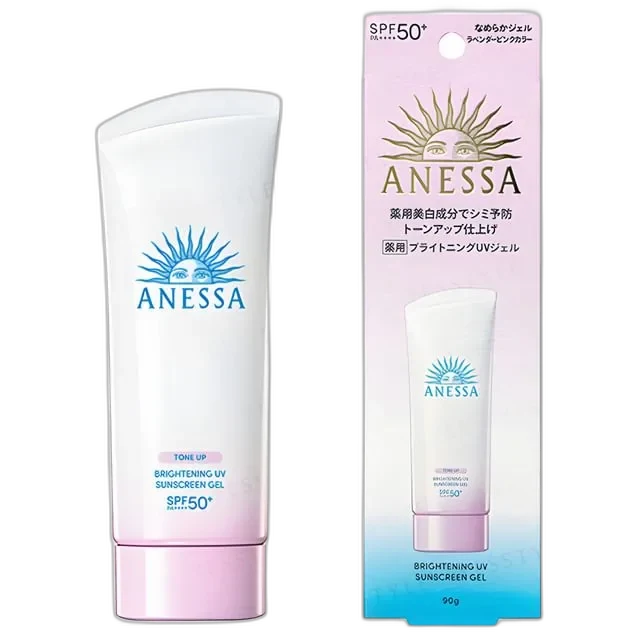
Brightening UV Sunscreen Gel SPF 50+
J-Beauty Brightening Shield
 Verified reviewer
Pros & cons.
- +Five-filter hybrid UV system delivers photostable SPF 50+ PA++++ broad-spectrum protection
- +Tranexamic acid quasi-drug designation means the brightening active meets Japanese pharmaceutical standards
- +Lavender-pink tint provides instant cosmetic brightening without heavy coverage
- +Lightweight gel texture sets quickly and works as a credible makeup primer
- +Dual brightening pathway with tranexamic acid and licorice root derivative
- +Water-resistant formula holds up during moderate sweating and humidity
- +Eco-conscious packaging with plant-based plastics and FSC-certified paper
- −Denatured alcohol high in the formula can dehydrate dry or compromised skin
- −Contains fragrance which limits suitability for sensitive skin types
- −Lavender-pink tint may leave a visible cast on very deep skin tones
- −Price per gram is higher than comparable Asian SPF 50 sunscreens
- −Can develop shine on oily skin after several hours of wear
The full review.
Tranexamic acid became a cornerstone of Japanese skincare pharmacology long before it trended on Western TikTok. Japanese pharmaceutical regulations classify certain skincare products as quasi-drugs, a designation requiring active ingredients at proven concentrations to earn specific claims. The Anessa Brightening UV Sunscreen Gel has quasi-drug status with tranexamic acid as its registered active; its brightening promise carries more regulatory rigor than an average “tone-correcting” sunscreen.
About Anessa
Anessa is Shiseido’s sun care sub-brand, established in 1992. It has held the number-one sunscreen sales position in Japan for over two decades.
Reality
The brand maintains this market dominance through continuous innovation, as Japanese consumers are famously exacting about sun protection. The Brightening variant meets a specific consumer demand: people who want daily SPF to actively work against hyperpigmentation rather than merely preventing new damage.
How it Works
The UV filter system is impressive. This hybrid formula uses five distinct filters: zinc oxide and titanium dioxide on the mineral side, plus ethylhexyl methoxycinnamate, diethylamino hydroxybenzoyl hexyl benzoate (DHHB), and bis-ethylhexyloxyphenol methoxyphenyl triazine (Tinosorb S) on the chemical side. Tinosorb S deserves mention. It is one of the most photostable broadband UV filters available, covering both UVA and UVB ranges without the degradation issues seen in older chemical filters like avobenzone. The inclusion of ethylhexyl triazone adds further UVB absorption. This formula is engineered for real-world durability.
How it Works (Continued)
The filter system is only half the story. Tranexamic acid inhibits plasminogen activator, which disrupts the signaling pathway that tells melanocytes to increase pigment production after UV exposure. Paired with dipotassium glycyrrhizate—a licorice root derivative with documented anti-inflammatory and melanogenesis-inhibiting properties—you get a dual-pathway approach to managing sun-induced pigmentation. The sunscreen does not just block UV; it manages your skin’s downstream response to rays that get through.
Texture
Anessa’s formulation expertise shows in the texture. The gel is tinted a pale lavender-pink that looks alarming in the tube but sheers out on application. It provides an immediate, subtle brightening effect through color-theory correction rather than foundation coverage. The consistency is lighter than expected for a product with this many filters; it spreads easily without dragging or pilling. A dimethicone and silicone base creates a smooth, near-primer-like canvas.
Common Complaints
The alcohol. Denatured alcohol is high in the ingredient list to help the gel set quickly, prevent tackiness, and spread the UV filters into an even, protective film. For normal and combination skin types, this works well, providing a fast-drying, lightweight finish under makeup. For dry or sensitive skin types, the formula is harder to recommend. The alcohol can exacerbate dehydration and may trigger irritation, especially if your barrier is compromised.
Scent
Fragrance is present as a light floral scent that dissipates quickly. For those who avoid fragrance, this is a disqualifier. Anessa offers fragrance-free and alcohol-lighter options elsewhere in the line for this reason.
Works for
The hydration complex offsets the alcohol: sodium acetylated hyaluronate (a skin-adhesive HA variant), soluble collagen, and glycerin form a moisturizing layer beneath the protective film. Camellia sinensis leaf extract adds antioxidant support. It is not a deeply hydrating formula, but it prevents the parched, papery feeling some high-SPF sunscreens cause.
Performance
Real-world performance is solid. The water-resistant claim holds up during moderate sweating and humidity, though you must reapply after two hours in direct sun. Under makeup, it functions as a credible primer; the slight luminosity is flattering without feeling greasy for the first several hours. By the five-hour mark, oilier skin types may notice shine, which is normal sunscreen behavior.
Price
At roughly $28 for 90 grams, this sits in the mid-to-upper range for Japanese sunscreens—more expensive than Biore or Skin Aqua, but less than buying a standalone tranexamic acid treatment and sunscreen separately. Because this product consolidates UV protection, brightening active treatment, and cosmetic tone correction, the value is reasonable. You are paying for specific multifunctionality.
Not ideal for
The limitation is reach. This is not a universal sunscreen. The alcohol, fragrance, and cosmetic tint narrow its audience. It is purpose-built for people with normal to combination skin who want a cosmetically elegant daily SPF with genuine active ingredients to target hyperpigmentation. For that audience, it delivers what it promises. For everyone else, Anessa has other options.
Ingredient analysis.
Full INCI list
Water (Aqua), Dimethicone, Ethylhexyl Methoxycinnamate, Alcohol, Zinc Oxide, Titanium Dioxide, Glycerin, Diisopropyl Sebacate, Tranexamic Acid, Diphenylsiloxy Phenyl Trimethicone, Diethylamino Hydroxybenzoyl Hexyl Benzoate, PEG-100 Hydrogenated Castor Oil, PEG-60 Hydrogenated Castor Oil, Silica, PPG-17, Hydrated Silica, Isostearic Acid, Bis-Ethylhexyloxyphenol Methoxyphenyl Triazine, Dimethylacrylamide/Sodium Acryloyldimethyltaurate Crosspolymer, Titanium Dioxide (CI 77891), Aluminum Hydroxide, Phenoxyethanol, Ethylhexyl Triazone, Dextrin Palmitate, Hydrogen Dimethicone, Mica, Sorbitan Sesquiisostearate, Beheneth-20, Succinoglycan, Cellulose Gum, Fragrance (Parfum), BHT, Tocopherol, Citric Acid, Sodium Metaphosphate, Trisodium EDTA, Dipotassium Glycyrrhizate, Hydroxypropyl Methylcellulose Stearoxy Ether, Sodium Citrate, Butylene Glycol, Talc, Sodium Metabisulfite, PEG/PPG-14/7 Dimethyl Ether, Red 33 (CI 17200), Camellia Sinensis Leaf Extract, Potentilla Erecta Root Extract, Blue 1 (CI 42090), Sodium Acetylated Hyaluronate, Polyquaternium-51, Soluble Collagen
Skin match.
The science.
The Science
The star active in this formula is tranexamic acid, a synthetic lysine derivative originally developed as an antifibrinolytic drug. Its dermatological applications have been studied extensively, particularly in the context of melasma treatment. A landmark 2012 study published in the British Journal of Dermatology demonstrated that topical tranexamic acid significantly reduced melanin index and erythema in melasma patients over 12 weeks, working by inhibiting UV-induced plasmin activity, which in turn reduces the release of arachidonic acid and prostaglandins that stimulate melanocyte activity.
The pairing with dipotassium glycyrrhizate is pharmacologically deliberate. This licorice-derived compound inhibits tyrosinase — the rate-limiting enzyme in melanin synthesis — through a pathway independent of tranexamic acid's plasmin inhibition. A 2019 review in the Journal of Cosmetic Dermatology confirmed that glycyrrhizin-derived compounds demonstrate both anti-inflammatory and depigmenting activity, making them effective adjuncts to primary brightening agents.
The UV filter architecture centers on bis-ethylhexyloxyphenol methoxyphenyl triazine (Tinosorb S), which functions as a broadband organic UV filter covering both UVA and UVB wavelengths. Research published in Photochemical and Photobiological Sciences has shown Tinosorb S to be among the most photostable organic UV filters, maintaining protective capacity without generating reactive oxygen species upon UV exposure — a problem that plagues older filters like avobenzone when used in isolation.
The hybrid approach of combining mineral filters (zinc oxide, titanium dioxide) with modern organic filters creates a complementary protection system. The mineral filters provide immediate, broad-spectrum physical blocking, while the organic filters fill spectral gaps and enhance the overall SPF without the aesthetic penalties (white cast, thick texture) that high-concentration mineral-only formulas typically carry.
References
- Topical tranexamic acid as a promising treatment for melasma — British Journal of Dermatology (2012)
- Glycyrrhizin and its derivatives in skin lightening — Journal of Cosmetic Dermatology (2019)
Dermatologist Perspective
Dermatologists frequently recommend combining sun protection with active brightening ingredients for patients managing hyperpigmentation, as UV exposure is the primary driver of melanin overproduction in conditions like melasma and post-inflammatory hyperpigmentation. Board-certified dermatologists note that tranexamic acid has gained significant clinical traction as a topical brightening agent, particularly in Asian dermatology practice where it has been studied for over a decade. The hybrid filter system in this product aligns with dermatological guidance favoring broad-spectrum protection using multiple complementary UV filters. However, dermatologists typically advise patients with rosacea, eczema, or compromised skin barriers to avoid formulas containing denatured alcohol and fragrance, as these can exacerbate inflammation and undermine the barrier repair that such conditions require.
Guidance
Where it fits in your routine.
Apply about two finger-lengths to the face and neck. Use this as the final morning step, after moisturizer and before makeup. The lavender-pink tint sheers out as you blend it with upward strokes. Let the formula set for 1-2 minutes before you apply foundation or powder. Reapply every 2 hours during prolonged sun exposure. Use an oil-based cleanser or micellar water at night, because the water-resistant film does not fully dissolve with standard face wash alone.
At about $28 for 90 grams, this sits in the mid-premium tier for Japanese sunscreens. The value comes from multifunctionality: one tube provides a high-SPF sunscreen, a tranexamic acid brightening treatment, and a cosmetic tone-up product. Buying a standalone tranexamic acid serum and a quality Japanese SPF 50 sunscreen separately costs more than this. This consolidation works for those targeting sun-induced hyperpigmentation. For daily sun protection without brightening, the Anessa line and other Japanese sunscreens cost less.
Normal to combination skin types want a daily sunscreen that fights hyperpigmentation and provides subtle cosmetic brightening. This suits users who value Japanese cosmetic elegance and want pharmaceutical-grade brightening actives in their sun protection step.
Dry, sensitive, or eczema-prone skin types will not like this. The denatured alcohol and fragrance make it a poor match for reactive or dehydrated complexions. Users wanting completely transparent, unscented sunscreens will find the tint and fragrance unnecessary.
Product details.
Lightweight gel has a lavender-pink tint and blends to a translucent brightened finish. The slightly watery consistency spreads easily and sets quickly.
Light floral fragrance. It is subtle but noticeable when applied. It fades within a few minutes.
90g plastic squeeze tube with flip-top cap. The 2024 edition uses eco-friendly packaging with plant-based plastics and an FSC-certified paper box.
The lavender-pink tint looks bold initially but sheers to a subtle brightening effect within 30 seconds. Alcohol creates a cooling sensation and helps the gel set fast. Dehydrated skin may feel mild tightness.
2-3 months with daily face and neck application
12 months
spring summer
The backstory.
Anessa began as Shiseido's answer to the extreme UV conditions in Japan, where sun protection is a cultural priority. The Brightening variant was developed to merge Anessa's renowned UV protection technology with the Japanese market's demand for tone-up cosmetic elegance, incorporating quasi-drug active tranexamic acid — a brightening ingredient deeply embedded in Japanese skincare pharmacology.
About Anessa
Established Brand (5–20 years)Anessa launched in 1992 as Shiseido's sun care line. It has been Japan's #1 selling sunscreen brand for over two decades. The brand uses Shiseido's research infrastructure and leads sales across 13 Asian markets.
Common myths.
The lavender-pink tint makes this sunscreen unsuitable for deeper skin tones.
The tint sheers out during application and works as a subtle tone-corrector rather than an opaque color. People with very deep skin tones should test a small area first, as any residual cast shows more clearly.
Hybrid sunscreens (mineral + chemical) provide less protection than pure mineral or pure chemical formulas.
Hybrid formulas use the strengths of both filter types: mineral photostability and chemical elegance. This allows the gel to reach SPF 50+ PA++++ with a lightweight, non-chalky texture.
FAQ.
Does the Anessa Brightening UV Sunscreen Gel leave a white cast?
No significant white cast. The lavender-pink tint sheers out to a subtle brightening effect that works as a light tone-up on most skin tones. The hybrid formula uses micronized zinc oxide alongside chemical filters to minimize any visible residue.
Is the Anessa Brightening UV Sunscreen Gel water resistant?
Yes, this gel is formulated with Anessa's water-resistant technology and holds up well against sweat and water. However, reapplication every 2 hours during prolonged sun exposure or after swimming is still recommended for optimal protection.
Can I use this sunscreen if I have sensitive skin?
This variant contains denatured alcohol and fragrance, which irritate sensitive skin. If you have reactive or easily irritated skin, Anessa's Moisture UV Sunscreen Mild Milk SPF 35 is a gentler alternative from the same line.
Does the tranexamic acid in this sunscreen actually help with dark spots?
Tranexamic acid is a well-studied brightening ingredient that inhibits melanin transfer. This formula uses Tranexamic acid and dipotassium glycyrrhizate to prevent new sun-induced pigmentation and calm inflammation. Daily use for 4-8 weeks helps create a more even complexion.
How does this compare to other Anessa sunscreens?
The Brightening variant includes tranexamic acid and lavender-pink tone-up pigments, which the Perfect UV Skincare Gel and Milk lines lack. It targets hyperpigmentation prevention and UV protection, rather than just sun defense.
What the community says.
"Lightweight gel texture absorbs quickly without white cast"
"Subtle lavender tone-up effect brightens skin instantly"
"Holds up well under makeup"
"Doesn't feel greasy despite high SPF"
"Contains alcohol which can feel drying on dry skin"
"Price is steep compared to other Asian sunscreens"
"Fragrance may irritate sensitive noses"
"Can look slightly shiny on oily skin by midday"
Featured in.
People also looked at.