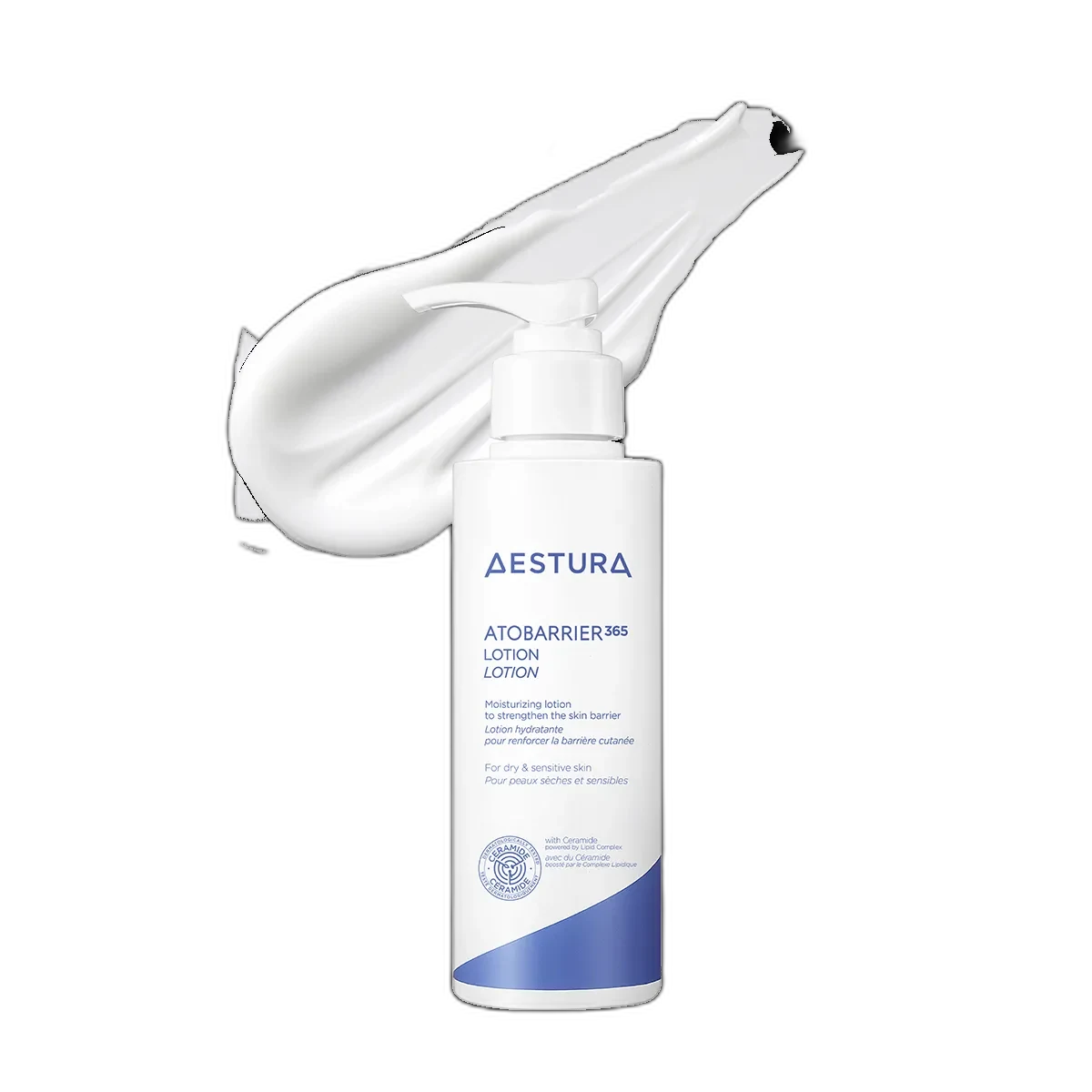
Atobarrier 365 Lotion
Barrier Repair for Oily Skin
 Verified reviewer
Pros & cons.
- +MLE lipid complex delivered in a genuinely lightweight base
- +Fragrance-free and gentle enough for reactive skin
- +Layers cleanly under sunscreen and makeup
- +Airless pump packaging is hygienic and travel-friendly
- +Works year-round for combination skin
- +Balances oily skin without stripping
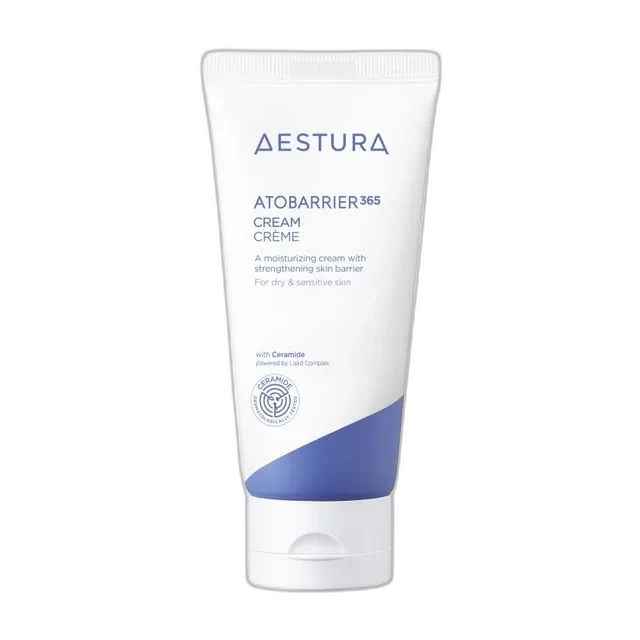
- +Pairs with the Atobarrier Cream for layered routines
- −Can feel insufficient as a sole moisturizer on very dry winter skin
- −Contains silicones which some users avoid
- −Not fungal-acne safe due to free fatty acid content
- −Packaging is functional rather than elegant
The full review.
A common skincare myth claims oily skin doesn’t need ceramides. Surface sebum differs from the intercellular lipids between your stratum corneum cells, and your barrier function is independent of t-zone shine. You can have oily skin and a damaged barrier simultaneously—over-exfoliating, over-cleansing, acne treatments, and benzoyl peroxide routines often cause this. Consequently, the group needing barrier repair most often faces a choice: use heavy ceramide creams that feel greasy by noon, or use structural-less gels that skip lipid support.
Aestura’s Atobarrier 365 Lotion fills this gap. It uses the same MLE lipid complex that makes the Atobarrier Cream a Korean pharmacy staple—ceramide NP, cholesterol, and three free fatty acids in an organized lamellar structure—but uses a lotion base for combination and oily skin. This is not a diluted Atobarrier Cream. It is a purpose-engineered alternative with a different emulsion structure and occlusive load for an underserved segment of the Korean dermatology market.
The texture is notable. It pours thin, like a lotion toner, and absorbs within thirty seconds. The finish is satin and soft, lacking the heavy slip of richer ceramide moisturizers. It disappears under sunscreen and does not pill under makeup. In climates like Seoul or Florida in August, it remains wearable at noon, a standard most “lightweight” barrier creams miss.
The INCI list shows the same precision. Caprylic/capric triglyceride and olive-derived emulsifiers create a light base. Dimethicone adds slight silicone slip without bulk. Ceramide NP, cholesterol, and the free fatty acid complex use hydrogenated lecithin, just like the cream. Panthenol, sodium hyaluronate, and hydroxyethyl urea provide humectant hydration. Madecassoside and Centella extract soothe the skin, supported by bisabolol and allantoin. It contains no fragrance, no drying alcohol, and uses a clean preservation system. It is a serious barrier product.
The lotion works best for three user types. First, combination skin wanting one product year-round. The Atobarrier Cream works well in winter but feels too rich for many in summer; the lotion serves as an all-year option, and users rotating between both across seasons report the smoothest barrier continuity. Second, oily, barrier-compromised skin—specifically users on retinoids or acne treatments whose skin feels tight and reactive despite being shiny. The lotion reduces reactivity without adding weight. Third, anyone needing a barrier moisturizer that disappears under makeup, which the Atobarrier Cream does not do.
The limitations are clear. On very dry skin during a dry winter, the lotion alone may feel insufficient—not because the lipid complex is weak, but because the base lacks enough occlusion for low-humidity days. Layering it under the Atobarrier Cream or a facial oil fixes this, and it works well in that role. Fungal-acne-prone users should avoid it; the free fatty acid complex makes it a Malassezia risk. While the pump packaging improves on the cream’s jar, the bottle is utilitarian and lacks high-end aesthetics.
For combination and oily skin needing barrier repair without occlusive weight, this lotion is a top K-beauty pick. It provides hospital-grade lipid architecture in a format suitable for warm weather and foundation. It answers a problem most moisturizer lines ignore.
Ingredient analysis.
Full INCI list · pH 5.5
Water, Glycerin, Caprylic/Capric Triglyceride, Methylpropanediol, Butylene Glycol, 1,2-Hexanediol, Cetearyl Olivate, Sorbitan Olivate, Dimethicone, Glyceryl Stearate, Cetearyl Alcohol, Panthenol, Ceramide NP, Cholesterol, Phytosphingosine, Stearic Acid, Oleic Acid, Linoleic Acid, Palmitic Acid, Hydrogenated Lecithin, Madecassoside, Centella Asiatica Extract, Sodium Hyaluronate, Hydroxyethyl Urea, Allantoin, Bisabolol, Tocopherol, Xanthan Gum, Carbomer, Arginine, Ethylhexylglycerin, Disodium EDTA
Skin match.
The science.
The Science
The case for a lightweight ceramide lotion uses the same physiologic lipid model as the Atobarrier line. Research by Peter Elias and colleagues over the last 30 years shows barrier repair requires ceramides, cholesterol, and free fatty acids in a specific ratio. The lipid delivery base matters less for structural repair than for sensory feel and tolerability. A light lotion with the right lipid combination performs as much structural barrier work as a thick cream with the same lipid complex, provided the lipids are organized and the emulsion does not strip them. Aestura's MLE technology pre-assembles lipids into a lamellar pattern. Aestura's technical literature and several Korean academic papers suggest this improves incorporation into the existing stratum corneum lipid matrix. Beyond lipids, the formula uses studied ingredients: panthenol for humectant hydration and barrier enzyme support, madecassoside for anti-inflammatory effects, and sodium hyaluronate and hydroxyethyl urea for water binding. Niacinamide is in the essence but not this lotion; niacinamide drives internal ceramide biosynthesis, while this lotion focuses on topical lipid delivery for oily skin. This combination of structural lipid delivery and supporting actives makes this lotion a credible barrier-repair moisturizer, not just a hydrating base.
Dermatologist Perspective
Dermatologists see oily or combination skin patients who incorrectly believe they do not need barrier repair. Board-certified dermatologists note that oily skin types suffer transepidermal water loss and barrier damage as much as dry types, especially when using acne treatments, retinoids, or aggressive cleansers. Dermatologists suggest Atobarrier 365 Lotion to these patients because it delivers a structured lipid complex in a format they will use. It also works as a summer alternative for patients using a richer ceramide cream in winter, or as a layering moisturizer under a heavier cream during acute eczema flares. The fragrance-free, well-tolerated profile makes it a safe option for sensitive skin patients and during pregnancy.
Where it fits in your routine.
Apply one to two pumps after cleansing, toning, and serums. Press into damp skin. Wait thirty seconds for absorption before applying morning sunscreen or makeup, or evening layers. For very dry winter skin, use the Atobarrier Cream or press a few drops of facial oil on top. Use twice daily, around the eyes, and on the neck and chest for dry or reactive skin. Use on compromised patches during eczema flares as a moisturizer alongside prescribed topicals.
This lotion offers excellent value at Korean retail. You get a clinically oriented lipid complex at pharmacy-tier pricing in a 150ml size that lasts 3-4 months. At nearly $30, international retail remains a fair price compared to Dr. Jart's Ceramidin Liquid or Bioderma Atoderm, and the per-ml value beats both. Amorepacific's Korean channels sometimes sell larger refills and bundled sets for extra savings.
Combination and oily users need barrier repair without occlusive weight. It works for anyone on retinoids or acne treatments with tight, reactive skin. It is a lightweight, all-year moisturizer that does not pill under sunscreen or makeup. It also works well as a summer companion to the Atobarrier Cream.
Very dry skin in dry climates may find it insufficient alone, but it works well as a layering step. Fungal-acne-prone users should skip it entirely. Those avoiding silicones or wanting a thicker, more sensory moisturizer should look elsewhere.
Product details.
Light, fluid lotion that absorbs quickly with a smooth satin finish
Unscented
Pump bottle with airless dispensing
Absorbs almost immediately with a soft satin finish and no tackiness. It causes no purging. Oily users see balanced oil production within the first week.
3-4 months with twice-daily facial use
12 months
All Year
The backstory.
The lotion was added to the Atobarrier 365 range in 2020 to serve the significant share of Korean pharmacy customers with oily or combination skin who still suffered from barrier issues. Rich ceramide creams had been the default solution, and the lotion was designed as a purpose-built alternative rather than a watered-down version of the cream.
About Aestura
Established Brand (5–20 years)Aestura launched in 2012 as an Amorepacific dermocosmetic affiliate, rooted in Pacific Pharmaceuticals (1982). Korean hospitals and pharmacies sell the brand. It is widely recommended for atopic-prone and barrier-compromised skin.
Common myths.
Oily skin doesn't need ceramides.
Oily skin can be barrier-compromised — surface sebum does not replace missing intercellular lipids. This lotion exists because oily users need ceramides as much as dry users, but in a lighter base.
FAQ.
How is this different from the Atobarrier 365 Cream?
Same MLE ceramide-cholesterol-fatty acid lipid complex, lighter base. The cream is a rich occlusive for dry skin; the lotion is a fluid moisturizer designed for combination and oily users or for the warmer months when the cream feels too heavy.
Can I use this if I have dry skin?
Many users layer it under the Atobarrier Cream on especially dry days. On its own, it lacks enough moisture for very dry skin in winter; use the cream as your single product then.
Is it good under makeup?
Yes. The lightweight, fast-absorbing base sets to a smooth satin finish. Primers and foundations layer onto it cleanly without pilling.
Is it fungal-acne safe?
No. It contains oleic, linoleic, and other free fatty acids that can feed Malassezia in fungal-acne-prone users.
Is the pump bottle hygienic?
Yes — the airless pump design prevents contamination and ensures predictable dosing. This design also lets you use the lotion until it is nearly empty without waste.
Can I use it around my eyes?
Yes. The lotion is fragrance-free and gentle enough for the under-eye area. For very dry eye skin, press a small amount in with ring fingers after your regular eye cream or on its own.
What the community says.
"Hydrating without weight"
"Doesn't pill under makeup"
"Calms redness"
"Works as an all-year face lotion"
"Good pump bottle"
"Can feel insufficient on very dry winter skin"
"Contains oleic acid"
"Silicones in the base"