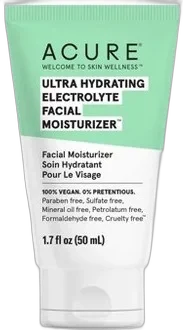
Ultra Hydrating Electrolyte Facial Moisturizer
Affordable Hydration Workhorse
 Verified reviewer
Pros & cons.
- +Layered humectant system with glycerin plus mineral electrolytes
- +Skin-identical squalane gives elegant slip without heaviness
- +Full essential fatty acid spread from multiple plant oils
- +Fragrance-free and alcohol-free for sensitive skin
- +Vegan, cruelty-free, and affordably priced
- +Absorbs quickly with a soft dewy finish suitable under makeup
- −Too light as a standalone winter cream in harsh climates
- −Not fungal-acne safe due to fatty-acid plant oils
- −Jar packaging exposes formula to air and contamination
- −'Electrolyte' marketing oversells the mechanism's novelty
- −Can feel slightly emollient on very oily skin in summer
The full review.
In the late 2010s, wellness brands all pivoted to electrolytes. Coconut water replaced Gatorade in bodegas, hydration powders filled hiking packs, and soon, brands applied this logic to face creams. Acure led this trend with this moisturizer. The product works better than its marketing suggests because its wellness-themed name hides a functional, layered humectant formula.
The electrolyte claim relies on sodium PCA, a well-characterized humectant and a component of natural moisturizing factor that helps the stratum corneum hold water. Acure also includes magnesium chloride, calcium chloride, and potassium chloride—the mineral salts that provide the product name. These salts do not rehydrate you like a sports drink; instead, they support skin osmosis. They work with glycerin—the second ingredient on the INCI list—to build a multi-layered humectant system. This approach is smarter than most moisturizers at this price point.
The emollient profile is also intentional. Squalane is the star; this skin-identical lipid provides smooth slip and works for most skin types without the oxidation risks of squalene. Acure adds sunflower, safflower, argan, and evening primrose oils to provide a range of essential fatty acids. The formula also includes isolated linoleic acid to target linoleic deficiency common in problem skin. This level of specificity is unusual for a $17 moisturizer.
The cream feels lighter than its ingredients suggest. It has a heavy lotion texture, spreads thin, and absorbs within about a minute into a soft, dewy finish. The scent is a faint herbal note from plant extracts with no added fragrance. It does not cause tingling, warming, or tackiness. After one week, skin feels plumper and less tight in the morning. By two weeks, the barrier benefits appear: less flaking after retinol use, smoother cheek texture, and a more settled skin surface.
This product has limits. It is a lightweight daily hydrator, not a rich winter occlusive; use a heavier layer if winter temperatures are in the single digits. It is not fungal-acne safe, as the fatty-acid-rich plant oils can feed Malassezia, so those with seborrheic dermatitis should avoid it. The jar packaging is a drawback; a pump would improve hygiene and limit air exposure. However, since the formula lacks unstable actives like vitamin C or retinol, this impact is small. Finally, the electrolyte marketing is clever, but it won’t fix systemic dehydration. Moisturizers work on the stratum corneum, not the whole body.
The value is high. At approximately $17 for 1.7 ounces, you get a fragrance-free, vegan, cruelty-free moisturizer containing squalane, an electrolyte humectant blend, linoleic acid, and a plant-oil emollient stack. Prestige brands sell comparable formulas for $40-60 without better hydration. Acure would make an even easier recommendation with a pump bottle and less wellness-era branding, but the formula earns its place in a daily routine.
Who’s this for?
Dry, normal, and dehydrated combination skin types seeking hydration without fragrance or high costs. The fragrance-free and alcohol-free formula should suit sensitive skin. Oily skin types may find it too emollient for AM use in warm weather, and fungal-acne-prone users should skip it. For others, this is a thoughtfully composed, affordable moisturizer in the clean-beauty aisle.
Ingredient analysis.
Full INCI list
Aqua, Glycerin, Caprylic/Capric Triglyceride, Squalane, Cetearyl Alcohol, Glyceryl Stearate Citrate, Helianthus Annuus (Sunflower) Seed Oil, Carthamus Tinctorius (Safflower) Seed Oil, Oenothera Biennis (Evening Primrose) Oil, Argania Spinosa (Argan) Kernel Oil, Aloe Barbadensis Leaf Juice, Sodium PCA, Sodium Lactate, Magnesium Chloride, Calcium Chloride, Potassium Chloride, Linoleic Acid, Tocopherol, Calendula Officinalis Flower Extract, Chamomilla Recutita (Matricaria) Flower Extract, Xanthan Gum, Glyceryl Caprylate, Potassium Sorbate, Citric Acid
Skin match.
The science.
The Science
Decades of research on the stratum corneum's natural moisturizing factor (NMF) support this hydration mechanism. Sodium PCA, sodium lactate, and the mineral chloride salts in this formula mirror NMF components. This means the product supplements the skin's own water-holding apparatus instead of introducing a foreign humectant. Extensive evidence shows Glycerin improves stratum corneum water content at concentrations lower than what's in this formula. Squalane is a lipid the sebaceous glands already produce; formulation studies document its role as an emollient and barrier-compatible oil. The essential fatty acid aspect uses newer research: studies show acne-prone sebum lacks linoleic acid compared to normal sebum, and topical linoleic application shows preliminary evidence for supporting barrier function in these users. This formula does not treat dehydration systemically. The electrolyte marketing uses nutrition vocabulary for topical humectants, which is a clever analogy, not a mechanism. The actual mechanism is a multi-humectant approach plus essential-lipid replenishment, which the ingredient science supports without the marketing hook.
Dermatologist Perspective
Dermatologists usually prefer moisturizers that combine multiple humectants with barrier-repair lipids over single-ingredient hydrators, and this formula uses that approach. Board-certified dermatologists note that skin-identical ingredients like sodium PCA and squalane tolerate well across skin types and help patients with compromised barrier function. The fragrance-free and alcohol-free profile makes it a good choice for patients with sensitive or reactive skin, but the fatty-acid-rich plant oils make it less suitable for patients with seborrheic dermatitis or fungal acne. Dermatologists often recommend this layered-humectant moisturizer category as a daily maintenance product alongside more targeted treatments.
Where it fits in your routine.
Apply a pea-to-dime-sized amount to clean, slightly damp skin morning and night. Smooth it over your face and neck after serums or essences and before sunscreen in the AM. For very dry skin in winter, layer a heavier occlusive on top at night. Use clean hands or a small spatula to reduce contamination risk from the jar packaging, and use the product within 12 months of opening to keep ingredients fresh.
At about $17 for 1.7 ounces, this is solid value in the clean-beauty category. You're getting a multi-humectant system, squalane, isolated linoleic acid, and a thoughtful plant-oil emollient stack at a price that undercuts most prestige hydrators by a wide margin. The closest comparable formulations from brands like Drunk Elephant or Indie Lee run two to three times the price without delivering materially better hydration. Given Acure's broad distribution at Target and Whole Foods, you can usually find it without shipping costs, which helps the real-world math. For anyone wanting a fragrance-free vegan hydrator without spending $40+, this is one of the better-value picks on the shelf.
Dry, normal, and dehydrated combination skin types want a fragrance-free, vegan daily hydrator under $20. The formula works well for rebuilding a compromised barrier after retinoid or exfoliant use without adding extra actives.
Oily skin in hot climates may find this slightly emollient for AM use. Avoid the fatty-acid-rich plant oil stack if you have fungal acne or seborrheic dermatitis. People in severe winter climates need a heavier overnight occlusive.
Product details.
Barely perceptible, faintly herbal from the plant extracts, no added fragrance
1. 7 fl oz glass jar with screw-top lid
Skin feels quenched on first application, leaving a soft dewy finish without stickiness. It has no tingling or warming sensation, only clean hydration. Full barrier benefits build over 10-14 days of consistent use.
2-3 months with twice-daily full-face application
12 months
All Year
The backstory.
Acure launched the Ultra Hydrating Electrolyte range to serve customers who wanted a dedicated dry-skin option from a vegan, affordable brand. The electrolyte hook came from the sports-hydration trend in consumer wellness — a framing that connected electrolyte drinks with skin hydration — and was aimed at giving the brand a differentiated hydration story without relying on HA.
About Acure
Established Brand (5–20 years)Acure has occupied the affordable vegan skincare aisle since 2009, selling through Target, Whole Foods, and Amazon. Its formulas use botanical ingredients and rely on moderate consumer review volume instead of proprietary clinical research.
Common myths.
Electrolytes in skincare work like electrolytes in sports drinks.
Topical mineral salts like sodium PCA and magnesium chloride support natural moisturizing factor and osmotic balance in the stratum corneum. They do not rehydrate you like an oral electrolyte drink rehydrates your body. The marketing parallel is clever, not literal.
Fragrance-free moisturizers are always boring to use.
This one proves otherwise. The squalane-forward texture feels cushiony and leaves an immediate dewy finish. The formula has sensory appeal without added perfume.
FAQ.
What are 'electrolytes' doing in a moisturizer?
Mineral salts like sodium PCA, magnesium chloride, and potassium chloride support the skin's natural moisturizing factor and osmotic balance. They work with glycerin, the formula's primary humectant, to help the stratum corneum hold water.
Is it heavy enough for very dry winter skin?
Most dry-skin users will find it sufficient, but harsh winter climates require layering a thicker occlusive on top at night. The squalane and plant oils provide emollient support, but this isn't a petrolatum-level barrier cream.
Is it fungal-acne safe?
No. The sunflower, safflower, evening primrose, and argan oils feed Malassezia. Choose a different moisturizer if you have fungal acne or seborrheic dermatitis.
Can I use it on body too?
You can, but at 1.7 oz and this price, using it on the face is more cost-effective. Acure makes larger-format body lotions better for use below the neck.
Will it work under makeup?
Yes. The finish is dewy but not slippery; most liquid and powder foundations layer well over it. Let the moisturizer settle for 60-90 seconds before applying base.
Does the jar packaging degrade the formula?
Jar packaging can degrade light- and air-sensitive antioxidants over time. This is a minor concern here because the formula does not use unstable vitamin C or retinoids. Use within 12 months of opening to be safe.
Community
What the community says.
"deeply hydrating"
"lightweight for dry skin"
"fragrance-free"
"too light for very dry skin in winter"
"price creeping up"
"jar packaging"