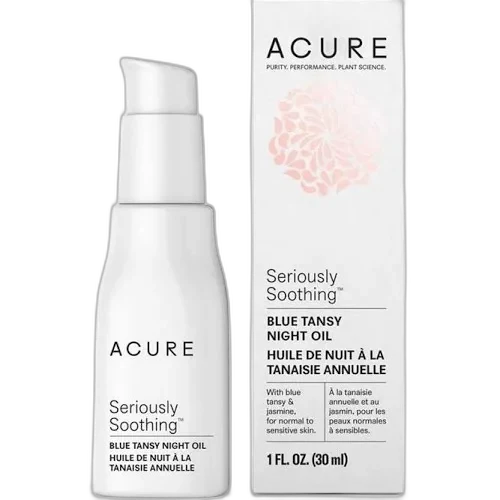
Seriously Soothing Blue Tansy Night Oil
Aromatic Comfort Oil
 Verified reviewer
Pros & cons.
- +Real blue tansy at a budget price compared to prestige versions
- +Lightweight caprylic/capric base absorbs without heaviness
- +Pleasant aromatic ritual for face oil enthusiasts
- +Vitamin E adds antioxidant support
- +Beautiful blue color and herbal scent for sensory experience
- +EWG Verified, vegan, and cruelty-free
- −Essential oils contradict the soothing-for-sensitive-skin marketing
- −Rose, chamomile, and yarrow are common cosmetic sensitizers
- −Sweet almond and castor oils may be comedogenic for acne-prone skin
- −Strong herbal scent is divisive
- −Not pregnancy-safe due to multiple essential oils
- −Not fungal-acne-safe
The full review.
The essential-oil-driven facial oil category contains a marketing contradiction, and Acure’s Seriously Soothing Blue Tansy Night Oil is a textbook case. The product name and marketing claim it is gentle, calming, and barrier-supportive, implying it suits sensitive skin. The formulation includes blue tansy oil, rose flower oil, chamomile flower oil, yarrow oil, jasmine extract, and rosemary leaf extract. Blue tansy, rose, and chamomile appear on standard dermatology lists of common cosmetic sensitizers. Their scent compounds—linalool, limonene, and citronellol—are EU-regulated allergens that require disclosure in cosmetics.
This is a tension worth naming. Essential oils soothe skin that tolerates them; the natural anti-inflammatory compounds in blue tansy (chamazulene) and chamomile (bisabolol) are real. However, “soothing” describes two different things: soothing-because-anti-inflammatory and soothing-because-non-irritating. This oil fits the first definition but implies the second. The marketing misleads people with truly reactive skin, perioral dermatitis, rosacea, or essential oil sensitivities. For dry, normal, or moderately resilient skin that enjoys aromatic botanical oils, the formula works as promised.
The ingredients are decent. The base is caprylic/capric triglyceride, a lightweight coconut-derived fractionated oil that absorbs cleanly without the heavy occlusive feel of pure coconut oil and has a lower comedogenic profile. Sweet almond oil and jojoba oil are the main carrier oils, while castor oil and argan oil add to the thick emollient layer. Jojoba mimics skin sebum chemistry, so it absorbs without sitting on the surface. Tocopherol (vitamin E) provides antioxidant support and stabilizes the oils against oxidation.
Blue tansy sits relatively low on the INCI, suggesting a small but meaningful presence rather than the high concentration the marketing implies. This is typical; blue tansy essential oil is expensive, so even prestige brands use it sparingly. The chamazulene molecule provides the blue color in the bottle. It does not transfer to the skin during application.
The oil feels lightweight despite the thick ingredient deck. The caprylic/capric triglyceride base ensures fast absorption; it sinks in without a slick film, leaving skin comforted rather than coated. The herbal scent is distinctive: chamomile-forward with a sweet rose note and the green-aromatic character of blue tansy. Users either love it or find it overwhelming. It is an opinionated scent in the budget facial oil category; sniff it before buying.
For dry or dehydrated skin in winter or dry climates, this oil works as a nighttime seal. Layer it over moisturizer to lock in hydration, or use it between cleansing and moisturizing for parched skin. After 1-2 weeks of nightly use, dryness should improve and skin should feel more comfortable upon waking. The carrier oils do the work; the essential oils provide aroma and soothing color but do not drive the improvement in dryness.
This oil fails the audience the marketing targets. For sensitive skin, the essential oils will cause reactions in many users. For acne-prone skin, sweet almond and castor oils have moderate comedogenic potential. For pregnant users, multiple essential oils are on the not-recommended list, including blue tansy, rose, and rosemary. For fungal acne, the fatty acid profile of these oils can feed Malassezia. Despite the soothing branding, the ideal user is someone with normal-to-dry skin without active sensitivities or breakouts—not the population implied by “seriously soothing.”
At $20 for one ounce, the price is fair. Prestige blue tansy oils cost $50-$200 for the same volume. The Acure version does not compete with luxury brands on concentration or sourcing, but it provides a blue tansy product at an accessible price. This offers value to users who want the ritual and aroma of a botanical facial oil without the prestige markup.
This product is a thoughtful budget alternative to luxury blue tansy oils. As a soothing essential, it overpromises. Buy it as a pleasant aromatic carrier oil blend with blue tansy as a feature ingredient. It suits dry skin in dry seasons but is the wrong choice if your skin reacts to fragrance or essential oils. Read the marketing skeptically, patch test, and the math works.
Ingredient analysis.
Full INCI list
Caprylic/Capric Triglyceride, Prunus Amygdalus Dulcis (Sweet Almond) Oil, Simmondsia Chinensis (Jojoba) Seed Oil, Ricinus Communis (Castor) Seed Oil, Argania Spinosa (Argan) Oil, Brassica Oleracea (Kale) Leaf Extract, Rosmarinus Officinalis (Rosemary) Leaf Extract, Tocopherol (Vitamin E), Rosa Damascena (Rose) Flower Oil, Vitis Vinifera (Grape) Seed Oil, Aleurites Moluccanus (Kukui Nut) Seed Oil, Tanacetum Annuum (Blue Tansy) Flower Oil, Achillea Millefolium (Yarrow) Oil, Chamomilla Recutita (Matricaria) Flower Oil, Jasminum Grandiflorum (Jasmine) Extract
Skin match.
The science.
The Science
Blue tansy (Tanacetum annuum) essential oil contains chamazulene, a sesquiterpene compound that shows anti-inflammatory activity in laboratory studies. In vitro research shows chamazulene inhibits certain inflammatory pathways, which explains why blue tansy products claim to soothe skin. However, topical application of a typical blue tansy facial oil delivers a small concentration of chamazulene, and clinical evidence for topical anti-inflammatory effects in humans is more limited than marketing suggests.
The carrier oils in this formulation have stronger, more consistent evidence for skin barrier support. Caprylic/capric triglyceride is a fractionated coconut-derived ester used in cosmetics because it is light, low-irritation, and less comedogenic than whole coconut oil. Jojoba oil is one of the most studied facial oils; research shows it integrates with sebum chemistry and supports barrier function without heavy occlusion. Argan oil has high levels of vitamin E and unsaturated fatty acids and shows documented benefits for hydration and skin comfort.
The essential oil components — rose, chamomile, yarrow, jasmine, rosemary — are well-documented cosmetic sensitizers in dermatology databases. EU cosmetic regulations require disclosure of the compounds responsible for their scents (linalool, limonene, citronellol, geraniol) because they trigger contact dermatitis in sensitized individuals. Reaction frequency varies by individual and concentration, but these ingredients are not categorically gentle — patch test before use on reactive skin.
Dermatologist Perspective
Dermatologists generally view facial oils as supportive emollient products that help dry or barrier-compromised skin, but they consistently caution patients about essential oil content. Board-certified dermatologists note that essential oils are common causes of cosmetic contact dermatitis, and products marketed as soothing or gentle can be the most irritating for truly sensitive skin. For patients with rosacea, perioral dermatitis, eczema, or fragrance sensitivities, dermatologists typically recommend essential-oil-free facial oils with simple carrier bases like squalane or jojoba. For dry skin without active reactivity, a blend like this one works as an enjoyable supplementary product if patch testing confirms tolerance.
Where it fits in your routine.
Apply 3-5 drops to clean skin after moisturizer as the final nighttime step. Warm the drops in your palms and press them into the face, neck, and décolleté. Avoid the immediate eye area. Use as needed for dryness or barrier discomfort. Patch test on the inner arm for 48 hours before first full-face use to check for essential oil reactions. Store the bottle upright and away from direct sunlight. Stop use if redness, stinging, or irritation occurs.
At about $20 per ounce, this oil is priced fairly for a budget blue tansy facial oil. Comparable prestige products cost $50-$200 for the same volume. The Acure version lacks luxury concentration or sourcing, but provides a meaningful blue tansy presence at an accessible price. The bottle lasts 2-3 months with nightly use. For users wanting the blue tansy experience without prestige prices, the value is real. For users seeking a generic soothing facial oil, simpler essential-oil-free options soothe more for less money.
Normal to dry skin types want an aromatic, budget blue tansy facial oil. Face oil enthusiasts want blue tansy without prestige prices. People in dry climates or with seasonal winter dryness use it. Users enjoy strongly herbal-scented skincare rituals.
Sensitive, rosacea-prone, or fragrance-reactive skin (despite the soothing marketing). Acne-prone or fungal-acne-prone users. Pregnant or nursing users. Anyone who finds essential oil scents overwhelming.
Product details.
Lightweight blue-tinted oil that absorbs cleanly without heavy residue
Essential oils provide a distinctive blue tansy and chamomile aromatic note.
Glass bottle uses a dropper applicator; opaque packaging protects the oils from light
Skin feels soft and lightly oiled upon application and has a noticeable herbal scent. The blue color is distinctive but does not transfer to the skin. Essential oils cause redness or tingling in some sensitive users — stop use if this happens.
About 2-3 months with nightly use
12 months
fall winter
The backstory.
The Seriously Soothing line launched in 2018 as Acure's calming-and-comfort range, built around blue tansy, which had become a hot ingredient in the natural beauty space following May Lindstrom and other luxury brands using it. Acure's version brought the ingredient into the mass-market price range, becoming one of the most accessible blue tansy face oils on shelves. The line's marketing positions it for sensitive skin, though the essential-oil-heavy formulation is technically a contradiction.
About Acure
Established Brand (5–20 years)Acure launched in 2010 as a budget clean beauty brand at Target, Whole Foods, and Ulta. The Seriously Soothing line targets sensitive and reactive skin and uses blue tansy, a natural ingredient with established but modest soothing evidence.
FAQ.
Is this oil really good for sensitive skin?
Sensitivity depends on your definition. The carrier oils are gentle, but the formula contains rose, chamomile, blue tansy, and yarrow essential oils, which are known cosmetic sensitizers. Reactive or rosacea-prone skin may react despite the soothing marketing. Patch test on the inner arm for 48 hours before applying to the full face.
What does the blue tansy in this oil actually do?
Blue tansy contains chamazulene, a compound with documented anti-inflammatory activity in lab studies. In this oil, it provides a small soothing signal alongside the chamomile and yarrow. The chamazulene molecule creates the blue color, which is the ingredient's most visible signature.
Can I use this oil on acne-prone skin?
This is likely not the best choice. The formula uses sweet almond oil and castor oil, which are moderately comedogenic for acne-prone users. Essential oils also irritate active breakouts. Acne-prone skin needs a non-comedogenic facial oil with squalane or jojoba as the primary base.
Is this oil pregnancy-safe?
No. This blend contains several essential oils (blue tansy, rose, yarrow, rosemary) that are generally not recommended during pregnancy. Use an essential-oil-free facial oil instead.
How does this compare to luxury blue tansy oils?
Luxury blue tansy oils (May Lindstrom The Blue Cocoon, etc.) use higher concentrations of the essential oil and expensive carrier oils, costing three to five times more. The Acure version offers a blue tansy oil experience at a budget price, but the formulation is a botanical carrier oil blend with blue tansy as a feature ingredient rather than a high-concentration treatment.
What the community says.
"Beautiful blue color and herbal scent"
"Non-greasy absorption"
"Helps with winter dryness"
"Affordable blue tansy oil compared to prestige versions"
"Essential oils caused reactions for some sensitive users"
"Strong herbal scent isn't for everyone"
"Not actually low-irritant despite the soothing marketing"
People also looked at.