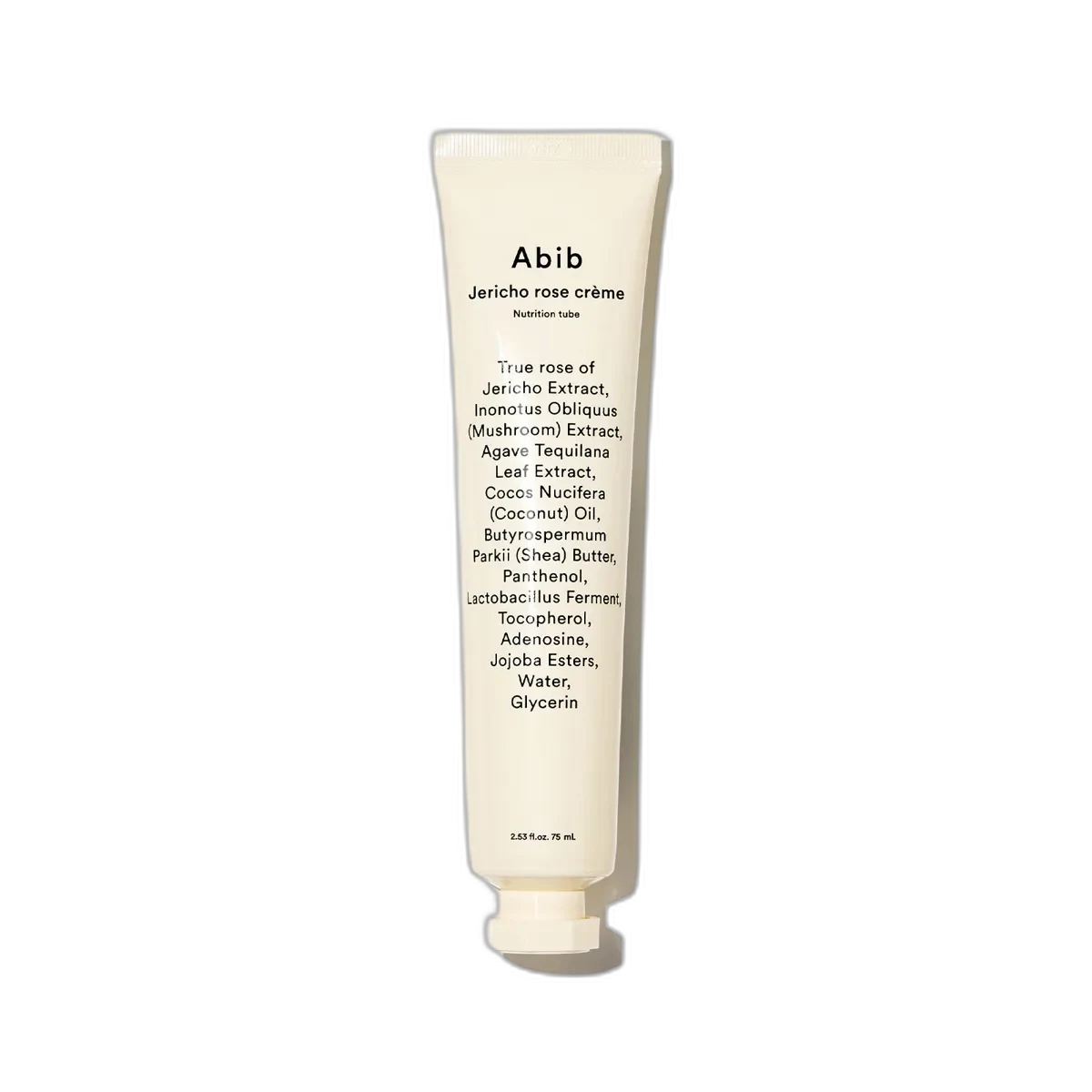
Jericho Rose Cream Nutrition Tube
K-Beauty Barrier Cream for Dehydrated Skin
 Verified reviewer
Pros & cons.
- +Three-component physiologic lipid blend (ceramide NP, cholesterol, phytosphingosine)
- +Tri-humectant hydration system delivers cushioned plumping
- +Niacinamide content meaningfully supports barrier and tone over time
- +Squalane and shea butter give comforting body without feeling heavy
- +Fragrance-free and well-tolerated by sensitive skin
- +Layers cleanly under sunscreen and makeup
- +One of the more thoughtfully formulated K-beauty barrier creams under thirty dollars
- −Too rich for oily and acne-prone skin types
- −Shea butter content makes it less suitable for fungal-acne-sensitive users
- −Tube design can squeeze unevenly toward the end of the bottle
- −Lipid blend is missing free fatty acids for a fully complete physiologic profile
The full review.
Anastatica hierochuntica is a small, woody desert plant from the Middle East and the Sahara that evolved to specialize in dehydration. When water disappears, the plant curls into a tight, dry, brown ball that looks dead. Wind moves it across the desert for months or years. When water returns via rain or storms, the plant unfurls, turns green, releases seeds, and revives within hours. Romans called it Rosa hierochuntina, the rose of Jericho. Christian folklore calls it the resurrection plant. Botanists call it a poikilohydric organism, a technical term for an organism that survives losing nearly all its water. It is a botanical metaphor for hydration skincare. Abib uses this symbol for its K-beauty range. The Jericho Rose Cream Nutrition Tube is the daily moisturizer at the center of the line. It applies the brand’s formulation expertise—proven in the Heartleaf range—to K-beauty hydration and barrier repair. The formula’s lipid blend is its first strength. K-beauty creams at this price usually include one or two ceramides and claim to be barrier creams. Abib combines ceramide NP with cholesterol and phytosphingosine. Phytosphingosine is a sphingoid base that acts as both a ceramide precursor and a mild antimicrobial. Together with ceramide NP and cholesterol—two of the three core lipids the stratum corneum needs for barrier function—these components provide a more complete physiologic lipid profile than typical creams in this tier. The formula lacks free fatty acids for a fully complete blend, but these three components cover more barrier real estate than a single-ceramide cream. Abib adds squalane—a non-comedogenic emollient that mimics natural sebum—and shea butter for fatty-acid content and a cushioned finish. These emollients provide “nutrition” without pore-clogging heaviness. The hydration uses the brand’s tri-humectant system: polyglutamic acid (which holds more water than HA by weight), multi-weight hyaluronic acid (sodium hyaluronate plus hydrolyzed HA), and beta-glucan (an oat-derived polysaccharide humectant with calming properties). It also contains high levels of glycerin and trehalose for desiccation resistance. This humectant stack is deep for a face cream at any price, which makes the cream feel cushioned without using heavy waxes or petrolatum. Niacinamide is in the upper third of the INCI for barrier and tone. Madecassoside and centella extract add calming properties from the Heartleaf range. Jericho Rose extract is the lead botanical at the top of the list. It provides polysaccharide humectancy and antioxidant defense, but it is not the main driver. The cream works because of the ingredients behind the Jericho Rose extract. The texture feels thick on application—cushioned and plumping—then absorbs into a satin finish within two minutes. It does not pill under sunscreen, layers cleanly with foundation, and lacks the sticky residue of some humectant-heavy creams. On chronically dehydrated skin, the cushioning is the primary benefit. Within a week, dehydration lines and rough texture from barrier compromise look softer. After 6-8 weeks of consistent twice-daily use, the niacinamide and ceramide work results in more resilient, less reactive skin. Limitations are few. This is not for oily or acne-prone skin; the shea butter and emollient base suit drier types better, and combination skin may find it too heavy in summer. The tube design squeezes unevenly at the end, wasting some product. Like most cream moisturizers, it is less effective during extreme winter dryness than an occlusive-heavy balm. At around twenty-six dollars for 75ml, it is competitively priced and one of the better-formulated K-beauty barrier creams in its tier.
Ingredient analysis.
Full INCI list
Anastatica Hierochuntica (Jericho Rose) Extract, Water, Glycerin, Squalane, Caprylic/Capric Triglyceride, Butylene Glycol, Cetearyl Alcohol, 1,2-Hexanediol, Niacinamide, Glyceryl Stearate, Cetearyl Olivate, Sorbitan Olivate, Panthenol, Allantoin, Ceramide NP, Cholesterol, Phytosphingosine, Sodium Hyaluronate, Hydrolyzed Hyaluronic Acid, Polyglutamic Acid, Beta-Glucan, Trehalose, Madecassoside, Centella Asiatica Extract, Bisabolol, Tocopherol, Shea Butter, Caprylyl Glycol, Carbomer, Tromethamine, Disodium EDTA, Xanthan Gum
Skin match.
The science.
The Science
This cream uses a stack of well-supported ingredient categories to address barrier and hydration. The lipid component is the most unique: ceramide NP, cholesterol, and phytosphingosine cover two of the three core stratum corneum lipid classes. Phytosphingosine works as both a mild antimicrobial sphingoid base and a ceramide precursor that the skin biosynthesizes into structural ceramides. Published research on physiologic lipid replacement shows that multi-component lipid blends restore barrier function better than single-component creams. The humectant side uses polyglutamic acid, multi-weight hyaluronic acid, beta-glucan, glycerin, and trehalose to cover several water-holding mechanisms. Polyglutamic acid is a fermentation-derived humectant that holds more water by weight than hyaluronic acid. Multi-weight HA penetrates to various stratum corneum depths; beta-glucan is an oat-derived polysaccharide with humectant and immunomodulatory action; trehalose is a disaccharide that protects against desiccation in stress conditions. This humectant stack is more substantial than any single hydrator. Niacinamide is the formula's most clinically validated active. Multiple double-blind studies show it improves the barrier, reduces pigmentation unevenness, and refines skin tone at concentrations starting around 2%. Jericho Rose extract provides polysaccharide humectancy and antioxidant defense, complementing the more clinically supported actives rather than acting as the center of gravity.
Dermatologist Perspective
Dermatologists treating chronically dehydrated or barrier-compromised skin favor moisturizers that combine multiple physiologic lipids, niacinamide, and a substantial humectant load, matching this cream's profile. Board-certified dermatologists often recommend ceramide-and-cholesterol creams for patients using retinoids or other actives that compromise the barrier, and the phytosphingosine inclusion adds formulation strength. Standard derm advice is to use this cream consistently twice daily for at least 6-8 weeks to see the long-term barrier effect, and to layer it under SPF 50+ during the day to protect the rebuilding barrier.
Where it fits in your routine.
Product details.
Rich but lightweight cream that softens on contact with skin
Faint, mostly neutral with a subtle natural floral note
75ml soft squeeze tube with a flip cap
Polyglutamic acid and multi-weight HA feel cool and plump the skin on application. The cream sinks in within a minute and leaves a satin finish that does not pill under sunscreen. Consistent use for one week makes dehydration lines around the cheeks and forehead look visibly softer.
About 2-3 months at twice-daily face application
12 months
fall winter
The backstory.
Abib's Jericho Rose collection takes its name from Anastatica hierochuntica, the desert resurrection plant that survives years of dehydration and revives when rehydrated. The brand built its hydration-focused range around that botanical narrative as a counterpart to the calming Heartleaf line. The Cream Nutrition Tube is the line's signature daily moisturizer.
About Abib
Emerging Brand (2–5 years)Abib launched in 2017, building its global K-beauty profile on the Heartleaf and Jericho Rose collections. The Jericho Rose line focuses on hydration and sits alongside Heartleaf. It has consistent positive reviews on Olive Young, Yesstyle, and Amazon, though independent dermatology validation lags behind legacy K-beauty houses.
Common myths.
Rich cream means heavy and pore-clogging.
Texture and comedogenicity are different. This cream feels thick because polyglutamic acid, multi-weight HA hydration, and a balanced lipid blend provide moisture, not heavy waxes or pore-clogging oils. It is still unsuitable for pure oily skin, but it is not heavy in the old-fashioned sense.
K-beauty creams are mostly hype with thin formulations.
Many options exist, but a formula with ceramide NP, cholesterol, phytosphingosine, polyglutamic acid, multi-weight HA, beta-glucan, and niacinamide at high enough concentrations is not a thin formulation. High density of useful actives separates better K-beauty creams from marketing-heavy ones.
FAQ.
What is Jericho Rose and what does it do for skin?
Jericho Rose, or Anastatica hierochuntica, is a desert plant that survives extreme dehydration and revives when rehydrated. Its extract provides polysaccharides and antioxidants that work as humectants and oxidative defense in skincare, but ceramides and polyglutamic acid provide the main benefits to this cream.
Is this cream good for sensitive skin?
Yes — it is fragrance-free, alcohol-free, and uses well-tolerated barrier-supporting ingredients like ceramides, panthenol, and bisabolol. The texture feels cushioned but not heavy. This formulation works for sensitive and reactive dry skin types.
Will it break out oily or acne-prone skin?
The shea butter and thicker emollient base make this the wrong cream for oily or acne-prone skin; it works better for dry and normal skin types. If you have combination skin with an oily T-zone, apply it to the rest of your face and skip oily areas, or use the Heartleaf Cream Calming Drop instead.
Can I use it under makeup?
Yes — despite the thick texture, the cream absorbs fully and leaves a satin finish. It takes makeup well without pilling. Let it absorb for one or two minutes before applying sunscreen and foundation for the cleanest layering.
How is this different from the Heartleaf cream?
The Heartleaf Cream Calming Drop uses 70% Houttuynia cordata to calm reactive and acne-prone skin in a lightweight gel-cream. The Jericho Rose Cream Nutrition Tube focuses on hydration and barrier nourishment for dehydrated or dry skin using a thick texture and a larger lipid blend. They solve different problems.
Community
What the community says.
"Cushioned, comforting texture without feeling heavy"
"Visibly plumps dehydrated skin"
"Great winter cream for sensitive types"
"Layers cleanly under sunscreen"
"Can feel too rich for combination skin in summer"
"Tube design squeezes unevenly toward the end"
"Not the right cream for oily skin types"