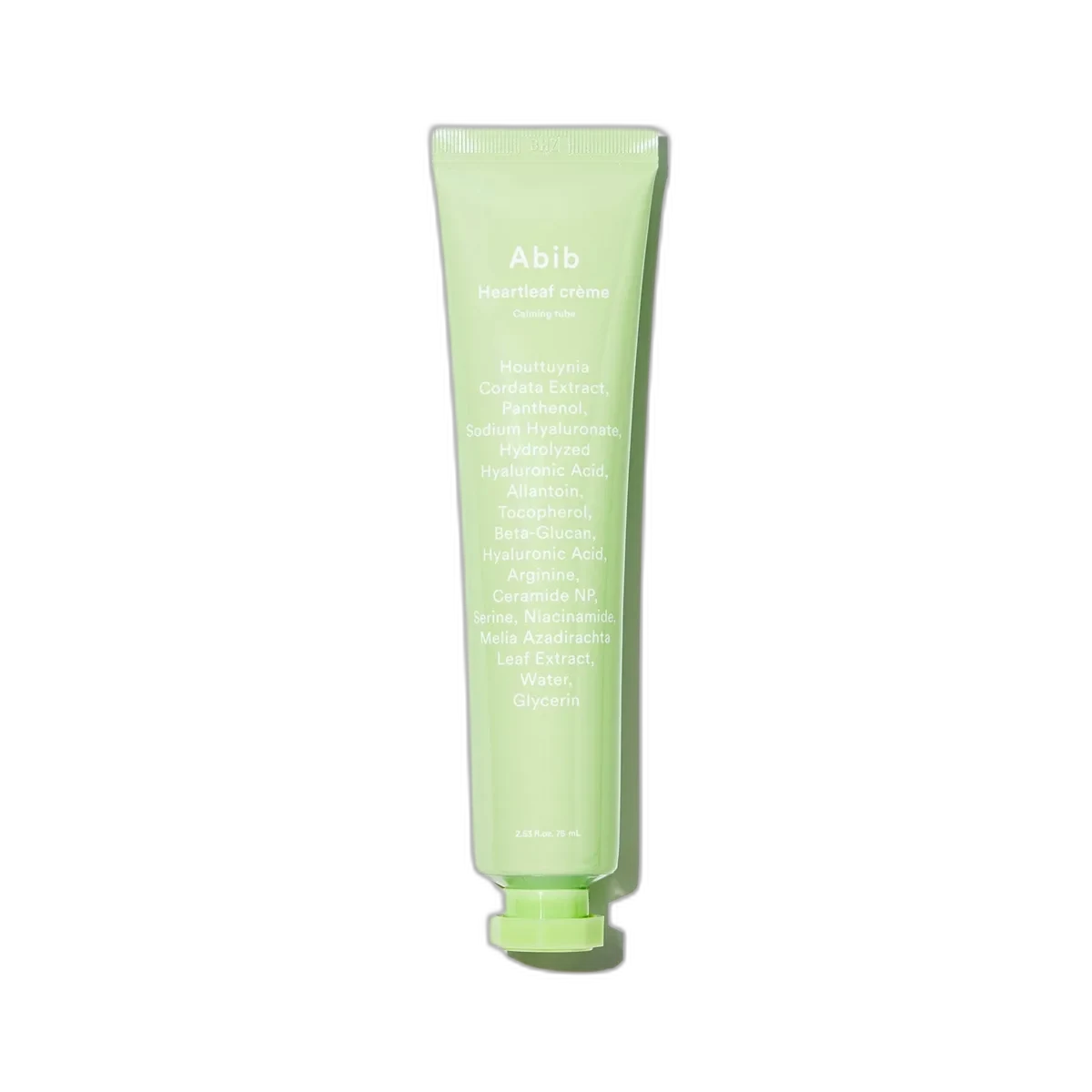
Heartleaf Cream Calming Drop
K-Beauty Calming Cream for Acne-Prone Skin
 Verified reviewer
Pros & cons.
- +70% Houttuynia cordata base does real anti-inflammatory work
- +Stacks heartleaf with full centella TECA complex for parallel calming
- +Ceramide NP and cholesterol provide barrier-lipid support
- +Lightweight gel-cream texture suitable for oily and combination skin
- +Polyglutamic acid plus multi-weight HA delivers substantive hydration
- +Niacinamide content meaningfully fades post-acne marks over time
- +Non-comedogenic and fragrance-free, well-tolerated by breakout-prone skin
- −Lipid profile is missing free fatty acids for a complete barrier blend
- −Not rich enough for very dry winter skin without layering
- −Tube design can split near the seam under heavy squeezing
- −Faint natural herbal note may be noticeable to fragrance-sensitive users
The full review.
About Abib
The toughest test of any new K-beauty brand built around a single hero ingredient isn’t the first product. It’s the second. Anyone can put 80% of an interesting botanical into a watery essence-toner format and call it a launch. The format is forgiving — a toner doesn’t need to balance hydration against acne-safety, doesn’t need to manage emollient texture, doesn’t need to navigate the dozen tradeoffs that a real daily moisturizer makes. The toner is the demo. The cream is the product, and it’s where most heartleaf-or-cica or whatever-the-buzz-botanical-is brands run out of formulation talent. So the question with Abib’s Heartleaf Cream Calming Drop, the moisturizer half of the brand’s debut Heartleaf line in 2021, was straightforward: did they actually know what they were doing, or was the toner a one-off? The cream is the answer, and the answer is that they did. The first signal is the same one the toner gives: Houttuynia cordata extract isn’t sneaking in at one percent, it’s the entire 70% water phase of the formula. That’s a meaningful concentration in a moisturizer, where you’re competing for INCI space against emollients, structural ingredients, and the supporting actives that make the cream work as both a calming product and a daily moisturizer. To sit at 70% heartleaf and still fit in everything else, the formulators had to make tight choices about what made the cut. They mostly made the right ones. The full TECA centella complex — madecassoside, asiaticoside, madecassic acid, asiatic acid — is here, layered alongside the heartleaf so the cream works through two parallel anti-inflammatory mechanisms instead of leaning on a single plant. Niacinamide is positioned high enough to do real work on barrier function and post-acne marks. Ceramide NP and cholesterol bring two of the three core barrier lipids (the formula is missing free fatty acids, which is the one composition gap) and squalane provides a non-comedogenic emollient that mimics the skin’s natural sebum profile rather than triggering the kind of breakouts that heavier oils would. The hydration story is built around polyglutamic acid plus sodium hyaluronate and hydrolyzed HA, which is the same humectant combination the toner uses, scaled into a cream context. That last choice is what makes the texture work. Polyglutamic acid holds an enormous amount of water by weight without contributing much body, so it lets the cream feel light and gel-like on application while still delivering substantial moisture. Glycerin and the multi-weight HA round out the humectant load. The result, on application, is a gel-cream that breaks down into a creamy fluid almost instantly, sinks in within a minute, and leaves a soft satin finish that takes makeup well and doesn’t pill under sunscreen. For oily and combination skin — the dominant population for this kind of formulation — the texture is exactly right. For very dry skin in winter, you’ll probably want a richer cream layered on top at night, but the same lightness that makes it slightly limited on parched skin is what makes it work for the breakout-prone people the cream is mainly built for. Where it actually shines is on the kind of skin that’s both reactive and acne-prone — the combination most calming creams handle badly because they either go rich and pore-clog, or go astringent and barrier-strip. Abib threads that needle by getting the calming work done with the heartleaf and cica complex, hydrating with humectants instead of oils, and using only the lipids and emollients the barrier actually needs. Within a week of consistent twice-daily use, most users with mild-to-moderate acne see calmer-looking skin, less redness around active breakouts, and a barrier that feels more cushioned. Over 6-8 weeks, the niacinamide contribution starts visibly fading the post-inflammatory marks acne leaves behind. The honest limitations are short. Some users with oily seam-prone packaging instincts split the tube — the design is fine but not foolproof. The cream isn’t going to take the place of a heavy occlusive cream for severely dry winter skin without help. And the high heartleaf content gives it a faint natural herbal note that, while not a fragrance in any meaningful sense, is detectable enough that very scent-sensitive users may notice it. None of those are reasons to skip. At around twenty-six dollars for 75ml, this is one of the densest calming moisturizers in K-beauty for the price, and it gives the Heartleaf line the kind of formulation depth that justifies treating Abib as a serious K-beauty brand rather than a one-product novelty.
Ingredient analysis.
Full INCI list
Houttuynia Cordata Extract (70%), Glycerin, Caprylic/Capric Triglyceride, Butylene Glycol, Cetearyl Olivate, Sorbitan Olivate, 1,2-Hexanediol, Niacinamide, Cetearyl Alcohol, Panthenol, Madecassoside, Centella Asiatica Extract, Asiaticoside, Madecassic Acid, Asiatic Acid, Allantoin, Sodium Hyaluronate, Hydrolyzed Hyaluronic Acid, Polyglutamic Acid, Ceramide NP, Cholesterol, Squalane, Tocopherol, Bisabolol, Caprylyl Glycol, Carbomer, Tromethamine, Disodium EDTA, Xanthan Gum
Skin match.
The science.
The Science
This cream stacks well-supported actives on a credible botanical base. Houttuynia cordata's flavonoids — quercitrin, isoquercitrin, hyperoside, rutin — show anti-inflammatory and antimicrobial activity; research shows they inhibit pro-inflammatory cytokine release and fight acne-related bacteria. Centella asiatica's TECA complex has even more published data: its four terpenoids have decades of research showing wound-healing, anti-inflammatory, and barrier-supporting effects. Using both botanicals creates two parallel pathways — heartleaf flavonoids and centella terpenoids modulate different inflammatory mediators, so the combination offers broader calming than either alone. Barrier support comes from the ceramide NP and cholesterol pairing, two of the three core stratum corneum lipids; the formula lacks free fatty acids to be a complete physiologic lipid blend, but this partial composition still supports barrier rebuild when paired with squalane. Niacinamide is the formula's most clinically validated active; evidence shows it improves barrier function, reduces post-inflammatory pigmentation, and modulates sebum at concentrations from 2%. Polyglutamic acid is a fermentation-derived humectant that holds more water by weight than hyaluronic acid; combined with multi-weight HA, it delivers hydration to multiple stratum corneum depths in a non-occlusive base. The formula targets calming, barrier support, and hydration without pore congestion, and the science supports this.
Dermatologist Perspective
Dermatologists treating acne-prone or reactive combination skin often recommend lightweight, non-comedogenic moisturizers that combine anti-inflammatory botanicals with niacinamide and barrier-supporting lipids — the exact profile this cream has. Board-certified dermatologists view ceramide-supported moisturizers with calming actives as the right daily moisturizer for patients using retinoids, salicylic acid, or other acne treatments that compromise the barrier. Standard derm advice is to use this formula as a daily complement to active treatment rather than a standalone fix, and to use the niacinamide and barrier-repair components for 6-8 weeks before judging the long-term effect on post-inflammatory marks.
Where it fits in your routine.
Apply after cleansing, toning, and treatment serums. Press a small amount onto the face and neck using your fingertips. A pearl-sized amount covers the full face. Use sunscreen in the morning. At night, use this as your final step unless you layer a heavier cream on top for more moisture. Monitor active breakouts during the first week to confirm tolerance, especially if you reacted to other gel-cream moisturizers before.
At around twenty-six dollars for 75ml, this cream sits in the K-beauty value zone — denser ingredient list than most Western moisturizers at twice the price, and competitive with the better-formulated K-beauty options in its own price band. Two to three months of twice-daily face use puts the per-day cost around thirty cents, which is reasonable for a moisturizer that doubles as a calming and barrier-repair treatment. Compared to single-purpose calming creams or basic oil-free moisturizers, the breadth of actives in this formula makes it a better value than a more expensive specialty product would typically be.
This moisturizer suits combination, oily, or acne-prone skin. It calms inflammation, supports the barrier, and hydrates without causing breakouts. It works well for users on retinoids or salicylic acid who need a soothing buffer cream.
This gel-cream may feel insufficient if you have very dry, winter-stressed skin and want one thick cream instead of layering. The faint heartleaf scent may bother you if you dislike natural herbal notes from high botanical content.
Product details.
Lightweight gel-cream turns into a creamy fluid on contact and absorbs fast
Faint natural herbal note, no added fragrance
75ml soft squeeze tube with a flip cap
The cream feels cool and cushioned due to polyglutamic acid hydration. Skin looks calmer almost immediately. The cream sinks in within a minute and leaves a smooth satin finish that works well with makeup. Most users see less redness around active breakouts within the first week.
About 2-3 months at twice-daily face application
12 months
All Year
The backstory.
Released alongside the Heartleaf toner in 2021, this cream was the moisturizer half of Abib's bet that Houttuynia cordata could anchor a full skincare line as a centella alternative. It became one of the brand's most-requested products on Olive Young and remains the main reason new buyers discover the Heartleaf range.
About Abib
Emerging Brand (2–5 years)Abib launched in 2017 and built its reputation on the Heartleaf line, which uses Houttuynia cordata. The cream is a consistent Olive Young best-seller and has many K-beauty reviews, though independent dermatology validation lags behind legacy K-beauty houses.
Common myths.
Calming creams are only for sensitive or dry skin.
Acne-prone skin often has chronic inflammation. A daily moisturizer manages breakouts best when it calms inflammation and supports the barrier. This cream targets that specific combination.
Lightweight gel-creams can't deliver real hydration.
Polyglutamic acid, a multi-weight hyaluronic acid stack, and glycerin in a non-occlusive base deliver hydration without weight. Texture and humectant capacity are different.
FAQ.
Will this cream break me out?
This formula targets acne-prone skin. It is non-comedogenic and fragrance-free. It uses squalane and ceramide NP instead of heavy oils. The high heartleaf content provides antimicrobial support against acne-related bacteria. Most reviewers with breakout-prone skin tolerate it well. Patch test if you are concerned.
Is it moisturizing enough for dry skin?
This lightweight gel-cream is not a heavy winter cream, but the polyglutamic acid and multi-weight HA combination delivers more hydration than the texture suggests. Dry skin can layer it under a richer cream at night during cold months, or use it as a daytime moisturizer with a heavier night cream.
Can I use this with retinol or salicylic acid?
Yes, this pairing works well. The calming and barrier-supporting profile buffers retinol or BHA irritation. Apply your treatment first, let it absorb, then layer this cream on top to soothe and rehydrate.
What's the difference between this and the Heartleaf Spot Cream?
The Spot Cream is a concentrated treatment for active blemishes and rougher patches. Its thick texture works for localized use. This Calming Drop cream is a daily all-over moisturizer with a lighter feel. They work together instead of replacing each other.
How is heartleaf different from centella?
These plants differ, though their calming properties overlap. Heartleaf contains flavonoids like quercitrin and isoquercitrin; centella contains TECA terpenoids. This cream uses both to target parallel anti-inflammatory pathways instead of one botanical.
Community
What the community says.
"Lightweight but actually moisturizing"
"Visibly calms active breakouts within days"
"Doesn't break out oily skin"
"Great as a daily moisturizer for sensitive combination skin"
"Not rich enough for very dry winter skin without layering"
"Tube can split if squeezed near the seam"
"Faint herbal note from the high heartleaf content"