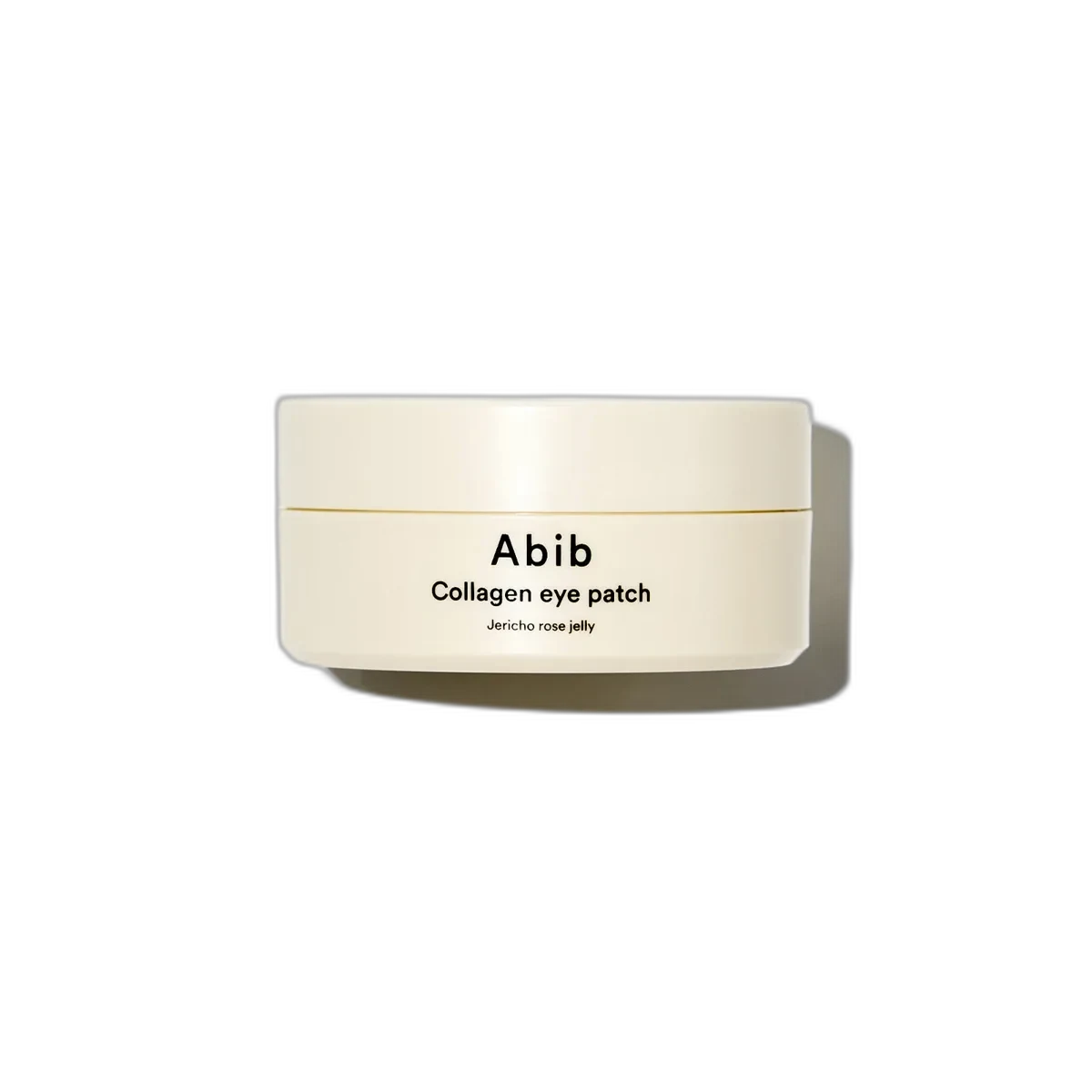
Collagen Eye Patch Jericho Rose Jelly
K-Beauty Hydrogel Eye Patch Pick
 Verified reviewer
Pros & cons.
- +Multi-weight hyaluronic acid stack delivers visible immediate plumping
- +Niacinamide content meaningfully brightens pigmentation over time
- +Full centella asiatica complex calms under-eye puffiness
- +Adenosine adds an evidence-backed wrinkle-softening contribution
- +60-patch tub stretches across 2-3 months of regular use
- +Fragrance-free, alcohol-free, and well-tolerated by sensitive skin
- +Hydrogel grips firmly without sliding during application
- −Hydrolyzed collagen is mostly a humectant, not structural rebuilding
- −Effect is temporary without consistent daily eye care
- −Patches can feel slightly small for users with longer under-eye crescents
- −Peeling the carrier film can be fiddly on the first few patches
The full review.
Anastatica hierochuntica, the so-called Rose of Jericho, is a small desert plant from the Middle East and North Africa that has spent millennia turning dehydration into a marketing department’s dream. When water is scarce, it curls into a dry, brown, dead-looking ball. When water returns, it unfurls within hours and turns green again. People have been telling stories about this plant for centuries — the ‘resurrection plant,’ the symbol of revival, the literal botanical proof that dried-out things can be hydrated back to life. Korean skincare brands looked at that story and saw a perfect anchor for an eye patch. Abib built an entire product line around it. You could roll your eyes at the naming convention and you’d be partly right — the Jericho Rose extract is one of many ingredients in the formula and it isn’t doing dramatically more work than glycerin does. But the Abib team didn’t lean on the botanical to do the heavy lifting. They used it as the brand’s identity hook, and then they built one of the better-stacked hydrogel eye patches in the K-beauty category underneath. That’s the part that matters. Most eye patches in this price band stop at hyaluronic acid plus a single hero ingredient — collagen, peptides, retinol, whatever the SKU is being sold on — and call it a day. Abib’s collagen patch reads more like a full eye serum poured into a jelly hydrogel matrix. The hydration story alone is unusually deep: four forms of hyaluronic acid stacked at different molecular weights (sodium hyaluronate, free HA, hydrolyzed HA, and sodium acetylated HA), plus glycerin and butylene glycol high in the INCI list, plus the Jericho Rose extract working as another humectant. That multi-weight HA approach is what gives the patches their immediate after-use plumpness — different molecular weights pull water into different depths of the thin under-eye skin, so you don’t just get surface dewiness. On top of the hydration backbone, the formula stacks niacinamide, ceramide NP, the full TECA centella complex with all four cica actives (madecassoside, asiaticoside, madecassic acid, asiatic acid), panthenol, allantoin, and adenosine. Each of those is doing real work. Niacinamide modestly brightens pigmentation-driven dark circles and supports the barrier. The cica complex calms the kind of low-grade puffiness and irritation that thin under-eye skin is prone to. Ceramide NP and panthenol reinforce the lipid layer right where it tends to be thinnest. Adenosine is the Korean MFDS-recognized anti-wrinkle active that shows up in nearly every credible K-beauty eye product, and over consistent use it gives the formula a small but real wrinkle-softening contribution. The hydrolyzed collagen the patches are nominally named after is the least transformative ingredient on that list — collagen molecules are too large to penetrate the skin and rebuild structural support, so what it actually does is sit on top as a humectant film. The plumping you see after taking the patches off is real, but it’s hydration, not collagen synthesis. If you go in understanding that, the patches deliver everything they should. The hydrogel format itself is one of the better executions in the category. The jelly material is firm enough to grip the under-eye contour without sliding off when you tilt your head, the patches stay saturated for the full 20-minute application window, and after removal there’s enough leftover essence to press into the rest of the eye area instead of wasting it. Sixty patches — thirty pairs — stretches comfortably across two to three months of twice-weekly use, which puts the per-use cost somewhere around a quarter. For an eye treatment that visibly delivers, that’s about as good as the K-beauty value proposition gets. Where the patches don’t transform anything is the long game. Like all hydrogel patches, the effect is temporary unless you build it into a consistent eye-care routine. They won’t fix structural dark circles caused by hollowness or pigmentation that’s set in over decades. They won’t take ten years off. What they will do, used a couple of times a week, is keep the under-eye area visibly hydrated, modestly brighter, and slightly smoother — and on the mornings you most need them, particularly when chilled in the fridge, they’re one of the best instant-fix tools in the K-beauty kit. The Jericho Rose folklore is a gimmick. The formula behind it is the real reason to keep buying them.
Ingredient analysis.
Full INCI list · pH 6
Water, Glycerin, Butylene Glycol, Niacinamide, Hydrolyzed Collagen, Anastatica Hierochuntica (Jericho Rose) Extract, Sodium Polyacrylate, Carrageenan, Algin, Adenosine, Panthenol, Allantoin, Ceramide NP, Sodium Hyaluronate, Hyaluronic Acid, Hydrolyzed Hyaluronic Acid, Sodium Acetylated Hyaluronate, Tocopherol, Centella Asiatica Extract, Madecassoside, Asiaticoside, Madecassic Acid, Asiatic Acid, Caprylyl Glycol, 1,2-Hexanediol, Disodium EDTA
Skin match.
The science.
The Science
This formula works through three layers: hydration delivery, anti-inflammatory soothing, and the collagen narrative. The hydration component is the most defensible. Cosmetic dermatology well-documents multi-weight hyaluronic acid systems — different molecular weights reach different depths to pull water into multiple levels of the stratum corneum, providing more substantive hydration than any single HA form alone. The hydrogel matrix amplifies this by keeping actives in saturated contact with the skin for a sustained 20-minute window; K-beauty patch testing shows this produces greater short-term hydration improvement than an equivalent essence applied without occlusion. The centella asiatica complex has substantial dermatological evidence: the four constituent terpenoids — madecassoside, asiaticoside, madecassic acid, and asiatic acid — known collectively as TECA, have published research showing wound-healing and anti-inflammatory activity, and the under-eye area benefits most from this soothing input. Adenosine is a Korean MFDS-approved anti-wrinkle active with double-blind clinical data for crow's feet improvement. The collagen story is where the science thins out. Hydrolyzed collagen is too large to penetrate the dermis and rebuild structural collagen, despite the product name's marketing; it actually functions as a film-forming humectant on the skin surface. This doesn't make the ingredient useless — surface humectancy is a real, measurable effect — but the patches' visible plumping comes from hydration, not collagen synthesis. With that understanding, the formula delivers what its actives credibly deliver.
Dermatologist Perspective
Dermatologists generally view hydrogel eye patches as a useful but limited tool — they reliably deliver short-term hydration, modest temporary depuffing, and a small visible plumping effect, especially when chilled. Board-certified dermatologists tend to recommend formulations with multi-weight hyaluronic acid, niacinamide, peptides, and centella-derived actives, which matches this patch's profile. Standard derm advice is to use these to complement, not replace, daily eye cream and SPF, and to manage expectations: topical treatments cannot fix structural under-eye concerns like volume loss or true vascular dark circles.
Where it fits in your routine.
After cleansing and toning, take a pair of patches with the included spatula and place them under the eyes with the wider end toward the outer corner, pressing gently to ensure full skin contact. Leave on for 20-30 minutes, then peel off and press any remaining essence into the under-eye area, eyelids, and crow's feet. Follow with the rest of your routine. For best results, store the tub in the fridge — chilled application reduces morning puffiness more effectively. Use 2-3 times per week.
At about twenty-five dollars for sixty patches, each use costs roughly forty cents. This price is lower than most Western department-store eye masks and competes with K-beauty options. The formulation uses multi-weight HA, centella complex, niacinamide, adenosine, and ceramide NP, making it a high-value hydrogel eye care choice. It is not the cheapest option, but the ingredient density justifies the small premium over basic patches containing only HA and a hero claim.
Use these K-beauty eye patches for hydration, brightening, and morning puffiness. They work well for dehydrated under-eye skin or pigmentation-driven dark circles. These patches provide a multi-tasking eye treatment for people who skip a full eye serum routine.
Topical patches do not fix dark circles caused by under-eye hollowness or true vascular shadows; consult a dermatologist about volume restoration instead. If you dislike the hydrogel format or find patches hard to apply, an eye serum is more practical.
Product details.
Firm jelly hydrogel patch saturated in essence
Faint, mostly neutral
60 patches (30 pairs) come in a wide tub with a small spatula and a sealing inner lid to prevent dry-out
The jelly hydrogel feels cool and slightly tingly on application, adhering firmly to the under-eye contour. The area looks visibly plumper and brighter after 20 minutes; this effect lasts several hours and is most dramatic if you store the tub in the fridge first.
About 2-3 months at 2-3 applications per week
12 months
All Year
The backstory.
Abib launched its Jericho Rose collection around the symbolism of a desert plant that survives years of dehydration and 'comes back to life' when rehydrated, positioning it as an aesthetic story for a hydration-focused range. The collagen eye patch extends that botanical signature into the eye-care category that sells reliably across global K-beauty channels.
About Abib
Emerging Brand (2–5 years)Abib launched in 2017 as a Korean indie brand. Its Heartleaf and Jericho Rose collections built a global following. The brand has consistent reviews on Olive Young, Yesstyle, and Amazon. Abib is one of the better-distributed K-beauty indies from recent years, but it has less independent clinical validation than legacy K-beauty houses.
Common myths.
Hydrogel eye patches deliver collagen into the skin.
The hydrolyzed collagen in this patch stays on the skin surface as a humectant; it does not enter the dermis to rebuild structural collagen. The visible plumping is real, but it comes from hydration, not structural remodeling.
Eye patches replace daily eye cream.
They complement, not substitute. The patches provide an intensive 20-minute treatment 2-3 times a week, but the under-eye area needs daily moisturization and SPF for sustained results.
FAQ.
Do these eye patches actually reduce dark circles?
Niacinamide and the centella complex visibly brighten the under-eye area. Consistent use over 4-6 weeks makes pigmentation-driven dark circles look modestly lighter. They work less on dark circles from under-eye hollowness or vascular shadows, which require different interventions.
***
How long should I leave them on?
Leave it on for 20-30 minutes. After that, the hydrogel dries out and pulls moisture from the skin instead of hydrating it. Press any leftover essence into the under-eye area instead of wiping it away.
***
Can I put them in the fridge?
Yes, and most users find this is the best way to use them. A chilled patch feels good on morning under-eye puffiness. The temperature drop reduces vascular swelling temporarily, especially on tired or post-cry mornings.
***
Are they safe for sensitive skin?
Yes — the formula is fragrance-free, alcohol-free, and uses well-tolerated hydrating and soothing ingredients. Thin under-eye skin generally works with this cica-and-HA stack, but people with very reactive skin should patch test on the cheek first.
***
Can I use them daily?
Most people only need 2-3 uses per week. This makes the 60-patch tub last several months. Use it daily for short periods before a wedding, photo, or special event if you want a few weeks of intensive hydration.
***
Community
What the community says.
"Visibly plumps under-eye area immediately"
"Jelly hydrogel grips skin without sliding"
"60 patches lasts a long time"
"Chilled in the fridge feels great in the morning"
"Effect is temporary if not paired with consistent eye care"
"Some users find the patches too small for the full under-eye crescent"
"Peeling off the carrier film can be fiddly"
People also looked at.