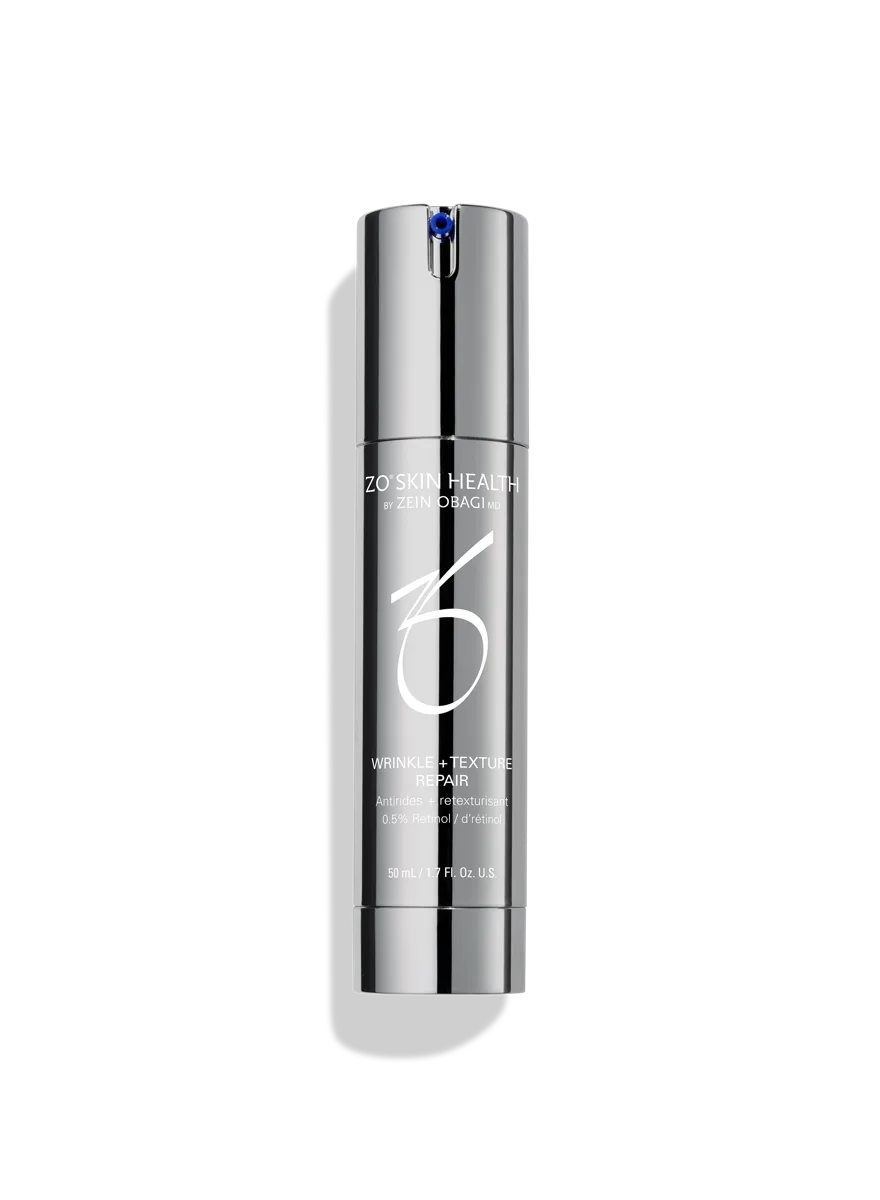
Wrinkle + Texture Repair
High-Strength Retinol
 Verified reviewer
Pros & cons.
- +Strong 0.5% retinol in a stable microemulsion delivery system
- +Emollient cream base that minimizes the usual retinol flaking curve
- +Bisabolol, beta-glucan, and peptide buffering system
- +Most retinol-experienced users can build to nightly use within a month
- +Noticeable texture and tone improvement by week 8
- +Commonly used as an OTC alternative to prescription tretinoin
- +Airless pump protects the photosensitive retinol payload
- −Contains lavender and geranium essential oils
- −Fragrance allergen panel includes linalool, citronellol, geraniol, citral, limonene
- −Not safe during pregnancy or breastfeeding
- −Expensive compared to other strong OTC retinols
- −Can trigger significant irritation in sensitive or rosacea-prone users
The full review.
Every retinol formulator faces one problem: higher concentrations increase efficacy but make nightly use harder to tolerate. Above 0.5% OTC, irritation often breaks the consistency required for retinol results. ZO’s Wrinkle + Texture Repair solves this from the formulation side. Instead of forcing users to build tolerance to a harsh product, ZO built a 0.5% retinol cream with enough supportive chemistry that most retinol-experienced users can reach nightly use without a three-month flaking phase.
The delivery system uses a microemulsion—retinol dispersed in fine droplets through a silicone and ester base rather than dissolved in a vehicle. Microemulsions spread the active more evenly and slow its release into the skin, which is ideal for higher doses. ZO stacks bisabolol (a well-studied topical anti-inflammatory from chamomile), beta-glucan for barrier soothing, hydrolyzed sericin for film-forming hydration, caprooyl tetrapeptide-3 for structural reinforcement, and ascorbyl palmitate plus tocopheryl acetate as antioxidants and retinol stabilizers. Each inclusion has a specific function. On paper, this is the closest thing to a ‘treatment moisturizer’ at this retinol strength in the OTC market.
The cream base drives the tolerability. Cetearyl isononanoate, apricot kernel oil, propylheptyl caprylate, cetyl alcohol, and glycerin create an emollient cushion that slows TEWL while the retinol works. This differs from thin serum-format retinol products that require users to layer occlusives later—ZO builds the moisture buffer into the treatment. Dermatologists often recommend Wrinkle + Texture Repair to users who struggle with retinol flaking on lighter bases.
Consistent use yields the expected performance for a well-formulated 0.5% retinol. At six to eight weeks, texture smooths and tone evens. At twelve to sixteen weeks, fine lines soften and firmness improves. The retinol is strong enough for structural work, and the buffering is comprehensive enough that most users see results without quitting. Dermatology offices often call this the ‘OTC tretinoin alternative’—not because it is chemically equivalent to prescription retinoic acid, but because it is the strongest credible step for patients avoiding prescriptions.
One part of this formula is frustrating. Fifteen entries down the INCI list, you find Lavandula angustifolia (lavender) oil and Pelargonium graveolens (geranium) oil. Further down are linalool, citronellol, geraniol, citral, and limonene—four common fragrance-derived contact dermatitis triggers plus citral. For a product designed to bypass the usual retinol tolerance threshold using bisabolol and beta-glucan, including these potential irritants contradicts the design philosophy. ZO would likely argue the essential oils provide anti-inflammatory activity and the allergen levels stay below most users’ sensitivity thresholds. Both points have merit, but a fragrance-free version would be a much cleaner recommendation for the sensitive, barrier-compromised users who need a well-buffered 0.5% retinol.
Who this product is actually for
retinol-experienced users with resilient skin and normal to dry types who want to move from 0.25% or 0.3% retinol to a strong OTC option without prescription tretinoin. Patients under dermatologist care who tolerate lower-strength retinols and want more. Users without known fragrance sensitivity who do not mind lavender-geranium aromatherapy. For these users, Wrinkle + Texture Repair justifies its $168 price tag.
Who it isn’t for
anyone with rosacea, eczema, fragrance sensitivity, contact dermatitis to linalool or geraniol, a compromised barrier, or a history of reacting to essential oils. These users should choose fragrance-free alternatives like PCA Skin Intensive Age Refining Treatment, SkinMedica Retinol Complex 0.5, or Skinbetter Alpha Ret for a similar or stronger retinoid experience. At $168, the bar is high, and the essential oils are an unnecessary reason to fail it.
Formula
Ingredient analysis.
Full INCI list
Aqua/Water/Eau, Cetearyl Isononanoate, Cyclopentasiloxane, Glycerin, Cetearyl Alcohol, Cyclohexasiloxane, Steareth-20, Pentylene Glycol, Cetyl Alcohol, Propylheptyl Caprylate, Prunus Armeniaca Kernel Oil, Lavandula Angustifolia Oil, Pelargonium Graveolens Flower Oil, Melilotus Officinalis Extract, Buddleja Davidii Meristem Cell Culture, Retinol, Cetearyl Glucoside, Polysorbate 20, Acrylamide/Ammonium Acrylate Copolymer, 1,2-Hexanediol, Lecithin, Bisabolol, Carbomer, Silica, Polyisobutene, Butylene Glycol, Hydrolyzed Sericin, Phospholipids, Pentaerythrityl Tetra-Di-T-Butyl Hydroxyhydrocinnamate, Sodium Hydroxide, Disodium EDTA, BHT, Sodium Metabisulfite, Sodium Sulfite, Ascorbyl Palmitate, Tocopheryl Acetate, Beta-Glucan, Sorbitan Isostearate, Hexylene Glycol, Xanthan Gum, Ethylhexylglycerin, Ethyl Nicotinate, Caprooyl Tetrapeptide-3, Dextran, Caprylyl Glycol, Potassium Sorbate, Phenoxyethanol, Ext. Violet 2 (CI 60730), Linalool, Citronellol, Geraniol, Citral, Limonene.
Skin match.
The science.
The Science
Retinol is one of the most thoroughly researched topical ingredients in dermatology. Decades of peer-reviewed studies have established that retinol and other retinoids increase epidermal turnover, normalize keratinization, stimulate procollagen and elastin synthesis, reduce matrix metalloproteinase activity, and improve clinical measures of photoaging over 12-24 weeks of consistent use. A key paper in the Archives of Dermatology reported that even 0.4% retinol showed measurable improvements in wrinkle depth and skin roughness in elderly subjects over 24 weeks, and higher concentrations have shown correspondingly stronger effects with more adjustment-phase irritation. Microemulsion delivery systems have been studied for their ability to enhance the stability and skin penetration of retinoids while reducing irritation — these formulations disperse the active in fine droplets that spread more evenly across the skin surface and reduce the local peak concentration that drives transient irritation. Bisabolol has been characterized in dermatology literature as a topical anti-inflammatory with documented activity against prostaglandin and cytokine signaling, and it's included in many sensitive-skin and retinoid-buffered formulations specifically for this purpose. Beta-glucan has published data on supporting skin barrier integrity and modulating inflammatory response. The peptide component, caprooyl tetrapeptide-3, has emerging in vitro data on fibroblast stimulation but less robust human clinical evidence than the retinol itself. The overall design of Wrinkle + Texture Repair is mechanistically coherent: a strong, well-delivered retinol supported by evidence-backed anti-inflammatory and barrier-supporting ingredients. The principal weakness in the evidence-to-formulation translation is the inclusion of essential oils with known contact allergen content, which runs counter to the tolerability-focused design of the rest of the product.
Dermatologist Perspective
Dermatologists commonly recommend Wrinkle + Texture Repair to patients who want a strong over-the-counter retinol but don't want the prescription route with tretinoin. It's typically positioned as the 'top of the OTC retinol ladder' — the step above 0.25% or 0.3% retinol products, and the step below prescription retinoids. Board-certified dermatologists appreciate the microemulsion delivery and the cream-base buffering system but regularly note the lavender-geranium oil content as a caution for fragrance-sensitive and rosacea-prone patients. In practice, clinicians often route reactive patients to a fragrance-free alternative and reserve Wrinkle + Texture Repair for resilient skin types who have already worked up through lower retinol strengths. As with all retinoids, discontinuation is recommended during pregnancy and breastfeeding, and daily broad-spectrum SPF is non-negotiable.
Where it fits in your routine.
Apply a pea-sized amount at night after cleansing, toning, and water-based serums, but before moisturizer. New users start 2-3 nights per week for 2-4 weeks, then move to every other night, then nightly over 6-8 weeks. Use a hydrating or ceramide moisturizer on top to minimize dryness, and always apply broad-spectrum SPF 30+ in the morning. Do not use AHAs, BHAs, benzoyl peroxide, or vitamin C in the same evening session; alternate those actives on different nights instead. Stop use 5-7 days before any in-office resurfacing procedure. Store in the original airless pump container away from heat and direct sunlight.
At $168 for 1.7 oz, Wrinkle + Texture Repair is priced in the premium clinical retinol tier and well above over-the-counter options at similar strengths from brands like Naturium ($25), The Ordinary Retinal 0.1% ($14), or Paula's Choice Clinical 1% ($70). The value case depends on whether the buffering system matters to you — for retinol-experienced users who've plateaued on cheaper options or struggled with irritation, the cream base and supporting ingredients can make the difference between consistent use and abandonment, and that justifies part of the premium. For first-time retinol users or value-conscious shoppers, starting with a $25-50 alternative and building tolerance first makes more sense, and only moving to ZO if a reason emerges. The fragrance situation also matters in value terms: if you need a fragrance-free 0.5% retinol, there are better options at lower prices.
Retinol-experienced users with resilient normal, combination, or dry skin can use this to access a stronger OTC retinoid than lower-strength options, without switching to prescription tretinoin. It works best for patients treating photoaging, texture, or hyperpigmentation with a dermatologist who already tolerate lower-strength retinols.
People with sensitive skin, rosacea, eczema, or fragrance and essential oil allergies should use a fragrance-free clinical retinol instead. Pregnant and breastfeeding users must stop all retinoids. Retinol beginners should use a lower-strength buffered retinol before using this product.
Product details.
Thick, emollient cream with a cushioned glide that feels like a moisturizer rather than a treatment.
Notable lavender-geranium botanical scent — stronger than other ZO products.
Opaque airless pump bottle — protects the photosensitive 0.5% retinol.
Expect an adjustment period during the first 2-4 weeks. You may see mild dryness, flaking around the nasolabial folds, or slight stinging. This is the standard retinol ramp, not a sign the product is wrong for you. Retinol-experienced users usually adapt within 2 weeks; new users should start 2 nights per week for a month.
Roughly 4-6 months with nightly pea-sized application from the 1.7 oz bottle.
6 months
All Year
The backstory.
Wrinkle + Texture Repair launched in 2020 as the successor to ZO's earlier Ossential Retinol Skin Brightener line, at a point when patients were asking for stronger OTC retinol options that didn't require prescription tretinoin. ZO's response was to push into the 0.5% range with an elaborate buffering system, positioning the product as the strongest retinoid step for patients who couldn't or wouldn't use tretinoin.
About ZO Skin Health
Established Brand (5–20 years)Dr. Zein Obagi founded ZO Skin Health in 2007. U.S. dermatology and plastic surgery offices distribute the brand. Wrinkle + Texture Repair is ZO's strongest over-the-counter retinol product and tops the brand's anti-aging stack.
Common myths.
0. 5% retinol is equivalent to prescription tretinoin.
Retinol converts to retinoic acid (the active form of tretinoin) via retinaldehyde in the skin, but this conversion is inefficient. 0.5% retinol is a strong OTC option that delivers anti-aging results, but it is not chemically equivalent to 0.025% or 0.05% tretinoin — prescription retinoic acid is more potent per unit because it skips the conversion step.
Retinol flaking means the product is working.
Flaking shows disrupted keratinization and mild barrier compromise, not direct collagen synthesis. Some adjustment is normal. Heavy, persistent flaking means you push too hard—reduce frequency and let the skin recover before continuing.
FAQ.
Is ZO Wrinkle + Texture Repair stronger than tretinoin?
No. Tretinoin is retinoic acid. The skin converts retinol to this active form, but that conversion is inefficient. 0.5% retinol is a strong OTC option, but it does not equal even low-strength prescription tretinoin. View it as a powerful non-prescription alternative, not a tretinoin replacement.
Can I use this product every night?
Most users tolerate nightly use after an adjustment period. Start 2-3 nights per week for 2-4 weeks, then move to every other night, then nightly. If flaking or stinging persists, reduce frequency and rebuild more slowly. Always use a ceramide moisturizer and daily SPF 30+.
Why does it contain lavender and geranium oil?
This is the formula's most legitimate criticism. Lavender and geranium oils are traditional botanical fragrances with anti-inflammatory activity, but they contain common contact-dermatitis allergens (linalool, citronellol, geraniol, citral, limonene). This is not an ideal choice for a retinol user with a challenged barrier. Sensitive users should patch test carefully.
Is ZO Wrinkle + Texture Repair pregnancy-safe?
No. Do not use any topical retinoids, including OTC retinol, during pregnancy or breastfeeding. Stop use and switch to a peptide or bakuchiol alternative instead.
How does it compare to Skinbetter Alpha Ret or SkinMedica Retinol?
Skinbetter Alpha Ret uses a buffered lactic acid ester of retinoic acid; SkinMedica Retinol uses straight retinol at various strengths; ZO Wrinkle + Texture Repair uses 0.5% retinol in a bisabolol- and peptide-buffered cream base. All three are respected clinical-grade OTC retinoids. ZO Wrinkle + Texture Repair offers better tolerability via its cream base; Skinbetter Alpha Ret uses novel ester chemistry; SkinMedica Retinol has a simpler ingredient deck.
What should I pair it with?
Use a gentle cleanser, a hydrating or ceramide moisturizer (ZO's Hydrating Cleanser and Recovery Cream work well together), and broad-spectrum SPF 30+ every morning. Do not use AHAs, BHAs, benzoyl peroxide, or vitamin C during the same evening session. In the ZO protocol, Wrinkle + Texture Repair is the nighttime retinoid and Daily Power Defense is for daytime.
Can I use it around my eyes?
Proceed carefully. Skin around the eyes is thinner and reacts more to retinol. Avoid the immediate orbital rim and lash line, and watch for irritation. ZO and many dermatologists recommend dedicated eye retinol products for periocular application instead of facial retinol.
What the community says.
"Visible texture improvement within weeks"
"Tolerated better than tretinoin by many users"
"Creamy buffered base"
"Noticeable fine line reduction over months"
"Contains lavender and geranium oils"
"Fragrance allergen panel is long"
"Expensive compared to OTC retinol alternatives"
"Irritation in the first month is common"
People also looked at.