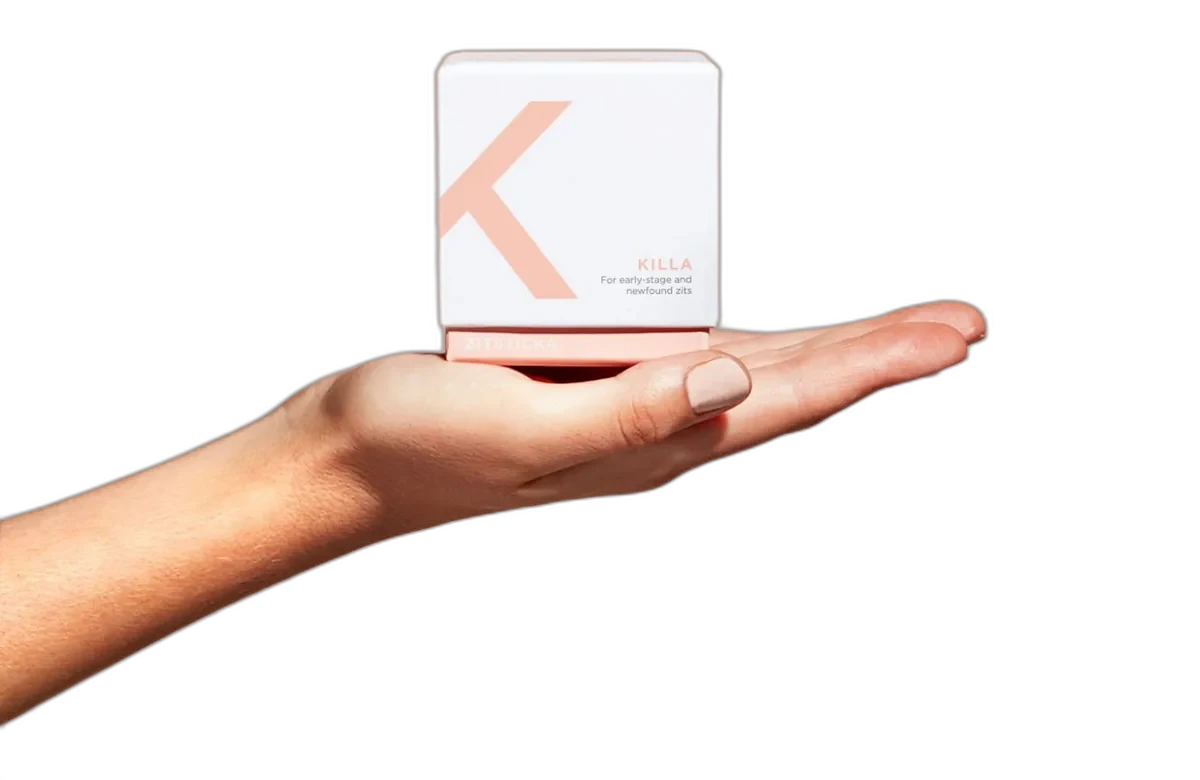
Killa Deep Zit Microdart Patch
Cystic Pimple SOS
 Verified reviewer
Pros & cons.
- +Solves the early-stage cystic timing window other treatments can't reach
- +Microdart delivery physically bypasses the surface barrier
- +2% salicylic acid plus niacinamide and centella in a single targeted application
- +Antimicrobial peptide oligopeptide-10 directly targets C. acnes
- +Pre-emptive 4-butylresorcinol addresses post-inflammatory hyperpigmentation
- +Visible reduction in pimple size and pain within 6-12 hours when applied early
- +Hydrocolloid base stays in place overnight without slipping
- +Fragrance-free, vegan, with included cleansing prep swab
- −Per-patch cost of $3.63 makes frequent use expensive
- −Highly time-sensitive — only works on early-stage spots before they surface
- −Not safe during pregnancy due to salicylic and glycolic acid
- −Not a substitute for a daily acne routine for persistent breakouts
- −Adhesive can lift on very oily skin if not properly degreased first
The full review.
Cystic acne is a familiar struggle. You feel a tender, subsurface lump on your jaw or forehead that hasn’t surfaced yet. There is a 12 to 24 hour window where you know a pimple is coming, but you cannot stop it. Topical spot treatments lack depth. Hydrocolloid patches have nothing to absorb. Drying agents like benzoyl peroxide irritate the surface while deep inflammation builds. By morning, you have the cyst and a flaky red patch from desperate treatments.
Killa targets that specific window. The brand launched in 2018 with a simple insight: if surface treatments cannot reach deep inflammation, you need a delivery system that bypasses the surface. Each patch is a hydrocolloid disc with 24 microdarts on the underside. These darts use sodium hyaluronate to hold their shape on the patch and dissolve when pressed into the skin. The darts are 200 micrometers long; they are short enough to avoid the nerve-rich deeper dermis. You feel a brief pinprick tingle upon contact, then nothing. Over two hours, the darts dissolve and deposit salicylic acid, niacinamide, oligopeptide-10, madecassoside, glycolic acid, and 4-butylresorcinol into the layer where the cystic spot forms.
The active stack is more strategic than most spot treatments. Salicylic acid at 2% is an OTC-strength BHA that works as a comedolytic and anti-inflammatory. It uses the same percentage as many leave-on treatments but places it closer to the source. Oligopeptide-10 is an antimicrobial peptide with documented activity against Cutibacterium acnes, the bacteria linked to inflammatory acne. Niacinamide calms inflammation and supports barrier recovery, which prevents the flaky skin caused by high-strength surface treatments. Madecassoside, the most active compound from centella asiatica, reduces redness and irritation around the spot. 4-butylresorcinol is a brightening active that targets post-inflammatory hyperpigmentation (PIH) after a pimple heals. This is especially relevant for medium-to-deep skin tones, where PIH can last months. It is a complete intervention, not just an acid in a patch.
When applied at the right stage, the results explain the product’s cult following. Most users report less pain within hours and reduced visible inflammation by morning. Some pimples fail to develop entirely or emerge as smaller, less inflamed versions that resolve in a day or two. Timing is everything. This product is highly time-sensitive. Catching the spot at the first tingling stage—before surface redness appears—yields dramatic results. If you apply it after a pimple breaks the surface, you are using the wrong tool. Switch to a regular hydrocolloid patch instead.
There are clear limitations. First, the price. Twenty-nine dollars for 8 patches is $3.63 per use. For frequent cystic breakouts, this cost adds up. Killa is an emergency-use product, not a primary acne treatment. People with persistent inflammatory acne should use a daily routine (retinoid, benzoyl peroxide, or a prescription) and use Killa as targeted reinforcement. Second, the pregnancy contraindication. Concentrated salicylic acid and glycolic acid are typically not recommended during pregnancy, and the microdart delivery sends more to the active layer than a wash-off product. Third, the timing sensitivity is significant; buyers who miss the early window often feel disappointed. The brand could communicate more clearly that this is not an “apply to any pimple” product. Finally, the included cleansing swab is helpful but not necessary; some users skip it without losing efficacy.
Killa still leads the category eight years after launch because the underlying insight and execution are solid. Pre-emptive cystic intervention was a gap in skincare, and Killa filled it with a functional delivery mechanism. Almost every microdart pimple patch on the market today traces its lineage to this product. For those dealing with cystic breakouts and ineffective spot treatments, the premium price corresponds to a real, reproducible benefit.
Formula
Ingredient analysis.
Full INCI list
Active: Salicylic Acid 2%. Inactive: Sodium Hyaluronate, Phytosphingosine HCL, Niacinamide, Oligopeptide-10, Glycolic Acid, Madecassoside, 4-Butylresorcinol, Water/Aqua/Eau.
Skin match.
The science.
The Science
The microdart format uses the same transdermal delivery principles that drove pharmaceutical microneedle research over the last fifteen years. Dissolvable polymer microneedles — usually 200-800 micrometers long — penetrate the stratum corneum but stop before the nerve-rich deeper dermis. This deposits actives in the viable epidermis to engage target tissue. For inflammatory acne, the target is early follicular inflammation before a surface lesion appears; a delivery format that bypasses the surface barrier fits this window.
The individual actives have strong research support. Salicylic acid at 2% is the FDA-recognized OTC concentration for acne treatment and has documented comedolytic, keratolytic, and anti-inflammatory effects in dermatology literature. Its lipophilicity lets it penetrate sebaceous follicles, and its anti-inflammatory action helps inflammatory acne lesions. Niacinamide has extensive studies on sebum regulation, ceramide synthesis, and reducing inflammatory response, with multiple controlled trials showing reduced acne lesion counts at topical concentrations.
Oligopeptide-10 (formerly known as Granactive Acne and marketed as a synthetic antimicrobial peptide) shows activity against Cutibacterium acnes in published research, providing a targeted antimicrobial pathway that complements the salicylic acid's broader action. Madecassoside, the most active triterpene saponin from centella asiatica, has documented anti-inflammatory and wound-healing effects, and research supports its use to reduce post-acne erythema. 4-Butylresorcinol is a tyrosinase inhibitor that shows stronger melanin-reduction activity than hydroquinone in some comparative studies; its use as a pre-emptive PIH treatment fits an acne intervention.
The combination makes the formulation interesting. Each ingredient targets a different part of the inflammatory acne cascade — bacterial, inflammatory, comedolytic, and pigmentary — and the microdart format ensures all reach the layer where they are needed instead of being limited by surface absorption.
Dermatologist Perspective
Dermatologists generally see microdart pimple patches as a useful targeted intervention for early-stage cystic or inflammatory lesions, especially if caught early. Board-certified dermatologists note that traditional topical spot treatments often struggle with surface absorption when addressing deep lesions; a delivery format that bypasses that barrier improves this specific use case. The most common dermatologist clarification is that these patches do not substitute for a daily acne treatment routine — patients with persistent inflammatory acne should still use a topical retinoid, benzoyl peroxide, or prescription option, using patches like Killa as targeted reinforcement for individual flares. Dermatologists also emphasize timing: applied early, results can be dramatic; applied too late, the patch is the wrong tool for the stage.
Where it fits in your routine.
Apply when a cystic pimple first tingles, before anything is visible. Cleanse the area and pat dry. Use the included cleansing swab to prep the spot if you want. Press the patch firmly over the developing zit for 30 seconds so the microdarts make full contact. Leave on for at least 2 hours, or ideally 6+ hours or overnight. Peel off gently in the morning and apply moisturizer. Do not layer retinoids or benzoyl peroxide on the same area that night. If the spot is a whitehead or popped pimple, use a standard hydrocolloid patch instead — Killa works for the pre-surface stage.
At $29 for 8 patches, each patch costs about $3.63. This price is high for a single-use skincare product. Value depends on how often you get cystic acne. For occasional deep spots — like a pre-event pimple or a monthly hormonal jaw cyst — the targeted intervention and visible results justify the cost. For frequent inflammatory acne, this is an emergency-use product, not a sustainable primary treatment; it supports a daily routine of prescription or OTC actives. A 4-pack costs around $15 for testing. Other brands sell cheaper microdart patches, but their active stacks are generally less comprehensive than Killa's.
This works for occasional cystic or deep inflammatory pimples needing targeted intervention before they emerge. It is useful for predictable hormonal jaw and chin breakouts. Use it to complement a daily acne routine, not as a standalone treatment.
Pregnant or breastfeeding users, people with persistent inflammatory acne needing a daily-routine approach rather than emergency interventions, and anyone treating already-surfaced pimples (use a regular hydrocolloid patch for that stage). Budget-focused shoppers can buy cheaper microdart patches with simpler formulations.
Product details.
Hydrocolloid patch with raised microdart array on the underside
Fragrance-free
Cardboard kit box with individually sealed patches and matching cleansing swabs
The first application tingles briefly as microdarts contact and dissolve. Most users feel a pinprick that fades within 30 seconds. Many users feel less pain in the developing pimple within the first few hours of wear, and the spot often looks smaller by morning.
Apply as needed to developing pimples — an 8-pack lasts 1-3 months based on breakout frequency
24 months
All Year
The backstory.
ZitSticka was founded in 2018 by Robbie Miller and Daniel Kaplan, with this Killa patch as the brand's debut product. The microdart delivery format was inspired by the transdermal drug-delivery research that pharmaceutical companies had been developing for over a decade, and Killa was named to Time magazine's Best Inventions list in 2019. The product essentially created the 'pre-emptive cystic patch' category, and most subsequent microdart acne patches from other brands trace their lineage back to this one.
About ZitSticka
Emerging Brand (2–5 years)ZitSticka launched in 2018 with the original Killa microdart patch. This flagship product defined the deep-pimple patch category. The brand sells at major retailers and has dermatologist endorsements, but it is a young brand with limited long-term clinical validation.
Common myths.
All pimple patches do the same thing.
Standard hydrocolloid patches absorb fluid from surfaced pimples; they work for the popped or whitehead stage. Microdart patches like Killa target the earlier deep-cystic stage before the spot surfaces. These products solve different problems and do not compare one-to-one.
Microdart patches hurt because they're 'needles.'
The darts are about 200 micrometers long — far too short to reach the nerve-rich deeper dermis. The brief tingling sensation users feel is the patch making contact, not pain. Most people report no discomfort after the first 30 seconds.
FAQ.
When should I apply a Killa patch?
Use it during the first tingling stage—when a deep pimple feels imminent but hasn't surfaced. Early application yields more dramatic results. If a pimple breaks the surface, it is less effective; switch to a regular hydrocolloid patch then.
How long do you wear it?
Wear them for at least 2 hours, though most users wear them overnight. The microdarts dissolve in about 2 hours, but longer contact gives the active payload more time to work.
Does it actually stop a cystic pimple from forming?
Often yes, especially if applied early. Many users report the developing spot feels less inflamed within hours and looks smaller by morning. Larger or established cysts may shrink but won't necessarily disappear in one use.
Can I use it during pregnancy?
No — concentrated salicylic acid and glycolic acid are typically not recommended during pregnancy. The microdart delivery sends more acid into deeper layers than a wash-off product. Talk to your OB about pregnancy-safe acne alternatives.
Why does it come with a cleansing swab?
The included swab contains a salicylic acid prep solution. Using it before the patch degreases the spot and ensures the patch adheres while pre-treating the area. It is not strictly necessary, but the brand's testing showed better results with the prep step.
Is this safe for sensitive skin?
Yes — spot-only application limits exposure. The niacinamide and madecassoside in the formula buffer the salicylic acid's irritation potential. Patch test on the jawline first if you have very sensitive skin.
How does it compare to a hydrocolloid patch?
These problems differ. Hydrocolloid patches absorb fluid from popped or surfaced pimples. Killa patches use microdarts to deliver actives into deep cysts that haven't surfaced yet. Use Killa for the developing stage and hydrocolloid for the surface stage.
What the community says.
"Stops developing pimples in their tracks"
"Visibly smaller and less painful in hours"
"Works on cystic acne hydrocolloid alone can't reach"
"Cleansing swab adds a useful prep step"
"Expensive per patch"
"Only works on early-stage spots"
"Adhesive can lift if face is too oily"
People also looked at.