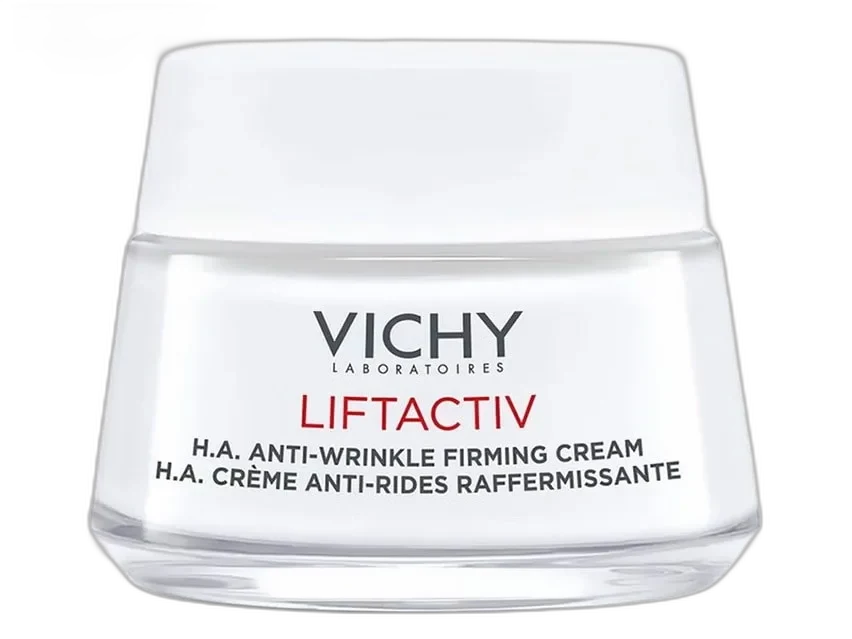
LiftActiv Supreme Anti-Wrinkle Cream
Patent-Backed French Pharmacy Classic
 Verified reviewer
Pros & cons.
- +5% rhamnose at confirmed concentration backed by 10 years of research and 7 patents
- +Immediate optical smoothing from light-reflecting particles while long-term actives work
- +Velvety, lightweight texture that feels more luxurious than the price suggests
- +Adenosine provides regulatory-approved anti-wrinkle effects with strong clinical evidence
- +Nearly 15 years of market history with consistent positive user outcomes
- +Separate dry skin variant available for those who need richer hydration
- +Layers well under sunscreen and makeup without pilling
- −Alcohol denat. at sixth INCI position may irritate dry or barrier-compromised skin
- −Fragrance inclusion is questionable for a product targeting mature, potentially sensitized skin
- −Isopropyl isostearate has comedogenic potential — not ideal for breakout-prone users
- −Jar packaging exposes product to air and finger contamination
- −Caffeine and neohesperidin concentrations appear low based on INCI positioning
The full review.
About Vichy
In an industry obsessed with novelty, Vichy’s LiftActiv Supreme is impressive. It launched at the World Congress of Dermatology in Seoul in 2011 and remains on pharmacy shelves with nearly the same formulation fifteen years later. Vichy’s LiftActiv Supreme did not go viral or use celebrity ambassadors. It arrived with clinical data, seven patents, and a decade of L’Oréal research.
Reality
The active ingredient in this cream is rhamnose, a plant-derived sugar. Most consumers do not know it, but the science is interesting. Most anti-aging actives work on the epidermis or the reticular dermis. Rhamnose targets the papillary dermis—the thin layer between those two that supplies nutrients to the skin above. This layer thins with age, causing the skin above to lose structural support. L’Oréal’s research shows 5% rhamnose stimulates the papillary dermis to produce more collagen IV and procollagen I, thickening the layer that aging collapses. A randomized, double-blind study in the International Journal of Cosmetic Science confirmed these effects in vivo after eight weeks of twice-daily application.
Concentration matters. Rhamnose is fourth in the INCI list—behind water, glycerin, and dimethicone—at a confirmed 5%. This is not a trace amount behind preservatives. It is a meaningful dose of the active the product is named after. This alignment between marketing and formulation is rare in skincare.
Adenosine provides anti-wrinkle support. A L’Oréal Recherche study on 126 women aged 45-65, published in the International Journal of Cosmetic Science, showed significant improvements in periorbital skin smoothness within three weeks of adenosine application. It is one of the few anti-wrinkle ingredients with regulatory approval across multiple markets.
The texture reflects French pharmacy heritage. This cream feels like a more expensive product—a light, velvety formulation that melts into skin without the heaviness of most wrinkle-targeted moisturizers. The silicone base (dimethicone and vinyl dimethicone crosspolymers) creates a silky slip and a comfortable semi-matte finish. Bismuth oxychloride, titanium dioxide, and synthetic fluorphlogopite provide immediate optical smoothing; fine lines look softer before the rhamnose works. This strategy gives users visible results on day one so they continue using the product until the deeper actives deliver at week eight.
The scent is a light, clean, pharmacy-fresh accord. It is generally pleasant. Some users find it stronger than expected, which matters for those using fragrance-free formulations. Including fragrance in a product for mature, potentially sensitized skin prioritizes user experience over dermatological purity.
Alcohol denat. sits at sixth in the ingredient list. It helps the cream absorb quickly and creates a non-greasy finish, but its presence in a product for aging skin—which is often drier and more barrier-compromised—is notable. The concentration is roughly 2%, low enough to avoid major barrier disruption for most, but high enough to caution those with reactive or very dry skin. A separate dry skin variant exists without this, suggesting Vichy knows this limitation.
Isopropyl isostearate also requires mention. It is an emollient with known comedogenic potential; users prone to breakouts should note it. While acne may seem secondary for the 35+ demographic, adult acne is common, and ingredient awareness matters.
Vichy’s clinical data claims up to a 20% reduction in key facial wrinkles after eight weeks, tested on over 300 women across seven clinical studies. These numbers are well-documented and reasonable.
At roughly $45 for 50 mL, this cream is a premium pharmacy brand. The value lies in the research: 10 years of development, 7 patents, and a World Congress debut. You pay for a pharmacy-brand moisturizer developed with clinical rigor. Whether the same L’Oréal research appears in cheaper products from the parent company is for the consumer to check, but Vichy’s formulation uses a thermal water base, specific silicone architecture, and an optical finishing system to differentiate it from mass-market siblings.
This cream rewards patience and consistency. It is not flashy and does not erase ten years overnight. It offers measurable, patent-backed, clinically tested wrinkle reduction via an uncommon ingredient, in a texture that makes daily use feel like a small luxury. For a product nearing its fifteenth year, that is a strong resume.
Ingredient analysis.
Full INCI list
Aqua/Water, Glycerin, Dimethicone, Rhamnose, Isohexadecane, Alcohol Denat., Propanediol, Isopropyl Isostearate, Vinyl Dimethicone/Methicone Silsesquioxane Crosspolymer, Cetyl Alcohol, Dimethicone/Vinyl Dimethicone Crosspolymer, Behenyl Alcohol, Nylon-12, PEG-100 Stearate, CI 77163/Bismuth Oxychloride, CI 77891/Titanium Dioxide, Stearic Acid, Stearyl Alcohol, Sorbitan Oleate, Arachidyl Alcohol, Cetearyl Alcohol, Cetearyl Glucoside, Caffeine, Neohesperidin Dihydrochalcone, Myristyl Alcohol, Myristic Acid, Palmitic Acid, Phenoxyethanol, Adenosine, Ammonium Polyacryloyldimethyl Taurate, Disodium Stearoyl Glutamate, Disodium EDTA, Caprylyl Glycol, Citric Acid, Synthetic Fluorphlogopite, T-Butyl Alcohol, Acrylamide/Sodium Acryloyldimethyltaurate Copolymer, Polysorbate 80, Parfum/Fragrance
Skin match.
The science.
The Science
This formulation centers on 5% rhamnose, a plant-derived deoxy sugar that targets the papillary dermis. Pageon et al. published a randomized, double-blind study in the International Journal of Cosmetic Science (2019) showing that applying 5% rhamnose emulsion twice daily for eight weeks increases collagen IV and procollagen I production in vivo. The study also shows improvements in epidermal and dermal compartments, proving rhamnose works on the skin's structural foundation instead of just surface hydration.
A 2023 study in Molecules validated rhamnose's anti-aging mechanisms by showing it inhibits elastase, hyaluronidase, and collagenase activity—the three enzymes that break down structural proteins during aging. That study also showed antiglycation effects and reduced pro-inflammatory interleukins and matrix metalloproteinases, meaning rhamnose hits multiple biochemical aging pathways at once.
The adenosine component has its own strong evidence. Abella et al. published a study in the International Journal of Cosmetic Science (2006) on 126 female volunteers aged 45-65, showing adenosine products improved periorbital skin smoothness within three weeks and continued to improve at two months. L'Oréal Recherche conducted this study; adenosine now has regulatory approval as an anti-wrinkle active in South Korea and the EU at concentrations as low as 0.04%.
References
- Potentially beneficial effects of rhamnose on skin ageing: an in vitro and in vivo study — International Journal of Cosmetic Science (2019)
- Hesperidin, Hesperetin, Rutinose, and Rhamnose Act as Skin Anti-Aging Agents — Molecules (2023)
- Evaluation of anti-wrinkle efficacy of adenosine-containing products using the FOITS technique — International Journal of Cosmetic Science (2006)
Dermatologist Perspective
Dermatologists view rhamnose as a credible anti-aging active with more evidence than most cosmetic peptides, though it has less study than retinoids and vitamin C. Board-certified dermatologists note the papillary dermis approach—targeting the nutrient supply layer instead of surface-level cell turnover—complements established anti-aging treatments. This cream is a common recommendation for patients who cannot tolerate retinoids due to sensitivity, rosacea, or pregnancy, providing a gentler, evidence-backed alternative. Dermatologists typically suggest using daily broad-spectrum sunscreen to protect collagen-building effects from UV degradation.
Where it fits in your routine.
Apply a thin layer to a cleansed face and neck every morning after treatment serums. Wait 1-2 minutes for the cream to absorb before you apply sunscreen. The semi-matte finish uses light-reflecting particles to create a smooth makeup base. For evening use, Vichy offers the dedicated LiftActiv Supreme Night Cream with a thicker formula for overnight recovery.
At about $45 for 50 mL, this cream's price competes in the pharmacy-brand anti-aging category. The value comes from the 5% rhamnose — an active with 7 patents and 10 years of research at an effective concentration. The texture and optical finishing system add quality. However, some L'Oréal products from other divisions have similar active ingredients for less. The jar lasts 2-3 months with daily use, so the monthly cost is roughly $15-22 — reasonable for a research-backed anti-aging moisturizer.
Adults 35+ with early-to-moderate aging signs — fine lines, loss of firmness, and dullness — who want a research-backed daily moisturizer for immediate cosmetic improvement and long-term structural benefits. It works well for those who cannot tolerate retinol but want evidence-based anti-aging actives.
Acne-prone skin reacts to comedogenic isopropyl isostearate. Alcohol denat. and fragrance can irritate sensitive or barrier-compromised skin. Users wanting fragrance-free, minimal-ingredient anti-aging formulas can find cleaner options among other pharmacy brands.
Product details.
Vichy signature fragrance is light and clean. Most users find it pleasant and not overpowering, but some find it stronger than expected. It contains parfum/fragrance.
A white jar with a screw-top lid fits Vichy's clean pharmacy aesthetic. The 50 mL jar format exposes the product to air and fingers during use. This is not ideal for antioxidant actives, though the primary active (rhamnose) is stable.
Bismuth oxychloride and synthetic fluorphlogopite light-reflecting particles provide immediate soft-focus radiance. Skin feels silky and smooth instantly. There is no tingling or adjustment period. The cream sets to a comfortable semi-matte finish within 1-2 minutes.
2-3 months with once-daily facial application
12 months
All Year
The backstory.
Launched at the World Congress of Dermatology in Seoul in 2011, this cream emerged from L'Oréal's decade-long research into the papillary dermis — the layer between the epidermis and deeper dermis that thins with age. The 5% rhamnose concentration was selected after clinical testing on over 300 women and protected by 7 patents, making it one of the most research-backed pharmacy-brand launches in anti-aging history.
About Vichy
Legacy Brand (20+ years)Vichy launched in 1931 near the thermal springs of Vichy, France, and belongs to L'Oréal's Dermatological Beauty division. The LiftActiv Supreme line uses 10 years of L'Oréal research into rhamnose and 7 patents protecting the formulation technology.
FAQ.
What does rhamnose do in Vichy LiftActiv Supreme?
Rhamnose is a 5% plant-derived sugar that targets the papillary dermis—the layer between your epidermis and deeper dermis that thins with age. L'Oréal research from 10 years and 7 patents back it. It stimulates collagen IV and procollagen I production using a mechanism different from retinoids or peptides.
How long does Vichy LiftActiv Supreme take to work?
Light-reflecting particles give immediate radiance and smooth the skin. Clinical testing on over 300 women shows visible wrinkle reduction starting at 2 weeks. Consistent daily use shows up to 20% reduction in key facial wrinkles at 8 weeks.
Is Vichy LiftActiv Supreme safe during pregnancy?
This cream lacks retinoids, salicylic acid, or other ingredients flagged for pregnancy. The actives — rhamnose, glycerin, adenosine, caffeine — are safe for topical use during pregnancy. It does contain fragrance, so consult your healthcare provider.
Can I use Vichy LiftActiv Supreme with retinol?
Yes, but use them at different times. Apply LiftActiv Supreme in the morning to hydrate and protect skin. Use your retinol product in the evening. The caffeine and neohesperidin antioxidants in LiftActiv Supreme protect skin during the day when retinol-treated skin is more photosensitive.
Is Vichy LiftActiv Supreme good for oily skin?
The standard version targets normal-to-combination skin. Its thick silicone base and semi-matte finish work for combination skin, but very oily skin may find it too thick. The formula contains isopropyl isostearate, which has comedogenic potential, so acne-prone oily skin should use it with caution.
What the community says.
"Smooth, velvety texture that absorbs quickly without greasiness"
"Noticeable improvement in skin firmness and tone within a month"
"Layers beautifully under makeup and sunscreen"
"Gentle enough for sensitive skin despite active ingredients"
"Subtle radiance boost from light-reflecting particles"
"Contains alcohol denat. which may irritate very dry or sensitized skin"
"Fragrance may be too strong for scent-sensitive users"
"Some users experience breakouts from comedogenic ingredients"
"Jar packaging is not the most hygienic dispensing method"
"Price feels high when comparable L'Oréal formulas exist for less"