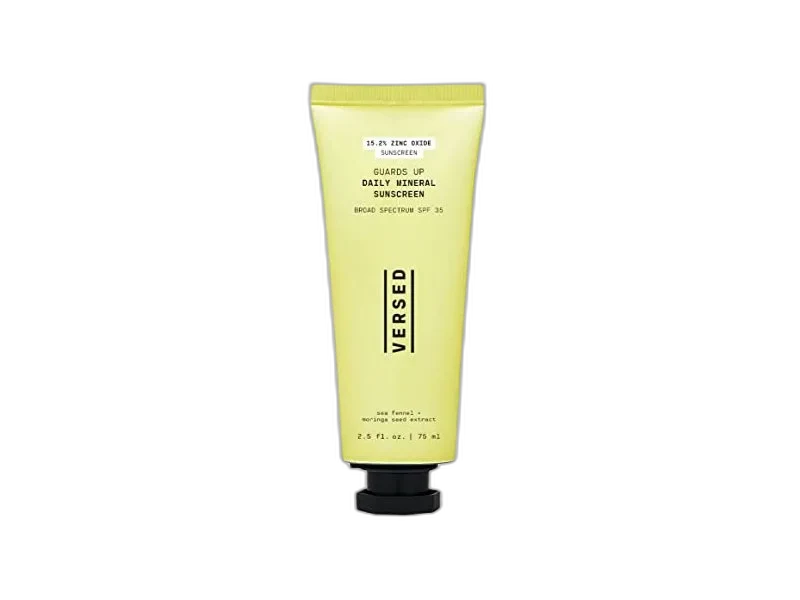
Guards Up Daily Mineral Sunscreen SPF 35
Clean Beauty Sun Shield
 Verified reviewer
Pros & cons.
- +Zinc oxide 15.2% provides stable, broad-spectrum UVA/UVB protection safe for pregnancy and sensitive skin
- +Iron oxides minimize white cast and add visible/blue light protection
- +Ethyl ferulate provides antioxidant photoprotection beyond basic UV blocking
- +Fragrance-free, silicone-free, and vegan with a minimal irritant profile
- +Comfortable satin finish that works under makeup and on bare skin
- +EWG Verified and widely available at Target at an accessible price point
- +Bisabolol and sodium hyaluronate add soothing and hydrating skincare benefits
- −Peachy tint may appear ashy or leave a visible cast on deeper skin tones
- −SPF 35 is lower than the SPF 50 many dermatologists recommend for outdoor activity
- −Not water-resistant — unsuitable for swimming or heavy exercise
- −Can pill under certain moisturizers when rubbed rather than patted into skin
- −Silicone-free texture is slightly less smooth than silicone-based mineral alternatives
The full review.
People avoid mineral sunscreen daily for reasons unrelated to UV protection. Mineral sunscreens work and have worked for decades. Zinc oxide is a well-studied UV filter in dermatology; it offers broad-spectrum coverage, photostability, and a safety profile that is pregnancy-safe and reef-friendly. The issue is cosmetic elegance—specifically, its historic lack.
Versed’s Guards Up solves this without typical shortcuts. It uses no silicones for artificial slip, no chemical UV filters to lower the zinc oxide load, and no fragrance to mask the sunscreen smell. It contains 15.2% zinc oxide in a base that feels good on the face.
Iron oxides are the formula’s first clever move. They create a subtle peachy tint that does two things: aesthetically, they neutralize the white cast that makes most mineral sunscreens look like face paint. Functionally, iron oxides protect against visible light and high-energy visible (HEV/blue) light—wavelengths zinc oxide does not fully cover and research links to hyperpigmentation, especially in melanin-rich skin. This small ingredient does a lot of work.
The second clever move is ethyl ferulate, a stable ferulic acid derivative. Ferulic acid is an antioxidant that enhances sunscreen photoprotective efficacy by neutralizing free radicals from UV radiation that penetrates past the physical UV filter. Because of this, Guards Up does more than block UV—it mops up oxidative damage from any UV that slips through.
Texture
Mineral sunscreens usually fail at texture, but Guards Up mostly succeeds. It applies as a lightweight cream that blends without the thick, draggy resistance that makes application difficult. The satin finish settles within one or two minutes—it is not dewy enough to look wet, nor matte enough to look flat. It is comfortable for daily wear under makeup or alone, unlike many mineral sunscreens.
The formula is silicone-free. Since chemists usually use silicones to achieve elegant mineral textures, this is notable. Versed compensates for the lack of silicones with a blend of fatty alcohols, plant-derived esters, and jojoba esters to create slip and spreadability without synthetic smoothness. The result is slightly less primer-like than silicone-based mineral sunscreens but remains comfortable.
Bisabolol—a chamomile derivative—adds anti-inflammatory benefits, and sodium hyaluronate provides hydration. These supporting ingredients make the sunscreen feel like skincare rather than just a UV shield. Apple fruit extract and moringa seed extract add antioxidant support.
Common Complaints
The limitations are few but important. The peachy tint targets light-to-medium skin tones; users with deeper complexions may see an unwanted cast that plain zinc oxide would not leave. SPF 35 is adequate for daily commuting and office work, but it is below the SPF 50 dermatologists generally recommend for extended outdoor exposure. Also, the formula is not water-resistant; you need a dedicated sport sunscreen for beach days, pool sessions, or heavy exercise.
Some users report pilling. Depending on your moisturizer and serum, Guards Up can ball up when rubbed instead of pressed into the skin. The fix is to apply by pressing and patting rather than rubbing, but pilling is a common issue with silicone-free sunscreens.
Packaging
At approximately $22 for 50ml, Guards Up is competitively priced for a clean mineral sunscreen. It costs less than premium mineral options and is widely available at Target, making it an accessible clean beauty sunscreen. The formulation is fragrance-free, silicone-free, paraben-free, cruelty-free, vegan, and EWG Verified—meeting all clean beauty demands without compromising SPF efficacy.
Best for
This is one of the most pleasant mineral sunscreens available at a drugstore price point for daily wear on light-to-medium skin tones. It does not feel like a compromise, which is the highest compliment for a mineral sunscreen.
Ingredient analysis.
Full INCI list
Active Ingredient: Zinc Oxide 15.2%. Inactive Ingredients: Water/Aqua/Eau, Butyloctyl Salicylate, Isodecyl Neopentanoate, Calcium Sodium Borosilicate, Diheptyl Succinate, C18-21 Alkane, Erythritol, Cetearyl Alcohol, Sodium Stearoyl Glutamate, Capryloyl Glycerin/Sebacic Acid Copolymer, Propanediol, Arachidyl Alcohol, Glycerin, Pyrus Malus (Apple) Fruit Extract, Caprylic/Capric Triglyceride, Tocopherol, Caprylyl Glycol, Coco-Glucoside, Ethyl Ferulate, Behenyl Alcohol, Cetyl Alcohol, Arachidyl Glucoside, Bisabolol, Polyhydroxystearic Acid, Citric Acid, Sodium Gluconate, Xanthan Gum, Octyldodecyl Oleate, Caprylhydroxamic Acid, Hydrolyzed Jojoba Esters, Sodium Hyaluronate, Crithmum Maritimum Extract, Maltodextrin, Moringa Oleifera Seed Extract, Aloe Barbadensis Leaf, Iron Oxides (CI 77491, CI 77492)
Skin match.
The science.
The Science
Zinc oxide at 15.2% concentration provides broad-spectrum protection for UVA (320-400nm) and UVB (280-320nm) wavelengths. Chemical UV filters absorb UV radiation and convert it to heat, but zinc oxide reflects and scatters UV photons. This physical mechanism provides photostable protection that does not degrade over time.
Iron oxides add protection against visible light (400-700nm), especially in the blue/violet range. A 2010 study in the Journal of Investigative Dermatology shows visible light induces hyperpigmentation, particularly in Fitzpatrick skin types IV-VI. Research confirms iron oxide-containing sunscreens protect better against visible light-induced pigmentation than zinc oxide alone.
Ethyl ferulate, a stable ester of ferulic acid, provides antioxidant photoprotection by neutralizing reactive oxygen species from UV exposure. The formulation combines a physical UV filter, visible light protection, and antioxidant defense into a multi-layered photoprotection strategy.
Dermatologist Perspective
Dermatologists recommend zinc oxide-based mineral sunscreens for patients with sensitive skin, rosacea, or during pregnancy. Board-certified dermatologists say Guards Up's 15.2% zinc oxide concentration works for daily protection, though they typically recommend SPF 50 for patients with a history of skin cancer or melasma. The iron oxide addition helps prevent visible light-induced hyperpigmentation. Dermatologists approve of the fragrance-free, clean formula but remind patients that reapplication every 2 hours is essential regardless of SPF number.
Where it fits in your routine.
Apply a generous amount to the face and neck after moisturizer as your final morning step. Use about a nickel-sized amount for the face. Press and pat the formula into skin instead of rubbing to prevent pilling. Let it set for 1-2 minutes before applying makeup. Reapply every 2 hours during extended sun exposure. Use a thorough double cleanse in the evening to remove the mineral filter.
At about $22 for 50ml, Guards Up offers high value for a clean mineral sunscreen. Its EWG Verified status and Target availability make it a highly accessible choice for consumers wanting a vetted, clean mineral SPF. A larger 2.5 oz size also provides better per-unit value.
Guards Up works for anyone needing a daily mineral sunscreen that feels comfortable for everyday wear. It suits sensitive skin, pregnant or nursing individuals, and clean beauty enthusiasts seeking EWG-verified sun protection. The peachy tint minimizes white cast on light-to-medium skin tones.
Deep skin tones should swatch-test first, because the peachy tint may not blend invisibly. People needing water-resistant SPF for outdoor sports should use dedicated sport sunscreens. If you need SPF 50+ for medical reasons, this SPF 35 may not be enough.
Product details.
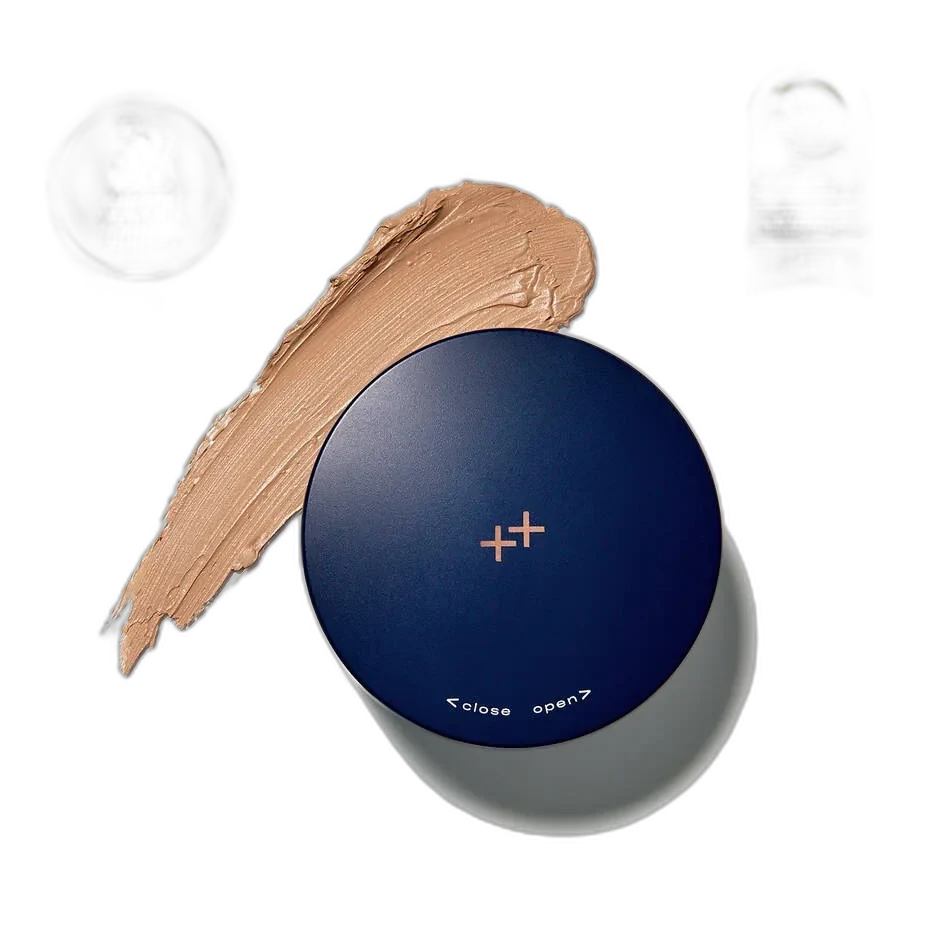
Lightweight cream with a subtle peachy tint that leaves a semi-matte, skin-like finish
No added fragrance — virtually unscented
Peach-colored squeeze tube with pump dispenser
This lightweight cream has a visible peachy tint from the iron oxides. It blends easily and lacks the thick, chalky drag of many mineral sunscreens. The tint neutralizes the white cast within 1-2 minutes of application. The finish is satin to semi-matte—neither dewy nor completely matte. It feels comfortable for daily wear and is not heavy or occlusive.
1-2 months with daily facial application
12 months
All Year
The backstory.
Guards Up launched as Versed expanded from treatment products into daily essentials. The brand's mission of accessible clean beauty demanded a mineral sunscreen that would not compromise on cosmetic elegance — a notoriously difficult balance. The formula went through multiple iterations to achieve a mineral SPF that blends without white cast while maintaining the brand's strict ingredient exclusion list.
About Versed
Established Brand (5–20 years)Katherine Power, co-founder of Who What Wear, founded Versed in 2019. The brand sells mostly through Target as accessible clean beauty. Versed uses dermatologist consultation for its formulas and avoids common irritants, though dermatologists did not develop the brand. Versed has a strong retail presence after 7 years on the market.
Common myths.
Mineral sunscreens always leave a white cast
Zinc oxide is naturally white, but this formula adds iron oxides for a peachy tint. This tint reduces the white cast on light-to-medium skin tones. Deeper skin tones may still show some cast, but it is less than untinted mineral formulas.
SPF 35 is not enough protection
SPF 35 blocks about 97% of UVB rays, while SPF 50 blocks about 98%. This difference is marginal for daily non-recreational use. Reapplication every 2 hours and applying an adequate amount matters more.
FAQ.
Does Versed Guards Up leave a white cast?
Iron oxides in the formula create a subtle peachy tint. This reduces the white cast typical of mineral sunscreens. Light-to-medium skin tones show minimal to no white cast. Deeper skin tones may show some cast.
Is Versed Guards Up safe during pregnancy?
Yes. Dermatologists and the FDA consider zinc oxide one of the safest UV filters during pregnancy. The formula lacks chemical UV filters, retinoids, and other ingredients commonly restricted during pregnancy.
Is SPF 35 enough protection?
SPF 35 blocks about 97% of UVB rays, which is adequate for daily commuting, office work, and incidental sun exposure. Dermatologists typically recommend SPF 50 or higher and reapplication every 2 hours for extended outdoor activity.
Can I wear makeup over Versed Guards Up?
The satin finish works well under makeup. Let the formula set for 1-2 minutes before you apply foundation or powder. Press the sunscreen into skin instead of rubbing to prevent pilling.
Is this sunscreen reef-safe?
Yes. Versed Guards Up uses zinc oxide as its only UV filter, which does not damage coral reefs. The formula lacks oxybenzone and octinoxate.
What the community says.
"Minimal white cast for a mineral sunscreen"
"Lightweight, non-greasy texture"
"Subtle peachy tint blends well on light-to-medium skin tones"
"No fragrance or irritating ingredients"
"Peachy tint can look ashy on deeper skin tones"
"SPF 35 is lower than some prefer for extended sun exposure"
"Can pill under certain moisturizers or primers"
"Not water-resistant for swimming or heavy sweating"
Featured in.
People also looked at.