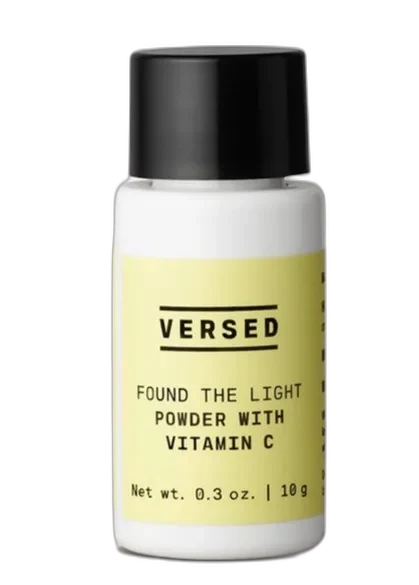
Found the Light Vitamin C Powder
Fix for Oxidized Vitamin C
 Verified reviewer
Pros & cons.
- +Stability-focused format sidesteps the oxidation problem of liquid vitamin C
- +3-O-ethyl ascorbic acid is meaningfully gentler than pure L-ascorbic acid
- +Tapioca starch base feels soft and does not sting reactive skin
- +Long shelf life lets you buy extra without worrying about going bad
- +Fragrance-free, alcohol-free, and pregnancy-safe
- +Flexible dosing — start small and work up as tolerated
- +Vegan and cruelty-free formulation
- −Ethyl ascorbic acid has a weaker evidence base than pure L-ascorbic acid
- −Dosing is imprecise — hard to know the effective concentration on skin
- −Palm-mixing is inconvenient compared to a pump serum
- −Results on established dark spots are slower and more subtle than high-strength serums
- −Not the right format for users who want a fast, simple morning routine
The full review.
Everyone who has used a traditional vitamin C serum for long enough has watched the same thing happen. You buy a bright-clear serum in a dark glass bottle, you apply it religiously for a few weeks, and then one morning you pump out a drop and realize the liquid has turned champagne-to-iced-tea-brown. That’s oxidation. L-ascorbic acid — the most clinically validated form of topical vitamin C — is chemically unstable in water, and every minute your serum is exposed to air is a minute it is degrading. By the time your bottle is half-empty, you are often applying a significantly weakened product. The category has invented dozens of partial workarounds for this: dark glass, airless pumps, anhydrous silicone bases, and a family of vitamin C derivatives engineered for better stability. Found the Light takes the derivative-plus-powder route.
Open the little glass jar and you’ll find something that looks like fine white face powder — and that’s essentially what it is. The base is tapioca starch, with aluminum starch octenylsuccinate added for slip and oil absorption, a trace of water, the active, and sodium benzoate as a preservative. The active is 3-O-ethyl ascorbic acid, a modified form of vitamin C that is meaningfully more stable in water than plain L-ascorbic acid because the ethyl group protects it from oxidation and then cleaves off in the skin to regenerate ascorbic acid. In principle, you get the brightening and antioxidant benefits of vitamin C without the inconvenient habit of going brown in the bottle. The powder format adds an additional layer of protection — because there is almost no water in the jar, even the ethyl ascorbic acid has a long, quiet shelf life until you activate it.
The way you use it is the part that takes getting used to. You tap a small amount of powder into your palm, add a drop of a water-based serum or moisturizer, and stir it in with a clean fingertip until it dissolves into a thin, workable paste. Then you apply to clean skin, follow with your regular moisturizer and sunscreen, and you’re done. The first few times, you will almost certainly use too much or too little, discover that the powder does not mix equally well into every carrier, and spend more time on this single step than on the rest of your morning routine combined. It is a learning curve. After a week or two, the workflow becomes muscle memory and you stop thinking about it, but the added friction is real and the product is not for anyone who actively wants fewer steps.
The honest assessment of the active itself is where this product needs to be read carefully. 3-O-ethyl ascorbic acid has some published research supporting its stability and its skin-brightening effect, and it is one of the better-studied vitamin C derivatives in a crowded field that also includes sodium ascorbyl phosphate, magnesium ascorbyl phosphate, ascorbyl glucoside, and tetrahexyldecyl ascorbate. What it does not have is the thirty-plus years of dermatology research behind pure L-ascorbic acid, which is still the reference standard for topical vitamin C efficacy on hyperpigmentation, collagen stimulation, and UV photoprotection. Ethyl ascorbic acid is a reasonable proxy, but its bioequivalent concentration in skin is not directly comparable to L-ascorbic acid at the same percentage, and the published evidence for its clinical endpoints is thinner.
For most users, the practical effect is a gentler vitamin C experience with a slower, subtler trajectory of results. Used daily over a couple of months, Found the Light can produce a visible brightening glow and modest softening of dullness. Deeper post-inflammatory hyperpigmentation and established sun-damage dark spots respond less dramatically than they would to a high-strength L-ascorbic acid serum or a dermatologist-prescribed topical. That’s a reasonable trade-off if you have sensitive or reactive skin that has been irritated by traditional vitamin C serums in the past, because ethyl ascorbic acid is much less likely to sting than pure L-ascorbic acid at a low pH. It is also reasonable if you specifically want a stable product you can buy in bulk without worrying about it going bad. It is less reasonable if you have durable, well-tolerating skin and are comparing against a well-formulated traditional serum with a sensible shelf-life strategy.
For sensitive skin, the gentleness is a real asset. The tapioca-starch base is soft and non-irritating, there is no fragrance or alcohol, and the ethyl derivative is known to be tolerated by skin that flushes or stings with pure ascorbic acid. For reactive users who have given up on vitamin C entirely after bad experiences with high-strength serums, Found the Light is worth trying as a re-introduction. For fungal-acne-prone users, the formulation is free of the typical malassezia-feeding ingredients that disqualify many creams. For pregnant or breastfeeding users, vitamin C derivatives are generally considered safe, and this product has no additional concerning ingredients.
On value, the calculation depends heavily on how much use you get out of one jar and how the powder format compares to the serum you’d otherwise buy. At around twenty dollars for a 0.3 ounce jar, Found the Light lasts three to four months at daily use, which puts the per-year cost in line with drugstore vitamin C serums and well under cult department-store options. The stability advantage is real — there is no brown-bottle degradation to factor in — but the ethy l ascorbic acid dosing is invisible to the buyer, and the evidence base is weaker than for pure L-ascorbic acid, so you are paying for a different risk profile rather than strictly better value. For the right user, the math works. For the wrong user, a straightforward fresh traditional serum used up within three months is probably a more productive twenty dollars.
Ingredient analysis.
Full INCI list
Tapioca Starch, Aluminum Starch Octenylsuccinate, Water, 3-O-Ethyl Ascorbic Acid, Sodium Benzoate
Skin match.
The science.
The Science
The headline ingredient in Found the Light is 3-O-ethyl ascorbic acid, a vitamin C derivative created by attaching an ethyl group to the third oxygen of the ascorbic acid molecule. This modification significantly improves stability in water compared to plain L-ascorbic acid and allows the molecule to survive in formulations that would otherwise oxidize quickly. Once inside the skin, enzymatic cleavage of the ethyl group is thought to regenerate ascorbic acid, providing the downstream benefits of topical vitamin C including antioxidant activity, collagen synthesis cofactor support, and inhibition of tyrosinase in melanocytes.
The evidence base for ethyl ascorbic acid is growing but thinner than for pure L-ascorbic acid. Published studies — often sponsored by ingredient manufacturers but peer-reviewed — have shown brightening effects on pigmented lesions and antioxidant activity in in vitro and small human trials, and the ingredient is commonly cited as one of the more promising vitamin C derivatives for topical use. What is missing is the large body of independent, long-duration clinical trials that support pure L-ascorbic acid as a treatment for photoaging and hyperpigmentation, and direct head-to-head comparisons between the two forms are rare. A sensible interpretation is that ethyl ascorbic acid is a reasonable derivative choice for users who cannot tolerate pure ascorbic acid, with the understanding that clinical results are likely to be slower and subtler.
The powder format itself is a separate formulation decision that is independent of the specific active. By delaying water contact until the point of application, powder delivery systems preserve the stability of water-sensitive actives regardless of which derivative is used, and this is the main reason the product can claim a long shelf life without relying on heroic packaging. The choice of tapioca starch as a base is sensible and well-tolerated on skin.
Dermatologist Perspective
Dermatologists generally view vitamin C derivatives like 3-O-ethyl ascorbic acid as reasonable alternatives to pure L-ascorbic acid, particularly for patients with sensitive or reactive skin who cannot tolerate a low-pH ascorbic acid serum. Board-certified dermatologists frequently note that the evidence base for derivatives is thinner than for pure ascorbic acid and that clinical expectations should be calibrated accordingly — gentler, slower, and less dramatic results on established hyperpigmentation. The typical clinical guidance for products like Found the Light is that they are appropriate for maintenance and mild brightening, that they should be used in the morning with strict sun protection, and that patients seeking significant improvement in dark spots or photoaging will usually get more traction from a well-formulated L-ascorbic acid serum or a dermatologist-prescribed topical like tretinoin. Derm perspectives on the powder format itself are generally positive — the stability advantage is real — but practical experience with palm-mixing products in a clinical population tends to be mixed, with many patients finding the extra step an obstacle to daily compliance.
Where it fits in your routine.
Apply once daily in the morning to clean skin. Tap a small amount of powder into your palm, add one drop of a water-based hydrating serum or a lightweight moisturizer, mix fast with a clean fingertip until the powder dissolves, and apply to the face and neck immediately. Follow with moisturizer and a broad-spectrum SPF 30 or higher. The powder base mixes into any water-based carrier, but some serums yield a smoother application than others — experiment to find a compatible pairing. Store the jar tightly closed away from humidity, heat, and direct sunlight, and keep it dry.
Found the Light costs around twenty dollars for a 0.3 oz jar. Daily use lasts three to four months, placing Found the Light in the middle of the vitamin C market. Its stability prevents oxidation-driven waste, making the yearly cost predictable and stockpiling safe. You do not pay for the strongest vitamin C active; ethyl ascorbic acid is gentler than pure L-ascorbic acid but has less clinical validation. The price is reasonable for users whose skin rejected traditional vitamin C serums before. For users comparing this to a well-formulated fresh L-ascorbic acid serum used within three months, buying a direct serum often uses the same twenty dollars more productively.
Users with normal, combination, oily, or reactive skin who want a gentle, stable daily vitamin C and accept the mix-it-yourself format. This works well for people irritated by pure L-ascorbic acid serums who want a gentler derivative, and for ingredient-focused shoppers seeking a simple, stability-first product.
Users with robust skin who tolerate and benefit from pure L-ascorbic acid serums get stronger clinical results and a simpler workflow. People with significant hyperpigmentation or deep photoaging want the most active vitamin C product available, as a well-formulated L-ascorbic acid serum generally delivers more. Anyone who dislikes extra morning routine steps will find palm-mixing friction undermines daily compliance.
Product details.
All Year Background
The backstory.
Found the Light launched in 2020 after the vitamin C powder category had been quietly growing for a few years among ingredient-focused consumers frustrated with their thirty-dollar vitamin C serums turning brown by month two. Versed's contribution was to translate the format into a mass-retail product at a clean-beauty-aligned price, with a single-ingredient INCI list that appealed directly to shoppers who had been burned by inactive, over-oxidized traditional serums.
About Versed
Established Brand (5–20 years)Versed launched in 2019 and released Found the Light around 2020. This product offers a stability-focused alternative to traditional liquid vitamin C serums. The brand does not publish peer-reviewed efficacy data. However, the formulation strategy uses a tapioca starch powder to carry 3-O-ethyl ascorbic acid. Users mix this fresh with a moisturizer or serum. This method bypasses the chronic stability problem of vitamin C in water-based formulas.
Common myths.
Vitamin C powder is more potent than any pre-mixed serum.
An anhydrous or properly stabilized aqueous L-ascorbic acid serum is just as potent if well-formulated. Powder avoids oxidation over time; it does not start at a higher potency. Daily powder use is almost always more active than a traditional serum opened six months ago.
You cannot use vitamin C and niacinamide together.
Modern research shows the historical "they cancel each other out" concern is overstated. Mixing pure ascorbic acid powder and a niacinamide serum in your palm produces nicotinic acid, which causes flushing in some users. Use them at different times of day to avoid this.
FAQ.
How do I use Versed Found the Light Vitamin C Powder?
Dispense a very small pinch of powder into your palm, add a drop of moisturizer or a water-based hydrating serum, mix quickly with a clean fingertip, and apply immediately to clean skin before the crystals fully dissolve and oxidize. Follow with moisturizer and sunscreen. Use once daily in the morning.
Can I mix Versed Found the Light with niacinamide?
Do not mix pure ascorbic acid powder with a niacinamide serum in one palm-mix. This combination briefly generates nicotinic acid and causes temporary flushing. Use vitamin C in the morning and niacinamide at night, or wait at least an hour between layers.
How long does Versed Found the Light last?
One 0.28 oz jar lasts 3-4 months with daily use. The powder stays shelf-stable for up to two years unopened. You can buy extra jars without oxidation risks — a major advantage over liquid vitamin C serums.
Does Versed Found the Light sting?
Mild tingling on first use is normal, especially for vitamin C beginners. Significant stinging or burning means your carrier product is too acidic or concentrated — use less powder and a more hydrating carrier. Stop use if significant irritation persists.
Is Versed Found the Light better than a traditional vitamin C serum?
It depends. A fresh, well-formulated traditional vitamin C serum works just as well, but vitamin C serums lose potency fast after opening. Found the Light solves oxidation entirely. This makes Found the Light a more reliable long-term choice for users who do not finish serums quickly.
Can I use Versed Found the Light every day?
Yes, use it once daily in the morning. Start with a very small pinch of powder and increase the amount as your skin tolerates it. Daily use produces meaningful brightening results over several months.
Is Versed Found the Light pregnancy-safe?
Vitamin C is generally pregnancy-safe. Pure ascorbic acid is one of the better-tolerated actives during pregnancy. Check with your obstetrician if you have specific concerns about any skincare change during pregnancy.
What the community says.
"Solves the oxidation problem of pre-mixed vitamin C serums"
"One small tube lasts months"
"Flexible dosing — start low and work up"
"No fragrance or irritating additives"
"Mixing in the palm is inconvenient and messy"
"Dosing is imprecise — hard to know how much you're using"
"Stings if used with the wrong carrier product"
"Niacinamide interaction is confusing for beginners"
People also looked at.