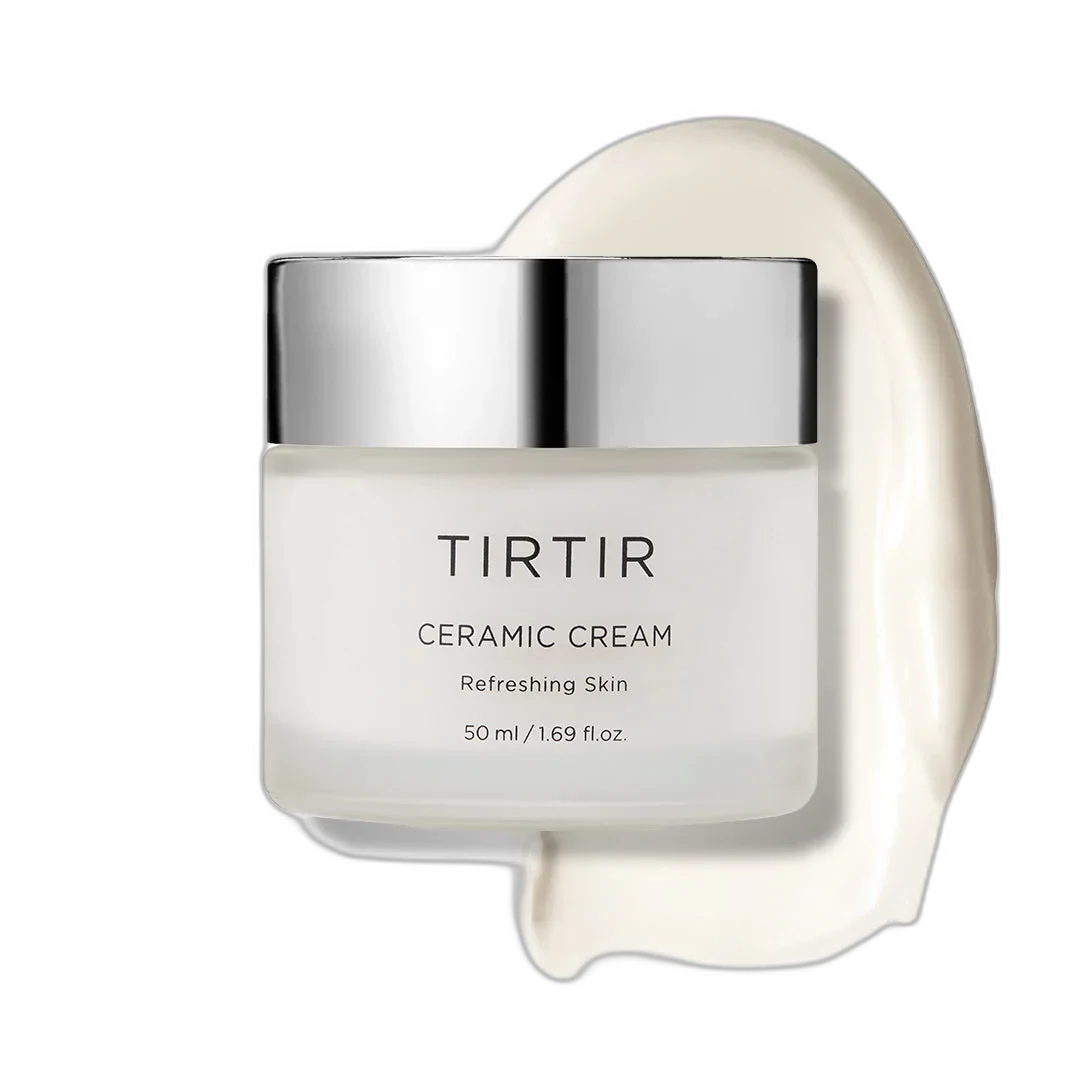
Ceramic Cream
Glass Skin Cream
 Verified reviewer
Pros & cons.
- +Two identical-to-skin ceramides at meaningful cosmetic concentration
- +Polyglutamic acid adds a layered humectant story beyond standard hyaluronic acid
- +Centella asiatica and botanical complex support reactive skin
- +Cushiony rich texture delivers genuine glass-skin finish
- +Fragrance-free formulation suitable for sensitive skin
- +Well-tolerated by barrier-compromised and post-active skin
- +Available in a Light version for combination and oily skin types
- +Reasonable price for the formulation quality compared to prestige K-beauty
- −Too rich for most oily and acne-prone skin
- −Non-airless jar packaging will degrade actives over time
- −Contains beeswax — not suitable for vegan routines
- −Comedogenic ingredients (isopropyl myristate, olive oil) for sensitive acne-prone skin
- −Post-viral price increases have eroded the original value proposition
The full review.
Many dismiss viral TikTok K-beauty products as hype with thin formulations. TIRTIR earned this reputation in 2023 when the Mask Fit Red Cushion exploded on Beauty TikTok, making the brand one of the most-searched Korean labels on Sephora’s wishlist tracker. The Ceramic Cream is different because it predates that wave by three years. TIRTIR launched it in 2020, long before international skincare communities knew the brand, and it was already well-regarded among Korean skincare enthusiasts. When the brand became famous in 2023, the Ceramic Cream followed. The formulation fundamentals remain strong despite post-viral pricing.
Ceramides drive the formula. Two identical-to-skin ceramides—Ceramide NP and Ceramide 3—sit at the bottom of the INCI at combined concentrations estimated by ingredient databases at 0.25 to 0.45%. This is higher than the trace ceramide inclusions in most under-$30 moisturizers that use them for marketing without providing barrier-repair benefits. TIRTIR sits closer to the prestige tier here; while not as high as specialized barrier creams, the ceramides work alongside the emollient system. Combined with shea butter, macadamia oil, and olive oil, the formula uses modern barrier-repair chemistry.
Polyglutamic acid is the second key ingredient. This peptide-based humectant is a K-beauty alternative or complement to hyaluronic acid. Polyglutamic acid holds more water than hyaluronic acid per gram and forms a thin film on the skin to lock in moisture. In the Ceramic Cream, this film and the silicone-shea-beeswax occlusive system seal in the hydration from the glycerin, butylene glycol, and trehalose at the top of the INCI. This multi-layered approach creates the characteristic glossy ‘glass skin’ finish on first application.
The botanical complex acts more as a brand signature than a treatment. Centella asiatica, licorice root, green tea, rosemary, chamomile, baicalin, and others are at supporting-cast levels. They provide mild antioxidant and soothing effects for users layering this over compromised or post-active skin, but these concentrations do not deliver measurable treatment benefits. The centella is high enough on the list to provide meaningful soothing and is supported by Korean dermatological research as a barrier-supportive ingredient.
Texture
The texture matches the ‘ceramic’ name. It is thick, cushiony, and substantial, similar to a cold cream rather than a gel. It melts into the skin within thirty seconds to a minute and leaves a glossy finish. It works well for dry, normal, or barrier-compromised skin; the cream cocoons the skin without smothering it, preventing tightness. For oily skin, it is too heavy. The shea butter, beeswax, olive oil, and isopropyl myristate can trap sebum and cause congestion in acne-prone users; the comedogenic ingredient flags are real. TIRTIR makes a Ceramic Cream Light version that replaces heavy emollients with a gel-cream base while keeping the same ceramide and polyglutamic acid profile. Choose that version for oily skin or humid climates.
Packaging
The packaging is the formula’s main weakness. It uses a frosted glass jar with a screw lid. While aesthetically pleasing, it is not airless, so the ceramides and polyglutamic acid degrade faster than in a pump or tube. Using a jar for a product focused on active barrier-repair concentrations contradicts the formulation goals. Use clean fingers or a spatula, screw the lid tight, and finish the jar within eight months of opening rather than waiting for the twelve-month PAO marker. This product rewards quick consumption.
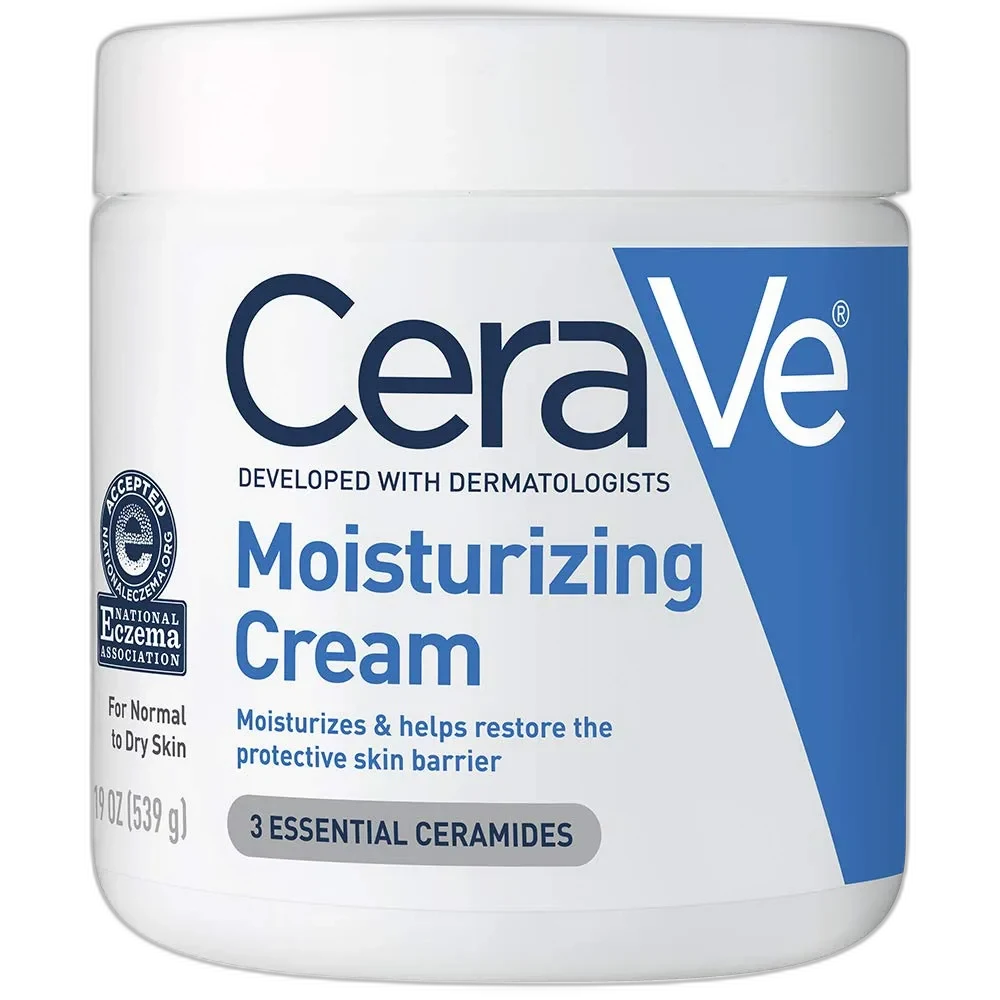
The value math has changed. TIRTIR has raised prices since the 2023 viral wave, and the Ceramic Cream increased too. At $25 for 50ml, the per-ml cost is reasonable for a K-beauty cream with this active profile, but less compelling than the pre-viral price. Compared to CeraVe Moisturizing Cream (which is significantly cheaper, ceramide-rich, fragrance-free, but uses petroleum derivatives and has a clinical texture), TIRTIR offers a better sensory experience and more sophisticated ingredients at roughly twice the per-ounce cost. Compared to prestige K-beauty barrier creams from Sulwhasoo or Tatcha at $60-90, TIRTIR is the value option with high formulation quality. Your choice depends on whether you value sensory experience and K-beauty botanicals over raw per-dollar barrier repair.
TIRTIR is a young company with a limited independent clinical track record for individual products. The brand has built credibility through user volume and technical formulation quality, but it lacks the decades of dermatological research held by legacy K-beauty brands like Sulwhasoo or Innisfree. The Ceramic Cream is one of the brand’s stronger formulations and has user validation, but data confidence is medium. We have a few years of real-world experience, not the twenty years needed to prove how this formula performs across all populations and conditions over time.
Who this is for
Who this is for: dry, normal, or barrier-compromised skin types wanting a K-beauty barrier cream with meaningful ceramide content and a glossy glass-skin finish. It is good for fall and winter use, post-active recovery, and reactive skin needing soothing. Who it isn’t for: oily or acne-prone skin (use the Light version), shoppers needing airless packaging for stability, vegan-only routines (contains beeswax), and budget-conscious shoppers who can get similar barrier benefits from CeraVe for less.
Ingredient analysis.
Full INCI list
Water, Glycerin, Olea Europaea (Olive) Fruit Oil, Butylene Glycol, Macadamia Ternifolia Seed Oil, Cyclopentasiloxane, Hamamelis Virginiana (Witch Hazel) Extract, Beeswax, Cetearyl Alcohol, Cetyl Ethylhexanoate, Cyclohexasiloxane, Isopropyl Myristate, Polyglyceryl-3 Methylglucose Distearate, Polysorbate 60, Stearic Acid, PEG-100 Stearate, Glyceryl Stearate, Dimethiconol, Sodium Polyacrylate, 1,2-Hexanediol, Caprylyl Glycol, Butyrospermum Parkii (Shea) Butter, Camellia Sinensis Leaf Extract, Rosmarinus Officinalis (Rosemary) Leaf Extract, Chamomilla Recutita (Matricaria) Flower Extract, Centella Asiatica Extract, Glycyrrhiza Glabra (Licorice) Root Extract, Polygonum Cuspidatum Root Extract, Scutellaria Baicalensis Root Extract, Illicium Verum (Anise) Fruit Extract, Disodium EDTA, Betaine, Allantoin, Trehalose, Polysorbate 20, Polyglutamic Acid, Xylitol, Ceramide NP, Ceramide 3
Skin match.
The science.
The Science
The ceramide complex provides this formula's strongest evidence base. Ceramides are structural lipids making up roughly 50% of the intercellular matrix in healthy stratum corneum. Their depletion drives barrier dysfunction in conditions like atopic dermatitis, dry skin, and aging. Peer-reviewed research on ceramide replacement shows that topical application of identical-to-skin ceramides—especially when paired with cholesterol and free fatty acids in physiologic ratios—supports barrier repair and reduces transepidermal water loss. The Elias barrier model has guided ceramide-based formulation design for over two decades. It suggests effective barrier-repair products use multiple ceramide subtypes instead of one ceramide at a higher concentration. TIRTIR's pairing of Ceramide NP and Ceramide 3 follows this principle, even if absolute concentrations are modest compared to medical-grade barrier-repair products.
Polyglutamic acid is a newer cosmetic ingredient with an emerging evidence base. This peptide polymer comes from fermented soybeans. Its main cosmetic claim is a water-binding capacity per molecule significantly higher than hyaluronic acid. In vitro and small clinical studies show polyglutamic acid forms a thin film on the skin surface and aids short-term hydration, especially when paired with other humectants. The strongest evidence supports its film-forming and humectant effects rather than direct cellular activity, making it a hydration-system component rather than a treatment active.
Centella asiatica has well-developed evidence for anti-inflammatory and barrier-supportive effects in topical use. Asiaticoside and madecassoside, the two main pentacyclic triterpenoids in centella, appear extensively in Korean dermatological literature and many K-beauty barrier-repair products. Research shows they support fibroblast proliferation, collagen synthesis, and anti-inflammatory activity at concentrations used in cosmetic formulations.
The supporting humectants—glycerin, butylene glycol, betaine, trehalose—are all well-studied for hydration, with glycerin being the most characterized. Trehalose has documented evidence for protein stabilization under dehydration stress, which matters for compromised skin.
The thick emollient system (shea butter, beeswax, olive oil, macadamia oil, isopropyl myristate) provides the occlusive component. These ingredients are well-established in cosmetic chemistry, but several carry comedogenic potential for acne-prone users—a factor that limits the formula's universality.
Dermatologist Perspective
Dermatologists often recommend ceramide-rich moisturizers as foundational therapy for patients with dry skin, atopic dermatitis, eczema, and barrier dysfunction. Board-certified dermatologists generally find products with multiple identical-to-skin ceramides at meaningful concentrations more effective than single-ceramide token formulations. This positions TIRTIR Ceramic Cream favorably in the K-beauty barrier-cream category. Professional caution focuses on the comedogenic ingredients (isopropyl myristate, olive oil, beeswax) for patients with active acne or fungal acne, as these can cause congestion and breakouts in susceptible users. Dermatologists managing those patients often recommend the Light version or a different formulation. For dry, sensitive, or barrier-compromised patients without acne, the formula is typically well-tolerated and a reasonable mid-tier K-beauty choice. However, the non-airless jar packaging is suboptimal for active stability, and the brand's short track record means long-term confidence is still building.
Where it fits in your routine.
Apply twice daily after cleansing, toning, and treatment serums as your last hydration step. Scoop a pea-sized amount onto clean fingers or a spatula to protect the non-airless jar, warm it, and press into damp skin using upward motions. For extra-dry nights, use a thicker layer as a sleeping mask. This cream works well with watery essences and lighter serums underneath; it traps water-soluble actives against the skin while delivering ceramide and polyglutamic acid.
At $25 for 50ml, this works out to about $0.50 per ml — reasonable for a K-beauty barrier cream with this ceramide and polyglutamic acid profile, but not the bargain it was at the brand's pre-2023 pricing. Compared to CeraVe Moisturizing Cream (significantly cheaper, ceramide-rich, but more clinical and fragrance-free without the K-beauty botanical aesthetic), TIRTIR offers a more sensorially pleasing experience at roughly twice the per-ml cost. Compared to prestige K-beauty barrier creams at $60-90, TIRTIR is the smarter value choice with a meaningful share of the formulation quality. The 100ml size offers slightly better per-ml value for committed daily users, but the jar packaging means buying smaller and finishing faster is the right move for active stability. Where this lands in your personal calculus depends on how much you value the K-beauty experience and the supporting botanical complex over raw per-dollar barrier-repair efficacy.
Dry, normal, or barrier-compromised skin types want a K-beauty barrier cream with high ceramide content and a glossy glass-skin finish. It works well for fall and winter, post-active recovery, and sensitive skin that needs soothing.
Oily or acne-prone skin (try the Ceramic Cream Light or a different category entirely), vegan routines (contains beeswax), users needing airless packaging for active stability, and budget-conscious shoppers — CeraVe Moisturizing Cream offers similar barrier benefits at about half the price.
Product details.
Rich, cushiony cream that melts into a glossy, dewy finish
Fragrance-free with a faint clean ingredient note
50ml white frosted glass jar with screw lid
The first application feels thick. The cream sinks in within a minute and leaves skin with a glossy 'glass skin' finish. Some users see immediate plumping. It causes no tingling or purging. It works well over watery essences.
3-4 months with twice-daily face application
12 months
fall winter
The backstory.
TIRTIR launched in South Korea in 2018 with the Mask Fit Cushion as its flagship product. The Ceramic Cream debuted in 2020 as the brand's first major skincare extension beyond base makeup, designed to deliver the 'glass skin' finish that was central to TIRTIR's identity in a treatment moisturizer format. The brand gained significant international attention in 2023 when its Red Cushion went viral on TikTok, which carried over to growing visibility for the rest of the lineup.
About TIRTIR
Emerging Brand (2–5 years)TIRTIR launched in South Korea in 2018 and gained significant international visibility starting in 2023 through TikTok virality of its Mask Fit Red Cushion. The brand's formulations use well-studied K-beauty ingredients but the company has a relatively short track record and limited independent clinical validation of specific products.
Common myths.
You only need ceramides if your skin is dry
Ceramides maintain the skin barrier for all skin types. They are structural components of healthy skin, regardless of oiliness. This specific cream has a texture too thick for oily skin, but ceramides are universally relevant.
Polyglutamic acid is a marketing version of hyaluronic acid.
They are chemically distinct. Polyglutamic acid is a peptide-based humectant that holds more water per molecule than hyaluronic acid. It forms a thin film on the skin surface. This is why people combine the two for layered hydration instead of using them as substitutes.
FAQ.
Is it good for oily skin?
Not the best fit. The thick emollient base (shea butter, beeswax, olive oil, isopropyl myristate) makes this cream too heavy for most oily skin types. TIRTIR also makes a Ceramic Cream Light version for combination and oily skin.
Is this safe for sensitive skin?
Yes, generally. The fragrance-free formulation, centella asiatica, and ceramide complex work well for reactive skin. Comedogenic ingredients may affect acne-prone users, and beeswax affects users with bee product allergies.
How does it compare to CeraVe Moisturizing Cream?
The positioning differs. CeraVe is fragrance-free, comes in a jar, has high ceramide levels, and costs much less — but uses petroleum derivatives and a clinical texture. TIRTIR uses K-beauty styling with botanical extracts, polyglutamic acid, and a glossier "glass skin" finish, but costs roughly twice as much per ounce.
What's the difference between the original and the Light version?
The Ceramic Cream Light uses the same ceramide and polyglutamic acid ingredients in a lighter gel-cream base. It removes the shea butter and beeswax, making it better for combination and oily skin types that want the actives without a thick feel.
Is it pregnancy-safe?
Yes. The formula has no retinoids, no salicylic acid, and no other actives on standard pregnancy-caution lists.
Why did the price go up after it went viral?
TIRTIR's brand visibility grew after the Red Cushion went viral on TikTok in 2023. The brand has raised prices across its lineup as international demand increased. The Ceramic Cream is one of the products affected by this repricing.
What the community says.
"glass skin finish"
"cushiony texture"
"real ceramide content"
"helps winter dryness"
"calms reactive skin"
"too rich for oily skin"
"jar packaging not airless"
"contains beeswax (not vegan)"
"price increased after viral popularity"