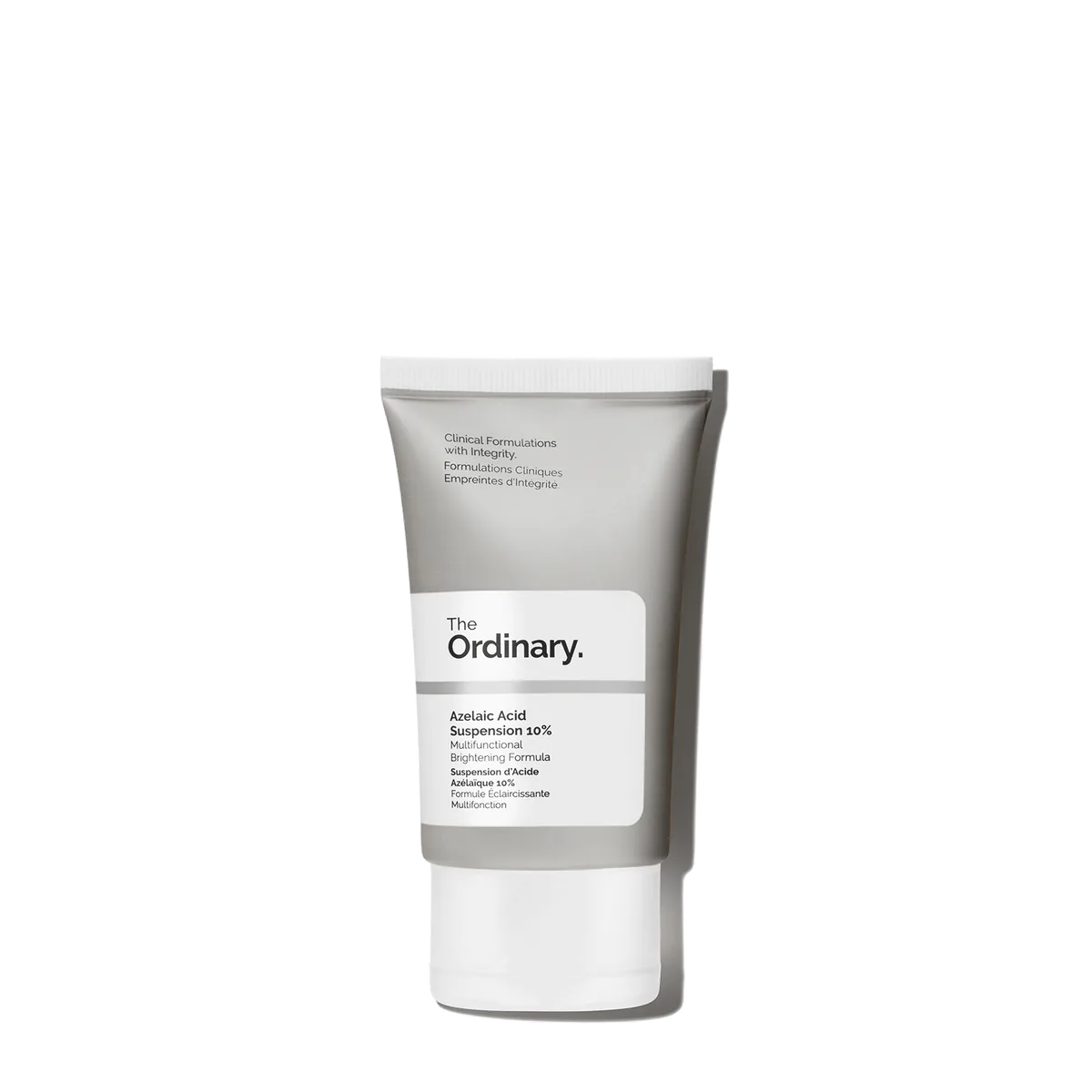
Azelaic Acid Suspension 10%
Multi-Tasking Skin Clarifier
 Verified reviewer
Pros & cons.
- +Multi-pathway active that simultaneously treats acne, rosacea, and hyperpigmentation
- +FDA Pregnancy Category B — one of the safest effective acne treatments during pregnancy
- +Dimethyl isosorbide penetration enhancer addresses azelaic acid's poor OTC absorption
- +Matte, primer-like finish is a bonus feature for oily skin types
- +25,000+ user reviews with consistently positive feedback on acne scar fading
- +Costs $12.20 versus $150+ for prescription azelaic acid products
- +Vitamin E provides complementary antioxidant support
- +No fragrance, no alcohol, no parabens in the formula
- −Thick, waxy suspension texture is heavy and divisive among users
- −Significant pilling when layered with other skincare products or makeup
- −Slightly gritty feel from undissolved azelaic acid particles during application
- −Can leave a noticeable white cast, especially on deeper skin tones
- −Contains silicones and polysorbates — not suitable for fungal acne
- −Initial stinging or burning sensation during the first week of use
The full review.
Dermatologists use azelaic acid for many different conditions. For acne, azelaic acid kills C. acnes bacteria and normalizes the follicular keratinization that traps sebum. For rosacea, it is anti-inflammatory and reduces erythema and papules. For hyperpigmentation, it inhibits tyrosinase to fade dark spots without the bleaching risks of hydroquinone. It is the Swiss Army knife of topical dermatology, and The Ordinary sells the maximum OTC version for twelve dollars.
This formulation is a suspension. The azelaic acid particles are not fully dissolved in the vehicle, creating a slightly gritty texture that polarizes users from the first application. If you have used a silicone-based primer, the base feels familiar: smooth, waxy, and matte once dry. That matte finish is deliberate. The three silicones in the formula — dimethicone, dimethicone/bis-isobutyl PPG-20 crosspolymer, and polysilicone-11 — create a film that holds the azelaic acid particles against the skin for prolonged contact, maximizing the time the active spends where it can work.
The inclusion of dimethyl isosorbide as a penetration enhancer is a smart formulation decision. Azelaic acid’s biggest limitation at OTC concentrations is poor skin penetration; it is a relatively large, polar molecule that does not easily traverse the stratum corneum’s lipid matrix. At prescription strength (15-20%), concentration compensates. At 10%, you need help getting it where it needs to go. Dimethyl isosorbide provides that help, which separates this formula from simpler azelaic acid creams.
The clinical evidence for azelaic acid is among the strongest in topical dermatology. A 2023 systematic review in the Journal of Cosmetic Dermatology analyzed 20 rosacea studies and found significant improvement in erythema severity and inflammatory lesion counts versus vehicle at 12 weeks. Sixteen acne studies showed azelaic acid was more effective than vehicle. Seven melasma studies showed that 20% azelaic acid outperformed both vehicle and 2% hydroquinone. A 2024 randomized double-blind trial in Dermatology and Therapy confirmed that 15% azelaic acid significantly reduced both post-inflammatory erythema and post-inflammatory hyperpigmentation at 8 and 12 weeks while maintaining skin barrier integrity.
At 10%, this product sits below the prescription threshold. Results will be more gradual than Finacea (15% gel) or Azelex (20% cream). However, those prescriptions cost $150+ even with insurance, require a dermatologist visit, and often require prior authorization. This delivers the same active ingredient at a meaningful concentration for under $13, available without a prescription, and uses a penetration enhancer to partially compensate for the lower concentration.
The pregnancy safety profile is a major differentiator. Azelaic acid is FDA Pregnancy Category B — one of the few effective acne and rosacea treatments dermatologists recommend during pregnancy. Only about 4% of topically applied azelaic acid is systemically absorbed, and it is a naturally occurring acid already in the body. For pregnant individuals with hormonal acne or pregnancy-triggered rosacea, this is one of the few safe options with genuine clinical evidence.
The texture complaints are valid. The thick, waxy suspension requires a specific application technique: spread it quickly over the target area before the silicone base sets. A pea-sized amount is sufficient for the full face. Using more leads to pilling, white cast, and a sensation like wearing a plaster mask. The product layers poorly over water-based serums and under water-based moisturizers; it works best on relatively clean skin with a lightweight moisturizer on top. For oily skin, the matte finish functions almost as a primer. For dry skin, the mattifying effect and silicone base can feel tight.
Initial stinging is a known side effect, not a cause for concern. Transient stinging is the most-reported side effect in azelaic acid clinical trials and usually resolves within the first week of regular use. Start with every other day application; by day seven to ten, most users can transition to twice daily without discomfort.
For acne, results typically begin at 2-4 weeks, with peak improvement at 12 weeks. For rosacea redness, improvement can appear within two weeks. For post-inflammatory hyperpigmentation, expect 4-8 weeks for visible fading. Results are cumulative and sustained — azelaic acid does not cause the tachyphylaxis that some other actives do.
At $12.20, this product makes a versatile, well-studied ingredient accessible to anyone who can handle the texture. The pilling, white cast, and formula are not pleasant. But effectiveness and aesthetics do not always overlap. For those willing to work with the formula’s quirks, this is clinical-grade skin clarifying at a price that makes prescription alternatives feel like highway robbery.
Formula
Ingredient analysis.
Full INCI list · pH 4.5
Aqua (Water), Isodecyl Neopentanoate, Dimethicone, Azelaic Acid, Dimethicone/Bis-Isobutyl PPG-20 Crosspolymer, Dimethyl Isosorbide, Hydroxyethyl Acrylate/Sodium Acryloyldimethyl Taurate Copolymer, Polysilicone-11, Isohexadecane, Tocopherol, Trisodium Ethylenediamine Disuccinate, Isoceteth-20, Polysorbate 60, Triethanolamine, Ethoxydiglycol, Phenoxyethanol, Chlorphenesin
Skin match.
The science.
The Science
Azelaic acid has some of the most comprehensive clinical evidence in topical dermatology. A 2023 systematic review by King et al. in the Journal of Cosmetic Dermatology analyzed 55 studies across four indications. For rosacea (20 studies), azelaic acid improved erythema severity and inflammatory lesion counts versus vehicle at 12 weeks. For acne (16 studies), it worked better than vehicle and showed efficacy comparable to benzoyl peroxide 5% and tretinoin 0.05%. For melasma (7 studies), 20% azelaic acid outperformed both vehicle and 2% hydroquinone.
The multi-pathway mechanism is well-characterized. Azelaic acid's antibacterial activity against Cutibacterium acnes disrupts bacterial protein synthesis. Its anti-inflammatory effects inhibit reactive oxygen species (ROS) generation by neutrophils and suppress pro-inflammatory cytokines — a 2024 review in Clinical, Cosmetic and Investigational Dermatology documents this. The keratolytic activity normalizes disordered keratinization in follicular infundibula to prevent microcomedone formation. Tyrosinase inhibition for depigmentation occurs selectively in hyperactive melanocytes; this prevents hypopigmentation in surrounding normal skin, making azelaic acid safer than hydroquinone.
A 2024 randomized double-blind trial by Shucheng et al. in Dermatology and Therapy tested 15% azelaic acid gel on 72 patients with post-inflammatory erythema and hyperpigmentation. The treatment group showed statistically significant reductions in hemoglobin content (PIE) and melanin content (PIH) at 8 and 12 weeks versus placebo. It also maintained skin barrier integrity, confirming azelaic acid's depigmenting activity does not disrupt the barrier.
At 10%, this product uses the maximum OTC concentration. Prescription formulations (15-20%) have higher bioavailability, but the dimethyl isosorbide in this formula acts as a penetration enhancer to improve stratum corneum absorption of the azelaic acid particles.
References
- A systematic review to evaluate the efficacy of azelaic acid in the management of acne, rosacea, melasma and skin aging — Journal of Cosmetic Dermatology (2023)
- Azelaic Acid: Mechanisms of Action and Clinical Applications — Clinical, Cosmetic and Investigational Dermatology (2024)
- Effects of 15% Azelaic Acid Gel in the Management of Post-Inflammatory Erythema and Post-Inflammatory Hyperpigmentation in Acne Vulgaris — Dermatology and Therapy (2024)
Dermatologist Perspective
Dermatologists view azelaic acid as a versatile topical active, prescribing it for acne, rosacea, and melasma — conditions that usually need different treatments. Board-certified dermatologists value its safety profile: FDA Pregnancy Category B status, no risk of bacterial resistance (unlike topical antibiotics), no photobleaching risk (unlike hydroquinone), and selective activity on hyperactive melanocytes that prevents the hypopigmentation seen with aggressive depigmenting agents. Dermatologists often recommend this OTC 10% formulation for patients with mild to moderate acne or rosacea, then step up to prescription 15-20% formulations if needed. Its dual role as a treatment and a pregnancy-safe option makes it a staple in dermatological practice.
Where it fits in your routine.
Apply a thin, even layer (pea-sized amount for full face) after cleansing and water-based serums, but before moisturizer. Spread it quickly before the silicone base sets. Use it every other day for the first week so skin adjusts to initial stinging. Once tolerated, use it twice daily (AM and PM). Apply it under sunscreen in the AM — the matte finish works as a primer. Do not apply over thick serums or creams to avoid pilling.
At $12.20 for 30 mL, this is likely the best value azelaic acid product available. Prescription azelaic acid formulations — Finacea (15% gel) and Azelex (20% cream) — cost $150-300+ even with insurance and often need prior authorization. Some markets offer a larger 100 mL tube for more savings. The price-per-gram of active ingredient is low. Including a penetration enhancer adds formulation value that cheaper alternatives lack. This multi-pathway active treats acne, rosacea, and pigmentation simultaneously, making the cost-effectiveness exceptional.
Use this for acne, rosacea, or post-inflammatory hyperpigmentation—or any combination. It works well for pregnant or breastfeeding individuals needing acne treatment. Oily skin types get a matte finish. Budget-conscious consumers get clinical-grade results without prescription costs.
Dry skin users who find silicone-heavy products uncomfortable or drying will like this. People who dislike texture quirks should note the gritty, waxy formula requires patience. Users with fungal acne should avoid this because of the polysorbate 60 and ester content. This 10% concentration may not deliver prescription-strength results immediately.
Product details.
No added fragrance. Essentially odorless.
30 mL squeezable tube with small opening for controlled dispensing. Standard The Ordinary minimalist white tube with black text. A larger 100 mL tube is available in some markets.
Expect mild stinging or tingling during the first few uses. This is normal for azelaic acid and usually stops within the first week. The gritty texture takes time to learn, and you must spread the product quickly before the silicone base sets. Apply every other day at first to build tolerance.
3-4 months with twice-daily application (pea-sized amount per use)
12 months
All Year
The backstory.
Azelaic acid is a naturally occurring dicarboxylic acid produced by Malassezia yeast on human skin — an irony given its antimicrobial and anti-fungal properties. Prescription-strength formulations (15-20%) have been FDA-approved for acne and rosacea since the 1990s. The Ordinary made this clinically validated ingredient accessible at the highest non-prescription concentration (10%) for under $15, and it quickly became one of the brand's most-reviewed products.
About The Ordinary
Established Brand (5–20 years)The Ordinary launched in 2016 under DECIEM and quickly became a top global clinical skincare brand. Its ingredient-first, transparent approach uses formulation science, but the brand does not run proprietary clinical trials on most products.
Common myths.
Azelaic acid is too gentle to treat acne; use benzoyl peroxide or retinoids instead.
A 2023 systematic review in the Journal of Cosmetic Dermatology analyzed 16 acne studies and found azelaic acid more effective than vehicle. Clinical studies show 20% azelaic acid is comparable to benzoyl peroxide 5% and tretinoin 0.05%, and outperforms metronidazole 0.75% for rosacea. At 10%, effects work more slowly but remain clinically meaningful.
Stinging means the product irritates your skin. Stop using it.
Initial stinging is a documented, expected response to azelaic acid that usually ends within 5-7 days of regular use. Clinical trials show transient stinging is the most common side effect; most subjects continue treatment. If stinging lasts more than two weeks, reduce frequency.
FAQ.
Is The Ordinary Azelaic Acid good for rosacea?
Yes — azelaic acid is a top well-studied topical treatment for rosacea. A 2023 systematic review of 20 rosacea studies shows significant improvement in erythema and inflammatory lesions at 12 weeks. At 10%, this product has meaningful anti-inflammatory effects for rosacea, though prescription 15% formulations work faster for moderate to severe cases.
Is The Ordinary Azelaic Acid safe during pregnancy?
Yes. Azelaic acid is FDA Pregnancy Category B and the American Academy of Dermatology recommends it as safe during pregnancy. Only about 4% of topically applied azelaic acid enters systemic circulation, and the body already contains this naturally occurring acid. It is one of the few effective acne treatments dermatologists recommend without reservation during pregnancy.
Why does The Ordinary Azelaic Acid sting when I apply it?
Clinical trials document transient stinging as the most common azelaic acid side effect. This usually resolves within 5-7 days of regular use. Apply every other day first, then increase to twice daily. If stinging lasts more than two weeks, use it less often or consult a dermatologist.
How do I stop The Ordinary Azelaic Acid from pilling?
The silicone-heavy suspension base pills when layered over thick serums or under water-based moisturizers. For best results: apply to relatively clean skin (after a lightweight toner at most), use a pea-sized amount, spread quickly, and wait 1-2 minutes before applying moisturizer. Do not rub or pat the area once the product has been applied.
Can I use The Ordinary Azelaic Acid with niacinamide?
Yes — standard niacinamide serums (like The Ordinary's 10% + Zinc 1%) work with this azelaic acid suspension. Apply niacinamide first as a water-based serum, let it absorb, then layer the azelaic acid on top. These two ingredients use different pathways to brighten skin and manage acne.
Is 10% azelaic acid strong enough to work?
Yes, but results take longer than prescription 15-20% formulations. Clinical studies show azelaic acid at OTC concentrations works for acne, mild rosacea, and hyperpigmentation with consistent use for 8-12 weeks. This formula uses dimethyl isosorbide as a penetration enhancer to partially offset the lower concentration.
What the community says.
"Visibly fades acne scars and post-inflammatory hyperpigmentation within weeks"
"Noticeably reduces redness and rosacea flares with consistent use"
"Creates a matte, smooth base that works well under makeup for oily skin"
"Extremely affordable compared to prescription azelaic acid products"
"Improves overall skin texture and clarity over time"
"Safe during pregnancy — one of the few effective acne treatments for expectant mothers"
"Thick, waxy texture that feels heavy on the skin"
"Significant pilling when layered with other skincare products or makeup"
"Slightly gritty or grainy feel during application from undissolved particles"
"Can leave a faint white cast, especially on deeper skin tones"
"Initial stinging or burning sensation during the first week of use"
"Silicone-heavy formula feels suffocating for some skin types"
People also looked at.