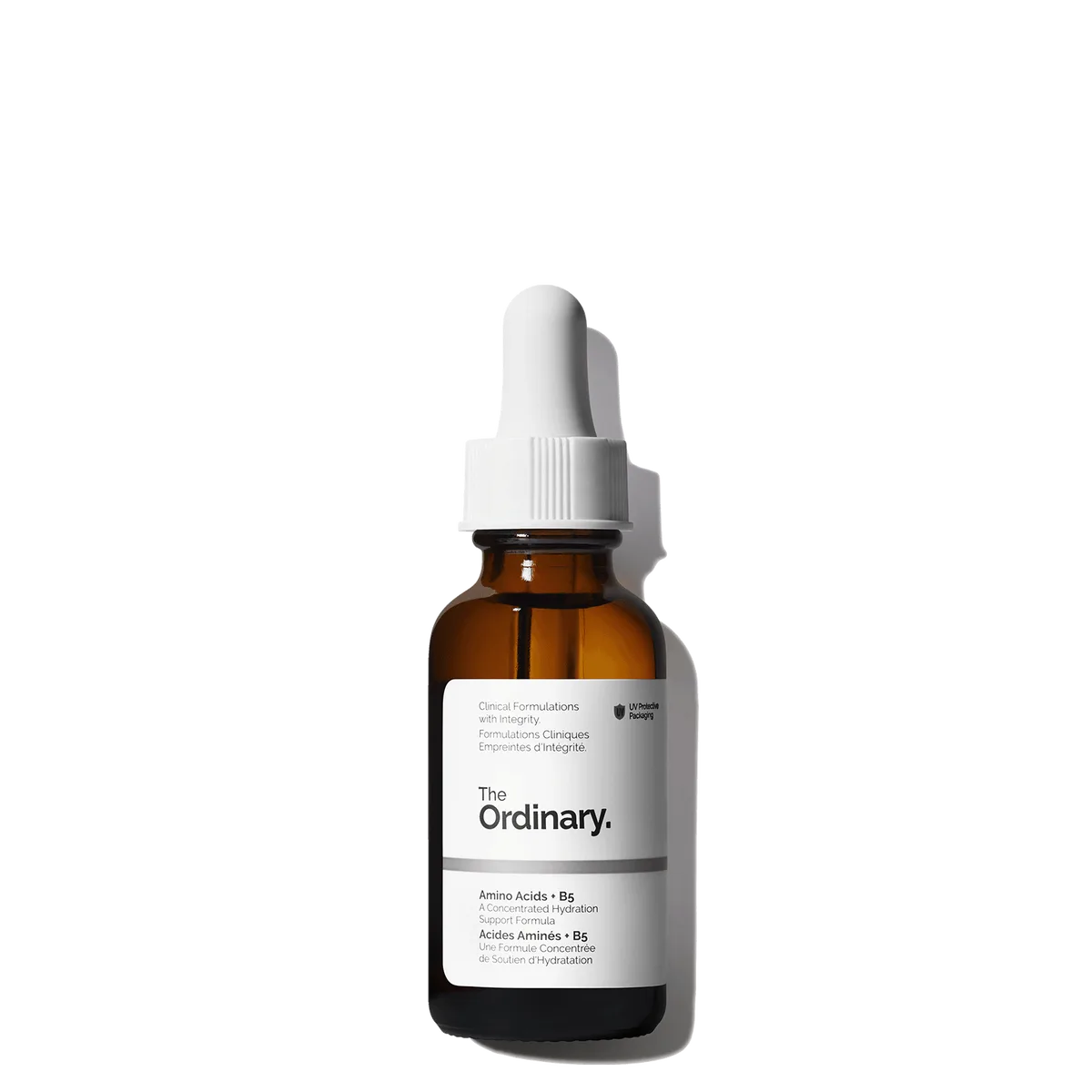
Amino Acids + B5
Barrier Repair Workhorse
 Verified reviewer
Pros & cons.
- +Biomimetic formula with 12 amino acids at 17% mirroring skin's natural NMF profile
- +Panthenol at clinically validated 5% concentration for barrier repair
- +Ultra-lightweight texture absorbs instantly without residue or greasiness
- +Zero known conflicts — compatible with every active ingredient
- +Excellent hydration buffer for retinoid and exfoliant users
- +pH within skin's natural range (4.8-5.3) minimizing disruption
- +Fragrance-free, alcohol-free, oil-free, silicone-free formula
- +Outstanding value at $9.20 for a multi-component hydrating serum
- −Can feel sticky or tacky when more than 2-3 drops are applied
- −Subtle, infrastructure-level results that lack dramatic visible impact
- −Not safe for fungal-acne-prone skin due to amino acid content
- −Small 30 mL bottle runs out quickly with twice-daily use
- −Occasional pilling under certain foundations or sunscreens
The full review.
Hydrating support serums often lack attention. They aren’t the stars like retinol, vitamin C, or exfoliants. But without hydration, those ingredients perform worse, irritate more, and deliver less. The Ordinary’s Amino Acids + B5 provides the infrastructure to make everything else work.
This formula uses biomimicry. The skin’s stratum corneum retains water using hygroscopic molecules called the natural moisturizing factor, or NMF. Amino acids make up about 40% of NMF. Sodium PCA accounts for about 12%. Lactate, urea, and various ions make up the rest. This serum contains twelve amino acids at 17% total concentration, sodium PCA, sodium lactate, and 5% panthenol. It reconstructs the NMF profile the skin produces, which diminishes after your mid-twenties.
This formulation differs from the hyaluronic acid approach. Hyaluronic acid is a powerful humectant, but it is a single molecule. This serum uses twelve different moisture-retaining compounds that interact differently with the stratum corneum’s lipid matrix and protein structures. The hydration feels integrated rather than superficial—less like a wet blanket and more like the skin itself holding water.
5% panthenol is the anchor ingredient. Pro-vitamin B5 has robust evidence in cosmetic dermatology. It penetrates the stratum corneum, converts to pantothenic acid, and upregulates lipid synthesis to help the skin repair its barrier from the inside out. A 2011 study in the Journal of Cosmetic Science found that panthenol formulations at this concentration decreased transepidermal water loss within 30 days. A 2020 review in Pharmaceuticals confirmed it accelerates re-epithelialization and restores barrier function after cosmetic procedures.
Texture
This serum is ghostly on the skin. It is thinner than water and very light, with a faint slip for even spreading. Three to four drops absorb across the face within seconds. There is no scent, no tingling (the label mentions a possible mild tingle from citric acid, but most users never notice it), and no visible residue. You might not even feel it applied.
Common Praise
This invisibility is the product’s greatest strength and its marketing challenge. In a market rewarding visible transformations, a serum that feels like water and delivers results measured by what doesn’t go wrong is a hard sell. But dermatologists understand this category. When your retinoid doesn’t flake, your exfoliant doesn’t sting, or your skin doesn’t tighten in the afternoon, The Ordinary’s Amino Acids + B5 is doing its job.
Pairs Well With
The compatibility profile is universal. The Ordinary states this product has no known conflicts with other ingredients. It slots into any routine, at any step, alongside any active. It works before retinoids as a hydration buffer, after exfoliants as a recovery aid, or mixed into other serums for more comfortable application. It is the diplomatic middle child of the skincare routine that makes the household run smoother.
Best for
This formula is valuable for sensitive skin. The ingredient list uses gentle, skin-compatible compounds. It has no fragrance, no alcohol, no silicones, no oils, and no exfoliating acids at active concentrations. The pH is 4.8-5.3, which matches the skin’s natural range. If you want a hydrating serum that won’t trigger reactivity, this is as safe as it gets.
Not ideal for
The limitations are expected. This is not a transformative product. It won’t brighten dark spots, smooth wrinkles, clear acne, or produce viral social media photos. If used correctly, you notice its absence more than its presence—skip it for a few days while using a retinoid and you will see the difference. The texture can feel slightly sticky if you use too much; 2-3 drops is enough for the full face.
Who Should Buy
At $9.20, there is little reason not to try it. Only those with fungal acne should pass, as some amino acids can be metabolized by Malassezia yeast, or those who already have sufficient hydration and want fewer steps. For everyone else—especially those using drying actives or living in climates with indoor heating or air conditioning—this is an under-$10 support player that makes your routine work better.
Ingredient analysis.
Full INCI list · pH 5
Aqua (Water), Propanediol, Betaine, Sodium PCA, Panthenol, Sodium Lactate, Arginine, PCA, Aspartic Acid, Glycine, Alanine, Serine, Threonine, Valine, Proline, Isoleucine, Lysine HCl, Histidine, Phenylalanine, Glutamic Acid, Citric Acid, Dimethyl Isosorbide, Polysorbate 20, Trisodium Ethylenediamine Disuccinate, 1,2-Hexanediol, Caprylyl Glycol
Skin match.
The science.
The Science
This formula works by targeting the skin's natural moisturizing factor (NMF)—the hygroscopic substances in the stratum corneum that maintain hydration. Amino acids make up about 40% of NMF, the largest single component class. Research in Biochimica et Biophysica Acta (2010) shows NMF levels correlate directly with stratum corneum water content and barrier function. Surfactants, UV exposure, and aging deplete NMF, causing drier, less functional skin.
A 2024 study in the Journal of Cosmetics, Dermatological Sciences and Applications found six key NMF amino acids peak between ages 25-29 and decline after. Topical replenishment with these amino acids improved skin hydration, texture, pore appearance, wrinkles, and dullness over 8 weeks. This supports using exogenous NMF supplementation to address age-related hydration decline.
Panthenol is the formula's anchor active at 5% and has robust clinical evidence. A 2011 study in the Journal of Cosmetic Science shows panthenol formulations at 1% and 5% significantly decrease transepidermal water loss after 30 days, with the 5% concentration performing better. Panthenol penetrates the stratum corneum, converts to pantothenic acid, and integrates into coenzyme A—a critical cofactor for skin lipid biosynthesis. This process increases barrier lipid production from within instead of just coating the surface.
A 2020 review in Pharmaceuticals confirms dexpanthenol (panthenol) upregulates genes for wound healing, accelerates re-epithelialization, and restores skin barrier function after cosmetic and medical procedures. A 2009 study in the Journal of Dermatological Treatment shows dexpanthenol has anti-inflammatory effects, reducing irritation after sodium lauryl sulfate challenge. This is relevant to using this product to buffer irritating actives.
References
- Skin moisturizing effects of panthenol-based formulations — Journal of Cosmetic Science (2011)
- Dexpanthenol in Wound Healing after Medical and Cosmetic Interventions — Pharmaceuticals (2020)
- Dexpanthenol enhances skin barrier repair and reduces inflammation after sodium lauryl sulphate-induced irritation — Journal of Dermatological Treatment (2009)
- Natural moisturizing factors (NMF) in the stratum corneum — Biochimica et Biophysica Acta (2010)
Dermatologist Perspective
Dermatologists use NMF replenishment to manage dehydrated and barrier-compromised skin. Board-certified dermatologists often recommend hydrating serums with amino acids and panthenol to patients on retinoid therapy. Maintaining stratum corneum hydration reduces the irritation and flaking that cause patients to stop treatment. The 5% panthenol concentration in this formula matches levels shown to be effective in clinical studies for barrier repair and TEWL reduction. Dermatologists also note NMF-mimicking formulations benefit patients with eczema-prone or atopic skin, where NMF levels are characteristically depleted.
Where it fits in your routine.
Apply 3-4 drops to clean skin after water-based active serums and before heavier treatments and moisturizer. Use morning and evening. It works well applied before retinoid treatments to buffer irritation, or after exfoliating acids to replenish stripped NMF. You can mix it with other water-based serums to simplify application. Use sparingly; more than 3-4 drops leaves a tacky finish. Wait 15-30 seconds for absorption before layering the next product.
At $9.20 for 30 mL, this is an exceptional value for a multi-component hydrating serum with clinically validated actives. Comparable NMF-replenishing serums from medical skincare brands typically cost $30-50. The formula contains 17% amino acids and 5% panthenol — concentrations that rival or exceed those in much more expensive products. Only one size is available, which means the per-milliliter cost can't be further reduced through bulk purchasing, but the base price is already remarkably low for what the formula delivers.
This works for anyone using retinoids, exfoliating acids, or other drying active treatments who needs hydration without weight or complexity. It helps dehydrated skin of any type, sensitive or reactive skin, and anyone over 30 with declining NMF levels. It is an excellent choice for dry climates or indoor-heated environments.
Amino acids may feed Malassezia yeast in those prone to fungal acne. This works for users who prefer minimal routines and get enough hydration from their moisturizer alone. This is support infrastructure, not a transformative treatment, for anyone looking for visible anti-aging or brightening results.
Product details.
Ultra-thin, clear watery liquid with slight viscosity. It feels like water on skin with subtle slip. It absorbs in seconds and leaves skin hydrated without visible residue.
Fragrance-free with no discernible scent. Completely neutral.
30 mL glass dropper bottle with The Ordinary minimalist white label. Uses recyclable materials.
Immediate hydration and visible plumping occur on first application. Most users experience no tingling, burning, or adjustment period. Some users feel mild tingling; the product label notes this and attributes it to the citric acid pH adjuster. Results are subtle but cumulative.
2-3 months with twice-daily full-face application (3-4 drops per use)
12 months
All Year
The backstory.
The skin's natural moisturizing factor — a complex of amino acids, PCA, lactate, urea, and other humectants — is responsible for keeping the stratum corneum hydrated and functional. NMF levels decline with age and are depleted by surfactants, low humidity, and UV exposure. The Ordinary designed this serum to replenish those losses directly, using a multi-amino-acid profile that mirrors the skin's own NMF composition rather than substituting a single synthetic humectant.
About The Ordinary
Established Brand (5–20 years)The Ordinary launched in 2016 under DECIEM and quickly became a top global clinical skincare brand. Its ingredient-first, transparent approach uses formulation science, but the brand does not run proprietary clinical trials on most products.
Common myths.
Amino acids in skincare are marketing gimmicks; they do not hydrate skin.
Amino acids make up about 40% of the skin's natural moisturizing factor and directly retain water in the stratum corneum. A 2024 study shows six key NMF amino acids peak at age 25-29 before declining; topical replenishment improved skin hydration, texture, and dullness over 8 weeks.
This serum is just a watered-down regular moisturizer.
This product uses a different mechanism than occlusive moisturizers. It replenishes hygroscopic (water-attracting) molecules within the stratum corneum, whereas moisturizers primarily trap moisture on the skin's surface. These two approaches complement each other rather than repeat each other.
FAQ.
What does The Ordinary Amino Acids + B5 do for skin?
This serum replenishes the skin's natural moisturizing factor (NMF)—the amino acids and humectants in the stratum corneum that retain water. With 17% amino acids that mirror the skin's NMF profile and 5% panthenol for barrier repair, it strengthens how the skin holds moisture from within instead of just coating the surface.
Can I use The Ordinary Amino Acids + B5 with retinol?
Yes — this works well for that. Apply it before retinol or retinoid treatments to buffer hydration and reduce common retinoid dryness, flaking, and irritation. The amino acids and panthenol support barrier function without interfering with retinoid activity.
Is The Ordinary Amino Acids + B5 the same as hyaluronic acid?
No. Both are hydrating serums, but they work differently. Hyaluronic acid is a single humectant molecule that pulls water to the skin's surface. This serum has twelve amino acids and multiple NMF components that join the stratum corneum's moisture-retention system. The two products complement each other and work together.
When should I apply The Ordinary Amino Acids + B5 in my routine?
Apply after cleansing and water-based active serums (vitamin C, niacinamide, alpha arbutin), but before heavier serums, moisturizers, and oils. It adds a hydration layer that preps the skin for later products. Use 3-4 drops and wait 15-30 seconds to absorb before the next step.
Is The Ordinary Amino Acids + B5 safe during pregnancy?
Yes. This serum contains amino acids and panthenol. Both occur naturally in the body and have no known risks during pregnancy or breastfeeding. Multiple pregnancy-safe skincare guides list it. Always confirm with your healthcare provider for individual guidance.
Why does The Ordinary Amino Acids + B5 feel sticky?
Applying too much product causes slight tackiness. Use 3-4 drops for the full face and wait 15-30 seconds for absorption before layering the next product. The amino acids and humectants create a hydration film that disappears once a moisturizer or sunscreen is applied on top.
Is The Ordinary Amino Acids + B5 fungal acne safe?
No. Malassezia yeast metabolizes some amino acids in this formula — specifically arginine — when lipids are present, which can worsen fungal acne. People with Malassezia folliculitis should use a different hydrating serum.
What the community says.
"Super hydrating — skin feels plump and moisturized immediately"
"Extremely lightweight formula that feels like water on skin"
"No conflicts with any other products — layers into any routine"
"Excellent buffer when used alongside retinoids or exfoliating acids"
"Great value at under $10 for a biomimetic hydrating serum"
"Suitable for even very sensitive and reactive skin types"
"Can feel sticky or tacky if more than 2-3 drops are applied"
"Occasional pilling under makeup if too much product is used"
"Subtle results — some users feel it doesn't do anything noticeable"
"Small 30 mL bottle runs out quickly with twice-daily full-face use"
"Rare reports of breakouts in acne-prone users"
Featured in.
People also looked at.