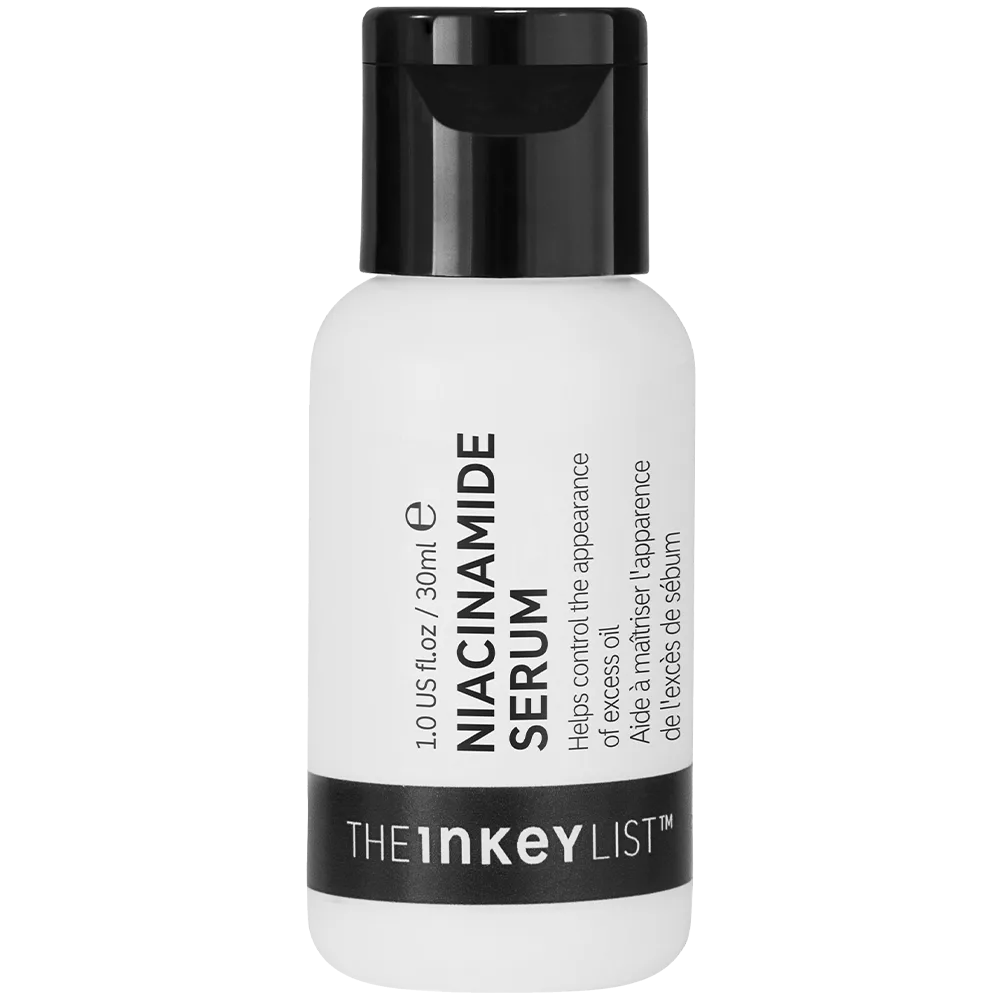
Niacinamide Serum
Budget Oil-Control Essential
 Verified reviewer
Pros & cons.
- +Clinical-strength 10% niacinamide backed by decades of published dermatological research
- +1% hyaluronic acid counterbalances oil reduction to prevent dehydration
- +Panthenol and allantoin provide barrier repair and soothing at the higher concentration
- +Outstanding value at 0.50 for a well-formulated niacinamide serum
- +Immediate matte-to-satin finish that controls shine throughout the day
- +Visible reduction in pore appearance, redness, and blemishes within 2-4 weeks
- +Fragrance-free, vegan, Leaping Bunny certified, and B Corp certified
- −Small 30ml bottle lasts only 2-3 months — no larger single-bottle option
- −10% concentration may cause temporary flushing in sensitive skin during first week
- −Dropper applicator is imprecise and easy to over-dispense
- −Not moisturizing enough to replace a cream for any skin type
- −Not fungal-acne-safe due to polysorbate 60 and soybean sterols
- −Contains soy-derived ingredients that may concern those with soy allergies
The full review.
Niacinamide is one of those rare ingredients where the clinical evidence is so overwhelming that the marketing almost cannot keep up. A 2000 study in the British Journal of Dermatology showed it boosts ceramide synthesis by thirty-four to sixty-seven percent. A 2002 study in the same journal proved it inhibits melanosome transfer for brightening. A 2006 study confirmed it reduces sebum production. A comprehensive 2014 review catalogued antipruritic, antimicrobial, photo-protective, and sebostatic effects. If niacinamide were discovered today, it would be the most hyped ingredient in skincare. Instead, it is so well-established that brands can sell ten percent of it for ten dollars and still turn a profit.
The INKEY List’s Niacinamide Serum has been part of the brand’s lineup since its founding in 2018, and the formula demonstrates the same design philosophy that defines all their products: effective concentration, proper supporting ingredients, nothing unnecessary. The niacinamide sits at ten percent — a concentration that exceeds what most clinical studies tested, pushing the upper end of the dose-response curve for oil control and pore refinement.
What separates this from the cheapest niacinamide options is the support system. Hyaluronic acid at one percent provides humectant hydration that counterbalances the sebum reduction. This matters more than it might seem. Niacinamide at ten percent is aggressive enough in its oil-regulating activity that without a hydration offset, skin can tip from balanced oil control into uncomfortable dehydration. The HA ensures the equation stays balanced.
Panthenol provides a second axis of barrier support. While niacinamide stimulates ceramide production from the inside, panthenol reduces transepidermal water loss from the outside, creating a two-direction approach to barrier health that helps skin tolerate the potent active concentration. Allantoin adds soothing insurance — relevant because ten percent niacinamide can cause transient flushing in sensitive individuals during the first week of use.
Squalane and phospholipids round out the formula with lightweight emolliency and enhanced ingredient delivery. The radish root ferment filtrate functions as a natural preservative booster. At twenty-four ingredients, this is a slightly longer INCI list than some of The INKEY List’s minimalist products, but every component serves a clear purpose.
The texture is classic niacinamide serum — watery, lightweight, absorbs quickly. There is a momentary tackiness upon application that resolves within thirty seconds to a smooth, matte-to-satin finish. For oily skin types, the immediate mattifying effect is one of the product’s most satisfying qualities. Under makeup, it creates a smooth, non-greasy base that helps control midday shine.
Results follow the clinical timeline almost exactly. Within two to four weeks, most users notice reduced redness, fewer active blemishes, and less midday oiliness. By the six to eight week mark, pore appearance improves noticeably, and hyperpigmented spots begin to fade. These are not dramatic overnight transformations — niacinamide works through cellular-level mechanisms that take time to manifest visually.
The ten percent concentration deserves an honest assessment. Most rigorous clinical trials used two to five percent and found significant benefits. At ten percent, the effects are expected to be more pronounced for oil control and pore reduction, but the risk of initial flushing also increases. For most people, this resolves within the first week. For genuinely sensitive skin, a five percent product might achieve comparable results with a wider comfort margin. More is not always proportionally better with niacinamide — the dose-response curve flattens at higher concentrations.
The dropper packaging is functional but imperfect. The dispensing can be imprecise, making it easy to apply too much. Two to three drops is sufficient for the full face, and the dropper sometimes delivers four or five on a careless squeeze. At thirty milliliters, the bottle lasts two to three months with once-daily use — a perfectly adequate supply, though the lack of a larger single bottle option means regular repurchasing.
The comparison to The Ordinary’s Niacinamide 10% + Zinc 1% is inevitable. Both sit at the same concentration and similar price point. The key difference is in supporting ingredients: The INKEY List includes hyaluronic acid, panthenol, and allantoin for hydration and soothing; The Ordinary adds zinc for additional sebum control. If your primary concern is oiliness, The Ordinary’s zinc may edge ahead. If you want a more hydrating, skin-comfortable formula, The INKEY List’s approach is arguably better balanced.
For oily and combination skin types looking for a workhorse active that addresses multiple concerns simultaneously — oil, pores, redness, blemishes, tone — niacinamide at ten percent is one of the most evidence-backed options in skincare. The INKEY List has packaged it with genuine formulation care at a price that makes trying it a genuinely risk-free proposition.
Formula
Texture
The texture is classic niacinamide serum — watery, lightweight, absorbs quickly. There is a momentary tackiness upon application that resolves within thirty seconds to a smooth, matte-to-satin finish. For oily skin types, the immediate mattifying effect is one of the product’s most satisfying qualities. Under makeup, it creates a smooth, non-greasy base that helps control midday shine.
Results
Results follow the clinical timeline almost exactly. Within two to four weeks, most users notice reduced redness, fewer active blemishes, and less midday oiliness. By the six to eight week mark, pore appearance improves noticeably, and hyperpigmented spots begin to fade. These are not dramatic overnight transformations — niacinamide works through cellular-level mechanisms that take time to manifest visually.
Packaging
The dropper packaging is functional but imperfect. The dispensing can be imprecise, making it easy to apply too much. Two to three drops is sufficient for the full face, and the dropper sometimes delivers four or five on a careless squeeze. At thirty milliliters, the bottle lasts two to three months with once-daily use — a perfectly adequate supply, though the lack of a larger single bottle option means regular repurchasing.
Best for
For oily and combination skin types looking for a workhorse active that addresses multiple concerns simultaneously — oil, pores, redness, blemishes, tone — niacinamide at ten percent is one of the most evidence-backed options in skincare.
Ingredient analysis.
Full INCI list
Water (Aqua/Eau), Niacinamide, Glycerin, Propanediol, Butylene Glycol, Phenoxyethanol, Hydroxyethyl Acrylate/Sodium Acryloyldimethyl Taurate Copolymer, Hydroxyethylcellulose, Phospholipids, Squalane, Xanthan Gum, Glycine Soja (Soybean) Oil, Allantoin, Sodium Phytate, Polysorbate 60, Panthenol, Glycolipids, Leuconostoc/Radish Root Ferment Filtrate, Sorbitan Isostearate, Glycine Soja (Soybean) Sterols, Citric Acid, Hyaluronic Acid, Disodium Phosphate, Sodium Phosphate
Skin match.
The science.
The Science
Niacinamide is one of the most studied topical ingredients in dermatological literature. A 2000 study by Tanno et al. in the British Journal of Dermatology shows nicotinamide increases biosynthesis of ceramides and other stratum corneum lipids, raising ceramide levels by 34-67% and improving the epidermal permeability barrier. This ceramide-boosting mechanism helps this serum strengthen the barrier and reduce oil output.
For sebum regulation, a 2006 study in the Journal of Cosmetic and Laser Therapy found that 2% topical niacinamide significantly reduced sebum excretion rates after 2-4 weeks. At 10%, the dose-response relationship suggests stronger oil control, matching user reports of reduced shine within two weeks.
A 2002 study in the British Journal of Dermatology explained the brightening mechanism: niacinamide inhibits melanosome transfer from melanocytes to keratinocytes, intercepting pigment before it reaches the skin surface. A 2004 randomized controlled trial in the International Journal of Cosmetic Science confirmed 5% niacinamide significantly reduced hyperpigmented spots, fine lines, wrinkles, and red blotchiness over 12 weeks.
A 2014 review in Skin Pharmacology and Physiology catalogued niacinamide's documented effects: antipruritic, antimicrobial, vasoactive, photo-protective, sebostatic, and lightening properties. The review confirmed dose-dependent efficacy, noting 2-5% concentrations produce significant clinical outcomes across multiple endpoints.
References
- Nicotinamide increases biosynthesis of ceramides as well as other stratum corneum lipids to improve the epidermal permeability barrier — British Journal of Dermatology (2000)
- The effect of niacinamide on reducing cutaneous pigmentation and suppression of melanosome transfer — British Journal of Dermatology (2002)
- The effect of 2% niacinamide on facial sebum production — Journal of Cosmetic and Laser Therapy (2006)
- Niacinamide - mechanisms of action and its topical use in dermatology — Skin Pharmacology and Physiology (2014)
Dermatologist Perspective
Board-certified dermatologists rank niacinamide among the top evidence-based topical ingredients for many skin concerns. Dermatologists note the 10% concentration in this serum is at the high end for over-the-counter formulations, providing oil control and pore refinement that approaches prescription-level outcomes for mild to moderate oiliness and acne. Dermatologists value the hyaluronic acid and panthenol at this 10% niacinamide concentration, as they prevent the barrier dehydration that aggressive sebum reduction can cause. For patients who experience flushing at 10%, dermatologists typically recommend starting with alternate-day application and building to daily use over two weeks.
Where it fits in your routine.
Apply 2-3 drops to clean, dry skin every morning and/or evening. Pat the serum into your face and neck; do not rub aggressively. Use a moisturizer afterward to seal in the treatment. Apply sunscreen as your final AM step. If you are new to 10% niacinamide, use it once every evening for the first week to check tolerance, then move to twice daily. If you use vitamin C, apply vitamin C first and let it absorb before layering this serum.
At 0.50 for 30 ml, this 10% niacinamide serum is one of the most affordable options — roughly /bin/bash.35 per ml. The formula uses supporting ingredients (1% HA, panthenol, allantoin, squalane) that many competitors at this price omit. A duo pack offers slightly better value. The INKEY List's B Corp certification and Sephora distribution add credibility at this price. The value is outstanding for the clinical-strength niacinamide concentration and balanced formula.
This works for oily and combination skin with excess shine, enlarged pores, blemishes, or uneven skin tone. It suits budget-conscious consumers seeking a clinical-strength niacinamide serum with supporting ingredients. Pregnant and breastfeeding individuals can use it safely for oil control and brightening.
Skip this if very sensitive skin reacts to niacinamide — try a 5% concentration first. Dry skin types will find this insufficient alone and should pair it with a thicker moisturizer. Those with soy allergies should note the soybean-derived ingredients. If you have fungal acne, the polysorbate 60 and soybean sterols are potential triggers.
Product details.
Lightweight, water-based gel serum. It feels slightly tacky for a moment, then absorbs quickly to leave a smooth, non-sticky finish. The watery consistency flows easily from the dropper.
Fragrance-free. No detectable scent beyond the faintest neutral product base.
A 30 ml frosted plastic dropper bottle uses The INKEY List's minimalist design and orange-coral accent. The standard dropper applicator dispenses 2-3 drops. The brand claims the packaging is 100% recyclable.
The serum absorbs within 30 seconds of the first application. It feels slightly tacky before drying to a smooth finish. Most users experience no stinging or irritation. Those with sensitive skin may feel mild warmth or flushing during the first few uses, but this usually resolves within a week. Skin feels mattified and smooth immediately.
2-3 months with once-daily use. 6-8 weeks with twice-daily use.
12 months
All Year
The backstory.
Part of The INKEY List's founding product lineup in 2018, this serum embodied the brand's core philosophy: take a well-researched ingredient, formulate it at an effective concentration with proper supporting ingredients, and sell it at a price that removes any barrier to trying it. The niacinamide serum quickly became one of the brand's bestsellers, competing directly with The Ordinary's Niacinamide 10% + Zinc 1% as a budget niacinamide staple.
About The INKEY List
Emerging Brand (2–5 years)The INKEY List launched this Niacinamide Serum in 2018 as part of its founding lineup. The brand is B Corp certified, Leaping Bunny cruelty-free, and sells at Sephora and Ulta. It lacks the dermatologist-developed pedigree of legacy brands, but transparent formulations and accessible pricing build strong consumer trust.
Common myths.
You cannot use niacinamide and vitamin C together
This myth comes from a 1963 chemistry study. That study shows niacinamide and ascorbic acid react at very high temperatures, but human skin does not reach those conditions. Modern formulations of both ingredients work together. Apply vitamin C first, let it absorb, then layer this niacinamide serum over it.
Higher niacinamide concentrations always work better
Clinical studies show benefits at 2-5%. The 10% in this serum controls oil and reduces pores more effectively, but increases the risk of initial flushing. For sensitive skin, a 5% concentration achieves comparable results with less irritation risk. Higher concentrations do not always yield proportional benefits.
FAQ.
What percentage of niacinamide is in The INKEY List serum?
This serum contains 10% niacinamide, a concentration higher than the 2-5% used in most clinical studies. It also includes 1% hyaluronic acid to keep skin hydrated while the niacinamide controls oil production.
Can I use The INKEY List Niacinamide Serum with retinol?
Yes — niacinamide and retinol work together. Niacinamide strengthens the barrier; published research shows it boosts ceramide synthesis by 34-67%. This helps skin tolerate retinol. Apply niacinamide in the morning and retinol in the evening, or layer them in one routine.
Will this serum cause purging?
Niacinamide is not a true exfoliant and does not cause clinical purging. Some users see breakouts during the first 1-2 weeks as the ingredient adjusts sebum production. This usually resolves with continued use. If breakouts last more than 4 weeks, the product may not suit your skin.
Is The INKEY List Niacinamide Serum safe during pregnancy?
Yes — dermatologists consider niacinamide (vitamin B3) safe during pregnancy and breastfeeding. The INKEY List includes this product in their pregnancy-safe skincare guide. The formula lacks retinoids, salicylic acid, or other pregnancy-flagged ingredients.
How does this compare to The Ordinary Niacinamide 10% + Zinc 1%?
Both contain 10% niacinamide at similar prices. The INKEY List version includes 1% hyaluronic acid, panthenol, and allantoin to hydrate and soothe, but lacks zinc. The Ordinary adds 1% zinc to control oil. The INKEY List formula hydrates slightly more; The Ordinary offers more sebum control because of the zinc.
Why does 10% niacinamide make my face flush?
Niacinamide causes transient vasodilation (flushing) in some people, mostly at higher concentrations. This is a known pharmacological effect, not an allergic reaction. It usually stops within the first week of use as skin adjusts. If flushing persists or causes irritation, use it once daily or try a 5% concentration product.
Can I use niacinamide and vitamin C together?
Yes — the myth that these ingredients cannot be combined stems from a 1963 study using high heat, which does not exist on human skin. Modern formulations are compatible. Apply vitamin C first on clean skin, let it absorb, then layer this niacinamide serum on top.
What the community says.
"Excellent value at 0.50 for a 10% niacinamide serum with HA and panthenol"
"Lightweight non-sticky texture that absorbs quickly into the skin"
"Effectively reduces oiliness and visible shine throughout the day"
"Noticeable reduction in redness and blemishes within 2-4 weeks of use"
"Layers well under every moisturizer and sunscreen without pilling"
"Simple no-filler formulation with transparent ingredient disclosure"
"Small 30ml bottle runs out in 2-3 months with daily use"
"Some users experience initial breakouts or purging when starting"
"Dropper applicator can be imprecise — easy to dispense too much"
"10% concentration may cause flushing or tingling in sensitive individuals"
"Not moisturizing enough to use without a cream on top for most skin types"
"Some users report no visible difference compared to 5% niacinamide products"
People also looked at.