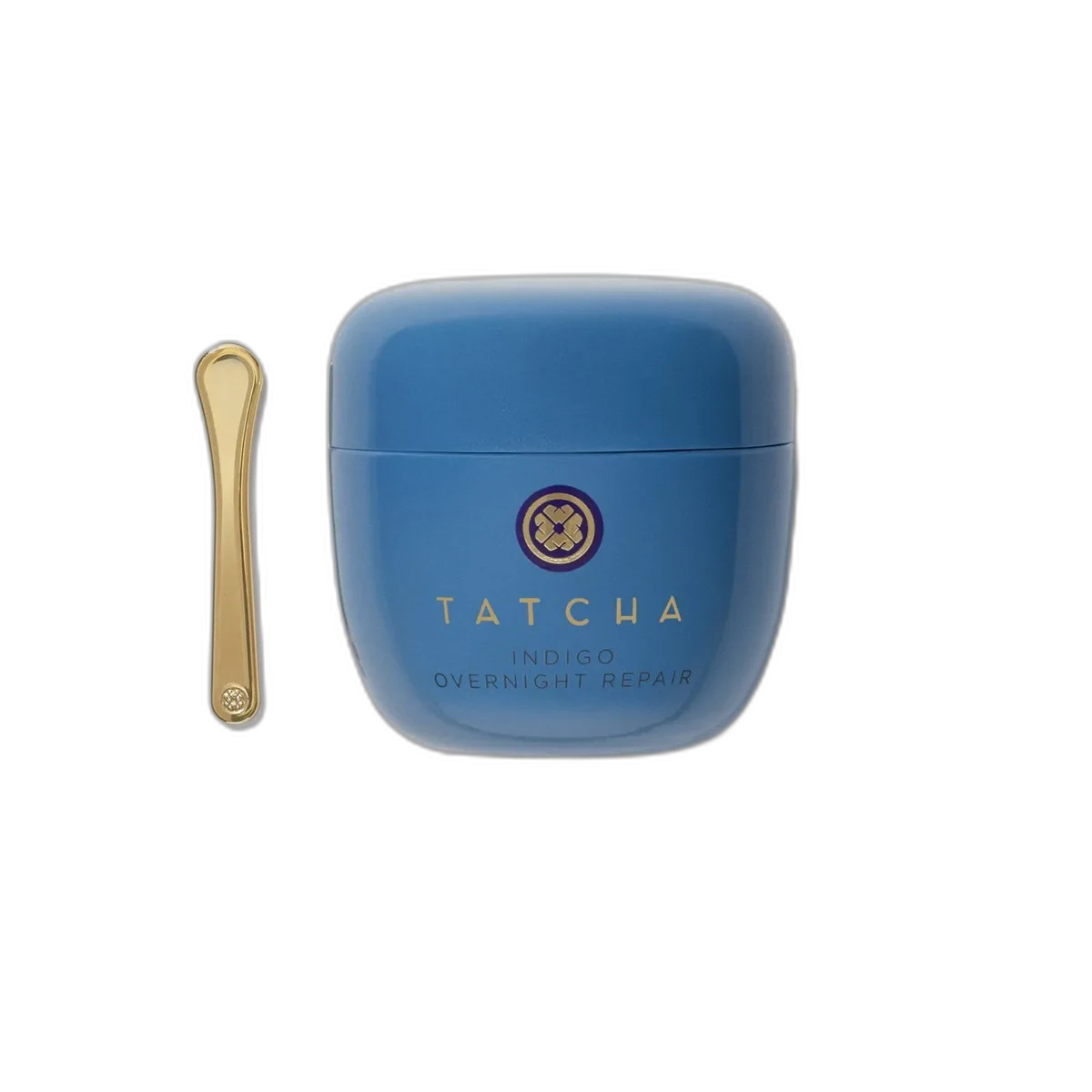
Indigo Overnight Repair Serum in Cream
Sensitive Skin Sanctuary
 Verified reviewer
Pros & cons.
- +Fragrance-free and alcohol-free formula with National Eczema Association endorsement
- +Unique dual-indigo botanical approach not found in competing sensitive skin creams
- +Rich texture absorbs quickly without leaving a heavy or greasy residue
- +Ceramide NG plus lipid blend provides genuine barrier repair overnight
- +Hadasei-3 ferment complex adds microbiome-supporting and antioxidant benefits
- +Visible reduction in redness and irritation often noticeable within the first week
- +A little goes a long way—the 50 mL jar lasts 3-4 months with nightly use
- −At $92 for 50 mL, the price significantly exceeds the ingredient complexity
- −Silicone-heavy base with dimethicone as the second ingredient may not suit all preferences
- −Japanese indigo's evidence base relies more on traditional use than clinical trials
- −Single ceramide (NG) is less comprehensive than formulas using the full ceramide trio
- −Luminescent mica and tin oxide particles feel unnecessary in a sensitive skin product
- −Too rich and emollient for oily skin types or humid summer conditions
The full review.
Vicky Tsai sold her engagement ring to start Tatcha, and the reason circles back to her own skin. Years of acute dermatitis—daily steroids, antibiotics, the whole clinical treadmill—eventually led her to Kyoto, where geisha introduced her to Japanese botanical traditions that Western dermatology had largely ignored. The Indigo Overnight Repair feels like the most personal product in Tatcha’s lineup, the one that exists because the founder needed it to exist.
The formula is built around Japanese indigo, or ai-zome, which has been used in Japan for centuries—not just as a textile dye, but as a folk remedy for skin irritation. Tatcha sources two forms here: Indigofera tinctoria leaf extract and Polygonum tinctorium leaf and stem extract, pulling anti-inflammatory compounds from two different plant families. It is an unusual approach. Most sensitive-skin creams reach for centella asiatica or colloidal oatmeal, ingredients with deeper clinical dossiers. Japanese indigo is a more poetic choice, rich in tryptanthrin and indirubin—compounds with demonstrated anti-inflammatory activity in laboratory studies, though the leap from petri dish to pillowcase is one that the marketing glosses over somewhat gracefully.
The supporting cast is more conventional and arguably more proven. Ceramide NG teams up with palmitic acid and linoleic acid to form a lipid blend that mimics what your skin barrier is made of. Sodium hyaluronate handles the hydration layer. Tatcha’s proprietary Hadasei-3 complex—a ferment of green tea, rice, and mozuku algae—adds amino acids and antioxidants, while mondo grass root (Ophiopogon japonicus) is included for its prebiotic potential, theoretically nudging the skin microbiome toward balance. Red sage root rounds out the botanical team with its own anti-inflammatory and antioxidant contributions.
The texture is where this cream makes its first impression count. It looks dense in the jar—a pale lavender cushion that seems like it might sit heavy—but it spreads with the ease of a serum and absorbs within a minute. The dimethicone base creates a silky, velvety finish that feels protective without feeling suffocating. There is a faint luminescence from mica and tin oxide particles, which gives skin a subtle glow by morning but feels slightly at odds with the otherwise no-nonsense sensitive-skin positioning. It is a small vanity in an otherwise earnest product.
Performance is where the Indigo Overnight Repair quietly delivers. After a single night, skin feels measurably calmer and more hydrated. The real magic—or more accurately, the real barrier repair—unfolds over weeks. By the second week, patches of redness that had become background noise start to fade. By week four, the skin feels sturdier, less reactive to the minor provocations (wind, dry air, that new cleanser you probably should have patch-tested) that used to trigger flares. The National Eczema Association endorsement is not a rubber stamp; products have to meet specific ingredient criteria, and the fragrance-free, alcohol-free, paraben-free formulation here clears that bar comfortably.
There are limitations worth naming. The silicone-forward base—dimethicone is the second ingredient—will not appeal to everyone. If you have a philosophical or textural objection to silicones, this cream will test it. The ingredient list, while thoughtfully composed, is not revolutionary from a pure biochemistry standpoint. Ceramide NG alone is a less comprehensive barrier approach than formulas that include the full ceramide trio (NP, AP, EOP) with cholesterol in optimized ratios. And while the Japanese botanicals are interesting, the evidence base for indigo specifically in topical skincare is thinner than Tatcha’s storytelling might suggest—mostly in vitro studies and traditional-use documentation rather than randomized controlled trials on human skin.
The price demands attention. At $92 for 50 mL, this is firmly luxury territory for a night cream whose most proven ingredients (ceramide, hyaluronic acid, glycerin) are available at a fraction of the cost. You are paying for the Japanese indigo angle, the Hadasei-3 ferment, the weighted purple jar, and the Tatcha name—a name that now belongs to Unilever’s portfolio. Whether that premium feels justified depends on how much you value the unique botanical approach and whether your skin responds to it in ways that simpler formulas have not achieved.
For sensitive and eczema-prone skin that has struggled to find a night cream that does not sting, flare, or feel like wearing a plastic bag to bed, this is a genuinely thoughtful option. It treats reactive skin with respect rather than just throwing ceramides at it and calling it a day. The fragrance-free commitment is real—no essential oils lurking in the botanical extracts—and the texture manages to feel luxurious without any of the usual sensory trade-offs that luxury demands. If your skin is calm enough to thrive on a $15 night cream, save your money. If your skin is the kind that makes you dread trying new products because something always goes wrong, the Indigo Overnight Repair understands that anxiety and was built to be the exception.
Formula
Texture
The texture is where this cream makes its first impression count. It looks dense in the jar—a pale lavender cushion that seems like it might sit heavy—but it spreads with the ease of a serum and absorbs within a minute. The dimethicone base creates a silky, velvety finish that feels protective without feeling suffocating. There is a faint luminescence from mica and tin oxide particles, which gives skin a subtle glow by morning but feels slightly at odds with the otherwise no-nonsense sensitive-skin positioning. It is a small vanity in an otherwise earnest product.
Performance
Performance is where the Indigo Overnight Repair quietly delivers. After a single night, skin feels measurably calmer and more hydrated. The real magic—or more accurately, the real barrier repair—unfolds over weeks. By the second week, patches of redness that had become background noise start to fade. By week four, the skin feels sturdier, less reactive to the minor provocations (wind, dry air, that new cleanser you probably should have patch-tested) that used to trigger flares. The National Eczema Association endorsement is not a rubber stamp; products have to meet specific ingredient criteria, and the fragrance-free, alcohol-free, paraben-free formulation here clears that bar comfortably.
Limitations
There are limitations worth naming. The silicone-forward base—dimethicone is the second ingredient—will not appeal to everyone. If you have a philosophical or textural objection to silicones, this cream will test it. The ingredient list, while thoughtfully composed, is not revolutionary from a pure biochemistry standpoint. Ceramide NG alone is a less comprehensive barrier approach than formulas that include the full ceramide trio (NP, AP, EOP) with cholesterol in optimized ratios. And while the Japanese botanicals are interesting, the evidence base for indigo specifically in topical skincare is thinner than Tatcha’s storytelling might suggest—mostly in vitro studies and traditional-use documentation rather than randomized controlled trials on human skin.
Price
The price demands attention. At $92 for 50 mL, this is firmly luxury territory for a night cream whose most proven ingredients (ceramide, hyaluronic acid, glycerin) are available at a fraction of the cost. You are paying for the Japanese indigo angle, the Hadasei-3 ferment, the weighted purple jar, and the Tatcha name—a name that now belongs to Unilever’s portfolio. Whether that premium feels justified depends on how much you value the unique botanical approach and whether your skin responds to it in ways that simpler formulas have not achieved.
Best for
For sensitive and eczema-prone skin that has struggled to find a night cream that does not sting, flare, or feel like wearing a plastic bag to bed, this is a genuinely thoughtful option. It treats reactive skin with respect rather than just throwing ceramides at it and calling it a day. The fragrance-free commitment is real—no essential oils lurking in the botanical extracts—and the texture manages to feel luxurious without any of the usual sensory trade-offs that luxury demands. If your skin is calm enough to thrive on a $15 night cream, save your money. If your skin is the kind that makes you dread trying new products because something always goes wrong, the Indigo Overnight Repair understands that anxiety and was built to be the exception.
Ingredient analysis.
Full INCI list
Water, Dimethicone, Diglycerin, Saccharomyces/Camellia Sinensis Leaf/Cladosiphon Okamuranus/Rice Ferment Filtrate, Glycerin, Diphenylsiloxy Phenyl Trimethicone, Neopentyl Glycol Diethylhexanoate, Butylene Glycol, Diisostearyl Malate, PEG-10 Dimethicone, Propanediol, Disteardimonium Hectorite, Ophiopogon Japonicus Root Extract, Indigofera Tinctoria Leaf Extract, Ceramide NG, Palmitic Acid, Linoleic Acid, Sodium Hyaluronate, Polygonum Tinctorium Leaf/Stem Extract, Cetyl Alcohol, Sucrose Stearate, Sucrose Palmitate, Maltodextrin, Sargassum Vulgare Extract, Saccharomyces Ferment Filtrate, Hydrolyzed Lagenaria Siceraria Fruit Juice, Salvia Miltiorrhiza Root Extract, Tocopherol, Lauryl PEG-9 Polydimethylsiloxyethyl Dimethicone, Magnesium Sulfate, Hydrogenated Lecithin, Phytosterols, Ethylhexylglycerin, Phenoxyethanol, Mica, Tin Oxide, Titanium Dioxide
Skin match.
The science.
The Science
The Indigo Overnight Repair formulation uses botanical anti-inflammatories and established barrier-repair lipids. Japanese indigo (Indigofera tinctoria) contains tryptanthrin and indirubin, compounds that show anti-inflammatory activity in labs. A 2020 review in the Journal of Ethnopharmacology documented the antimicrobial, cytotoxic, and anti-inflammatory activities of Indigofera species. It notes I. tinctoria is the most studied species in the genus and has centuries of use for skin ailments. However, the gap between in vitro findings and clinical efficacy in topical cosmetic formulations for this botanical remains unbridged.
The barrier-repair component is more established. Ceramide NG is a non-hydroxy fatty acid ceramide that integrates into the stratum corneum's lipid matrix. Combined with palmitic acid (a saturated fatty acid) and linoleic acid (an essential polyunsaturated fatty acid), it creates a simplified physiological lipid blend. Research on ceramide-containing moisturizers consistently shows improved transepidermal water loss and barrier function, which matters for eczema-prone skin where the ceramide-to-cholesterol ratio is often disrupted.
The Hadasei-3 ferment complex uses fermentation biochemistry. Saccharomyces fermentation of botanical substrates (green tea, rice, mozuku algae) produces a filtrate rich in amino acids, organic acids, and polyphenol metabolites. These have higher bioavailability than unfermented extracts. Tatcha does not publish independent studies on this proprietary complex, but broader research on fermented botanical extracts in skincare—especially from the K-beauty research tradition—supports their role in antioxidant delivery and microbiome modulation.
The mondo grass root (Ophiopogon japonicus) inclusion targets microbiome balance, a key factor in sensitive skin management. Early research suggests prebiotic botanical extracts can selectively support commensal bacteria on the skin surface, though the field is young and product-specific clinical validation is limited.
References
- A review of traditional uses, phytochemistry and pharmacology of the genus Indigofera — Journal of Ethnopharmacology (2020)
Dermatologist Perspective
Dermatologists view the National Eczema Association Seal of Acceptance as a meaningful credential for sensitive skin products because it requires specific ingredient and formulation criteria. Board-certified dermatologists note the fragrance-free, alcohol-free profile makes this cream appropriate for patients with reactive skin conditions like rosacea and atopic dermatitis. The ceramide-and-lipid barrier repair approach matches current dermatological understanding of compromised skin barriers. While Japanese indigo appears less often in dermatological literature than centella asiatica or colloidal oatmeal, dermatologists generally regard it as a low-risk botanical with anti-inflammatory potential. This cream is often recommended as a nighttime occlusive step for patients needing barrier support without the fragrance found in many luxury creams.
Where it fits in your routine.
Apply this as the final step of your evening skincare routine. Use the included spatula to scoop a quarter-sized amount; this covers the entire face and neck. Warm the product briefly between fingertips, then press and pat it onto skin. Do not rub, as this minimizes friction on irritated areas. Wait 1-2 minutes for full absorption before resting your face on a pillow. Use nightly. The barrier-strengthening benefits are cumulative and show most after 3-4 weeks of consistent use.
At $92 for 1.7 oz, this is a premium night cream. The 0.5 oz travel size costs $28, offering less value per ounce but a lower trial commitment. The price is steep but typical for luxury skincare, given its fragrance-free calming, genuine barrier repair, and NEA endorsement. The Japanese indigo formulation is unique and adds value. However, you can find the core functional ingredients (ceramide NG, hyaluronic acid, glycerin) in effective formulas at one-fifth the price. The premium pays for the botanical story, the elegant texture, and the Tatcha brand experience. This investment may work for sensitive skin that failed with cheaper options; for skin that responds well to basic ceramide creams, the marginal benefit is harder to justify.
This fragrance-free night cream works for sensitive, redness-prone, or eczema-affected skin. It feels thick rather than medicinal. It suits people whose skin reacts to most night creams and who want a product engineered for reactive complexions.
Oily skin types who find thick creams too heavy, people on a strict skincare budget (effective barrier creams cost under $20), and those who want silicone-free formulations. If your skin is not sensitive or reactive, the premium over simpler moisturizers lacks clear benefit.
Product details.
The whipped, cushiony texture feels like a hybrid of a serum and a thick moisturizer. Mica particles add a slight luminescent quality, and the cream melts into skin with a silky, velvety feel.
Unscented — completely fragrance-free with no detectable botanical odor
A weighted purple glass jar has a gold-accented screw-top lid. A small spatula comes with it for hygienic dispensing. The opaque jar protects light-sensitive ingredients.
The cream feels lightweight despite its thick appearance. It spreads easily and absorbs in one to two minutes, leaving a soft, dewy finish without grease. There is no tingling or adjustment period; it works for immediate comfort on irritated skin. Most users see calmer, more hydrated skin by morning after the first use.
Use a quarter-sized amount on the face and neck nightly for 3-4 months to get full coverage.
12 months
All Year
The backstory.
Tatcha's Indigo line was developed specifically for founder Vicky Tsai, who personally struggled with acute dermatitis. The formula draws on the traditional Japanese use of indigo (ai-zome) as a skin soother, translating a centuries-old textile-dyeing plant into a modern skincare active. It launched in 2021 as part of Tatcha's expansion into sensitive skin solutions, earning a National Eczema Association endorsement.
About Tatcha
Established Brand (5–20 years)Vicky Tsai founded Tatcha in 2009, using traditional Japanese beauty rituals. Unilever acquired Tatcha in 2019. The brand uses Japanese botanical ingredients and fermentation science to build a loyal following, but relies on traditional knowledge instead of peer-reviewed clinical trials for its specific products.
Common myths.
Indigo in skincare will stain or dye your skin blue
The indigo extract uses a process to deliver the plant's anti-inflammatory compounds (tryptanthrin, indirubin) without the pigment concentration used in textile dyeing. The cream is pale purple but does not stain skin or bedding.
Silicone-based creams clog pores and suffocate skin
Dimethicone is the primary silicone in this formula. It is non-comedogenic and creates a breathable occlusive layer. It protects compromised skin barriers by reducing transepidermal water loss without blocking oxygen exchange.
FAQ.
Is Tatcha Indigo Overnight Repair good for eczema?
This cream carries the National Eczema Association Seal of Acceptance, meaning it meets their standards for ingredients suitable for eczema-prone skin. Its fragrance-free, alcohol-free formula with ceramide NG and lipid-replenishing fatty acids is designed to strengthen the compromised barriers typical of eczema. However, it is a cosmetic product, not a medical treatment—consult a dermatologist for eczema management.
Can I use Tatcha Indigo Overnight Repair with retinol?
Yes, the ceramide-and-lipid-rich formula in this cream works as a buffer for retinol treatments. Apply your retinol first, wait a few minutes to absorb, then layer the Indigo Overnight Repair on top. Its barrier-strengthening properties help reduce retinol-related dryness and irritation, especially during the retinization period.
What does the Hadasei-3 complex in this cream do?
Hadasei-3 is Tatcha's proprietary fermented blend of green tea, rice, and mozuku algae. In this formula, it acts as a nutrient-rich humectant and microbiome-supporting complex. It delivers amino acids and antioxidants that complement the calming effects of the Japanese indigo. Fermentation increases the bioavailability of these botanical compounds.
Will Tatcha Indigo Overnight Repair stain my pillowcase?
No. Japanese indigo extract gives this formula a pale purple color, but the indigo compounds are processed and concentrated for skin delivery, not pigmentation. The cream absorbs fully and does not transfer to pillowcases or sheets.
Is Tatcha Indigo Overnight Repair worth the price?
At $92 for 50 mL, this night cream costs a premium. Its value comes from the unique Japanese indigo formulation, fragrance-free sensitive-skin focus, and NEA endorsement—a rare combination. However, the core barrier-repair function (ceramide + lipids + hyaluronic acid) works at lower price points. The price reflects Tatcha's botanical sourcing and the indigo-specific calming benefits.
How long does a jar of Tatcha Indigo Overnight Repair last?
Using a quarter-sized amount on the face and neck nightly makes the 1.7 oz / 50 mL jar last 3-4 months. Tatcha also sells a 0.5 oz / 15 mL travel size for $28; it works for trials but has less value per ounce than the full size.
Can I use Tatcha Indigo Overnight Repair during the day?
This cream is a night treatment, but contains no photosensitizing ingredients. Its thick, dewy finish and luminescent particles work better at night. If you want a calming daytime cream, layer it under sunscreen; however, most users find it too emollient to use under makeup.
What the community says.
"Visibly calms redness overnight"
"Rich texture absorbs without feeling heavy"
"Fragrance-free and gentle on reactive skin"
"Noticeable improvement in skin barrier within weeks"
"A little goes a long way"
"Expensive for a night cream at $92"
"Silicone-heavy base may not appeal to silicone-averse users"
"Subtle luminescent particles from mica/tin oxide feel unnecessary"
"Some users find it too rich for warmer months"