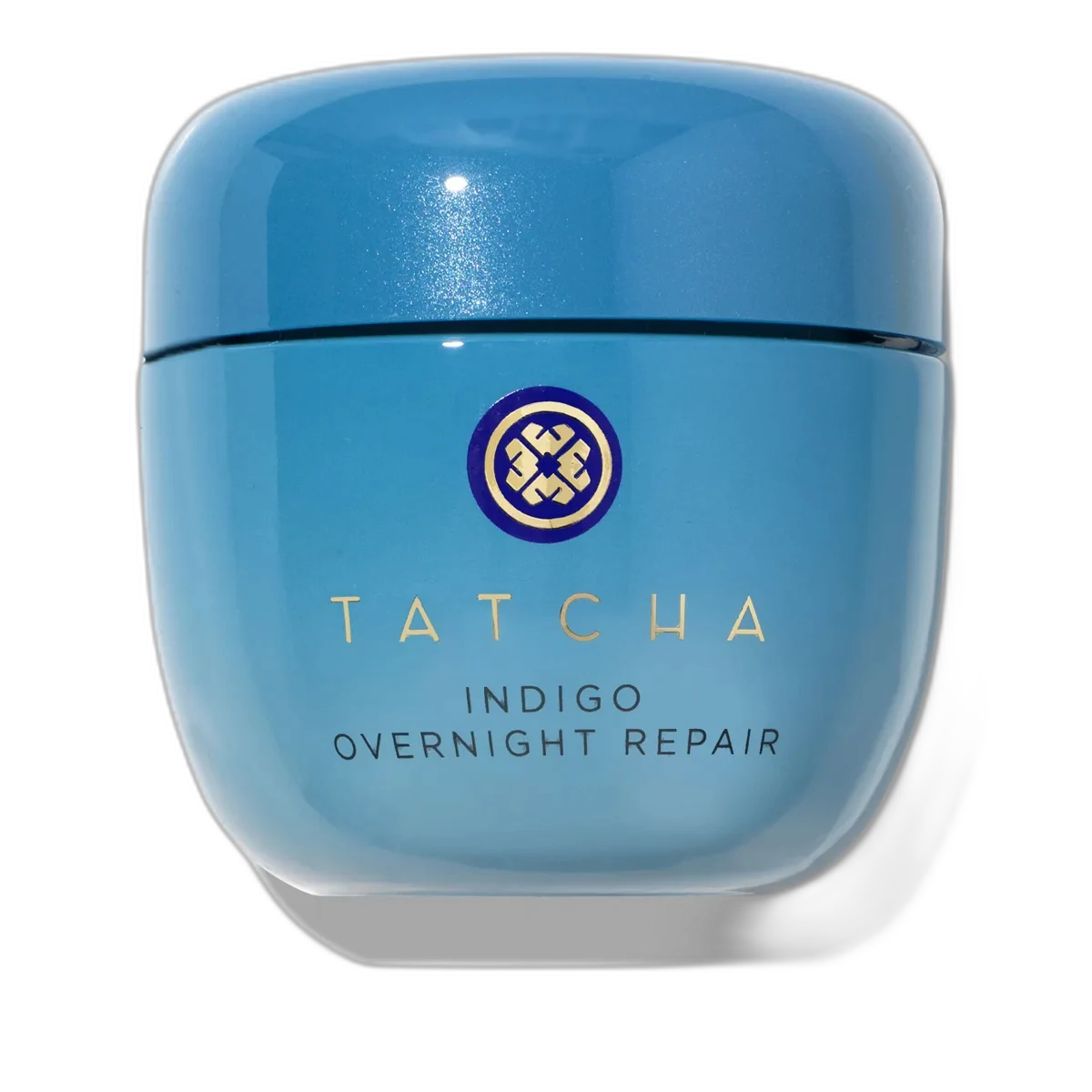
Indigo Overnight Repair Cream
The Eczema-Endorsed Night Repair
 Verified reviewer
Pros & cons.
- +Dual Japanese indigo extract with clinically studied anti-inflammatory compounds (tryptanthrin, indirubin)
- +National Eczema Association Seal of Acceptance requires clinical substantiation, not just ingredient lists
- +Completely fragrance-free — no synthetic fragrances, essential oils, or masking agents
- +Ceramide NG with palmitic and linoleic acid provides structural barrier lipid repair overnight
- +Hadasei-3 complex at high concentration (4th ingredient) supports overnight skin renewal
- +Mondo grass root extract for microbiome balancing addresses root cause of some sensitive skin conditions
- +Cushiony serum-cream texture applies without friction on compromised skin
- +SkinSAFE 91% top allergen free certification with minimal irritant risk
- −Premium $94 price for 1.7 oz makes this a significant skincare investment
- −Four silicones can trap sebum and cause breakouts on acne-prone skin
- −Short 6-month PAO for a $94 jar creates usage pressure
- −Gold spatula does not dock into the jar lid for convenient storage
- −Too rich and occlusive for oily skin types
- −Indigo extract concentrations likely lower than published clinical trial doses
The full review.
Indigo has a deeper history in Japanese culture than most skincare ingredients. During the Edo period, people used indigo-dyed fabrics as a folk remedy for irritated skin, and indigo vat workers had notably soft, healthy hands. This is science, not mysticism: Indigofera tinctoria and Polygonum tinctorium contain tryptanthrin and indirubin, which research shows modulate the IL-17 inflammatory pathway. When Tatcha built a night cream around dual Japanese indigo extract, they connected traditional observation to clinical mechanism.
Research on indigo naturalis for inflammatory skin conditions is more substantial than most cosmetic ingredients. A clinical trial in Annals of Dermatology (2017) showed topical indigo naturalis achieved PASI 75 improvement in 56.3% of psoriasis patients over eight weeks, compared to 0% in the placebo group. A separate randomized controlled trial showed dose-dependent efficacy for indirubin, a key active compound. A 2024 systematic review confirmed the mechanism: tryptanthrin from indigo inhibits the IL-17 signaling pathway, the same target used by prescription biologics like secukinumab.
A cosmetic night cream is not a pharmaceutical. This product does not disclose indigo extract concentrations, and they are likely lower than those used in clinical psoriasis trials. However, the science is real, and the National Eczema Association’s Seal of Acceptance—which requires clinical substantiation—validates that this product benefits eczema-prone skin.
The Hadasei-3 complex is fourth in the ingredient list, which is unusually high for a featured extract. This proprietary blend ferments green tea, rice, and Okinawa algae with Saccharomyces to produce a filtrate dense with amino acids, B vitamins, minerals, and polysaccharides. Fermentation transforms raw botanicals into more bioavailable forms, similar to how sake and miso differ from unfermented ingredients. In an overnight cream, this complex feeds skin repair during peak cellular renewal hours.
Ceramide NG and supporting lipids (palmitic acid, linoleic acid) address skin barrier repair. Ceramides make up roughly 50% of the stratum corneum’s intercellular lipid matrix. Ceramide deficiency is well-documented in eczema, rosacea, and chronically sensitive skin. Published reviews confirm that ceramide-containing topicals significantly reduce transepidermal water loss, helping the barrier seal in moisture provided by the glycerin, diglycerin, and sodium hyaluronate in this formula.
The mondo grass root extract (Ophiopogon japonicus) targets microbiome management. Sensitive skin conditions often involve microbial dysbiosis, or imbalances in the skin’s bacterial ecosystem. Instead of using an antimicrobial approach, this extract cultivates beneficial bacteria to create an environment less hospitable to the imbalances that drive inflammation. This ecological approach complements the direct anti-inflammatory action of the indigo extract.
Texture
The texture is a hybrid—thicker than a serum but lighter than a traditional night cream. A dimethicone base provides a cushiony slip that prevents dragging during application. This matters for sensitive or compromised skin, as rubbing creates friction that can trigger inflammation. The cream absorbs within one to two minutes, leaving a subtle dewy luminosity from the mica and titanium dioxide at the end of the INCI list. By morning, skin looks calmer, feels plumper, and mottled redness from reactive skin is measurably reduced.
Scent
The formulation is fragrance-free—no synthetic fragrance, no essential oils, and no masking agents. This is essential for the significant percentage of eczema and rosacea patients who react to fragrance. The SkinSAFE rating of 91% top allergen free confirms the formulation avoids common contact sensitizers.
Conflicts With
The silicone content—four different silicone compounds—is the most debated part of the formula. Dimethicone creates a breathable occlusive film that reduces water loss and seals in active ingredients during sleep. This benefits dry and sensitive skin, but for acne-prone skin, the film can trap sebum and cause breakouts. User reviews split: sensitive-skin users praise the results, while occasional acne-prone users report new whiteheads. This is not a product for oily or acne-prone skin, and Tatcha should state this more explicitly.
Packaging
At $94 for 1.7 ounces, this is luxury pricing even for Tatcha. The six-month PAO is unusually short, requiring consistent use before it expires—roughly how long the jar lasts with nightly use. A $28 mini at 0.5 ounces allows for trial. The per-application cost is approximately $1.50-2.00 per night, which is defensible for a clinically endorsed product addressing eczema, but hard to justify as a simple moisturizer.
Best for
This product distinguishes itself by treating sensitive, reactive, and eczema-prone skin with both cultural depth and clinical seriousness. The indigo extract is not decorative, the ceramide is not a check-the-box addition, and the microbiome ingredient is not marketing buzz. Each serves a specific, evidence-supported reason, formulated without the fragrances and irritants that would undermine the goal. That is rarer than the price tag suggests.
Ingredient analysis.
Full INCI list
Aqua/Water/Eau, Dimethicone, Diglycerin, Saccharomyces/Camellia Sinensis Leaf/Cladosiphon Okamuranus/Rice Ferment Filtrate, Glycerin, Diphenylsiloxy Phenyl Trimethicone, Neopentyl Glycol Diethylhexanoate, Butylene Glycol, Diisostearyl Malate, PEG-10 Dimethicone, Propanediol, Disteardimonium Hectorite, Ophiopogon Japonicus Root Extract, Indigofera Tinctoria Leaf Extract, Ceramide NG, Palmitic Acid, Linoleic Acid, Sodium Hyaluronate, Polygonum Tinctorium Leaf/Stem Extract, Cetyl Alcohol, Sucrose Stearate, Sucrose Palmitate, Maltodextrin, Sargassum Vulgare Extract, Saccharomyces Ferment Filtrate, Hydrolyzed Lagenaria Siceraria Fruit Juice, Salvia Miltiorrhiza Root Extract, Tocopherol, Lauryl PEG-9 Polydimethylsiloxyethyl Dimethicone, Magnesium Sulfate, Hydrogenated Lecithin, Phytosterols, Ethylhexylglycerin, Phenoxyethanol, Mica (CI 77019), Tin Oxide (CI 77861), Titanium Dioxide (CI 77891)
Skin match.
The science.
The Science
Indigo naturalis has unusually robust clinical evidence for inflammatory skin conditions for a cosmetic ingredient. A randomized controlled trial in Annals of Dermatology (2017) by Lin and colleagues shows topical indigo naturalis achieved PASI 75 improvement (75% reduction in psoriasis severity) in 56.3% of patients over eight weeks, while the vehicle-only control group saw 0%. Mechanism-of-action studies identified the active compounds: tryptanthrin and indirubin.
A systematic review and meta-analysis in Annals of Medicine (2024) confirmed this mechanism: tryptanthrin inhibits the IL-17 signaling pathway, the same inflammatory cascade prescription biologic medications target for psoriasis and severe eczema. Indirubin also inhibits cyclin-dependent kinases that drive inflammatory cell proliferation. Tatcha uses extract from both Indigofera tinctoria and Polygonum tinctorium to maximize active indigo compound diversity.
Ceramide NG's role in barrier repair is extensively documented. A qualitative review by Kono and colleagues (2021) in The Journal of Dermatology confirms that ceramide-containing topical formulations significantly improve skin barrier function and reduce TEWL. In eczema-affected skin, ceramide depletion causes and results from barrier dysfunction; ceramide supplementation helps break this cycle.
The use of Ophiopogon japonicus (mondo grass) root extract reflects the understanding that sensitive skin conditions involve microbial imbalances. Instead of antimicrobial agents that non-selectively reduce bacterial populations, this prebiotic approach selectively supports beneficial organisms—a strategy microbiome dermatology research increasingly validates.
The Hadasei-3 ferment filtrate uses fermentation to enhance bioavailability. Saccharomyces fermentation transforms the polyphenols in green tea (EGCG), the amino acids in rice, and the fucoidan in Okinawa algae into smaller, more skin-penetrable molecular forms, while producing additional B vitamins and enzymes not found in the raw ingredients.
References
- Clinical efficacy and IL-17 targeting mechanism of Indigo naturalis as a topical agent in moderate psoriasis — Annals of Dermatology (2017)
- Evidence and potential mechanism of action of indigo naturalis and its active components in the treatment of psoriasis — Annals of Medicine (2024)
- Clinical significance of the water retention and barrier function-improving capabilities of ceramide-containing formulations — The Journal of Dermatology (2021)
Dermatologist Perspective
Board-certified dermatologists see the National Eczema Association endorsement as a meaningful differentiator; it requires more clinical testing than most luxury skincare products. The dual indigo extract's IL-17 modulating properties match the mechanisms targeted by prescription treatments for inflammatory skin conditions, though at cosmetic rather than pharmaceutical concentrations. Dermatologists familiar with this product note its value for patients with chronic redness, eczema, or post-procedure sensitivity who want a night cream that addresses inflammation instead of just moisture. The fragrance-free, allergen-minimal formulation follows dermatological best practices for sensitive skin management. Dermatologists caution acne-prone patients about the silicone content and recommend patch testing before full-face use.
Where it fits in your routine.
Scoop a pea-sized amount from the jar using the gold spatula. Apply to a clean face as the final PM routine step after serums and treatments. Pat gently into skin; do not rub, especially on irritated or compromised areas. Wait 1-2 minutes to absorb before lying down. Use nightly or as a targeted rescue treatment during flare-ups. Close the jar securely to maintain the 6-month PAO.
At $94 for 1.7 fl oz, this is a high-end luxury night cream. A 0.5 fl oz mini at $28 offers a lower-risk trial. The value is highest for users with clinically sensitive, eczema-prone, or rosacea-affected skin who struggle with mainstream night creams containing fragrances, essential oils, or common irritants. The NEA endorsement, dual indigo extract with published clinical data, and ceramide barrier repair formulation apply pharmaceutical-grade thinking to a cosmetic product. For simple moisturizing without sensitivity concerns, the price is harder to justify—comparable hydration exists at lower price points without the specialized anti-inflammatory ingredients.
This night cream targets inflammation at a molecular level rather than just surface moisture. It suits dry, sensitive, eczema-prone, or redness-reactive skin. It works for post-procedure skin recovering from lasers, peels, or retinoid irritation. The fragrance-free, allergen-minimal formulation serves people who find most night creams aggravate their skin.
Oily and acne-prone skin types should avoid this multi-silicone formula because it traps sebum and triggers breakouts. At $94, the price is hard to justify for a single-step night cream. This product is anti-inflammatory, not anti-aging; it lacks retinol, peptides, AHAs, or any exfoliating and cell-turnover-accelerating ingredients.
Product details.
All Year Certifications National Eczema Association Seal of AcceptanceLeaping Bunny CertifiedVeganGluten-FreeDermatologist TestedSkinSAFE 91% Top Allergen Free
The backstory.
Tatcha developed the Indigo Overnight Repair as part of its Indigo line, which draws on the centuries-old Japanese tradition of using indigo plant dye (ai-zome) for skin soothing. In Japan, indigo has been applied to irritated skin since the Edo period. Tatcha modernized this tradition by extracting the anti-inflammatory compounds from two indigo species (Indigofera tinctoria and Polygonum tinctorium) and formulating them into a serum-cream hybrid designed for overnight barrier repair. The product launched in 2021 and subsequently earned the National Eczema Association's endorsement.
About Tatcha
Established Brand (5–20 years)Tatcha was founded in 2009 by Vicky Tsai, inspired by classical Kyoto beauty rituals, and acquired by Unilever in 2019 for approximately $500 million. Products are formulated at the Tatcha Institute in Japan. This product carries the National Eczema Association Seal of Acceptance, which requires clinical substantiation.
FAQ.
Is Tatcha Indigo Overnight Repair good for eczema?
Yes — it has the National Eczema Association Seal of Acceptance, which requires clinical proof of safety and efficacy for eczema-prone skin. The dual indigo extract targets eczema's inflammatory pathways, and ceramide NG repairs the compromised barrier in eczema-affected skin.
Can I use Tatcha Indigo Overnight Repair every night?
Yes, it works as the last step in a nightly PM routine. A pea-sized amount covers the full face. Users with very sensitive skin often start with every-other-night use and build to nightly application as their skin adjusts.
Does Tatcha Indigo Overnight Repair reduce redness?
Yes — this is a primary function. The dual Japanese indigo extract has tryptanthrin and indirubin, which modulate the IL-17 inflammatory pathway that causes redness and irritation. Most users see visible redness reduction by morning after the first application, with cumulative improvement over 2-4 weeks.
Will Tatcha Indigo Overnight Repair cause breakouts?
The formula is non-comedogenic and fragrance-free, but uses multiple silicones (dimethicone, diphenylsiloxy phenyl trimethicone) to create an occlusive film. Some acne-prone users report breakouts, likely because this film traps sebum. Acne-prone users should patch test on a small area for a week before full-face use.
What is the difference between Tatcha Indigo Overnight Repair and Indigo Calming Cream?
The Overnight Repair is a PM-only treatment that repairs the barrier using mondo grass root extract to balance the microbiome and dual indigo extract for anti-inflammatory action. The Indigo Calming Cream (launched 2023) uses colloidal oatmeal and works as a daily soothing moisturizer for AM/PM use. These products complement each other rather than replacing each other.
Is Tatcha Indigo Overnight Repair fragrance-free?
Yes — it is fragrance-free. It has no synthetic fragrances, no essential oils, and no fragrance-masking agents. This makes it a top choice for sensitive, eczema-prone, and reactive skin types that cannot tolerate fragrance in their skincare.
What is the Hadasei-3 complex in Tatcha products?
Hadasei-3 is Tatcha's proprietary blend of green tea, rice, and Okinawa algae fermented with Saccharomyces. This fermentation creates a nutrient-dense filtrate with amino acids, vitamins, and polysaccharides. In the Indigo Overnight Repair, it is the fourth ingredient, which indicates a meaningful concentration, and it supports overnight skin renewal and antioxidant protection.
What the community says.
"Visibly calms redness and irritation overnight after just one application"
"Rich, cushiony serum-cream hybrid texture that absorbs without heavy residue"
"Skin feels soft, plump, and deeply hydrated by morning"
"Fragrance-free formulation that won't aggravate sensitive or reactive skin"
"National Eczema Association endorsement gives confidence for eczema-prone skin"
"Luxurious packaging with weighted glass jar and gold spatula"
"High price at $94 for 1.7 oz of a single-step night cream"
"Silicone content can cause breakouts on acne-prone skin"
"6-month PAO is short for a $94 product, especially with nightly use"
"Gold spatula does not dock into the jar lid for storage"
"Too rich and heavy for oily skin types"
"Some users report temporary itching during initial use"