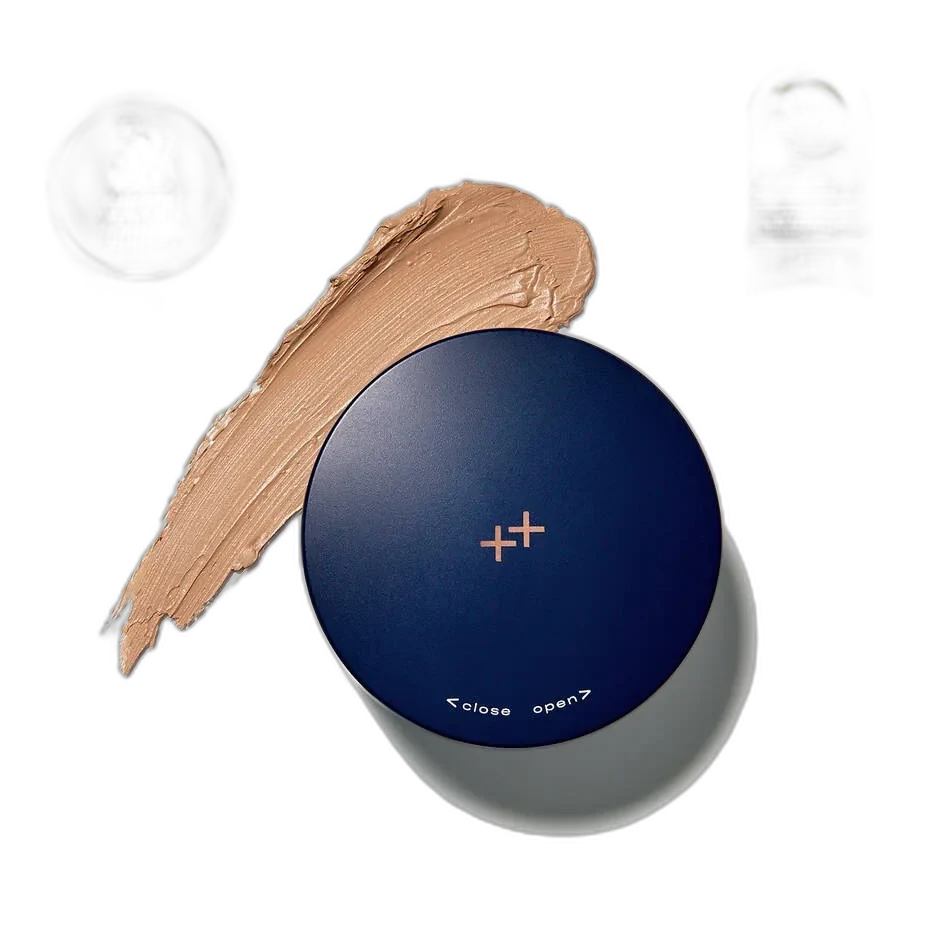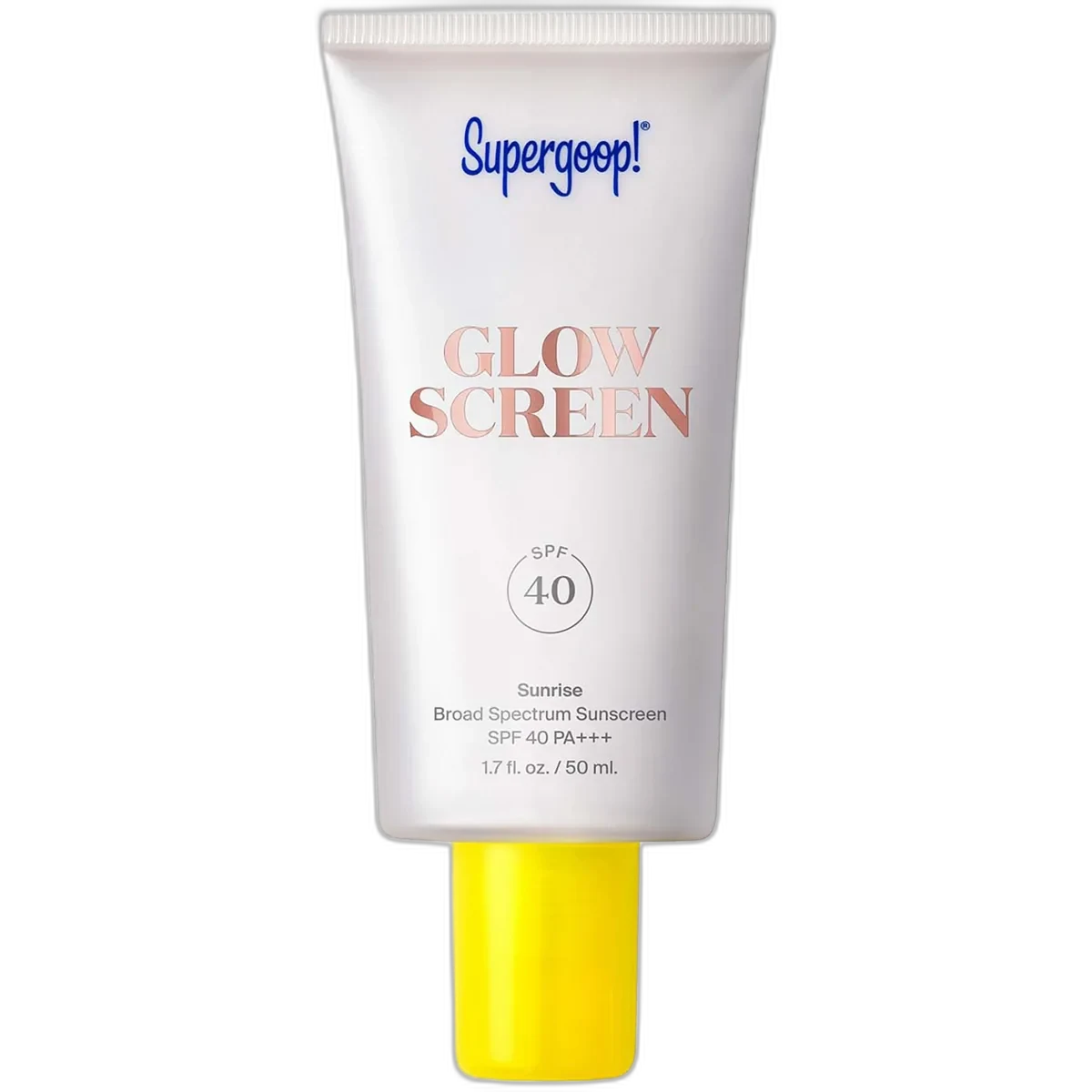
Glowscreen SPF 40
Glow-Primer SPF Icon
 Verified reviewer
Pros & cons.
- +Niacinamide, hyaluronic acid, ferulic acid, and vitamin B5 provide genuine skincare beyond basic UV protection
- +Functions as a legitimate makeup primer — smooths pores, extends foundation wear, and creates a luminous base
- +Allure Best of Beauty 2020 winner with over 10,000 positive reviews across major retailers
- +Fragrance-free formula with no added parfum or essential oils
- +Four shade options provide some flexibility for matching different skin tones
- +Lightweight, easy to blend, and comfortable for all-day wear under makeup
- +PA+++ UVA protection with stabilized avobenzone for reliable photoaging prevention
- −Dewy, luminous finish is too shiny for oily skin types without mattifying powder on top
- −Shimmer can appear metallic or glittery at proper sunscreen application amounts in harsh light
- −Bismuth oxychloride is a known irritant that can cause reactions in sensitive or rosacea-prone skin
- −Tint may oxidize or shift slightly toward orange on some skin tones over the day
- −Only four shades — insufficient for truly inclusive shade matching across all skin tones
- −Tension between cosmetic elegance and adequate application density for labeled SPF 40 protection
The full review.
For decades, the sunscreen industry assumed people wore sunscreen only because they had to. Product development prioritized efficacy over aesthetics. Sunscreens were white, greasy, thick, and smelled like a public pool. Marketing used skin cancer statistics and UV damage photos to send one message: this is medicine. Take it.
Supergoop’s Glowscreen SPF 40, launched in February 2020, flipped this paradigm. It looks like a primer, feels like a serum, and makes skin glow. It is also an SPF 40 PA+++ broad-spectrum sunscreen. The product won Allure’s Best of Beauty award in its first year. It has over 10,000 reviews across major retailers with a 4.4/5 average—impressive numbers for any skincare product or sunscreen.
The formula is sophisticated. Three chemical UV filters—avobenzone at 3%, octisalate at 5%, and octocrylene at the FDA-maximum 10%—provide sun protection. Octocrylene stabilizes avobenzone, and butyloctyl salicylate in the inactive list adds more stabilization. The inactive ingredients distinguish Glowscreen from other chemical sunscreens.
Niacinamide is seventh on the INCI list, meaning it is at a meaningful, active concentration. In a daily-wear sunscreen-primer, niacinamide has triple utility: it strengthens the skin barrier (which UV exposure weakens), regulates sebum production (helping the dewy product last on the face), and provides anti-inflammatory protection against low-level irritation from chemical UV filters. A 2025 study in Scientific Reports confirmed niacinamide enhances water uptake in the stratum corneum, supporting the product’s hydration claims at a molecular level.
Sodium hyaluronate (hyaluronic acid) provides humectant moisture-binding to keep skin plump and dewy. Ferulic acid—an antioxidant with UV-absorbing properties—adds secondary photoprotection beyond the UV filters. Pantothenic acid (vitamin B5) supports barrier repair. Tocopherol (vitamin E) provides antioxidant synergy with the ferulic acid. Sunflower seed oil contributes essential fatty acids. This is a skincare formulation that contains UV filters, not a sunscreen with token skincare marketing.
Mica, bismuth oxychloride, and titanium dioxide create the luminous finish; these are cosmetic light-reflectors, not UV-active ingredients. Polymethylsilsesquioxane (silicone microspheres) creates the pore-blurring, primer-like slip that makes Glowscreen work as a makeup base. Iron oxides tint the shaded versions. The effect is a warm, lit-from-within radiance that looks like natural skin.
The primer performance is real. Glowscreen improves the wear and appearance of foundation. The silicone microspheres create a smooth, filled-in canvas. The luminous base gives makeup a radiant quality instead of the flat, matte look many primer-sunscreens produce. Users report extended foundation wear time when using Glowscreen.
The luminous finish is also the product’s main limitation. On dry and normal skin, the dewy glow is flattering. On oily and combination skin, it looks like excessive shine within hours, requiring mattifying powder. The shimmer looks natural in controlled lighting but can look metallic or glittery in harsh fluorescent or direct sunlight, especially at the generous application amounts needed for SPF 40 protection. Lab Muffin Beauty Science, the cosmetic chemist and science communicator, noted this: the product looks most elegant at thin applications that may not deliver the labeled SPF.
The bismuth oxychloride in the formula is another factor. It creates the luminous effect but is a known irritant for some, especially those with sensitive or rosacea-prone skin. Bismuth oxychloride can cause itching, redness, and breakouts in susceptible people. Patch testing is advisable if you have reactive skin.
The shade range—four options—is adequate but not generous. For a Supergoop’s signature product, expanding beyond four shades would better serve the brand’s inclusive mission. The original Sunrise shade works as a universal pearlescent glow on many skin tones, but tinted options may oxidize or shift color on some complexions.
Value is reasonable for a multi-functional product. At $38 for 1.7 ounces, Glowscreen replaces both a sunscreen and a primer, making the per-use cost competitive with two separate products. The mini size at $22 for 0.5 ounces allows trial. A jumbo size at $48 for 2.5 ounces offers the best per-ounce value.
Glowscreen’s legacy in the sunscreen category is established. It proved people will actively seek and advocate for a sunscreen that makes them look beautiful. Over 10,000 reviews with a 4.4 average shows this is a product people love, not just use dutifully. For a product that requires daily use to be effective, love is worth more than any SPF number.
Formula
Ingredient analysis.
Full INCI list
Active Ingredients: Avobenzone 3%, Octisalate 5%, Octocrylene 10%. Inactive Ingredients: Water, Propanediol, Butyloctyl Salicylate, Glycerin, C12-15 Alkyl Benzoate, Polymethylsilsesquioxane, Niacinamide, Glyceryl Stearate Citrate, Bismuth Oxychloride, Mica, Titanium Dioxide, Lauryl Lactate, Isododecane, Isodecyl Neopentanoate, Glyceryl Stearate, Diisopropyl Sebacate, Cetyl Phosphate, Caprylic/Capric Triglyceride, Coco-Caprylate, Ethylhexyl Hydroxystearate, Butylene Glycol, Arginine, Hydroxyacetophenone, Caprylyl Glycol, 1,2-Hexanediol, Iron Oxides, Sodium Hyaluronate, Chlorphenesin, Acrylates/C10-30 Alkyl Acrylate Crosspolymer, Trisodium Ethylenediamine Disuccinate, Phospholipids, Limonium Gerberi Extract, Leuconostoc/Radish Root Ferment Filtrate, Theobroma Cacao (Cocoa) Seed Extract, Pantothenic Acid, Tocopherol, Helianthus Annuus (Sunflower) Seed Oil, Ferulic Acid
Skin match.
The science.
The Science
Glowscreen uses three chemical filters for complementary spectral coverage. Avobenzone at 3% absorbs the UVA1 range (340-400nm), which causes photoaging, hyperpigmentation, and immunosuppression. Octocrylene at 10% absorbs UVB and stabilizes avobenzone by quenching its photoreactive triplet state. Octisalate at 5% adds UVB absorption and solubilizes avobenzone for even distribution.
Evidence supports the skincare ingredients. A 2025 study in Scientific Reports shows niacinamide increases water uptake in the stratum corneum and plasticizes keratin, explaining how the ingredient improves skin hydration and barrier function at the molecular level (PubMed 39929949). A 2014 review in Skin Pharmacology and Physiology confirmed niacinamide's anti-inflammatory, sebum-regulating, and barrier-strengthening effects, which matter for products worn under UV stress (PubMed 24993939).
Ferulic acid, at the end of the INCI list, provides antioxidant synergy with the tocopherol (vitamin E) in the formula. Combining ferulic acid with vitamins C and E enhances photoprotection beyond UV filters alone, but in Glowscreen, ferulic acid works with vitamin E rather than ascorbic acid.
The 2020 JAMA study by Matta et al. shows all three UV filters in this formula (avobenzone, octisalate, octocrylene) absorb systemically above the FDA's 0.5 ng/mL threshold after maximal application. The FDA says this finding does not mean these ingredients are unsafe and still recommends sunscreen use while more data is gathered.
References
- Niacinamide and its impact on stratum corneum hydration and structure — Scientific Reports (2025)
- Niacinamide - mechanisms of action and its topical use in dermatology — Skin Pharmacology and Physiology (2014)
- Effect of Sunscreen Application on Plasma Concentration of Sunscreen Active Ingredients: A Randomized Clinical Trial — JAMA (2020)
Dermatologist Perspective
Sunscreen compliance is the most important factor in preventing sun damage, so products that make daily SPF use enjoyable serve a clinical purpose. Board-certified dermatologists note that Glowscreen combines UV protection with niacinamide, hyaluronic acid, and ferulic acid to address multiple skin concerns, which simplifies routines and improves adherence. Dermatologists warn that bismuth oxychloride may worsen rosacea or sensitive skin and recommend applying the full 2 mg/cm² density, even if the shimmer becomes more pronounced. The PA+++ rating provides UVA protection, though dermatologists note PA++++ is better for patients with photoaging or melasma.
Where it fits in your routine.
Apply 2-3 pumps evenly to the face and neck. Use this as the last skincare step and the first makeup step. Press the primer into the skin with fingertips instead of rubbing to keep the luminous finish. Let the primer set for 1-2 minutes before applying foundation. Wear it alone for a no-makeup glowy look. Use a mattifying setting powder on oily areas. Reapply every 2 hours during direct sun exposure; use a powder SPF to reapply over makeup.
At $38 for 1.7 oz, Glowscreen sits in the upper-middle prestige sunscreen range. It replaces both a sunscreen and a makeup primer, providing strong value for multi-step routines. A $22 mini (0.5 oz) allows trial, while the $48 jumbo (2.5 oz) has the best per-ounce value. For a brand founded in 2007 with nearly two decades of sun-protection expertise and an Allure Best of Beauty award, the price reflects formulation innovation and consumer validation. The niacinamide, hyaluronic acid, and ferulic acid content adds skincare value most competing sunscreens lack.
Glowscreen works for dry to normal skin types wanting a luminous makeup primer and sunscreen. It suits people who skip SPF because they dislike wearing it. It also fits anyone seeking a multi-functional product that combines UV protection with niacinamide and hyaluronic acid.
Skip Glowscreen if oily skin cannot tolerate dewy finishes, if sensitive or rosacea-prone skin reacts to bismuth oxychloride, or if you want an invisible, no-shimmer sunscreen for professional environments. Those needing the highest UVA protection (PA++++) should use alternatives with stronger UVA coverage.
Product details.
No fragrance or parfum listed. Has a very light, clean scent — likely from the cocoa seed extract and botanical components. Does not smell like traditional sunscreen. Most users find it pleasant and unobtrusive.
A pump dispenser tube controls product amount effectively. It comes in four shades: Sunrise (the original pearlescent) and three tinted options for different skin tones. The opaque packaging protects light-sensitive ingredients (ferulic acid, tocopherol) from degradation.
The first application shows an immediate luminous effect — skin looks hydrated and lit-from-within. The primer-like texture smooths pores and prepares skin for makeup. Oily skin types may see the dewy finish intensify during the morning. Most users experience no stinging or irritation. The shimmer is more noticeable and prettier than expected.
2-3 months with daily morning use of 2-3 pumps on face only
12 months
All Year
The backstory.
Glowscreen launched in February 2020 and immediately became Supergoop's fastest-selling product. The timing was both fortunate and unfortunate — it arrived just before the pandemic, and while in-store discovery was limited, the product found its audience through social media and beauty editor coverage. The concept was born from founder Holly Thaggard's observation that people were more likely to wear sunscreen daily if it made them look good, not just protected. The Allure Best of Beauty award in its launch year validated the approach, and Glowscreen became Supergoop's signature product — the one that represents the brand's philosophy that sunscreen should be something you want to wear, not something you have to wear.
About Supergoop!
Established Brand (5–20 years)Holly Thaggard founded Supergoop! in 2007 to change how the world views sunscreen. The brand is Leaping Bunny and PETA certified cruelty-free and leads the US prestige sun-protection market. Glowscreen won the Allure Best of Beauty Award in 2020, its launch year.
Common myths.
The shimmer in Glowscreen reduces its UV protection compared to non-shimmery sunscreens.
Light-reflecting minerals (mica, bismuth oxychloride, titanium dioxide) are cosmetic ingredients. They are separate from the three chemical UV filters that provide the SPF 40 protection. The shimmer does not dilute or interfere with the UV-absorbing capacity of avobenzone, octisalate, and octocrylene. However, Lab Muffin Beauty Science notes that users may apply less than the 2 mg/cm² needed for the labeled SPF to achieve cosmetic elegance.
Glowscreen can replace both moisturizer and sunscreen.
Glowscreen contains hyaluronic acid, niacinamide, and glycerin to provide hydration—the brand claims a 78% hydration boost after 8 hours. Glowscreen works as a combined moisturizer-SPF-primer step for oily or combination skin. Dry skin gets better results if you apply a hydrating serum or lightweight moisturizer underneath.
FAQ.
Is Supergoop Glowscreen too shiny for oily skin?
Glowscreen's dewy, luminous finish works best on dry to normal skin. On oily skin, the shimmer can intensify and look too shiny during the day. If you have oily skin but want to use Glowscreen, apply a thin layer and set it with a mattifying powder or Supergoop's (Re)setting Mineral Powder to control shine.
Which Supergoop Glowscreen shade should I choose?
Glowscreen has four shades. Sunrise (the original) gives most light to medium skin tones a universal pearlescent glow. The three additional tinted shades offer more coverage and warmth for various undertones and depths. Sunrise is the safest choice if unsure because it is the most sheer.
Can Supergoop Glowscreen replace my primer?
Yes — Glowscreen works as both sunscreen and makeup primer. The polymethylsilsesquioxane creates a silky, pore-blurring base, and the luminous finish makes makeup look radiant. Many users say it extends foundation wear time. Apply Glowscreen as your last skincare step before makeup.
Does Supergoop Glowscreen provide enough SPF protection?
The formula uses avobenzone 3%, octisalate 5%, and octocrylene 10%. This combination provides SPF 40 when applied at the tested density of 2 mg/cm². The shimmery texture might lead users to apply less than this amount for aesthetics. For full protection, use 2-3 generous pumps and wait for the initial glow to settle after a few minutes.
Does Supergoop Glowscreen oxidize or turn orange?
Some users report the tint shifts slightly during the day, especially the warmer shades. This shows more on lighter skin tones. The oxidation is mild and comes from iron oxides reacting with skin oils and pH. If you see color shifting, the Sunrise shade is more stable because it uses pearlescence instead of pigment.
Is Supergoop Glowscreen safe during pregnancy?
Yes — Supergoop states their products are pregnancy-safe. The chemical UV filters (avobenzone, octisalate, octocrylene) are FDA-approved for over-the-counter use, and the skincare ingredients (niacinamide, hyaluronic acid, pantothenic acid) are all considered safe during pregnancy. However, if you prefer mineral-only sunscreens during pregnancy, Supergoop offers zinc oxide-based alternatives.
Community
What the community says.
"Beautiful dewy glow that functions as both sunscreen and makeup primer"
"Excellent makeup base — extends foundation wear and provides a luminous canvas"
"Niacinamide and hyaluronic acid provide genuine skincare benefits beyond UV protection"
"Lightweight, easy to blend, and comfortable for all-day wear"
"Pleasant non-sunscreen scent despite no listed fragrance ingredients"
"Four shades provide some flexibility for matching different skin tones"
"Shimmer can look metallic or overly intense at proper sunscreen application amounts"
"Too dewy and shiny for oily skin types without a mattifying product on top"
"Tint can oxidize or appear orange on some skin tones after a few hours"
"Bismuth oxychloride can irritate sensitive or acne-prone skin"
"Only four shades — not enough range for truly inclusive shade matching"
"Concern that cosmetically elegant thin applications may not deliver the labeled SPF 40"
People also looked at.