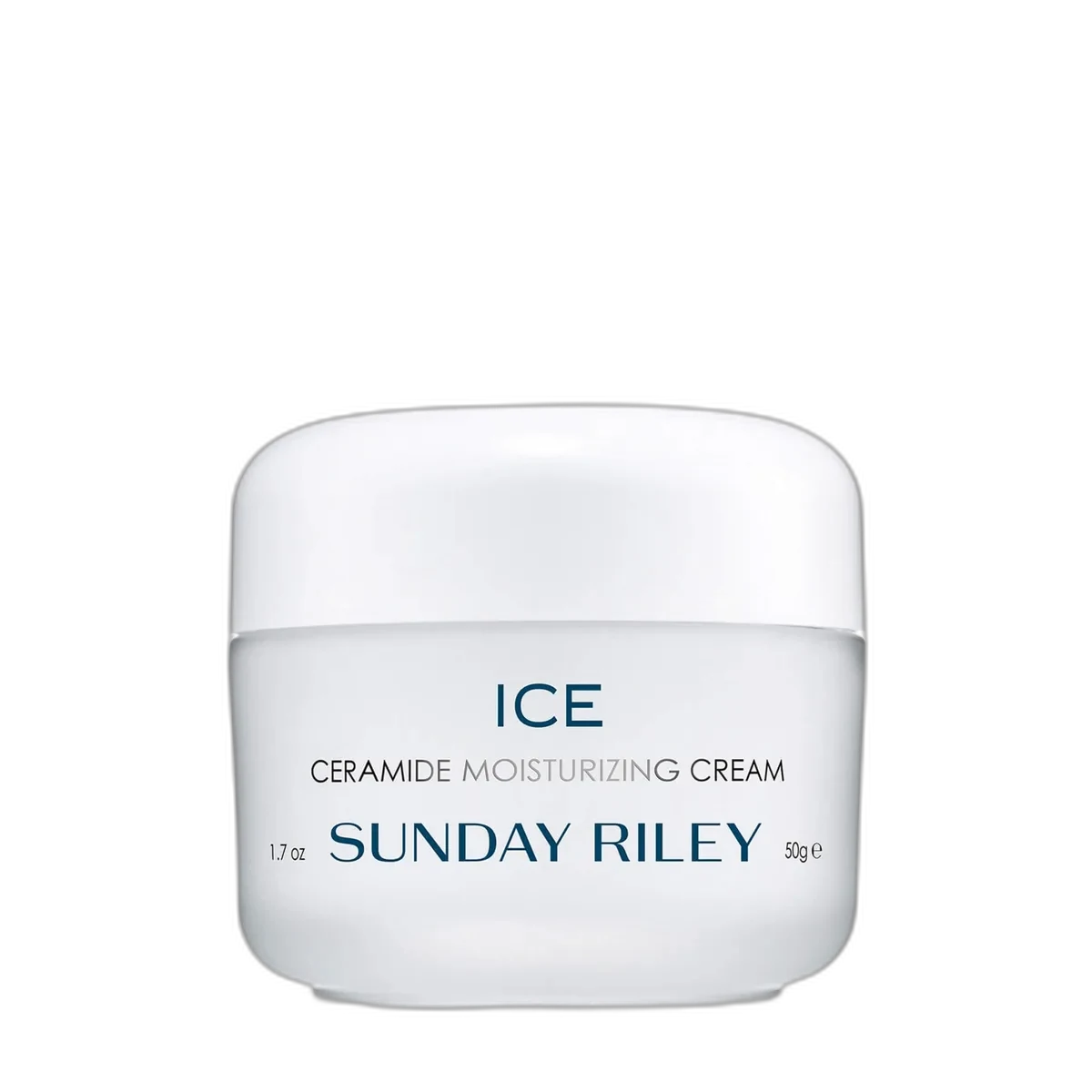
Ice Ceramide Moisturizing Cream
Prestige Barrier Builder
 Verified reviewer
Pros & cons.
- +Physiological ceramide-cholesterol-phytosphingosine trio mimics the skin's natural lipid architecture
- +Squalane-rich base provides substantial skin-identical emollient hydration
- +Free-form essential fatty acids (linoleic and linolenic) address barrier-compromised skin deficiencies
- +Deeply nourishing texture delivers meaningful relief for genuinely dry and dehydrated skin
- +B Corporation certified, Leaping Bunny approved, made in the USA
- +Excellent companion cream for buffering retinol irritation at night
- +A small amount covers the full face, extending the jar's lifespan
- −Contains sensitizing essential oils (cinnamon cassia, rose) that contradict its barrier-repair positioning
- −Priced at $65 for ceramide science available at pharmacy-brand prices
- −Dense, waxy texture requires warming and technique for even application
- −Contains lanolin alcohol, ruling out vegan status and posing allergen risk for some
- −Strong herbal scent is polarizing and may deter fragrance-sensitive users
- −Several potentially comedogenic ingredients (red algae, coconut extract) limit suitability for acne-prone skin
The full review.
Sunday Riley’s Ice Ceramide Moisturizing Cream hides an uncomfortable truth: its core science was designed for affordability. Decades of research developed the ceramide-cholesterol-fatty acid model to create accessible treatments for eczema and xerosis. It was never meant to be exclusive. Yet, it sits in an ice-blue glass jar priced at $65.
That price must earn its value, and the formula makes a credible case—up to a point. Ice contains three ceramides (NP, EOP, and AP), cholesterol, and phytosphingosine. This physiological lipid trio repairs the barrier more effectively than ceramides alone. This is not a superficial ceramide dusting; it reconstructs the stratum corneum’s lamellar lipid architecture. The ratio matters, and including all three components shows the formulators understand the science.
The supporting ingredients reinforce this. Squalane is third in the INCI list, providing a substantial skin-identical emollient backbone. Free-form linoleic and linolenic acids—branded as “Vitamin F”—supply the essential fatty acids compromised skin lacks. Pomegranate sterols add plant-derived structural lipids. Sodium hyaluronate adds humectant hydration. Red algae extract, the second ingredient by concentration, acts as a water-binding gel matrix. On paper, this is a well-architected barrier repair system.
The texture defines the product. Ice is dense and thick. It feels almost waxy in the jar, requiring slight pressure to scoop. This is not a lightweight gel-cream. It is a thick moisturizer. Warming it between fingertips changes the texture from resistant to silky, and it spreads well once you learn the technique. However, that initial learning curve—smearing what feels like cold butter on your cheek—is why some reviewers call application “difficult.”
Once applied, the cream absorbs better than its thickness suggests. The finish is satin-to-dewy, leaving skin looking fed and calm rather than greasy. For dry skin that feels tight by noon, this cream provides lasting relief. The barrier-repair effect builds over the first two weeks. Users with barriers compromised by retinoid use, over-exfoliation, or winter climate report less tightness, flaking, and sensitivity.
But the formula undermines itself here. Rosa Damascena Flower Oil and Cinnamomum Cassia Leaf Oil are in the ingredient list. Cinnamon cassia oil in a barrier repair cream. For a product marketed as a soothing moisturizer for compromised skin, including a known sensitizer containing cinnamal—a common fragrance allergen—is a puzzling choice. Rosa damascena is less aggressive but still carries sensitization potential via linalool and geraniol. With vanilla and anise extracts, the formula uses the science of gentle repair while including ingredients dermatologists tell patients to avoid when their barrier is compromised.
The scent from these oils divides users. Some call it herbal, pleasant, or spa-like. Others find it sharp, earthy, and off-putting. It fades within minutes, but the scent turns some users away. More importantly, essential oil sensitization is cumulative. Irritation may not appear on day one but can develop over weeks or months of use, exactly when you are building trust in a barrier cream.
About Sunday Riley
Sunday Riley launched in 2009 and holds a respected position in prestige clean beauty. The brand is B Corporation certified, Leaping Bunny approved, and manufactures in the United States. These are meaningful credentials. However, the brand is not dermatologist-developed, and no published clinical data exists for this specific formulation’s barrier repair performance. The ceramide-cholesterol-phytosphingosine model is well-established; the execution in this particular cream is not.
Not ideal for
The not-vegan status matters for some: lanolin alcohol, from sheep’s wool, is in the formula. It is an effective emollient used widely in dermatology, but it prevents vegan certification and is a known allergen for approximately 1-3% of dermatitis patients.
Price
At $65 for 1.7 ounces, the value is strained. The ceramide-cholesterol-phytosphingosine approach is not proprietary. Pharmacy brands use this same lipid strategy at a quarter of the price, often without the essential oils that limit this formula’s use for sensitive or barrier-damaged skin. A 0.5 oz travel size costs $22 for those who want to test it.
Who Should Buy
With Ice, you pay for the intersection of thoughtful formulation and prestige experience—the jar weight, the squalane base quality, and the botanical complexity. If that experience matters and your skin tolerates the essential oils, this is an effective moisturizer. But if you need a ceramide cream because your barrier is in crisis, the fragrant oils in this formula work against your goal.
Ingredient analysis.
Full INCI list
Water/Eau/Aqua, Chondrus Crispus (Red Algae) Extract, Squalane, C13-15 Alkane, Glycerin, Helianthus Annuus (Sunflower) Seed Wax, Lanolin Alcohol, Tri(Polyglyceryl-3/Lauryl) Hydrogenated Trilinoleate, Cocos Nucifera (Coconut) Fruit Extract, Ceramide NP, Ceramide EOP, Ceramide AP, Sodium Hyaluronate, Linoleic Acid, Oleic Acid, Palmitic Acid, Linolenic Acid, Prunus Amygdalus Dulcis (Sweet Almond) Fruit Extract, Fructooligosaccharides, Beta Vulgaris (Beet) Root Extract, Shea Butter Ethyl Esters, Prunus Armeniaca (Apricot) Fruit Extract, Pimpinella Anisum (Anise) Fruit Extract, Rubus Idaeus (Raspberry) Fruit Extract, Vanilla Planifolia Fruit Extract, Cucumis Melo (Melon) Fruit Extract, Punica Granatum Sterols, Rosa Damascena Flower Oil, Ananas Sativus (Pineapple) Fruit Extract, Cinnamomum Cassia Leaf Oil, Ricinus Communis (Castor) Seed Oil, Rhus Verniciflua Peel Wax, Sodium Lauroyl Lactylate, Sodium Polyacryloyldimethyl Taurate, Triethyl Citrate, Tapioca Starch, Sodium Benzoate, Potassium Sorbate, Sodium Phytate, Magnesium Stearate, Magnesium Aspartate, Pentylene Glycol, Tocopherol, Phytosphingosine, Cholesterol, Lithothamnion Calcareum Extract, Zinc Gluconate, Stearic Acid, Copper Gluconate, Phenoxyethanol, Polymethylsilsesquioxane, Xanthan Gum, Carbomer, Ascorbyl Palmitate, Pentaerythrityl Tetra-Di-T-Butyl Hydroxyhydrocinnamate, Benzotriazolyl Dodecyl P-Cresol
Skin match.
The science.
The Science
The barrier-repair model for this formula is a well-validated dermatological concept. The stratum corneum's intercellular lipid matrix uses ceramides, cholesterol, and free fatty acids in an approximately equimolar ratio. Research by Elias and colleagues shows that effective barrier repair requires all three components in physiological ratios; formulations missing one component can delay barrier recovery.
This cream contains ceramides NP, EOP, and AP, cholesterol, and phytosphingosine (a sphingoid base and ceramide precursor). A 2002 study by Chamlin et al. in the Journal of Investigative Dermatology shows that a ceramide-dominant lipid mixture in a physiological ratio accelerates barrier repair in atopic dermatitis patients more than petrolatum alone. This three-component approach works for xerosis, contact dermatitis, and post-procedure barrier compromise.
The free-form linoleic acid in the formula addresses a deficiency in barrier-damaged skin. Elias et al. showed that essential fatty acid deficiency impairs lamellar body formation and barrier function, while topical linoleic acid supplementation partially normalizes these processes. Linoleic acid also modulates sebum composition; a 1998 study in the British Journal of Dermatology by Letawe et al. shows that topical linoleic acid reduces sebum oleic acid ratios in acne patients, which correlates with comedone reduction.
Phytosphingosine also has antimicrobial activity against Propionibacterium acnes and Staphylococcus aureus. A 2008 study by Pavicic et al. in Dermatology shows that phytosphingosine-containing formulations reduce inflammatory acne lesions, meaning this ingredient does more than barrier repair.
References
- Ceramide-dominant barrier repair lipids alleviate childhood atopic dermatitis: changes in barrier function provide a sensitive indicator of disease activity — Journal of the American Academy of Dermatology (2002)
- Effect of linoleic acid on comedones — British Journal of Dermatology (1998)
- Efficacy and tolerability of topical phytosphingosine in the treatment of acne vulgaris — Dermatology (2008)
Dermatologist Perspective
Board-certified dermatologists endorse the ceramide-cholesterol-fatty acid approach to barrier repair because it addresses the lipid depletion in eczema and retinoid dermatitis. The three-component lipid system in this cream matches the gold standard for barrier-mimetic formulations. However, dermatologists would likely flag the essential oil inclusions; cinnamon cassia oil and rose oil are sensitizers in dermatological patch testing panels, which contradicts the product's use for compromised skin. Most dermatologists recommend fragrance-free ceramide formulations for patients with active barrier damage. For dry skin without sensitization issues, the lipid architecture of this cream is dermatologically sound.
Where it fits in your routine.
Use the provided spatula to scoop a pea-to-nickel-sized amount. Warm the cream between your fingertips for several seconds to soften the waxy texture. Press and pat the cream into the skin instead of dragging; focus on dry or barrier-compromised areas. Apply after water-based serums (hyaluronic acid, niacinamide, vitamin C) as the moisturizer step. Follow with sunscreen in the AM. At night, this can be the final step; for dry skin, a thin layer of occlusive (petrolatum or sleeping mask) on top intensifies the barrier seal.
At $65 for 1.7 oz, this ceramide cream is priced at a premium in a commoditized market. A 0.5 oz travel size at $22 offers a lower-risk entry point. Typical twice-daily use lasts 3-4 months, making the daily cost roughly $0.54-0.72. The ceramide-cholesterol-phytosphingosine formulation is more sophisticated than many competitors, but Sunday Riley lacks clinical research for its specific products, making the price harder to justify. You pay for formulation thoughtfulness, B Corp certification, and the prestige experience. Whether that premium is worthwhile depends on if fragrance-free pharmacy alternatives meet your skin's needs at a quarter the cost.
Dry to normal skin types want a thick, well-formulated barrier cream with prestige ingredients and ethical certifications. It works for retinol users needing a protective moisturizer to buffer irritation and for cold-weather skin needing intensive lipid replenishment.
People with sensitive, reactive, or compromised skin should watch the essential oils (cinnamon, rose) in this formula — the target audience for this cream faces the highest irritation risk. Oily or acne-prone skin types should avoid it because of several comedogenic ingredients. Budget-conscious consumers can find equivalent ceramide-cholesterol science at pharmacy-brand prices.
Product details.
This thick, waxy cream feels dense and buttery in the jar but melts on contact. Warm it between your fingertips first to spread it easily. The heavy texture absorbs well and does not feel greasy.
Natural essential oils—mainly rose, cinnamon cassia, and vanilla—give it a noticeable herbal, earthy scent. The scent is polarizing: some find it pleasant and spa-like, while others call it sharp and medicinal. It fades minutes after application.
Sunday Riley uses a heavy glass jar in its signature ice-blue color with a screw-top lid. A plastic spatula comes with it for hygienic dispensing. The packaging looks premium, but the jar format exposes the product to air every time you use it. It comes in a 1.7 oz standard size and a 0.5 oz travel size.
The cream feels dense and almost waxy on first application. Warming it between fingers softens it. It absorbs within one to two minutes, leaving skin immediately softer and more supple. The herbal scent is strongest during application and fades quickly. Most users will not feel tingling or irritation, but those sensitive to essential oils may feel mild warmth from the cinnamon cassia oil. The hydration effect shows from the first use.
3-4 months with twice-daily use on face and neck
12 months
fall winter
The backstory.
Sunday Riley launched the Ice Ceramide Moisturizing Cream in 2020 as a straightforward barrier-repair product — a deliberate departure from the brand's more complex, active-heavy offerings like Good Genes and Luna. The 'Ice' name references the cooling, soothing effect the cream aims to provide for compromised skin. It represents the brand's acknowledgment that sometimes the most sophisticated thing a product can do is simply restore what the skin has lost.
About Sunday Riley
Established Brand (5–20 years)Sunday Riley launched in 2009 in Houston, Texas, by its namesake founder. The brand has Leaping Bunny cruelty-free certification and B Corporation status. Sunday Riley sells at Sephora and Nordstrom and has a good reputation in prestige clean beauty, but dermatologists did not develop it and specific formulations have limited peer-reviewed research.
Common myths.
Higher-priced ceramide creams have better or more ceramides than drugstore options.
Ceramides NP, EOP, and AP are the same molecules at any price. The formulation differs; this cream uses them with cholesterol and phytosphingosine in a physiological ratio, though similar formulations exist for less.
Natural essential oils in skincare are always safer than synthetic fragrance.
Essential oils like the cinnamon cassia and rose oils in this cream contain potent allergens (cinnamal, citronellol, geraniol). These cause contact dermatitis at rates equal to or higher than many synthetic fragrance components. 'Natural' does not mean 'non-sensitizing.'
FAQ.
Can I use Sunday Riley Ice with retinol?
Yes, this is an excellent pairing. The ceramide-cholesterol-phytosphingosine system in this cream repairs the barrier disruption retinol causes. Apply your retinol serum first, wait a few minutes, then layer this cream on top to seal in hydration and protection.
Is Sunday Riley Ice safe during pregnancy?
Yes. Sunday Riley includes this product in their pregnancy-safe collection. It lacks retinoids, salicylic acid, or other ingredients typically avoided during pregnancy. The essential oils use low concentrations considered safe for topical use during pregnancy.
Why does Sunday Riley Ice feel so thick and waxy?
Sunflower seed wax, lanolin alcohol, and ceramide-lipid complex create this thick texture and give the cream barrier-mimetic properties. Warm a small amount between your fingertips before application to change the texture from waxy to silky and spread it evenly.
Is Sunday Riley Ice fragrance-free?
No. The formula lacks synthetic fragrance but uses Rosa Damascena Flower Oil, Cinnamomum Cassia Leaf Oil, and Vanilla Planifolia Fruit Extract. These natural ingredients can trigger sensitization. People with fragrance sensitivities or reactive skin should patch test or use fragrance-free ceramide alternatives.
Will Sunday Riley Ice clog my pores?
The formula contains ingredients flagged as potentially comedogenic, such as red algae extract (the second ingredient) and coconut fruit extract. While the ceramides and squalane are non-comedogenic, this cream works best for dry to normal skin. People prone to breakouts or milia should use it with caution.
Is Sunday Riley Ice vegan?
No. The formula contains Lanolin Alcohol from sheep's wool. Sunday Riley states most of their products are vegan, but this particular cream is not. It is cruelty-free with Leaping Bunny certification.
What the community says.
"Rich, buttery texture that feels deeply nourishing without excessive heaviness"
"Leaves skin noticeably soft, plump, and hydrated after just a few uses"
"Excellent for combating winter dryness and indoor heating dehydration"
"A little product goes a long way, extending the value of the jar"
"Works beautifully as a barrier-repair cream alongside retinol use"
"Waxy, pasty consistency can be difficult to spread evenly on the skin"
"Strong herbal scent from essential oils that some users find unpleasant"
"Overpriced at $65 for a ceramide moisturizer with basic active ingredients"
"Can feel sticky or leave a rubbery film if overapplied"
"May cause milia formation, especially when used around the eye area"