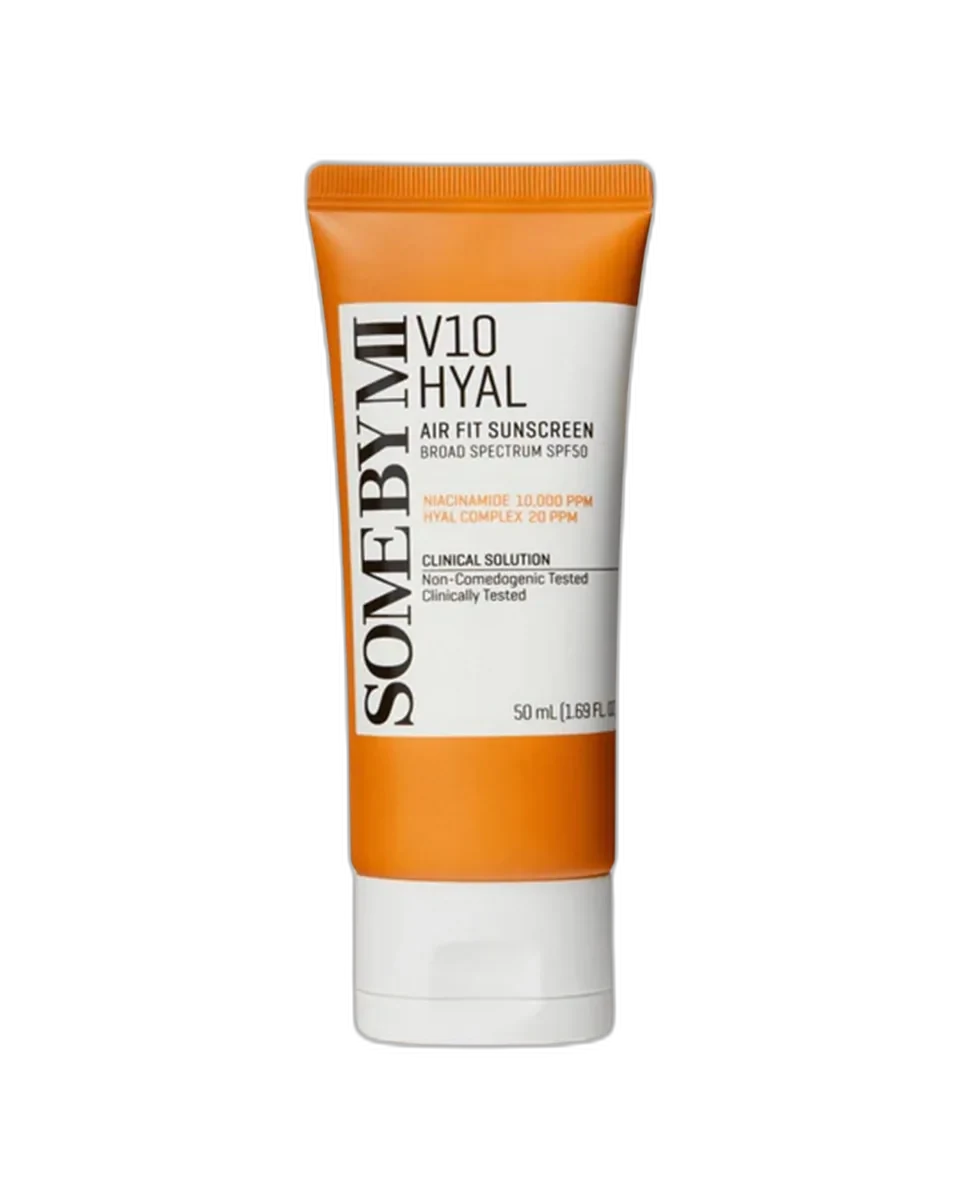
V10 Hyal Antioxidant Sunscreen SPF 50+
K-Beauty UV Shield
 Verified reviewer
Pros & cons.
- +Next-generation UV filter system (Tinosorb S, DHHB, Ecamsule) provides superior photostable protection
- +Hybrid chemical-mineral approach offers comprehensive broad-spectrum SPF 50+ PA++++ coverage
- +Niacinamide, HA, and ceramide NP add genuine skincare value beyond just UV protection
- +Lightweight texture absorbs quickly with a natural, non-greasy finish
- +Subtle tone-up effect reduces the need for additional base makeup
- +Affordable price point for the quality of UV filter technology
- −Contains denatured alcohol which can be drying and irritating for sensitive or compromised skin
- −Added fragrance with allergens (limonene, linalool) limits suitability for reactive skin
- −Titanium dioxide may leave a white cast on deeper skin tones
- −Some users report eye stinging from the alcohol content
- −40 mL size lasts only 4-6 weeks with proper daily application — no larger size readily available
The full review.
Some By Mi’s V10 Hyal Antioxidant Sunscreen explains why K-beauty sunscreens perform differently than American versions: the ingredients. Specifically, the UV filter ingredients differ. This formula uses modern, photostable chemical filters (Tinosorb S, DHHB, Ecamsule, ethylhexyl triazone) approved in Europe and Asia but still pending FDA approval. Consequently, American sunscreens rely on older filters like avobenzone, homosalate, and octinoxate, while Korean brands use next-generation UV protection.
The impact is clear. Tinosorb S (bis-ethylhexyloxyphenol methoxyphenyl triazine) is a broad-spectrum filter that absorbs UVA and UVB without photodegrading; it stays protective all day instead of breaking down under UV exposure. DHHB (diethylamino hydroxybenzoyl hexyl benzoate) targets UVA1 rays in the 340-400nm range, which cause photoaging and collagen degradation. Ecamsule (terephthalylidene dicamphor sulfonic acid) adds more UVA coverage. Combined with ethylhexyl triazone for UVB and titanium dioxide for physical protection, the filter system is comprehensive.
The hybrid approach combines chemical and mineral filters. Chemical filters handle most UV absorption, while titanium dioxide adds a physical reflection layer and a tone-up effect. This hybrid model gives users the cosmetic elegance of chemical sunscreens plus mineral reassurance.
The “V10” concept in Some By Mi’s formula refers to ten vitamins, including ascorbic acid, tocopherol, retinol, niacinamide, panthenol, biotin, cyanocobalamin, and menadione. Most appear at the end of the ingredient list in concentrations too low for standalone therapeutic benefit. Niacinamide (listed high in the INCI), panthenol, sodium hyaluronate, and ceramide NP provide the meaningful skincare benefits at functional amounts, making this a multi-benefit daily product.
The texture is lightweight and absorbs fast due to the denatured alcohol base. This ingredient has two sides. Alcohol creates the thin, fast-drying application typical of Korean sunscreens. However, it can dry or irritate sensitive skin, eczema, or rosacea. The formula uses sodium hyaluronate and panthenol to offset drying, but alcohol-sensitive users should be cautious.
The titanium dioxide creates a useful tone-up effect. Application provides subtle brightening that evens the complexion and may reduce foundation use. This looks natural on light to medium skin tones. On deeper skin tones, the titanium dioxide can leave a noticeable white cast, a common mineral sunscreen tradeoff.
Fragrance is another compromise. Added fragrance with limonene and linalool introduces unnecessary allergen risk for a daily product. The scent is mild and fades fast, but its presence means this is not a universal recommendation.
At approximately $19 for 40 mL, the value is strong for these filter qualities. European or luxury brands charge more for these next-generation UV filters. The niacinamide, HA, ceramide NP, and panthenol allow the product to work as both sunscreen and a lightweight moisturizer.
The 40 mL size is compact for travel but lasts only 4-6 weeks with proper daily application (under-application reduces actual protection). A larger size would increase value for daily users.
This sunscreen uses K-beauty’s best approach: cutting-edge UV filters for cosmetic elegance and daily wear, plus skincare actives. Alcohol and fragrance are legitimate concerns, but for non-sensitive skin, this is an accessible way to use modern UV protection.
Ingredient analysis.
Full INCI list
Water, Dibutyl Adipate, Butyloctyl Salicylate, Alcohol, Titanium Dioxide (CI 77891), Phenethyl Benzoate, Isononyl Isononanoate, Diethylamino Hydroxybenzoyl Hexyl Benzoate, Diphenylsiloxy Phenyl Trimethicone, Niacinamide, Polyglyceryl-6 Stearate, Polymethylsilsesquioxane, Bis-Ethylhexyloxyphenol Methoxyphenyl Triazine, Ethylhexyl Triazone, Polysilicone-15, Sodium Acrylates Crosspolymer-2, Terephthalylidene Dicamphor Sulfonic Acid, 1,2-Hexanediol, Panthenol, Pentylene Glycol, Potassium Cetyl Phosphate, Polyhydroxystearic Acid, Sorbitan Sesquioleate, Tromethamine, Aluminum Hydroxide, Hydroxyacetophenone, Stearic Acid, Isododecane, Octyldodecanol, Hydroxyethyl Acrylate/Sodium Acryloyldimethyl Taurate Copolymer, Polyglyceryl-6 Behenate, Sodium Hyaluronate, Fragrance, Glycerin, Polyglyceryl-4 Isostearate, Polyglyceryl-2 Dipolyhydroxystearate, Sodium Polyacrylate, Isopropyl Titanium Triisostearate, Adenosine, Limonene, Sodium Phytate, Hydroxypropyl Cyclodextrin, Tocopherol, Linalool, 7-Dehydrocholesterol, Biotin, Glutathione, 4-Terpineol, Butylene Glycol, Caprylic/Capric Triglyceride, Hydrogenated Lecithin, Polyglyceryl-10 Diisostearate, Linoleic Acid, Ceramide NP, Bioflavonoids, Cyanocobalamin, Menadione, Retinol, Hyaluronic Acid, Ethylhexylglycerin, Ascorbic Acid
Skin match.
The science.
The Science
The UV filter combination in this sunscreen uses state-of-the-art photoprotection science. Tinosorb S is a broad-spectrum filter with absorption peaks in both UVA and UVB ranges. It is photostable, keeping over 95% of its filtering capacity after 60 MED (minimal erythemal doses) of UV exposure, whereas avobenzone degrades significantly under similar conditions without stabilizers.
DHHB targets the UVA1 range (340-400nm), the primary driver of photoaging, immunosuppression, and indirect DNA damage. Studies in Photochemical & Photobiological Sciences show UVA1 rays penetrate deeper into the dermis than UVA2 or UVB, so UVA1 filtration is critical for anti-aging sunscreen efficacy. DHHB and Tinosorb S together provide more balanced spectral coverage than most single-filter approaches.
The PA++++ rating is the highest UVA protection grade in the Asian grading system, meaning a UVAPF (UVA Protection Factor) of 16 or higher. This measures UVA protection more informatively than the Broad Spectrum designation used in US sunscreens, which only requires a 370nm critical wavelength without specifying the degree of UVA protection.
Dermatologist Perspective
Board-certified dermatologists increasingly recommend Asian and European sunscreens that use modern photostable filters unavailable in US-manufactured products. Dermatologists note that the Tinosorb S and DHHB combination in this formula provides broader, more stable UVA protection than formulas limited to US-approved filters. Dermatologists value the PA++++ rating when treating hyperpigmentation and photoaging because it guarantees robust UVA protection. However, dermatologists caution that the alcohol content makes this less suitable for patients with rosacea, eczema, or post-procedure skin, and the fragrance may cause contact sensitization with long-term daily use.
Where it fits in your routine.
Apply a generous amount as the last step of your morning skincare routine, after moisturizer. Use about a nickel-sized amount (roughly 1/4 teaspoon) for the face alone — most people under-apply, which reduces SPF. Reapply every 2 hours during direct sun exposure or after swimming or heavy sweating. Let it set for 1-2 minutes before applying makeup.
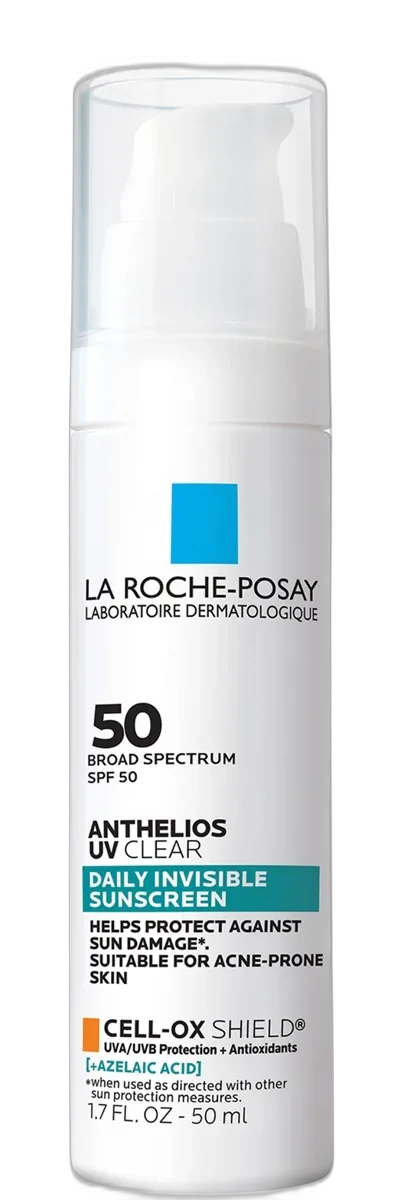
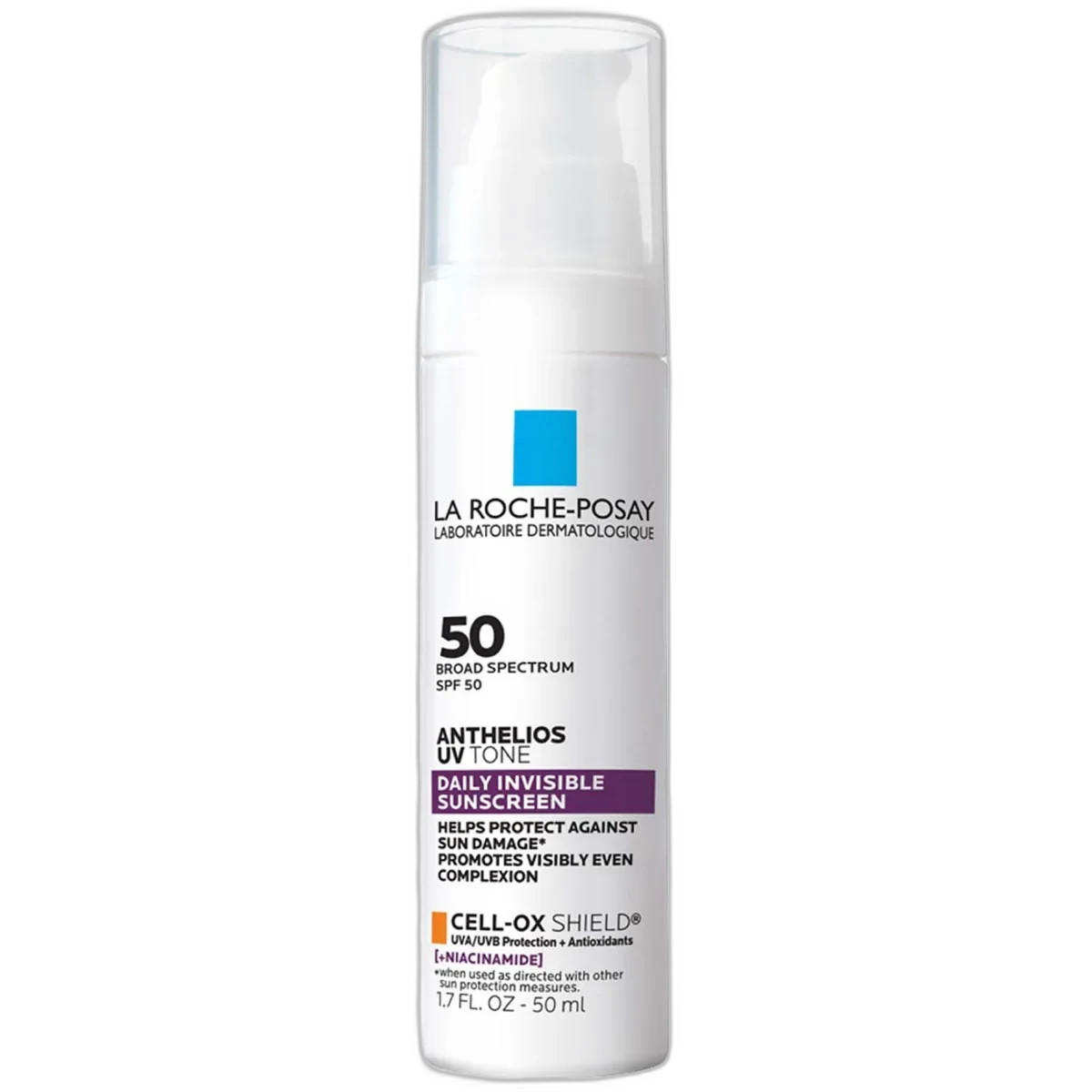
At about $19 for 40 mL, this sunscreen offers strong value for its next-generation UV filters. European sunscreens using similar filter systems (La Roche-Posay Anthelios, Bioderma Photoderm) usually cost $25-40 for the same volume. The niacinamide, HA, and ceramide NP make this a multi-benefit product that replaces both a lightweight AM moisturizer and sunscreen. The 40 mL size is the only value concern; it runs out fast with daily use. A larger economy size would lower the long-term cost.
People wanting modern, photostable UV protection that feels good and costs less. It works well for oily and combination skin types needing a lightweight, non-greasy daily sunscreen with skincare benefits. It also suits those targeting photoaging and hyperpigmentation with the strongest UVA protection available.
The alcohol and fragrance content affects people with sensitive, rosacea-prone, or eczema-affected skin. People with deeper skin tones may see white cast from titanium dioxide. This also applies to anyone who avoids alcohol or fragrance in their skincare routine.
Product details.
Lightweight cream with a soft-focus, slightly tinted finish from titanium dioxide and polymethylsilsesquioxane. The alcohol base spreads it thinly and helps it absorb quickly.
Mild fragrance that dissipates within minutes of application.
Squeeze tube with flip cap. Compact and travel-friendly at 40 mL.
The alcohol base makes it apply smoothly and absorb fast. The tone-up effect shows immediately, brightening and evening the complexion. It dries to a matte, non-greasy finish in 1-2 minutes. Dry skin users may feel slight tightness as the alcohol evaporates, but the HA and panthenol mitigate this.
4-6 weeks with daily face application
12 months
All Year
The backstory.
Some By Mi developed the V10 Hyal sunscreen line to address the K-beauty community's demand for sunscreens that feel like skincare — lightweight, hydrating, and loaded with skin-benefiting ingredients beyond just UV protection. The 'V10' refers to the ten vitamins included in the formula, and 'Hyal' references the hyaluronic acid, reflecting the Korean approach of making sunscreen a treatment step rather than just a protective barrier.
About Some By Mi
Emerging Brand (2–5 years)Some By Mi launched in South Korea around 2016 and grew internationally via its AHA BHA PHA 30 Days Miracle line. The brand uses a 'cleanical' philosophy that combines clean ingredients with clinical results, but specific products have less independent clinical validation than established K-beauty brands.
Common myths.
Chemical sunscreens are unsafe and mineral-only is the way to go.
The chemical UV filters in this sunscreen (Tinosorb S, DHHB, Ecamsule) are some of the most photostable and well-studied filters globally. These modern filters do not degrade significantly under UV exposure and have strong safety profiles, unlike older chemical filters. This hybrid approach combines chemical filters with titanium dioxide to provide broader, more reliable protection than either type alone.
Asian sunscreens don't provide real SPF 50 protection.
Korean and Japanese sunscreens follow strict KFDA and JCIA testing protocols. SPF 50+ PA++++ shows high UVB protection (SPF 50+) and the highest UVA protection grade (PA++++). The PA system tests UVA protection, which many US sunscreens do not explicitly measure.
FAQ.
Does Some By Mi V10 Sunscreen leave a white cast?
Titanium dioxide provides a subtle tone-up effect, leaving minimal white cast on light to medium skin tones. Deeper skin tones show a more noticeable white cast initially, but gentle patting blends it out. Chemical filters provide most UV protection, so the formula uses lower levels of titanium dioxide than pure mineral sunscreens.
Is Some By Mi V10 Sunscreen good for sensitive skin?
This formula has issues. The UV filter system is modern and well-tolerated, but the formula contains denatured alcohol, added fragrance, and fragrance allergens (limonene, linalool). Denatured alcohol can dry and irritate skin. Sensitive skin types may prefer fragrance-free Korean sunscreens.
Can I wear makeup over Some By Mi V10 Sunscreen?
Yes — the matte, non-greasy finish works well under foundation and powder. The tone-up effect reduces the amount of base makeup you use. Wait 1-2 minutes for the sunscreen to set before applying makeup to prevent pilling.
What UV filters does Some By Mi V10 Sunscreen use?
This hybrid formula uses titanium dioxide (mineral) and four modern chemical filters: Tinosorb S (broad-spectrum UVA/UVB), DHHB (UVA1), ethylhexyl triazone (UVB), and Ecamsule/Mexoryl SX (UVA). These next-generation photostable filters are approved in Europe and Asia but mostly lack availability in US-made sunscreens.
Does Some By Mi V10 Sunscreen contain retinol?
Yes — the formula contains a trace amount of retinol, listed near the end of the INCI list. This concentration and position provide negligible anti-aging activity, but it matters for those avoiding all retinoids during pregnancy or those concerned about photosensitivity.
What the community says.
"Lightweight feel with minimal to no white cast for most skin tones"
"Broad-spectrum SPF 50+ PA++++ protection"
"Subtle tone-up effect evens skin appearance"
"Good under makeup without pilling"
"Contains denatured alcohol which can be drying for some"
"Some users report white cast on deeper skin tones"
"Added fragrance with allergens (limonene, linalool)"
"Can sting eyes due to alcohol content"
People also looked at.