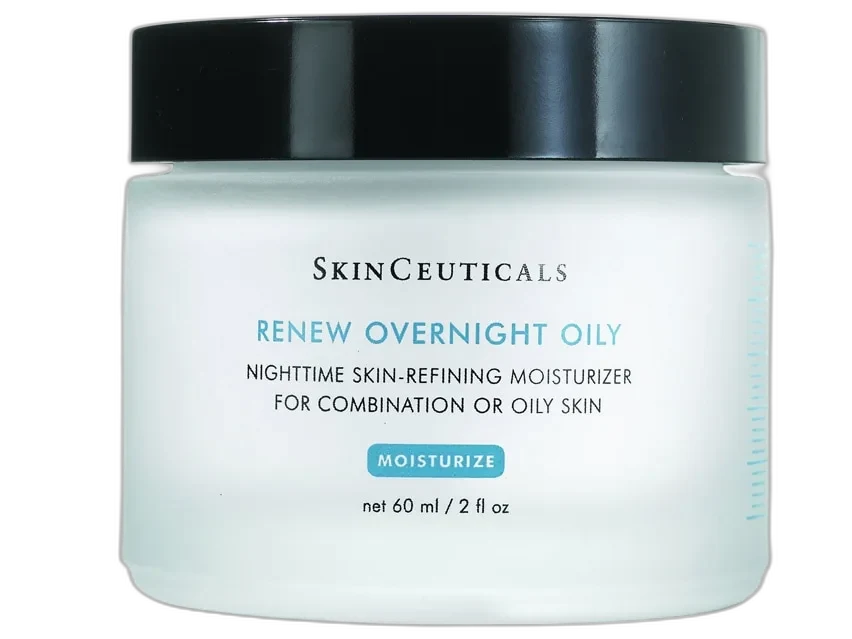
Renew Overnight Oily
Oily-Skin AHA Workhorse
 Verified reviewer
Pros & cons.
- +10% glycolic acid at pH 3.8 in a genuinely lightweight oily-skin-friendly gel-cream
- +Visible improvement in congestion, pores, and post-acne pigmentation within weeks
- +Doesn't add occlusive weight that would clog oily skin
- +Refreshing cooling sensation from menthyl lactate
- +Pregnancy-safe alternative for patients pausing retinoids
- +Dermatologist-office provenance with two decades of real-world use
- −$78 for 2.4 oz is premium pricing against comparable AHA products
- −Not appropriate for sensitive, dry, or rosacea-prone skin
- −Initial tingling can feel aggressive to first-time acid users
- −Contains BHT and silicones that some users prefer to avoid
- −Menthyl lactate cooling sensation isn't for everyone
The full review.
About SkinCeuticals
The exfoliating active load matches the Dry variant and the brand’s dermatology-office peel formulations: 10% glycolic acid at pH 3.8, with ammonium lactate providing a second keratolytic assist. The carrier differs. Instead of a thick emulsion using glycerin and dimethicone, the Oily version uses a light gel-cream base. This delivers the acid and a modest humectant hit without heavy occlusive weight. Menthyl lactate adds a non-irritating cooling sensation that oily-skin users often prefer in night treatments—a small touch that counterbalances the warming tingle 10% glycolic acid can produce. Panthenol and a trace of ascorbic acid complete the formula.
Myth
Oily-skin shopping in the glycolic acid aisle often disappoints. Serum-form acids work but leave skin tight and dehydrated by morning, causing sebaceous glands into a compensatory overdrive that undoes half the benefit. Cream-form acids are gentler but usually too thick—built for dry skin and full of occlusives that sit on oily surfaces like a greasy protest. Most oily-skin users compromise by using a serum acid followed by an oil-free moisturizer, turning a one-step routine into two.
Reality
SkinCeuticals Renew Overnight Oily solves that problem in one product.
How to Use
The Oily variant earns its label during application. The gel-cream dispenses thin, spreads in one pass, and absorbs into oily skin without residue migrating onto the pillow or pooling in fine lines. The initial tingle is brief, followed by the cooling sensation from the menthyl lactate. Most users feel fine within two minutes. No pilling, no greasy slip, and no weird morning-after film.
Who Should Buy
Board-certified dermatologists often recommend this for oily or combination-oily patients who want a well-formulated glycolic treatment they can tolerate nightly. It is a common recommendation for patients with acne-related post-inflammatory pigmentation who need exfoliation without the richness of a traditional night cream, and for combination-oily patients who find retinoids too drying or cannot use them. If you fit that profile, the answer is likely yes. If you have dry skin, sensitive skin, or a budget that cannot absorb premium pricing for a nightly product, the answer changes—the Dry variant, a lower-priced alternative, or a gentler AHA works better.
Best for
This treatment works best for specific oily-skin results. Congestion and blackheads improve within the first two weeks as exfoliation accelerates surface turnover. Post-inflammatory pigmentation from old acne fades over four to six weeks as cell turnover brings fresher skin to the surface. Pores appear smaller as the dead cell layer clears, though the underlying pore size does not physically shrink. Texture smooths. Makeup applies more evenly. For combination and oily skin with photoaging or sun damage, the improvement in radiance by week eight is often what people notice first—the “your skin looks really good” comments that make acid routines worth the commitment.
Not ideal for
The limitations are standard for this category. Seventy-eight dollars for 2.4 ounces is premium, and lower-priced alternatives like The Ordinary’s glycolic toner, Paula’s Choice 8% AHA gel, or K-beauty options deliver similar results for less money. The 10% glycolic concentration is too much for sensitive or rosacea-prone skin, and the Oily variant is not for dry or mature skin that would benefit from the thicker emulsion in the Dry variant. Some users may also dislike menthyl lactate—the cooling sensation can feel like tingling if unexpected, and it is a reason to pass if you have very reactive skin.
Ingredient analysis.
Full INCI list · pH 3.8
Water/Aqua, Glycolic Acid, Butylene Glycol, Ammonium Lactate, PEG-5 Pentaerythrityl Ether, Sodium Hydroxide, Glycerin, Cyclopentasiloxane, Cetyl Alcohol, Dimethicone, Panthenol, Glyceryl Stearate, PEG-100 Stearate, Steareth-20, Xanthan Gum, Phenoxyethanol, Ascorbic Acid, Menthyl Lactate, Tocopherol, Caprylyl Glycol, Citric Acid, Disodium EDTA, Hordeum Vulgare (Barley) Extract, BHT
Skin match.
The science.
The Science
The active mechanism matches the Dry variant and follows clinical literature on glycolic acid for oily and acne-prone skin. Glycolic acid is the smallest alpha hydroxy acid; it penetrates the stratum corneum easily and disrupts corneocyte adhesion. This accelerates desquamation and clears surface buildup that causes congestion, blackheads, and dull tone. Clinical studies show that 10% glycolic acid regimens improve post-inflammatory hyperpigmentation, texture, and radiance over 8-12 weeks of consistent use in oily and acne-prone skin. The 10% concentration is at the high end for over-the-counter formulations, and the 3.8 pH delivers the acid in its protonated active form. Ammonium lactate adds a secondary AHA with a larger molecular size and different penetration profile, extending exfoliating activity across more stratum corneum depths. The lighter emulsion base uses glycerin and panthenol but lacks the occlusive load of the Dry variant. It is engineered not to congest oily skin while supporting the barrier for tolerable nightly acid use. Menthyl lactate, the ester of menthol and lactic acid, provides a cooling sensation without the irritation of free menthol. This approach balances efficacy with the skin's tolerance profile, which is often more fragile than sebum output suggests.
Dermatologist Perspective
Dermatologists often recommend this treatment for oily and combination-oily patients seeking a well-formulated glycolic product with a lightweight carrier base. Board-certified dermatologists suggest it for patients with acne-related post-inflammatory hyperpigmentation, congested skin with blackheads, and textural roughness on sebum-heavy complexions. Patients who cannot or prefer not to use prescription tretinoin—especially during pregnancy or with retinoid intolerance—use it as a retinoid alternative. Dermatologists steer patients elsewhere if the skin is sensitive, rosacea-prone, dry, or mature. In those cases, a gentler 5-8% formulation fits the patient's tolerance better, or the issue is dryness and aging rather than oiliness and congestion.
Where it fits in your routine.
Apply to clean, dry skin as your last PM step. Start 2-3 nights per week and increase to 3-5 nights as tolerance builds. A pea-sized amount covers the face and neck. Avoid the eye area. Do not use retinoids, salicylic acid, or benzoyl peroxide on the same night; alternate them instead. Use daily broad-spectrum SPF 30 or higher. If you have persistent stinging, tightness, or peeling after the first two weeks, use less often and add a lightweight gel moisturizer on alternate nights to let the barrier recover.
At seventy-eight dollars for 2.4 fluid ounces, this is a premium AHA treatment. Using it 3-5 nights weekly makes a tube last three to four months, justifying the per-use cost for the target audience. Lower-priced alternatives exist: The Ordinary's glycolic toner provides similar exfoliating benefits for less, Paula's Choice 8% AHA gel offers a comparable format at a moderate premium, and various K-beauty options give overlapping results for under thirty dollars. The SkinCeuticals premium buys the specific oily-skin-optimized emulsion base, formulation reliability from two decades of use, and a dermatology-office track record. The price is reasonable for oily-skin users who need that specific combination. For everyone else, cheaper options are worth considering first.
Oily or combination-oily skin needs a well-formulated, high-strength glycolic treatment in a gel-cream format that lacks occlusive weight. This works for post-acne pigmentation, congestion, or textural roughness. It also serves as a retinoid alternative during pregnancy or for tolerance reasons.
The Dry variant's thick emulsion works better for dry or mature skin. Sensitive or rosacea-prone skin avoids 10% glycolic and uses gentler 5-8% formulations instead. Users on a tight budget should try lower-priced glycolic products like The Ordinary or Paula's Choice first, upgrading only if the simpler formula fails.
Product details.
Lightweight gel-cream that absorbs quickly without residue
Fragrance-free with a very faint cooling note
White squeeze tube
This thin gel-cream spreads easily and absorbs into oily skin without pilling or grease. The 10% glycolic acid causes a brief tingling sensation for new users, then menthyl lactate provides mild cooling. Minor flaking during the first 1-2 weeks is normal as turnover accelerates. It leaves no sticky residue.
3-4 months with 3-5 nights weekly use
12 months
All Year
The backstory.
SkinCeuticals launched Renew Overnight in 2005 as the dermatology-office answer to the glycolic acid-heavy at-home regimens that dermatologists prescribed but couldn't easily hand to patients in a polished format. The Oily version was specifically developed for acne-prone and combination-oily patients whose skin would reject a richer cream base — a specific product for a specific skin type rather than a one-size-fits-all exfoliant.
About SkinCeuticals
Established Brand (5–20 years)Dr. Sheldon Pinnell's antioxidant research at Duke University founded SkinCeuticals in 1997. The brand's exfoliating moisturizers are staples in dermatology and med-spa practice.
Common myths.
Oily skin doesn't need a moisturizer.
Oily skin often experiences dehydration, which triggers compensatory oil production. This lightweight gel-cream provides both exfoliation and water-binding humectant support in one product.
Glycolic acid will always worsen acne first.
Proper glycolic acid use smooths congestion instead of causing dramatic acne purging. Breakouts worse than mild surface bumps during the first two weeks mean the product is wrong or you use it too often.
FAQ.
How often should I use this?
Use this 2-3 nights a week, then increase to 3-5 nights as your skin adjusts. Many oily-skin users tolerate nightly use after the first 2-4 week adjustment period. Watch your skin — if you see redness or tightness, use it less often.
Can I combine it with a BHA like salicylic acid?
Not in the same routine. Combining 10% glycolic with salicylic acid significantly increases irritation risk and barrier damage. Alternate: glycolic on one night, BHA on another, or use them at different times of day if you can keep AM use light.
Is this a replacement for acne medication?
It reduces the congestion that causes blackheads and whiteheads, and it improves post-inflammatory pigmentation from old acne. For active inflammatory or cystic acne, it supports rather than replaces benzoyl peroxide, topical retinoids, or prescription acne treatments.
How is this different from Renew Overnight Dry?
Same active load — 10% glycolic at pH 3.8 with ammonium lactate — but uses a lighter gel-cream base with menthyl lactate for cooling. Oily suits combination and oily skin; Dry suits normal to dry skin. Pick based on your preferred carrier base.
Will it make me more sun-sensitive?
Yes, like all AHAs, this increases photosensitivity. Use daily broad-spectrum SPF 30 or higher while using it. Skipping sunscreen undoes the benefits and worsens the sun damage you are treating.
Is it safe during pregnancy?
Glycolic and lactic acids at cosmetic concentrations are generally considered pregnancy-safe, and this product is a common recommendation for pregnant patients who need a texture treatment but can't use retinoids. Confirm with your OB if uncertain.
Will it help with acne scars?
Consistent use over several weeks improves the appearance of post-inflammatory hyperpigmentation — the dark marks left after acne heals. It does not resolve true atrophic or ice-pick scarring; those require in-office treatments like microneedling or laser resurfacing.
Community
What the community says.
"Visible pore and texture improvement within a few weeks"
"Lightweight enough not to clog oily skin"
"Reduced post-acne pigmentation over time"
"Refreshing cooling sensation from menthyl lactate"
"Expensive for a nightly-use product"
"Can sting initially"
"Some users want a richer base"
"Menthyl lactate sensation isn't for everyone"