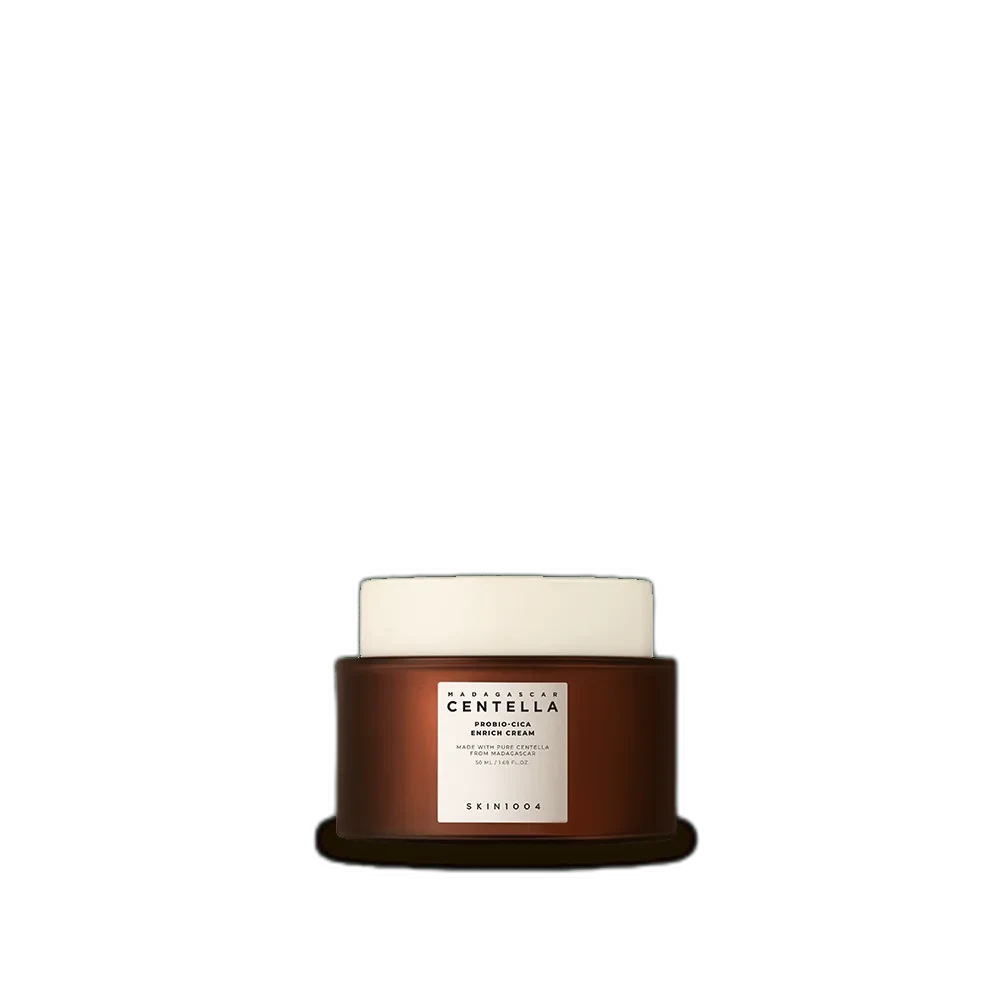
Probio-Cica Enrich Cream
Sensitive Skin MVP
 Verified reviewer
Pros & cons.
- +Full centella triterpene panel, not a single-compound shortcut
- +Four distinct postbiotic ferments for genuine microbiome support
- +Real ceramide-cholesterol-lecithin lipid trio for barrier repair
- +Fragrance-free and suitable for post-procedure recovery
- +Rich cushioned texture without petrolatum heaviness
- +Fair price for the ingredient quality
- +Pregnancy-safe and suitable for reactive skin
- −Shea butter and cetearyl alcohol rule it out for fungal acne
- −Too rich for oily skin in summer or humid climates
- −50ml jar runs out in 2-3 months of daily use
- −Non-airless jar packaging isn't ideal for the ferment stability
- −Postbiotic evidence still catching up to centella's clinical track record
The full review.
About SKIN1004
A brand built almost entirely on Madagascar centella.
Texture
The name ‘enrich’ describes the texture well. Shea butter, dicaprylyl carbonate, and caprylic/capric triglyceride make this cream feel soft and cushioned, unlike most lightweight K-beauty moisturizers. It isn’t occlusive like petrolatum, but it is substantial. The finish leaves skin feeling coated rather than “hydrated but still somehow thirsty.”
Scent
SKIN1004 uses a fragrance-free formulation for its target demographic and avoids masking agents. Any scent comes from the botanical water itself.
Packaging
The 50ml jar is small for a cream used twice daily. Most users will finish one in two to three months.
Conflicts With
Shea butter and cetearyl alcohol make this a poor choice for managing fungal acne. Combination-skin users may also find it too thick in hot, humid weather.
Best for
This cream works quietly for reactive, post-procedure, or genuinely compromised skin.
Ingredient analysis.
Full INCI list
Centella Asiatica Leaf Water, Glycerin, Dicaprylyl Carbonate, Cetyl Ethylhexanoate, Caprylic/Capric Triglyceride, Butyrospermum Parkii (Shea) Butter, Pentylene Glycol, Cetearyl Alcohol, Glyceryl Stearate, Glyceryl Stearate Citrate, 1,2-Hexanediol, Sorbitan Olivate, Polyglyceryl-3 Methylglucose Distearate, Bifida Ferment Lysate, Lactobacillus Ferment, Lactobacillus/Soybean Ferment Extract, Lactococcus Ferment Lysate, Saccharomyces Ferment Filtrate, Centella Asiatica Extract, Madecassoside, Asiaticoside, Asiatic Acid, Madecassic Acid, Panthenol, Sodium Hyaluronate, Ceramide NP, Hydrogenated Lecithin, Cholesterol, Tocopherol, Xanthan Gum, Arginine, Carbomer, Ethylhexylglycerin, Adenosine, Disodium EDTA
Skin match.
The science.
The Science
The centella asiatica evidence base is well established. Peer-reviewed studies examine madecassoside and asiaticoside, the two most abundant triterpenes in centella, for wound healing, collagen stimulation, and anti-inflammatory activity. Published research shows these compounds downregulate pro-inflammatory signaling and support fibroblast activity in vitro; clinical trials show improved barrier function in compromised skin. SKIN1004 has used the full four-triterpene extraction in this cream — rather than a single isolate — since 2016. Postbiotics are newer territory. Research on topical ferments focuses on strains like bifida, lactobacillus, and saccharomyces. Published work suggests fermented lysates and filtrates support skin barrier markers and reduce sensitivity in stressed skin, though study sizes are smaller and mechanisms are still being mapped. Combining centella's documented anti-inflammatory pathway with a postbiotic input targeting microbiome balance offers a plausible two-front approach to barrier dysfunction, even as the postbiotic half builds clinical evidence. Decades of research on lipid replacement therapy for compromised skin barriers support the ceramide NP, cholesterol, and hydrogenated lecithin combination in the base. Ratios of ceramides to cholesterol to fatty acids close to the skin's native composition accelerate barrier recovery.
Dermatologist Perspective
Dermatologists frequently recommend centella-based creams for patients recovering from laser resurfacing, chemical peels, or microneedling, and for those managing rosacea or chronic sensitivity. Board-certified dermatologists note that formulations combining the full triterpene panel with barrier lipids outperform single-active cica creams in compromised skin. Postbiotic additions in this product appear more in dermatological discussions of microbiome-supportive skincare, though clinical recommendations still lead with the centella and lipid components. Dermatologists commonly suggest this fragrance-free, ceramide-containing formulation as a daily moisturizer for reactive skin patients who cannot tolerate active treatments during a flare.
Guidance
Where it fits in your routine.
Use as your final moisturizer in AM and PM routines. Dispense a pea-to-almond-sized amount, warm it between fingertips, and press into clean, damp skin after hydrating essences, serums, or ampoules. The thick formula means a little goes further than it looks. In the morning, follow with a broad-spectrum sunscreen. At night, layer it under a sleeping mask or occlusive if your skin is severely compromised. Store out of direct sunlight to keep the ferments and lipids stable, and use a clean spatula instead of dipping fingers into the jar.
At roughly $28 for 50ml, this is a mid-range K-beauty barrier cream. It costs more than the standard Madagascar Centella Cream but less than Western creams with similar ingredient density. Clinical brands with comparable ceramide-plus-centella creams often cost $40-60, and SKIN1004 has a genuine track record with centella formulation. Postbiotic ferment additions justify the price increase over the original line, but the 50ml size requires replacement every couple of months. The cost-per-benefit is reasonable for reactive or barrier-compromised skin. For stable, healthy skin, the cheaper original likely gives 80% of the result.
Reactive, dry, or barrier-compromised skin types work well—especially those recovering from overexfoliation, post-procedure healing, or chronic rosacea flares. Normal and combination skin also uses it in fall and winter for a thicker layer of protection.
Skip this if you manage fungal acne because it contains shea butter and fatty alcohols. The thick texture is too heavy for oily skin in hot climates. This is a supportive cream, not a treatment; it lacks actives like retinol, vitamin C, or acids.
Product details.
Thick cream with a soft, buttery slip that melts into skin without a film
Fragrance-free — faint herbal note from the centella water base
Opaque white screw-top jar with inner cap — functional but not airless; use clean fingers or a spatula.
The texture is cushiony and absorbs within a minute. Reactive skin feels calm immediately; there is no tingling or adjustment period. Blotchiness usually reduces visibly during the first week.
Approximately 2-3 months with twice-daily face and neck application
12 months
fall winter
The backstory.
SKIN1004 built its name on the Madagascar Centella line, but the Probio-Cica range was developed for customers whose skin had moved past basic redness into full barrier dysfunction — the wave of 'overexfoliated' K-beauty users in 2022-2023. The brand doubled down on ferments to address the microbiome angle that pure centella doesn't touch.
About SKIN1004
Emerging Brand (2–5 years)SKIN1004 launched in 2016 using single-origin Madagascar centella asiatica. The Probio-Cica line, added in 2023, uses postbiotics to support barrier care with that same centella focus.
Common myths.
Probiotics in skincare are alive and colonize your skin
The ferments in this cream are lysates and filtrates—metabolic byproducts of microbes, not living organisms. They use peptides and postbiotic compounds to support your skin's flora instead of seeding new bacteria.
Cica creams only work for redness, not dryness
This version pairs centella triterpenes with shea butter, ceramide NP, and cholesterol to address inflammation and lipid loss simultaneously.
FAQ.
How is the Probio-Cica Enrich Cream different from SKIN1004's original Madagascar Centella Cream?
The Enrich version replaces ingredients with a postbiotic ferment blend of four different ferments and adds shea butter and a ceramide-cholesterol-lecithin lipid trio. It is thicker, focuses on the microbiome, and targets barrier-compromised skin instead of general soothing.
***
Myth
Is this cream fungal acne safe?
Not strictly. Shea butter and cetearyl alcohol in the formula can feed malassezia. If you manage fungal acne, the brand's Centella Ampoule or a simpler cica gel works better.
***
Reality
Can I use it after a dermatological procedure?
Yes — the fragrance-free, postbiotic-and-centella base works well for post-procedure recovery. The ceramide and cholesterol pairing rebuilds the barrier without interfering with healing.
***
Reality
Is Probio-Cica Enrich Cream pregnancy safe?
Yes. The formula contains no retinoids, salicylic acid, or essential oils. The centella triterpenes, ferments, and ceramides are pregnancy-compatible.
***
Best Season
Is this too heavy for summer?
Most skin types can use it, especially in fall, winter, or air-conditioned climates. Oily and combination skin will prefer the regular Madagascar Centella Cream or the Poremizing line during warmer months.
***
Scent
Does it contain fragrance?
No added fragrance. The centella leaf water has a faint herbaceous scent, but the formula contains no perfume, essential oils, or masking fragrance.
***
Community
What the community says.
"Calms redness quickly"
"Rich without feeling greasy"
"Good for post-procedure recovery"
"Fragrance-free"
"Too rich for oily skin in summer"
"Small 50ml size"
"Harder to find outside K-beauty retailers"