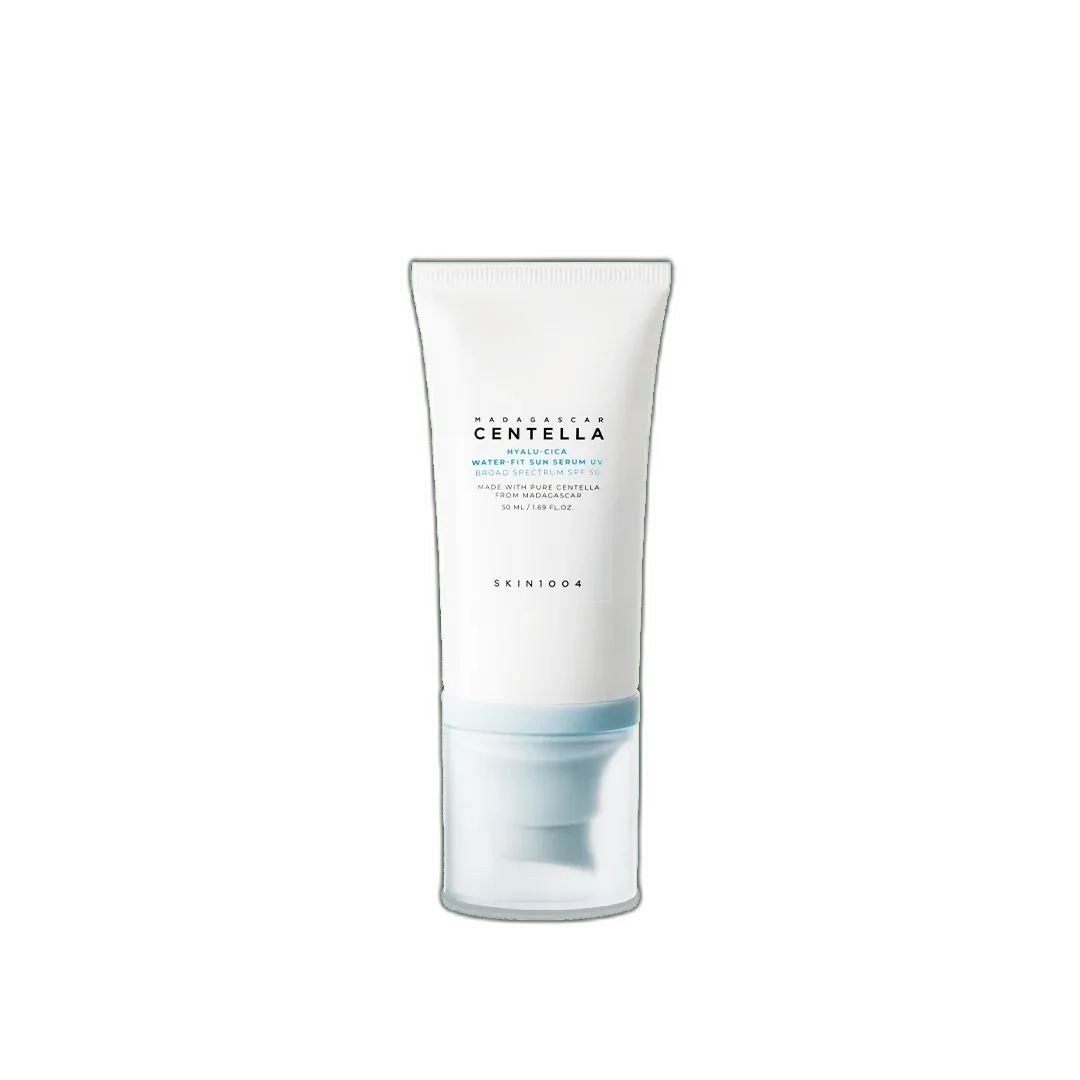
Hyalu-Cica Water-Fit Sun Serum SPF 50+
K-Beauty Lightweight SPF
 Verified reviewer
Pros & cons.
- +Genuinely lightweight serum texture for a high-SPF organic sunscreen
- +No white cast on any skin tone
- +Four FDA-approved filters delivering SPF 50+ broad-spectrum coverage
- +Centella and panthenol add real calming support
- +Fragrance-free and alcohol-free base
- +Layers cleanly under makeup and silicone primers
- +Strong value per month versus Western equivalents
- −Can sting sensitive eyes during heavy sweating
- −Homosalate concentration may concern users following European regulatory discussions
- −SPF tested to Korean standards rather than U.S. FDA OTC methodology
- −Contains silicones, not suitable for silicone-averse users
- −Not the best pick for ultra-sensitive or reactive skin
The full review.
The best sunscreen is the one you apply to your face in the amount the label recommends. Skincare discussions often focus on filter debates and nanoparticles, but this truth is underrated. Most people face a simpler problem: they hate sunscreen texture, so they skimp on the dose. This results in maybe a third of the labeled SPF coverage and eventual sun damage. The SKIN1004 Hyalu-Cica Water-Fit Sun Serum addresses this compliance problem better than most products in its category, which is the primary reason to consider it.
The filter system matches a typical American department-store sunscreen: avobenzone at 2.7% for UVA, homosalate at 13.6% and octisalate at 4.5% for UVB, and octocrylene at 9% to stabilize the avobenzone (which degrades in sunlight without it) and boost UVB coverage. This is a well-characterized, FDA-approved quartet that delivers SPF 50+ when applied correctly. The vehicle is what differs. Instead of the typical emulsion that makes organic-filter sunscreens feel like thick cream, SKIN1004 formulated this as a thin, watery serum. It absorbs in under ninety seconds and leaves a satin finish similar to a hydrating essence. This comes from using silicones, elastomers, and film-forming polymers to distribute filters evenly without the heavy oil-in-water structure traditional SPFs use.
The supporting ingredients work. Panthenol sits at a mid-list position and helps the sunscreen feel comfortable on reactive or post-procedure skin. Centella asiatica extract is dosed below the 50% levels found in SKIN1004’s dedicated centella moisturizers, but it is above the trace amounts in most sunscreens—enough to justify the product name. A triple hyaluronic acid complex adds surface hydration, supporting the “water-fit” claim. Tocopherol provides antioxidant support for free radicals generated by UV that pass the filter layer. The formula is fragrance-free and alcohol-free, which matters in a category where fragrance often masks the smell of filters.
On skin, this feels different from most organic-filter sunscreens. It applies thin, spreads like a hydrating essence, and lacks the tight, stiff feeling common in cheap chemical SPFs. There is no white cast, which benefits anyone with deeper skin tones who avoids mineral sunscreens. It layers under most foundations without pilling and works with silicone-based primers. The satin finish is neither matte nor dewy, making it a middle ground for use under makeup or bare.
The trade-offs match the filter system. Organic sunscreens can sting sensitive eyes during heavy sweating; this one is no exception. If you do outdoor sports in humid weather, use a dedicated sport stick or a mineral sunscreen around the eyes. People with reactive skin—especially those sensitive to homosalate or octocrylene—should patch test or use a mineral alternative. While the filters are all FDA-approved, the SPF 50+ rating follows Korean MFDS testing standards, which the brand imports under cosmetic regulations rather than U.S. OTC drug rules. This is mostly an academic distinction; practically, it means this is not technically tested to FDA SPF methodology, even though its filters are all U.S.-legal.
A 50ml tube costs around $15-19 and lasts most users two to three months if they apply the recommended quarter-teaspoon dose to the face and neck daily. The per-month cost is below most Western drugstore equivalents with comparable cosmetic elegance, and much lower than luxury brand sunscreens that charge $40+ for less filter in similar textures. For most skin types and daily uses, this is a smart SPF pick in the K-beauty category and a reliable choice for those who struggle with heavier traditional sunscreens.
Ingredient analysis.
Full INCI list
Water, Butyloctyl Salicylate, Propanediol, Polymethylsilsesquioxane, C20-22 Alkyl Phosphate, C20-22 Alcohols, Panthenol, 1,2-Hexanediol, Caprylyl Methicone, Pentylene Glycol, Dimethicone/Vinyl Dimethicone Crosspolymer, Cetyl Alcohol, Vp/Eicosene Copolymer, Glyceryl Stearate, Tromethamine, Polyacrylate Crosspolymer-6, Ammonium Acryloyldimethyltaurate/Vp Copolymer, Silica, Butylene Glycol, Centella Asiatica Extract, Ethylhexylglycerin, Hydrolyzed Sodium Hyaluronate, Sodium Hyaluronate, Tocopherol, Glycerin, Portulaca Oleracea Extract, Camellia Sinensis Leaf Extract, Hyaluronic Acid, Oryza Sativa (Rice) Extract, Avena Sativa (Oat) Meal Extract, Glycine Max (Soybean) Seed Extract
Skin match.
The science.
The Science
The filter system in this sunscreen is among the best-characterized in the organic SPF world. Avobenzone (butyl methoxydibenzoylmethane) is the primary UVA-I filter in U.S. sunscreens, with extensive peer-reviewed data on its photoprotection performance — its well-known photoinstability is addressed here by octocrylene, which has been shown in numerous studies to stabilize avobenzone and prevent UV-induced degradation. Homosalate and octisalate are salicylate UVB filters with decades of use history and strong absorption in the UVB range. The combined four-filter system delivers broad-spectrum coverage extending into UVA-I when formulated at these concentrations, and SPF 50+ claims from this filter combination are well-supported by in vitro and in vivo testing methodologies when applied at the standard 2 mg/cm² dose. Research has consistently shown that real-world SPF compliance is significantly below labeled value because users underapply — studies in the Journal of the American Academy of Dermatology have documented typical application at 25-50% of the tested dose — which means the cosmetic elegance of a sunscreen matters as much for actual protection as the filter system. The serum vehicle in this product is explicitly designed to encourage adequate application. The centella asiatica content adds calming and antioxidant benefits that have been described in dermatology and ethnopharmacology literature, and tocopherol contributes lipid-soluble antioxidant defense against UV-generated reactive oxygen species, a role well-documented in photoprotection research. The formula does not claim water resistance, which is accurate — the polymer system supports a uniform film but is not rated for significant water exposure.
Dermatologist Perspective
Dermatologists generally consider the avobenzone + octocrylene + homosalate + octisalate combination a gold-standard organic filter system for daily-wear sunscreens, with broad-spectrum UVA/UVB coverage when properly formulated. Board-certified dermatologists commenting on K-beauty sunscreens have noted that texture and cosmetic elegance are as important as filter selection for real-world SPF compliance, and products like this one address the underapplication problem by making the sunscreen feel like a lightweight essence. For daily use in patients not prone to homosalate sensitivity, this is commonly considered a reasonable recommendation. Dermatologists typically caution that any organic-filter sunscreen should be patch tested by users with very reactive or rosacea-prone skin, and they often suggest mineral alternatives for those populations or for children. For standard daytime use on healthy adult skin, this product fits well into most dermatologist-recommended photoprotection routines.
Where it fits in your routine.
Apply this as your final morning step after moisturizer and before makeup. Use the two-finger rule or about 1/4 teaspoon for the face; underapplication prevents you from reaching labeled SPF values. Spread it evenly over your face, ears, and neck, including the hairline and nose. Wait 60-90 seconds for full absorption before you apply primer or foundation. Reapply every two hours during extended sun exposure, or after swimming or heavy sweating. This is not a water-resistant formula.
At roughly $15-19 for 50ml, this sunscreen offers two to three months of daily face-and-neck application at the proper dose, which puts it well below Western drugstore equivalents with similar cosmetic elegance and meaningfully below luxury brand sunscreens in the same texture category. The tube packaging is efficient and doesn't waste product. What you're paying for is genuinely the formulation work — the difficulty of turning a heavy four-filter system into a watery serum is real, and this product earns its price premium over simpler cream sunscreens. For users who've struggled with compliance because they hate the feel of their sunscreen, the value calculation is straightforward: this is the sunscreen you'll actually apply correctly, which makes it more protective in practice than a stronger-looking product you underuse.
This works for combination, normal, oily, or moderately dry skin types seeking a lightweight daily sunscreen that lacks a heavy mask-like feel. It suits people who underapplied heavier sunscreens because of texture, and anyone with deeper skin tones frustrated by white-casting mineral alternatives.
People with highly reactive or rosacea-prone skin who reacted to organic filters should use a mineral sunscreen instead. Athletes or swimmers need a water-resistant formula. Those wanting sunscreen tested under U.S. FDA SPF methodology should buy American-market products, as this one uses Korean MFDS standards.
Product details.
Watery serum spreads like a hydrating essence and absorbs in 60-90 seconds to a satin finish
Essentially fragrance-free with a faint clean note
Plastic tube with narrow nozzle for controlled dispensing; 50ml
Feels cool and watery for a high-SPF product. It absorbs faster than most organic-filter sunscreens. It stings eyes slightly during heavy sweating, a common trait for chemical SPFs. No white cast shows on any skin tone.
Daily face-and-neck use of the recommended 1/4 teaspoon dose lasts about 2-3 months.
12 months
All Year
The backstory.
The Hyalu-Cica Water-Fit Sun Serum is SKIN1004's second-generation sun protection product, building on the texture lessons from their original Madagascar Centella sunscreen line and refining the filter system for a more water-like application experience. It reflects the K-beauty trend toward sunscreens that feel like hydrating essences rather than traditional creams.
About SKIN1004
Emerging Brand (2–5 years)SKIN1004 launched in 2016, focusing on a single ingredient: Madagascar-sourced centella asiatica. The brand grew via global K-beauty channels and gains recognition in Western markets, though its SPF filings use Korean MFDS testing standards instead of U.S. FDA.
Common myths.
Serum-textured sunscreens lack real SPF protection.
Texture does not affect filter performance. This serum uses four well-characterized UV filters at concentrations that provide SPF 50+ in the film on the skin — texture relates to vehicle formulation, not active efficacy.
Homosalate is dangerous and should be avoided.
Homosalate is an FDA-approved UV filter used in sunscreens for decades. Regulatory reviews question maximum allowable concentrations in Europe, but the 13.6% used here stays within approved global use levels.
FAQ.
How is this different from SKIN1004's Madagascar Centella sunscreen?
The Madagascar Centella Air-Fit Sun Cream uses a cream texture and relies on centella for calming. This Hyalu-Cica version has a lighter, serum-like texture and adds hyaluronic acid to the centella. It works better for oily and combination skin types that find cream sunscreens heavy.
Is this sunscreen FDA approved for U.S. sale?
The SPF 50+ rating on this product uses Korean MFDS standards instead of U.S. FDA standards. The filter system — avobenzone, homosalate, octisalate, and octocrylene — uses all FDA-approved ingredients, but the U.S. markets the finished sunscreen as an imported cosmetic under different regulations. It works as labeled; it is not a U.S.-OTC-approved drug.
Will this leave a white cast?
No. This organic-filter formula leaves no white cast on any skin tone, unlike mineral sunscreens. It absorbs to a nearly invisible satin finish. This finish is why it appears in many K-beauty SPF roundups.
Is it safe for sensitive skin?
The centella, panthenol, and fragrance-free base make this well-tolerated for most moderately sensitive skin. However, organic filters (especially homosalate) occasionally cause stinging or reactions in reactive skin. A mineral sunscreen is a safer starting point then.
Can I wear this under makeup?
Yes — the serum texture layers cleanly under most foundations and does not pill with silicone-based makeup. Wait 60-90 seconds for full absorption before you apply primer or foundation.
Does it sting the eyes?
It stings during heavy sweating, a common issue with most chemical sunscreens. For sports or humid weather with heavy sweat, a dedicated stick or water-resistant formula works better around the eye area.
How much should I apply?
Use the two-finger rule — two full lines of product along your index and middle fingers — or about 1/4 teaspoon for the face alone. Anything less means you do not get the labeled SPF 50+ protection.
What the community says.
"Genuinely lightweight serum texture"
"No white cast on any skin tone"
"Layers cleanly under makeup"
"Calming centella and panthenol feel"
"Can sting sensitive eyes during heavy sweat"
"Homosalate content not ideal for ultra-sensitive skin"
"SPF tested to Korean standards, not U.S. FDA"
People also looked at.