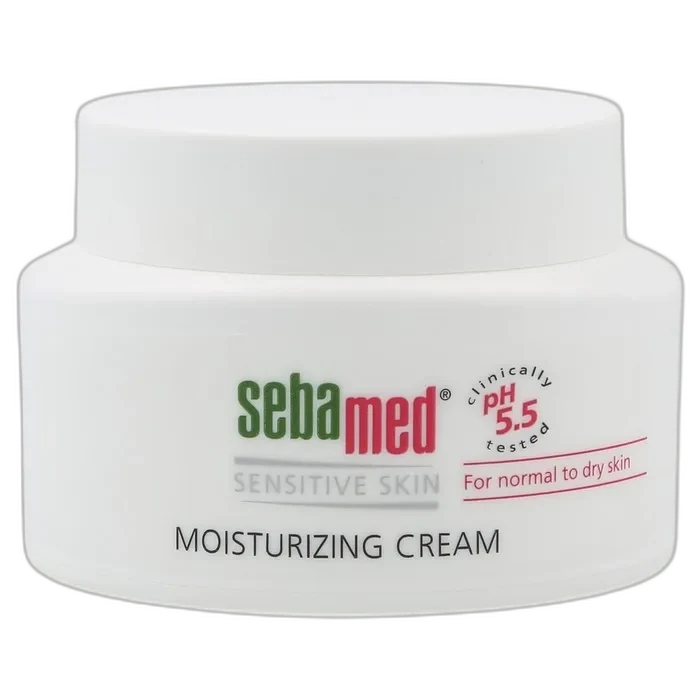
Moisturizing Cream for Sensitive Skin
German Derm-Science Classic
 Verified reviewer
Pros & cons.
- +pH 5.5 formulation precisely matched to skin's natural acid mantle for optimal barrier support
- +Petrolatum-based occlusion provides clinical-grade moisture retention without heavy feel
- +2% Vitamin E concentration offers meaningful antioxidant protection against environmental damage
- +Sodium PCA mimics the skin's own natural moisturizing factor for biocompatible hydration
- +Lightweight, non-greasy finish despite strong occlusive ingredients — wears well under makeup
- +Backed by over 150 clinical studies and decades of dermatologist recommendations worldwide
- +Simple, purposeful formula without unnecessary trending ingredients or filler botanicals
- −Contains fragrance despite being marketed specifically for sensitive skin — an inconsistent choice
- −Small 75mL tube at $16.99 offers modest value compared to similarly formulated drugstore options
- −Myreth-3 Myristate makes it unsuitable for those dealing with fungal acne concerns
- −Formula is functional but basic — lacks the sophisticated actives found in modern competitors
- −Ceteareth-20 emulsifier may concern users who prefer to avoid ethoxylated ingredients
The full review.
In 1950s Bonn, dermatologist Heinz Maurer ran an unauthorized experiment on his ward. His eczema patients could not use soap, so Maurer tried washing them with an acid tenside instead. The results showed clear skin and no irritation, making the soap ban obsolete. That rebellion became Sebamed, and this Moisturizing Cream uses that same insight—skincare calibrated to the skin’s own chemistry.
The formula uses restraint. Petrolatum is second on the INCI list, making this a serious occlusive moisturizer despite its lightweight feel. It is refreshing to see a brand prioritize petrolatum in 2026, while ingredient trends favor exotic botanical oils and fermented extracts. Decades of research show petrolatum is the most effective occlusive agent in dermatology, reducing transepidermal water loss by up to 98 percent. Sebamed uses it intentionally.
Glycerin acts as the humectant, pulling moisture into the upper skin layers where the petrolatum seal holds it. Sodium PCA adds a thoughtful touch—as a component of the skin’s natural moisturizing factor, it matches the biochemical language of your stratum corneum. Together with the 2 percent Vitamin E (as tocopheryl acetate), these ingredients work as a purposeful team. There are no filler botanicals or trending actives for label appeal. Everything in this tube has a job.
The pH 5.5 formulation is the entire philosophy, not just a marketing bullet point. Your skin’s acid mantle stays near this pH; maintaining it is critical for barrier function, microbiome balance, and irritant resistance. Many moisturizers sit at pH 6 or higher without disclosing it. Sebamed built its brand identity on this number, and independent testing confirms they deliver.
Texture
The cream strikes a pleasant balance for a petrolatum-based formula. It feels waxy for barely a second during application before absorbing to a satin finish that disappears. You would not guess it contains petrolatum by feel alone. The dimethicone smooths the sensory experience, creating a finish that sits comfortably under sunscreen and makeup. The formula is elegant for something designed in a dermatology lab rather than a cosmetic sensory studio.
Scent
The inclusion of Fragrance (Parfum) is a head-scratcher. This product markets to sensitive skin and uses a pH 5.5 formula to protect compromised barriers. The scent is light and clean and fades quickly, and Sebamed has clinically tested the formula for sensitive skin tolerance. However, for fragrance-reactive users—the people most likely to use this product—it adds an unnecessary variable. Sebamed offers fragrance-free alternatives, but the flagship Moisturizing Cream should lead by example.
Packaging
The preservative system uses benzyl alcohol and phenoxyethanol. It is clean and paraben-free, aligning with the brand’s clinical positioning. Ceteareth-20 serves as the emulsifier; while some purists avoid ethoxylated ingredients, most skin types tolerate it at typical use concentrations.
Works for
The cream’s strengths show over time. Dry, reactive skin calms within the first few applications; the immediate petrolatum comfort is hard to replicate with lighter formulas. After two to three weeks of consistent use, the cumulative barrier support is evident: skin feels less reactive, less tight after cleansing, and more resilient against environmental triggers. This cream does not transform skin with exotic actives. It creates the conditions for your skin to heal itself.
Price
The 75mL tube costs around seventeen dollars, placing Sebamed in a middle ground. It costs more per milliliter than drugstore staples with similar or more sophisticated ingredient lists. You pay for the pH-calibrated approach, decades of clinical research, and the assurance that every batch is dermatologically tested to the same standard. Whether that premium is justified depends on your value of the pH story—for genuinely sensitive skin, it may be worth every cent.
Final Thoughts
Sebamed will not win beauty awards for this cream. It will not trend on social media or inspire unboxing videos. But it has earned the trust of dermatologists across Europe for over five decades. When your skin is angry, compromised, and tired of being experimented on, that track record matters. This moisturizer is like a reliable family doctor—not flashy, but competent and always there when you need it.
Formula
Ingredient analysis.
Full INCI list · pH 5.5
Water (Aqua), Petrolatum, Myreth-3 Myristate, Glycerin, Cetearyl Alcohol, Tocopheryl Acetate, Ceteareth-20, Dimethicone, Sodium PCA, Sodium Citrate, Sodium Carbomer, Fragrance (Parfum), Benzyl Alcohol, Phenoxyethanol
Skin match.
The science.
The Science
Sebamed's pH 5.5 formulation rests on solid science. A 2010 British Journal of Dermatology study shows skin surface pH directly affects barrier recovery; acidic formulations (pH 5.5) repair the barrier faster than neutral or alkaline alternatives. This matters for sensitive and eczema-prone skin where the acid mantle is often compromised.
Petrolatum is the formula's primary occlusive and the dermatology gold standard for preventing transepidermal water loss. Research in the Journal of the American Academy of Dermatology shows petrolatum reduces TEWL by up to 98 percent, outperforming dimethicone, lanolin, and mineral oil. It works by creating a semi-permeable barrier that slows water evaporation while allowing gas exchange.
Sodium PCA sits ninth in the INCI list. As a natural component of the skin's NMF (Natural Moisturizing Factor), Sodium PCA enhances hydration through mechanisms distinct from glycerin. Research in the International Journal of Cosmetic Science shows NMF components work synergistically; when multiple NMF elements are present, hydration improvements exceed what any single component achieves alone.
Tocopheryl acetate at 2 percent provides antioxidant protection. Once applied, skin esterases convert the stable acetate form to active alpha-tocopherol. Journal of Investigative Dermatology studies confirm topical vitamin E reduces UV-induced lipid peroxidation and supports barrier recovery, pairing well with the formula's occlusive and humectant components.
References
- Natural skin surface pH is on average below 5, which is beneficial for its resident flora — International Journal of Cosmetic Science (2006)
Dermatologist Perspective
Dermatologists often recommend Sebamed products for patients with compromised skin barriers, especially those with eczema, contact dermatitis, or post-procedure sensitivity. The pH 5.5 formulation follows the dermatological principle that maintaining the acid mantle is critical for barrier function and microbiome health. Board-certified dermatologists note the petrolatum-glycerin combination in this cream provides reliable occlusive moisturization comparable to clinical barrier repair creams, though it lacks the ceramide components found in newer prescription-adjacent formulations. The main reservation from dermatologists is the fragrance inclusion — while clinically tested, many practitioners prefer fragrance-free options for their most sensitive patients.
Guidance
Where it fits in your routine.
Apply a pea-sized amount to clean, slightly damp skin morning and evening. After using a gentle, pH-appropriate cleanser, pat skin until just damp—not dripping—then massage the cream into the face and neck using upward motions. In the morning, wait two to three minutes for full absorption before applying sunscreen. Layer it over hydrating serums or use it as a buffer layer before retinoid application in the evening.
At approximately $16.99 for 75mL, Sebamed's Moisturizing Cream costs a mid-range price for pharmacy-brand moisturizers. The per-milliliter cost exceeds drugstore options with similar occlusive hydration. The price reflects the pH-calibrated approach and clinical testing rigor of each batch. A 100mL pump bottle also exists, which provides better per-unit value and easier dispensing. The premium is justified for patients whose dermatologist directs them to use pH 5.5 products. For general-purpose sensitive skin moisturizing, the value is adequate but not exceptional.
People with sensitive skin who want a clinically validated, no-nonsense moisturizer backed by dermatological research. It works well for dry, reactive, or barrier-compromised skin after trendy products with long ingredient lists fail.
This formula suits people with fungal acne concerns (contains Myreth-3 Myristate), those with fragrance sensitivities to low concentrations, and oily skin types needing oil-free formulas. This minimalist formula lacks active ingredients like ceramides, peptides, or niacinamide.
Product details.
This lightweight cream spreads easily and absorbs quickly despite the petrolatum. It feels slightly waxy at first but settles into a smooth, non-greasy finish.
Light, clean fragrance lasts minutes after application. It is noticeable but not overpowering.
White squeeze tube with blue branding and a flip-top cap. A 100mL pump bottle also exists for easier dispensing.
It applies smoothly with a slight waxy feel and absorbs quickly, leaving skin soft and comfortable. It does not sting or tingle, even on reactive skin. The light fragrance is noticeable at first but fades fast.
2-3 months with twice-daily face and neck application
12 months
All Year
The backstory.
Born from Dr. Heinz Maurer's 1950s research at the University of Bonn, where he discovered that pH 5.5 formulations dramatically improved outcomes for eczema patients. Sebamed built an entire product line around this principle, and this moisturizer has been a cornerstone of their facial care range for decades, quietly earning a loyal following among sensitive skin sufferers who prioritize science over marketing.
About Sebamed
Legacy Brand (20+ years)Dermatologist Dr. Heinz Maurer founded Sebamed in 1967 in Germany. He used clinical research from the University of Bonn to pioneer pH 5.5 skincare. Over 150 clinical studies back Sebamed products, and dermatologists globally recommend the brand.
Common myths.
Petrolatum clogs pores and causes breakouts
Cosmetic-grade petrolatum is non-comedogenic and has been used safely in skincare for over a century. In this formula, it is one of the most effective occlusive agents, reducing transepidermal water loss by up to 98%.
pH-balanced products are just a marketing gimmick
The skin's acid mantle sits at approximately pH 5.5. Products with a different pH disrupt barrier function. Clinical research shows Sebamed's pH 5.5 formulation improves barrier recovery and reduces irritation.
FAQ.
Is Sebamed Moisturizing Cream good for eczema-prone skin?
Yes — the pH 5.5 formulation supports the acid mantle eczema-prone skin struggles to maintain, while the petrolatum base provides clinical-grade occlusion to reduce water loss. However, the included fragrance may concern those with severe eczema or fragrance sensitivities.
Can I use Sebamed Moisturizing Cream under makeup?
This cream absorbs to a lightweight, non-greasy finish despite containing petrolatum. It layers well under foundation and sunscreen. The dimethicone in the formula creates a smooth base for makeup application.
Why does Sebamed Moisturizing Cream contain fragrance if it's for sensitive skin?
People often criticize this product. The fragrance concentration is low and the cream is clinically tested for sensitive skin tolerance, but fragrance-reactive individuals should use Sebamed's fragrance-free alternatives instead.
Is Sebamed Moisturizing Cream fungal acne safe?
No — the formula contains Myreth-3 Myristate, a myristate ester that feeds Malassezia yeast. People with fungal acne should use a fungal-acne-safe alternative.
What does pH 5.5 mean for my skin?
Healthy skin's acid mantle has a pH around 5.5. This slight acidity supports barrier function, controls harmful bacteria, and helps the skin microbiome thrive. Sebamed formulates all products at this pH to avoid disrupting this protective layer.
How does Sebamed compare in quality to drugstore moisturizers?
Sebamed sits between drugstore and clinical brands. The formulation is simple but uses dermatological research from the 1950s. You pay for pH-calibrated science and clinical testing, not exotic ingredients.
Can I use this cream with retinol?
Yes — this cream's petrolatum-based occlusive formula buffers retinol treatments well. Glycerin and Sodium PCA maintain hydration, while petrolatum reduces irritation from the retinoids beneath.
What the community says.
"Lightweight yet hydrating"
"Non-greasy finish"
"Good for sensitive and reactive skin"
"Works well under makeup"
"pH-balanced at 5.5"
"Contains fragrance despite sensitive skin marketing"
"Small tube for the price"
"Texture can feel slightly waxy"
"Scent may bother fragrance-sensitive users"