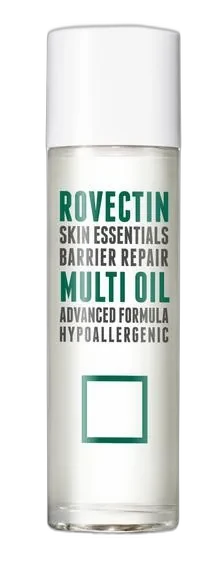
Barrier Repair Multi-Oil
Aromatherapy Body Oil in Disguise
 Verified reviewer
Pros & cons.
- +Lightweight caprylic/capric triglyceride base absorbs quickly
- +Squalane and macadamia oil provide meaningful emollient support
- +Versatile for face, body, and hair use
- +Pleasant aromatherapy scent from well-composed botanical blend
- +Large 100ml size offers reasonable value per ounce
- +Vegan and cruelty-free
- −Contains phototoxic bergamot oil — not safe for AM use
- −Nine essential oils contradict the hypoallergenic marketing
- −Not safe during pregnancy due to essential oil load
- −Not suitable for sensitive, rosacea-prone, or reactive skin
- −Can trigger breakouts in acne-prone users
- −Strong fragrance incompatible with fragrance-free preferences
The full review.
The term ‘hypoallergenic’ in this product’s marketing needs scrutiny. No part of the world regulates ‘hypoallergenic’ in cosmetics. Brands use it on any product without minimum ingredient restrictions. Rovectin describes the Barrier Repair Multi-Oil as hypoallergenic to imply it is safe for reactive skin, but the INCI list says otherwise. This oil contains nine essential oils — neroli, chamomile, mandarin, orange, lavandin, geranium, bergamot, grapefruit, and lavender. At least two, citrus oils and lavender, appear on dermatologist lists of common cosmetic sensitizers. Bergamot is also phototoxic. Evaluate this product as a well-crafted botanical oil blend that is not hypoallergenic by any serious definition; the marketing misleads users who rely on that claim.
The formulation shows real craft. The carrier base uses caprylic/capric triglyceride and caprylic/capric/succinic triglyceride — two coconut-derived medium-chain triglyceride fractions that are lightweight, fast-absorbing, and non-greasy. These make the oil feel like a dry oil rather than a heavy facial oil. Squalane is third, which is a strong signal; squalane mimics human sebum and absorbs without residue. Macadamia oil provides palmitoleic acid, a fatty acid abundant in young skin but rare in other commercial oils. Jojoba esters and phytosterols complete the emollient system. This is a well-chosen lightweight oil blend that provides meaningful fatty acid nourishment. If you stopped reading the INCI list at ‘squalane,’ you would think this is one of the most thoughtful facial oils on the market.
The essential oil parade starts at position five, right after squalane. Neroli (bitter orange blossom), chamomile, mandarin peel, orange, lavandin, geranium, bergamot, and grapefruit peel form a continuous stretch of citrus and floral essential oils. These create the oil’s intense aromatherapy scent and its modest antioxidant activity. They also cause nearly every concern this product has. Citrus essential oils (orange, mandarin, grapefruit) and floral essential oils (neroli, geranium, lavender, bergamot) contain terpene compounds that oxidize on skin and become potent sensitizers, especially for users with barrier compromise or reactivity. Bergamot contains bergapten, a furocoumarin that reacts with UV light to cause skin pigmentation or burns. This makes bergamot phototoxic, so dermatologists caution against using bergamot-containing products in the morning before sun exposure. Rovectin does not disclose if this is bergapten-free (FCF) bergamot oil; assume it is not. Use it only at night.
This oil suits users with robust, non-reactive skin who enjoy aromatherapy, want a versatile face and body product, and do not prioritize clinical skincare positioning. On the body after a shower, it is a lovely, lightweight, well-scented product that absorbs quickly and leaves a subtle glow. On the face of a tolerant user at night, used as a sealing layer over moisturizer, it provides satin nourishment and a pleasant scent. On the face of a reactive user in the morning under sunscreen, it reliably causes pigmentation spots, breakouts, or sensitization. The gap between best-case and worst-case use is wide, and the marketing does not help users identify their risk.
The scent is the dominant user experience. If you like spa-style aromatherapy, this oil delivers. The blend is well-composed: bright citrus notes, warm floral notes, and a gentle chamomile underlayer that lingers for 15-30 minutes. If you prefer fragrance-free skincare, this will not work for you, regardless of sensitization risks. It is a perfumed product using skincare language.
At $28 for 100ml, this is reasonably priced for a k-beauty facial-and-body oil. You get a large bottle of a well-made carrier blend with a premium sensory experience. The per-ounce cost is lower than most single-ingredient facial oils, and its versatility for body use justifies the size. If you prioritize ingredient quality and have no sensitivities, this is a reasonable deal. If you prioritize formulation safety for reactive skin, buy a fragrance-free alternative instead.
The bottom line: this is a good aromatherapy body oil and an acceptable facial oil for non-reactive skin and evening routines. It is not a clinical barrier repair treatment. Mentally translate the marketing’s hypoallergenic claim to ‘mostly pleasant-smelling, not remotely hypoallergenic.’ Use it as it is, not as the brand suggests.
Formula
Ingredient analysis.
Full INCI list
Caprylic/Capric Triglyceride, Caprylic/Capric/Succinic Triglyceride, Helianthus Annuus (Sunflower) Seed Oil, Squalane, Citrus Aurantium Amara (Bitter Orange) Flower Oil, Anthemis Nobilis Flower Oil, Citrus Nobilis (Mandarin Orange) Peel Oil, Citrus Aurantium Dulcis (Orange) Oil, Lavandula Hybrida Oil, Pelargonium Graveolens Flower Oil, Citrus Aurantium Bergamia (Bergamot) Fruit Oil, Citrus Paradisi (Grapefruit) Peel Oil, Macadamia Integrifolia Seed Oil, Jojoba Esters, Squalene, Phytosteryl Macadamiate, Phytosterols, Tocopherol
Skin match.
The science.
The Science
The core carrier system of this formula is well-supported by emollient research. Caprylic/capric triglyceride is a medium-chain triglyceride widely used in both cosmetics and clinical wound care for its lightweight, skin-compatible properties. Squalane, the hydrogenated form of squalene, closely mimics human sebum and has been studied extensively for its ability to replenish skin lipids without comedogenic effects. Macadamia oil's fatty acid profile — rich in palmitoleic acid, which decreases naturally with age — provides a plausible mechanism for modest skin softness improvements in mature skin. The essential oil content is where the scientific claims become weaker. While some essential oils have demonstrated antioxidant or anti-inflammatory activity in in vitro studies, topical application of complex essential oil blends is strongly associated with contact sensitization in peer-reviewed dermatological literature. Bergamot oil's phototoxicity from bergapten (a furocoumarin) is particularly well-documented, and dermatologists routinely warn against leave-on bergamot-containing products before sun exposure. Limonene and linalool — breakdown products of citrus and lavender oils respectively — are among the most-cited fragrance allergens in patch testing registries.
Dermatologist Perspective
Dermatologists commonly caution patients against facial oils heavy in essential oils, particularly those containing citrus and lavender compounds, due to well-documented sensitization risks. Board-certified dermatologists note that 'hypoallergenic' is an unregulated marketing term and that patients should evaluate formulations based on the actual ingredient list rather than the claim. Bergamot oil specifically is flagged in dermatology literature as phototoxic when not processed to remove bergapten, and patients are typically advised to avoid leave-on bergamot products in their morning routine. For patients seeking facial oils for barrier support or dryness, dermatologists more commonly recommend simple single-ingredient options like pure squalane, jojoba, or rosehip seed oil, which provide emollient benefits without the allergen exposure.
Where it fits in your routine.
Press 2-3 drops onto your face and neck after moisturizer as your final evening step. Warm the drops in clean hands first. You can also apply it to damp skin on your arms, legs, and décolletage after showering. Do not use in the morning because the bergamot content is phototoxic. Do not apply to broken or irritated skin. Patch test on your inner arm for 3-5 days before using it on your face. Stop use if redness, itching, or burning occurs.
At about $28 for 100ml, this oil has reasonable per-ounce value compared to other k-beauty multi-oils. Using it on both face and body stretches the bottle further than a face-only product. The carrier base formulation is solid, but the essential oil load adds complexity and risk without adding proportional value for sensitive users or those focused on clinical skincare. Users wanting an aromatherapy experience may find it worth the price; users looking for pure barrier support would do better with a simpler, less expensive single-oil alternative.
Users with non-reactive skin who like aromatherapy scents and want a versatile face-and-body oil. People seeking a lightweight dry oil with no greasy finish. Users already tolerant of essential oil blends in skincare.
This works for sensitive skin, rosacea-prone users, acne-prone skin, pregnant or breastfeeding users, anyone using morning sun-exposed routines, and those seeking a fragrance-free barrier support oil. Users wanting clinical barrier repair should choose a simpler formulation.
Product details.
The nine-oil blend has a strong, lingering citrus and floral aromatherapy scent.
Amber glass bottle with dropper — standard facial oil format, protects oils from light degradation Finish dewyglowyfast-absorbing What to Expect on First Use Expect a strong aromatic burst on application that fades to a soft linger over 15-30 minutes. The oil absorbs faster than most facial oils but the citrus scent stays present. No tingling in tolerant skin, but the essential oil load makes patch testing essential.
4-6 months with evening-only facial use, less if used on body
12 months
All Year
The backstory.
Rovectin launched the Barrier Repair line around 2015 under Kolmar Korea's R&D umbrella. The Multi-Oil followed around 2017 as a companion product to the brand's Barrier Repair Cream Concentrate, designed to extend the brand's barrier-repair positioning into an oil format suitable for both face and body use.
About Rovectin
Established Brand (5–20 years)Rovectin uses Kolmar Korea, a major South Korean contract manufacturer with large R&D infrastructure. Rovectin launched in 2010 and has a modest global following via k-beauty import retailers.
Common myths.
This oil is hypoallergenic
The brand claims otherwise, but this formula has at least nine essential oils — including bergamot, grapefruit, orange, and lavender — that can cause sensitization. Bergamot is phototoxic. "Hypoallergenic" is not a regulated term, and this product fails common clinical definitions of hypoallergenic skincare.
FAQ.
How is this different from the Rovectin Barrier Repair Face Oil?
The Multi-Oil is a lighter, aromatherapy-forward blend for face and body. The Barrier Repair Face Oil (also called Intense Glow Oil) is a thicker, more concentrated facial treatment oil with different botanical emphasis. The Multi-Oil works as a versatile product; the Face Oil works as a treatment.
What the community says.
"Beautiful natural scent"
"Lightweight for a multi-oil"
"Great as a body oil after showering"
"Versatile for face, body, and hair"
"Heavy essential oil content"
"Contains phototoxic bergamot"
"Not suitable for sensitive skin despite marketing claims"
"Can cause breakouts on acne-prone users"
People also looked at.