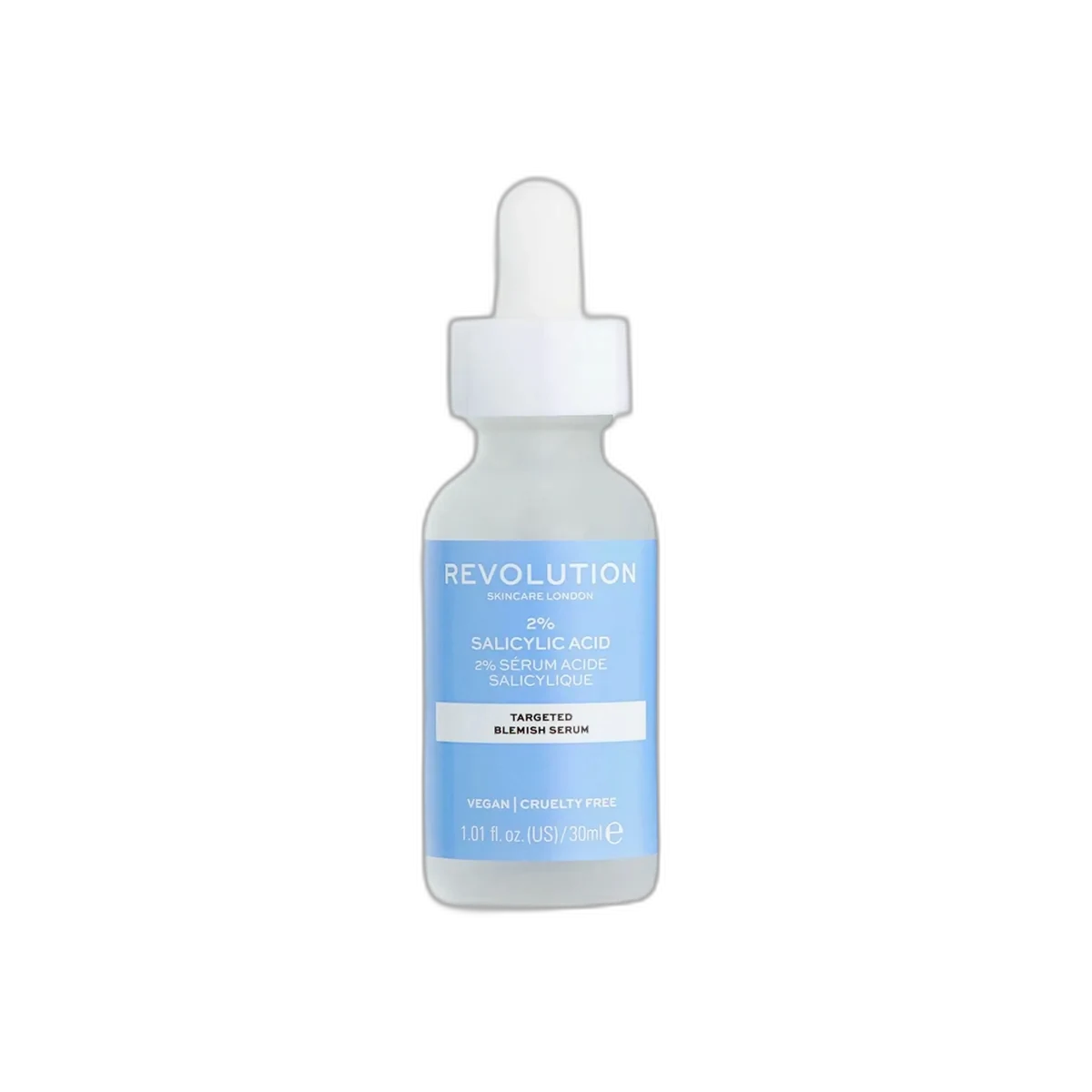
2% Salicylic Acid & BHA Anti Blemish Serum
Budget BHA Starter
 Verified reviewer
Pros & cons.
- +2% salicylic acid at correct pH for full efficacy
- +Betaine salicylate addition uncommon in budget BHAs
- +Lightweight texture absorbs instantly without residue
- +Genuinely affordable entry point into BHA treatment
- +Vegan and cruelty-free with Leaping Bunny certification
- +Simple, functional formulation without filler actives
- +Soothing cast of niacinamide, centella, and panthenol
- −Added fragrance limits suitability for sensitive skin
- −30 ml bottle makes per-ounce cost less competitive
- −Supporting formulation is basic relative to premium dupes
- −Clear glass packaging exposes acid to light
- −Not appropriate during pregnancy
The full review.
Two percent salicylic acid is, by the standards of the skincare industry, a completely commoditized active. The molecule has been studied for decades, the mechanism is well-understood, the OTC maximum concentration is legally capped at 2%, and the formulation parameters that determine whether a BHA serum works — acid concentration, pH, solvent system, supporting humectants — are the same for every brand in the category. Which raises the obvious question when you’re looking at a $12 Revolution Skincare BHA serum sitting on the shelf next to a $32 Paula’s Choice 2% BHA Liquid: does the brand premium actually buy you anything, or is this one of the corners of skincare where the dupe genuinely works?
The honest answer is somewhere in the middle, and it’s worth walking through exactly where.
About Revolution Skincare
At the active level, Revolution’s formulation is competent. The headline 2% salicylic acid is present at the correct concentration, the pH is held at approximately 3.8 — low enough to keep the acid in its protonated, membrane-permeable form — and the delivery vehicle is a simple water-glycerin-propanediol base that doesn’t interfere with penetration. These are the basics every functional BHA serum has to get right, and Revolution got them right. If you were grading this serum on ‘does the salicylic acid actually work?’, the answer is yes.
What’s mildly surprising is the inclusion of betaine salicylate alongside the pure salicylic acid. Betaine salicylate is a gentler salicylic acid derivative commonly used in K-beauty BHA products, where it extends the active exposure at a more tolerable irritation profile than pure SA alone. It’s an unusual inclusion in a budget Western serum — most $12 BHA serums would just run the 2% SA and call it a day. The dual-BHA approach gives Revolution’s formulation a small but meaningful edge over the most basic budget alternatives, and it suggests the brand’s formulators were paying attention to what the K-beauty market was doing.
The soothing supporting cast is standard. Niacinamide provides the anti-inflammatory backbone, centella asiatica contributes the expected K-beauty-influenced calming, panthenol and allantoin round out the barrier-support layer, and the whole thing is thickened with a basic gum-hydrocolloid system. None of this is impressive, but none of it is wrong. A $12 serum cannot realistically include a sophisticated encapsulation system or a dozen supporting actives; Revolution spent its budget on the two BHAs and the core soothing stack, which is the correct prioritization.
Where the formulation loses meaningful ground is the added fragrance. This is a frustrating choice in a product marketed specifically to acne-prone skin, because fragrance is one of the most common triggers for sensitized, reactive, or barrier-compromised skin — exactly the skin type that’s likely to be reaching for a 2% BHA serum. The fragrance is light and fades quickly, and most users tolerate it without issue, but the decision to include it at all is the kind of choice that separates a budget serum with professional formulation discipline from one that treats scent as a product feature. Fragrance-free dupes exist at similar price points, and for anyone with fragrance sensitivity or significantly reactive skin, those are the better pick.
The texture and user experience are where the cheap price point shows up positively. The serum is thin, water-clear, absorbs within seconds, and leaves no tackiness or residue. It layers easily under moisturizer and doesn’t pile or pill the way some thicker dupes can. The glass bottle with dropper is standard for the category, though the clear glass is a minor concern for long-term salicylic acid stability — darker or opaque packaging would have been slightly better. At 30 ml, the bottle is on the small side compared to the 118 ml Paula’s Choice version, which materially affects the per-ounce value calculation even though the headline price is lower.
Performance-wise, users report the expected arc: mild tingling on first use, softer blackheads by week two, smoother texture by week four, and gradual reduction in active breakouts over the first two to three months. None of this differs materially from what you’d expect from any other 2% BHA serum — the active is the active, and this one delivers it. Where Revolution underperforms the premium alternatives is in consistency of experience over long-term use, where the fragrance can become tiring and the formula can feel slightly more drying on reactive skin.
At $12 for 30 ml, the value is defensible for BHA beginners or buyers specifically looking for the cheapest functional entry point into a BHA routine. For anyone who can stretch to the $18-25 range, fragrance-free alternatives with more refined supporting formulas exist and are a better long-term choice. The Revolution serum isn’t bad — it’s competent, affordable, and delivers on the active promise — but it’s firmly in the ‘you get what you pay for’ tier rather than the ‘genuinely punches above its price’ category. If the budget is tight and you want a workable 2% salicylic acid serum, this gets the job done. If the budget allows, buy the fragrance-free version from a brand that prioritized formulation over marketing.
Ingredient analysis.
Full INCI list · pH 3.8
Aqua (Water), Glycerin, Propanediol, Pentylene Glycol, Salicylic Acid, Betaine Salicylate, Niacinamide, Centella Asiatica Extract, Allantoin, Panthenol, Sodium Hydroxide, Xanthan Gum, Hydroxyethylcellulose, Disodium EDTA, Phenoxyethanol, Ethylhexylglycerin, Fragrance
Skin match.
The science.
The Science
Dermatology has well-documented salicylic acid's role in treating comedonal acne. A 1994 Cutis review by Kligman and others established its comedolytic mechanism: the oil-soluble molecule enters sebum-filled pores and disrupts the corneocyte cohesion that causes comedones. A 2015 review in Clinical, Cosmetic and Investigational Dermatology confirmed 2% as the standard OTC concentration for leave-on acne treatment; efficacy data shows meaningful reduction in comedones and inflammatory lesions over 8-12 week trials. The pH requirement is also well-established. Salicylic acid must exist in its protonated (non-dissociated) form to cross lipid membranes. Because the pKa is approximately 3.0, formulations need a pH below roughly 4 for full activity. K-beauty research supports the inclusion of betaine salicylate, which acts as a gentler BHA analogue with comparable but milder pore-clearing effects. Pairing both molecules in one formulation is unusual but rational. The niacinamide and centella asiatica supporting actives have published evidence for anti-inflammatory support and barrier function in acne-adjacent contexts. The dual-BHA choice distinguishes this serum's formulation from standard 2% BHA products, but the lack of a novel delivery system or concentration beyond what any functional BHA serum provides makes it less distinguished.
References
- Salicylic acid as a peeling agent: a comprehensive review — Clinical, Cosmetic and Investigational Dermatology (2015)
- Nicotinamide (niacinamide) in the treatment of acne vulgaris — International Journal of Dermatology (2013)
Dermatologist Perspective
Dermatologists often recommend 2% salicylic acid products as first-line OTC acne treatment for comedonal and mildly inflammatory acne. Board-certified dermatologists generally value concentration, pH, and consistent use over the specific brand. Patients applying a $12 serum nightly typically see better results than patients applying a $40 serum sporadically. Dermatologists' main counseling points for budget BHA serums include fragrance content (avoid for reactive skin), starting slowly to build tolerance, and the critical need for daily broad-spectrum sunscreen during BHA use to protect newly exfoliated skin from UV damage.
Where it fits in your routine.
Apply 3-5 drops to clean, dry skin in the evening after toner and before moisturizer. Use it every other night for the first two weeks to test tolerance. If your skin adapts without irritation, use it nightly. Always follow with a moisturizer, and always apply broad-spectrum SPF the next morning. Do not layer with retinoids, benzoyl peroxide, or other acids on the same night. Reduce frequency if you see persistent redness, dryness, or more breakouts after the first two weeks.
At $12 for 30 ml, this serum is cheap, but some budget BHAs offer better value per ounce. The Inkey List's salicylic acid cleanser and The Ordinary's salicylic acid serum cost similar amounts but use different formulations. Paula's Choice's 2% BHA Liquid provides a larger 118ml bottle and a more refined formulation for about three times the price. Revolution offers good value for those seeking the cheapest functional BHA serum who are not fragrance-sensitive. For long-term routines, the small premium for a fragrance-free version is usually worth it.
Budget-conscious buyers seeking a functional 2% salicylic acid serum at the lowest price. Beginners starting a BHA routine without a large financial commitment. Oily and combination skin users who tolerate light fragrance and want a simple, no-frills BHA formulation.
Sensitive, rosacea, or eczema-prone skin. Fragrance-sensitive buyers. Pregnant or breastfeeding users. Anyone who can afford a slightly more expensive fragrance-free BHA serum — the upgrade is worth it for daily use over the long term.
Product details.
This clear, watery serum spreads easily and absorbs in seconds. It leaves no tackiness or residue.
Light floral fragrance that fades quickly after application.
Clear glass bottle with glass dropper — standard BHA serum packaging. This exposes the formula to light, which slightly affects salicylic acid stability.
Mild tingling on first application is normal and subsides within a minute. Some users see slightly pinker skin for the first few nights — the acid is working. Blackheads soften and texture smooths over the first two weeks. Full breakout reduction takes longer and builds gradually.
Approximately 6-8 weeks with nightly use on the full face.
6 months
All Year
The backstory.
Revolution Skincare is the skincare-focused arm of Revolution Beauty, a UK beauty group founded in 2014 by Adam Minto and Tom Allsworth, built on the premise of offering accessible alternatives to trending beauty products. This serum launched in 2020 as part of the brand's expansion into active ingredient skincare, positioned as a direct budget alternative to Paula's Choice 2% BHA and The Ordinary's salicylic acid products.
About Revolution Skincare
Established Brand (5–20 years)Revolution Skincare is the skincare division of Revolution Beauty. This UK-based affordable beauty group launched in 2014 and builds its business on dupe-priced versions of trending actives. The brand uses marketing-driven strategies instead of dermatologist-led ones, but its formulations are often competent if unambitious.
Common myths.
Cheap BHA serums don't work.
Salicylic acid at 2% is a commodity active. Concentration and pH determine efficacy; the formulation regulates both, not brand prestige. A well-formulated $12 BHA serum delivers similar results to a $30 one, even if the supporting cast and user experience differ.
2% salicylic acid is the strongest over-the-counter option.
Most countries cap leave-on salicylic acid at a 2% legal OTC maximum. You cannot go higher without a prescription. But combining it with actives like azelaic acid or benzoyl peroxide extends results beyond what pure BHA alone achieves.
FAQ.
Is this serum as good as Paula's Choice 2% BHA?
Both deliver 2% salicylic acid at a similar pH. The Revolution version costs roughly a third as much and includes betaine salicylate for extra BHA. The Paula's Choice version has a more refined supporting cast, no fragrance, and more history. Revolution works for budget-conscious buyers or BHA beginners; Paula's Choice is better for established routines or fragrance-sensitive skin.
Can I use this during the day?
BHA leave-on products work in the AM if you follow with broad-spectrum SPF. Nighttime use is better because it avoids layering the acid with sunscreen and reduces UV exposure on newly exfoliated skin. Use it in the PM first; move to the AM only if your skin tolerates the nighttime routine.
Why is there fragrance in a serum meant for acne-prone skin?
Fragrance often triggers sensitive and acne-prone skin. Including it in a BHA serum limits how many people can use the product. People with sensitive or reactive skin should choose a fragrance-free BHA serum instead.
How often should I use this serum?
Use this every other night for the first two weeks. If your skin shows no redness, dryness, or more breakouts, use it nightly. Some users prefer 4-5 nights a week long-term—BHAs do not always work better with more frequent use.
Is this safe during pregnancy?
Doctors generally advise against 2% leave-on salicylic acid during pregnancy, even though topical systemic absorption is very low. Most obstetricians recommend switching to acne treatments like azelaic acid or glycolic acid instead. Consult your doctor before using any BHA routine while pregnant.
Can I combine this with retinol?
Don't use them on the same night. Retinol and salicylic acid together increase irritation and barrier stress. If you use both, alternate nights — retinol one night, this BHA serum the next.
Does this help with hormonal acne?
BHAs target the comedonal acne component: blackheads, closed comedones, and congestion. Deep hormonal cystic acne needs more than this, such as prescription retinoids, spironolactone, or other hormonal approaches. This serum reduces surface breakouts but lacks enough potency alone for significant hormonal acne.
What the community says.
"Affordable BHA option"
"Noticeable reduction in blackheads"
"Lightweight texture"
"Works on closed comedones"
"Cruelty-free and vegan"
"Added fragrance is unnecessary in a BHA serum"
"Can be drying on sensitive skin"
"Smaller 30ml bottle"
"Not as effective as other 2% BHAs"
People also looked at.