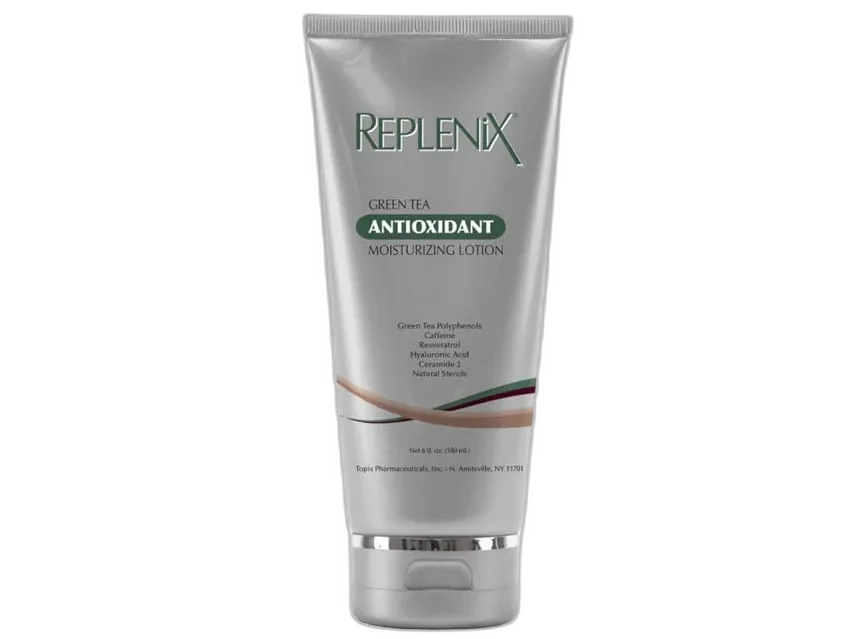
Green Tea Fortified Moisturizer
Post-Procedure Calm Down
 Verified reviewer
Pros & cons.
- +High-concentration green tea polyphenol complex backed by brand research
- +Fragrance-free and gentle enough for post-procedure use
- +Lightweight lotion texture absorbs quickly, layers under SPF well
- +Compatible with retinoids, acids, and vitamin C routines
- +Calms rosacea and reactive skin within days
- +Airless pump preserves antioxidant stability
- +Long track record in dermatology offices
- −Not hydrating enough as a standalone for very dry winter skin
- −Premium price for a formula without trendy modern actives
- −Availability has been inconsistent across retailers
- −Lacks peptides or ceramide-focused barrier repair
- −Single size only
The full review.
Topix Pharmaceuticals began researching topical green tea polyphenols in the late 1990s, when antioxidant skincare was still developing. Vitamin C led the market, niacinamide was mostly a prescription ingredient, and building a moisturizer around a high-potency plant polyphenol was novel. Replenix launched from that research. This moisturizer validates the brand’s thesis: a properly stabilized, high-concentration green tea polyphenol complex delivers measurable antioxidant benefits in a daily-use product that also acts as a gentle hydrator. Two decades later, dermatologists still use it for patients with red, reactive skin after a chemical peel or a microneedling session to calm skin without causing new irritation.
The formula is simple. Water, caprylic/capric triglyceride, cetyl alcohol, glycerin, and dimethicone form the base—a light lotion that absorbs in under a minute and leaves a satin, non-greasy finish. The green tea polyphenol complex is the primary active. Sodium hyaluronate acts as a humectant, squalane adds a skin-identical lipid layer, bisabolol calms skin, and panthenol and allantoin support recovery. It has no fragrance, no essential oils, and no acids. It is compatible with retinoids, vitamin C, exfoliants, or in-office procedures. The formulation is a neutral, dependable anchor for a routine.
On skin, it works like a standard post-procedure moisturizer. Red, inflamed, recently treated skin calms within minutes. Rosacea-prone skin responds within one or two days of consistent use. The lotion layers easily—it sits under mineral sunscreen without pilling, works under makeup, and layers over previously applied actives. It provides enough hydration for normal-to-combination skin daily. For very dry skin in winter, use it as a layer under a thicker ceramide cream.
Antioxidant benefits are harder to feel. You won’t see a dramatic change like you would with a 10% glycolic acid or a strong retinoid; the benefit is measured by what doesn’t happen over years. UV exposure, pollution, and metabolic processes create free radicals that cause collagen breakdown and pigment dysregulation. A high-concentration topical polyphenol layer neutralizes some of that damage. This is a long-term benefit, which is why dermatologists focused on prevention still recommend this moisturizer.
Several factors limit its category ranking. First, the price—at $50+, you pay for Replenix antioxidant research and professional-channel distribution rather than a premium feel. Drugstore moisturizers with “green tea extract” cost much less, though most use decorative concentrations that shoppers cannot verify. Second, availability varies because Replenix has rebranded and reformatted products over the years, making this formula hard to find at times. Third, this is not a multitasker for anti-aging peptides, ceramide barrier repair, or brightening. It focuses on antioxidants and leaves other tasks to other routine steps.
This product suits specific needs. If you have sensitive or rosacea-prone skin, are recovering from in-office treatments, or use retinoids and acids and need a neutral, calming, antioxidant-supportive moisturizer, choose this. If you want one moisturizer that includes peptides, ceramides, and brightening actives, this is not it; other multitaskers exist at this price. Pick the product that matches your specific skin needs.
Formula
Ingredient analysis.
Full INCI list
Purified Water, Caprylic/Capric Triglyceride, Cetyl Alcohol, Glycerin, Butylene Glycol, Dimethicone, Camellia Sinensis (Green Tea) Polyphenols, Sodium Hyaluronate, Tocopheryl Acetate, Panthenol, Allantoin, Glyceryl Stearate, PEG-100 Stearate, Squalane, Bisabolol, Aloe Barbadensis Leaf Juice, Phospholipids, Xanthan Gum, Disodium EDTA, Phenoxyethanol, Ethylhexylglycerin.
Skin match.
The science.
The Science
This moisturizer relies on topical green tea polyphenols, mainly epigallocatechin gallate (EGCG). Research since the late 1990s shows topical green tea polyphenols reduce UV-induced erythema, inhibit skin oxidative damage markers, and down-regulate inflammatory cytokines. The mechanism differs from vitamin C: polyphenols are large, multi-functional molecules that neutralize a different profile of free radicals and modulate cellular signaling pathways for inflammation and pigment production. The delivery system in this lotion keeps the polyphenol complex stable. This is difficult because EGCG oxidizes quickly in solution; the airless packaging and water-in-silicone architecture preserve activity over the product's life. Sodium hyaluronate provides humectant draw, a fact well-established in the literature, while squalane adds a skin-identical lipid that supports barrier function. Bisabolol, a sesquiterpene alcohol from chamomile, has evidence for anti-inflammatory activity, though the research body is smaller than for the green tea. This specific formulation succeeds through integration: a preserved high-concentration polyphenol payload in a neutral emollient base that does not cause irritation or sensitization. This combination targets patients with skin temporarily destabilized by treatment, exposure, or disease, reflecting what research suggests topical antioxidant therapy does best.
Dermatologist Perspective
Dermatologists often recommend green tea polyphenol-based moisturizers for post-procedure care and for patients with rosacea or sensitive skin needing a calming, antioxidant-supportive daily moisturizer. Replenix is commonly stocked in dermatology offices because its formulations focus on dermatological rather than consumer-market concerns. Board-certified dermatologists note that topical antioxidant coverage is preventive rather than corrective — benefits accrue over time and work best with daily sunscreen. This moisturizer often buffers retinoid therapy and helps in the weeks following chemical peels or microneedling when the skin recovers from controlled injury and produces elevated free radicals.
Where it fits in your routine.
Apply one pump to clean skin after serums and treatments, morning and night. In the morning, use broad-spectrum SPF 30 or higher after. For post-procedure use, apply liberally several times a day during the first week of recovery. It layers without pilling under most sunscreens and makeup. For dry skin needing more hydration, apply this first, then follow with a thicker ceramide cream.
At $52 for 6 oz the per-ounce math is reasonable, and a bottle lasts around 4-5 months with twice-daily use, translating to roughly $10-13 per month. That's fair for a professional-channel dermatology-office moisturizer with a well-formulated antioxidant payload, but unimpressive compared to drugstore options that claim 'green tea' on the label at a fraction of the price. The honest question is whether the brand's documented polyphenol complex is worth the premium over a generic botanical, and for most users with specific clinical needs — post-procedure recovery, rosacea, dermatologist-directed routines — the answer is yes. For casual maintenance, a cheaper moisturizer is probably fine.
This moisturizer targets sensitive, rosacea-prone, or post-procedure skin. It also works for users on active routines (retinoids, acids, vitamin C) who want a neutral, antioxidant-supportive daily moisturizer that does not increase irritation.
This is not a multitasking moisturizer with peptides, ceramides, and brightening actives. It focuses on antioxidants and base hydration. Very dry skin in winter needs a thicker cream layered on top instead of using this alone.
Product details.
Light, creamy lotion — dimethicone makes it slightly silky, but it is non-greasy once absorbed.
Unscented — has no added fragrance, only a faint, neutral cosmetic base note.
6 oz. airless pump bottle preserves green tea polyphenol stability.
The first use provides immediate surface hydration and a barely-there finish. Reactive or recently treated skin feels measurably calmer within minutes. There is no tingling or adjustment period — this is one of the most forgiving products in a dermatology-office routine.
Approximately 4-5 months with twice-daily full-face and neck application.
12 months
All Year
The backstory.
Replenix was created by Topix Pharmaceuticals specifically to commercialize their research on topical green tea polyphenols, and this moisturizer is one of the core formulations that validated the brand's thesis. It has been recommended by dermatologists as a post-procedure moisturizer for patients recovering from chemical peels, microneedling, and laser treatments for nearly two decades.
About Replenix
Legacy Brand (20+ years)Replenix stems from Topix Pharmaceuticals' early-2000s research into topical green tea polyphenols. It has sold through dermatology offices and professional skincare channels for more than two decades.
FAQ.
Is this the same as Replenix CF Cream?
No — the CF Cream is a thicker cream that adds caffeine and soy for anti-aging. This is the lighter, lotion-format moisturizer using the same green tea polyphenol complex but without the caffeine or soy.
Can I use this after microneedling or a chemical peel?
Yes — Replenix designed this formulation specifically for post-procedure use. Green tea polyphenols reduce oxidative stress, while squalane and bisabolol calm inflammation. It has no fragrance or active acid to irritate freshly treated skin.
Will this be hydrating enough for dry skin?
This works for normal-to-combination skin. Dry skin, especially in winter, needs to layer this under a heavier ceramide or occlusive cream — it is a lotion, not a thick cream.
Does it replace a vitamin C serum?
No. Green tea polyphenols and vitamin C are complementary antioxidants. They scavenge different free radicals and use different mechanisms. Serious antioxidant protection uses both instead of choosing one.
Is Replenix Green Tea Fortified Moisturizer pregnancy safe?
Yes — the ingredient list contains no restricted items during pregnancy. It is fragrance-free, which suits pregnant users with heightened scent sensitivity.
Why does it cost more than drugstore moisturizers with green tea?
Drugstore moisturizers often use green tea as a marketing claim with low active concentrations. Replenix builds its brand on a high-potency polyphenol complex and prices it higher. Whether that premium is worth it depends on how much you value the antioxidant layer over the emollient base.
What the community says.
"Very calming for post-procedure skin"
"Fragrance-free"
"Doesn't irritate rosacea"
"Lightweight lotion finish"
"Not hydrating enough for very dry skin in winter"
"Premium price for a straightforward formula"
"Availability has been inconsistent"