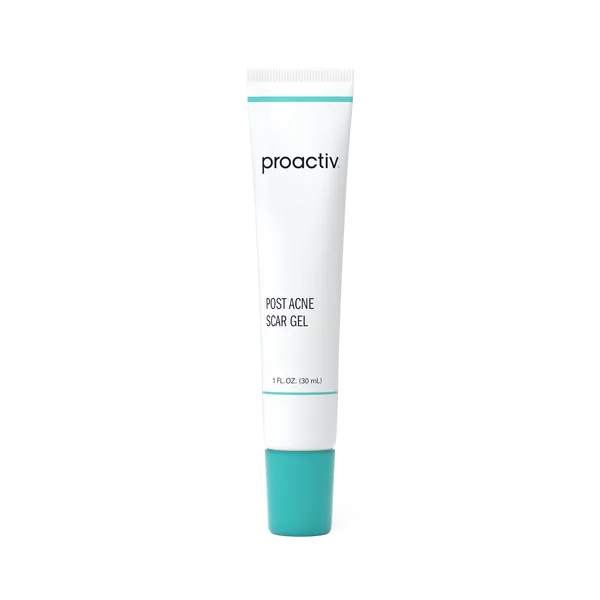
Acne Scar Spot Treatment Gel
Gentle Scar Smoother
 Verified reviewer
Pros & cons.
- +Triple-pathway collagen stimulation via bakuchiol, Centella triterpenes, and peptide
- +Isolated Centella triterpenes provide more targeted activity than generic extract
- +Pregnancy-safe formula using bakuchiol instead of retinol
- +Fragrance-free, gentle enough for sensitized post-acne skin
- +Silicone-based matrix leverages proven scar-management technology
- +Dual sea buckthorn oils provide comprehensive fatty acid support for skin repair
- −At $34 for 1 oz, the tube runs out in 4-6 weeks with regular spot treatment use
- −Mixed reviews reflect the inherent difficulty of topical scar treatment
- −Not effective for deep or pitted scars — limited to post-inflammatory marks and mild texture
- −Results require 8-12 weeks minimum, meaning $68-102 investment before full evaluation
- −Brand's cruelty-free status is ambiguous — not certified by Leaping Bunny or PETA
The full review.
About Proactiv
For nearly three decades, Proactiv was the answer to one question: how do I stop breaking out? The infomercials, the celebrity endorsements, the benzoyl peroxide systems shipped in discreet brown boxes — Proactiv built an empire on active acne. But anyone who has lived through persistent breakouts knows that clearing the acne is only half the battle. The other half is the map it leaves behind: red marks, dark spots, uneven texture, and the particular frustration of clear skin that still doesn’t look clear.
About the Product
The Acne Scar Spot Treatment Gel is Proactiv’s attempt to address that second chapter. And to their credit, they didn’t phone it in with a basic silicone gel and call it a day. The formulation shows genuine thought about how post-acne scarring works and what it takes to address it topically.
Texture
The foundation is a dimethicone-based matrix — dimethicone and dimethicone crosspolymer are the second and third ingredients after water. This isn’t arbitrary. Silicone-based gels have decades of clinical evidence behind them for scar management, primarily because they create an occlusive barrier that regulates hydration in scar tissue and normalizes collagen synthesis. Medical-grade silicone scar sheets work on the same principle. What Proactiv has done is take that proven base and load it with targeted actives.
Active Ingredients
Bakuchiol leads the active ingredient story. This plant-derived compound from Psoralea corylifolia has gained significant attention as a retinol alternative, and a well-designed 2019 study by Dhaliwal et al. in the British Journal of Dermatology demonstrated that bakuchiol produced comparable improvements to retinol in reducing wrinkles and hyperpigmentation — with significantly less scaling and stinging. For a scar treatment designed to be used on post-acne skin that’s often sensitized, inflamed, and prone to further breakouts, choosing bakuchiol over retinol is a smart formulation decision that prioritizes tolerability without abandoning efficacy.
The Centella asiatica component is where the formulation gets particularly interesting. Rather than using a generic Centella extract — which varies wildly in active compound content — this gel includes three isolated triterpenes: asiaticoside, madecassic acid, and asiatic acid. These are the specific compounds responsible for Centella’s wound-healing reputation, and their inclusion in purified form means more consistent and targeted activity. Research on these triterpenes has demonstrated their ability to stimulate type I and III collagen synthesis, modulate the TGF-beta signaling pathway involved in wound healing, and reduce post-inflammatory hyperpigmentation.
Tripeptide-1 adds a third collagen-stimulation pathway. This GHK-family signal peptide tells fibroblasts to produce more collagen through direct cell signaling — a different mechanism than both bakuchiol’s retinoid-receptor-mediated turnover and Centella’s wound-healing cascade. Having three independent collagen-stimulation pathways in a single product represents genuine formulation ambition.
Sea buckthorn oil — both fruit and seed — provides omega-7 fatty acids and carotenoids for skin repair, while rosehip seed oil adds natural trans-retinoic acid and essential fatty acids for tissue regeneration. Squalane and tocopheryl acetate round out the formula with moisturization and antioxidant support.
Feel
The texture is smooth, lightweight, and pleasant to use. The silicone base gives it a slippery glide that dries to a barely perceptible film — you forget it’s there within minutes. No fragrance, no stinging, no dramatic first-use experience. This is a product that does its work quietly, which is exactly what you want from something applied to sensitive post-acne skin.
Reality
The reality check is that scar treatment is one of the hardest things to accomplish topically. Post-inflammatory marks — the red, brown, or purple discoloration — respond reasonably well to the actives in this formula, and users who are consistent with twice-daily application typically see improvement in four to eight weeks. But genuine textural scarring — ice-pick scars, rolling scars, boxcar scars — involves structural damage to the dermis that no topical product can fully repair. Proactiv’s marketing walks this line carefully, but consumer expectations often don’t.
Review Landscape
The review landscape reflects this reality. Ratings hover around 3.7 out of 5, with a notable split between enthusiastic users who saw real improvement in their marks and disappointed users who expected more dramatic scar elimination. The users who set appropriate expectations — this will fade marks and smooth mild texture, not erase deep scars — are generally satisfied. The ones who expected transformation are not.
Price
The price is the other sticking point. At $34 for a single ounce, this is not cheap for what amounts to a specialized spot treatment. If you’re applying it to multiple scar areas twice daily, that tube will last four to six weeks at best. For a product that requires twelve-plus weeks of consistent use to deliver its full benefit, you’re looking at two to three tubes — $68 to $102 — before you can fairly evaluate the results. The ingredient quality justifies the per-ounce price, but the small size makes the total investment feel steep.
Brand Credibility
Proactiv’s legacy as a dermatologist-founded brand lends credibility to the formulation choices here. Drs. Rodan and Fields may have moved on to their eponymous brand, but the scientific foundation they established — treating acne as a medical condition deserving evidence-based solutions — is evident in this gel’s approach to scarring. The triple-pathway collagen stimulation strategy is more sophisticated than what you’ll find in most OTC scar treatments.
Conclusion
The Acne Scar Spot Treatment Gel is a genuinely well-formulated product that’s limited more by the inherent difficulty of topical scar treatment than by any formulation shortcoming. If you have post-inflammatory marks and mild textural concerns, the bakuchiol-Centella-peptide combination is one of the more scientifically grounded approaches available at the consumer level. Just set your expectations at the door, and budget for the multi-month commitment the results require.
Ingredient analysis.
Full INCI list
Water, Dimethicone, Dimethicone Crosspolymer, Caprylic/Capric Triglyceride, Bis-PEG-12 Dimethicone, Glyceryl Oleate Citrate, Ethoxydiglycol, Butylene Glycol, Bakuchiol, Hydrogenated Ethylhexyl Olivate, Phenoxyethanol, Acrylates/C10-30 Alkyl Acrylate Crosspolymer, Hippophae Rhamnoides (Sea Buckthorn) Fruit Oil, Hippophae Rhamnoides (Sea Buckthorn) Seed Oil, Citric Acid, Sodium Hydroxide, Rosa Rubiginosa Seed Oil, Tocopheryl Acetate, Ethylhexylglycerin, Disodium EDTA, Squalane, Asiaticoside, Madecassic Acid, Asiatic Acid, Dextran, Tripeptide-1
Skin match.
The science.
The Science
The formulation uses three independent pathways to stimulate collagen in post-acne scarred tissue. Bakuchiol, a meroterpene from Psoralea corylifolia, showed comparable efficacy to 0.5% retinol for reducing wrinkles and hyperpigmentation in a prospective, randomized, double-blind study by Dhaliwal et al. (British Journal of Dermatology, 2019). It also has significantly fewer side effects, which helps when applying to sensitized post-acne skin.
The formula uses purified Centella asiatica triterpenes (asiaticoside, madecassic acid, asiatic acid) instead of a crude extract. Maquart et al. (European Journal of Dermatology, 1999) showed these triterpenes stimulate extracellular matrix accumulation in experimental wounds. Specifically, asiaticoside promotes type I collagen synthesis by modulating the TGF-beta pathway. Using isolated compounds instead of whole plant extract ensures more predictable dosing and activity.
Tripeptide-1 is part of the GHK peptide family; it signals fibroblasts to increase collagen and glycosaminoglycan production. This mechanism differs from bakuchiol's retinoid-receptor pathway and the Centella asiatica wound-healing cascade, providing a multi-modal approach to scar remodeling.
The silicone base (dimethicone/dimethicone crosspolymer) is evidence-based for scar management. Decades of clinical research show that the occlusive barrier from silicone-based scar treatments normalizes collagen synthesis by regulating transepidermal water loss across scar tissue—the same principle used in medical silicone scar sheets post-surgery.
References
- Prospective, randomized, double-blind assessment of topical bakuchiol and retinol for facial photoageing — British Journal of Dermatology (2019)
- Triterpenes from Centella asiatica stimulate extracellular matrix accumulation in rat experimental wounds — European Journal of Dermatology (1999)
Dermatologist Perspective
Dermatologists know topical scar treatments have limitations compared to in-office procedures like microneedling, laser resurfacing, or subcision. However, board-certified dermatologists note that topical approaches can improve post-inflammatory hyperpigmentation and mild textural changes, the most common acne aftermath. The bakuchiol-based formulation is a frequent recommendation for patients who cannot tolerate retinoids or are pregnant or breastfeeding. Dermatologists state that twelve or more weeks of consistent use is the minimum timeframe to evaluate scar treatment efficacy, and patients should expect improvement rather than elimination.
Where it fits in your routine.
Apply a thin layer to post-acne marks and scars morning and evening after cleansing and water-based serums. The silicone base forms a protective film; apply it before heavier creams and moisturizers. Use consistently for at least 8-12 weeks to see results. You can use it with benzoyl peroxide and other acne treatments in separate routine steps.
At $34 for 1 oz, this gel costs as much as clinical scar treatments, but a small tube runs out fast with regular use. Only one size exists. An 8-12 week commitment requires a $68-102 budget before you can evaluate it fairly. The ingredient quality—specifically the isolated Centella triterpenes and multi-active approach—justifies the price. However, compare this cost to professional scar treatments, which may show more dramatic results. Proactiv's dermatologist-founded heritage adds credibility, even though the brand has changed ownership several times since its founders left.
This works for post-inflammatory marks (red, brown, or purple discoloration) after acne clears, especially if you need a gentle, retinol-free option. It is ideal for pregnant or breastfeeding individuals and sensitive skin types that cannot tolerate retinoid-based scar treatments.
People with deep, pitted, or structural acne scars need professional treatments. If budget matters, the multi-month cost may exceed the incremental results from topical scar treatments.
Product details.
Lightweight silicone-based gel feels smooth and slippery. It absorbs to a barely-there finish and is not greasy.
Fragrance-free with no noticeable scent
Small squeeze tube in Proactiv's signature green and white branding. Approximately 1 x 2 x 5 inches.
The silicone gel glides on smoothly and dries to a thin, barely perceptible film. It causes no tingling, stinging, or warmth — this is a zero-irritation experience. You won't see visible changes in the first few weeks; scar treatment is slow and requires 8-12 weeks of consistent daily application.
4-6 weeks with twice-daily application to multiple scar areas
12 months
All Year
The backstory.
Proactiv built its empire on treating active acne — the benzoyl peroxide systems that dominated infomercials for decades. This scar gel represents the brand's expansion into post-acne care, addressing the marks and texture changes that remain after breakouts clear. It's a recognition that acne treatment doesn't end when the pimple does.
About Proactiv
Legacy Brand (20+ years)Board-certified dermatologists Dr. Katie Rodan and Dr. Kathy Fields developed Proactiv in 1995 after meeting during their Stanford dermatology residency. The brand became one of history's best-selling acne treatment systems, peaking at $800 million in annual revenue. Taro Pharmaceutical Industries owns Proactiv now.
Common myths.
Topical products can eliminate deep acne scars
This gel targets post-inflammatory marks (red/brown discoloration) and mild textural irregularities. Deep ice-pick or boxcar scars need professional treatments like microneedling, laser resurfacing, or dermal fillers. Topical products improve appearance but do not structurally rebuild deeply scarred tissue.
Bakuchiol matches prescription retinoids for scar effectiveness
Bakuchiol shows results comparable to retinol in photoaging studies, but it is a milder active. For scar treatment, bakuchiol gently promotes collagen production and cell turnover. This benefits sensitive, acne-prone skin, but it lacks the intensity of prescription tretinoin or professional procedures.
FAQ.
Can I use this gel on my whole face or just on scars?
This bakuchiol-based formula works as a spot treatment or on larger areas of scarring and post-inflammatory marks. The silicone base layers well, but applying it under other products works better than applying it over them.
Is Proactiv Acne Scar Gel pregnancy-safe?
Yes — this gel uses bakuchiol instead of retinol, so it is safe during pregnancy and breastfeeding. It has no retinoids, salicylic acid, or other pregnancy-contraindicated ingredients.
How long does it take to see results?
Apply twice daily for at least 8-12 weeks to see meaningful scar improvement. Post-inflammatory redness may improve in 4-6 weeks, but textural changes take longer. Scar treatment is slow; patience and consistency matter more than product potency.
Can I use this with other Proactiv products?
Yes — this gel complements Proactiv's acne treatment systems. Apply it after cleansing and water-based treatments, but before heavier moisturizers. The silicone base works well under or alongside benzoyl peroxide-based Proactiv products.
What the community says.
"Noticeable improvement in acne scar appearance over several weeks"
"Lightweight, non-greasy gel texture that absorbs well"
"Fragrance-free formula suitable for sensitive and acne-prone skin"
"Easy to incorporate as a spot treatment into any routine"
"Helped reduce post-inflammatory redness and dark marks"
"Small 1 oz tube feels overpriced at $34 and runs out quickly"
"Some users saw no improvement after months of consistent use"
"Not effective for deep or pitted acne scars — better for surface marks"
"Results are inconsistent — works well for some, not at all for others"
"Takes 8-12 weeks minimum to see meaningful changes"
People also looked at.