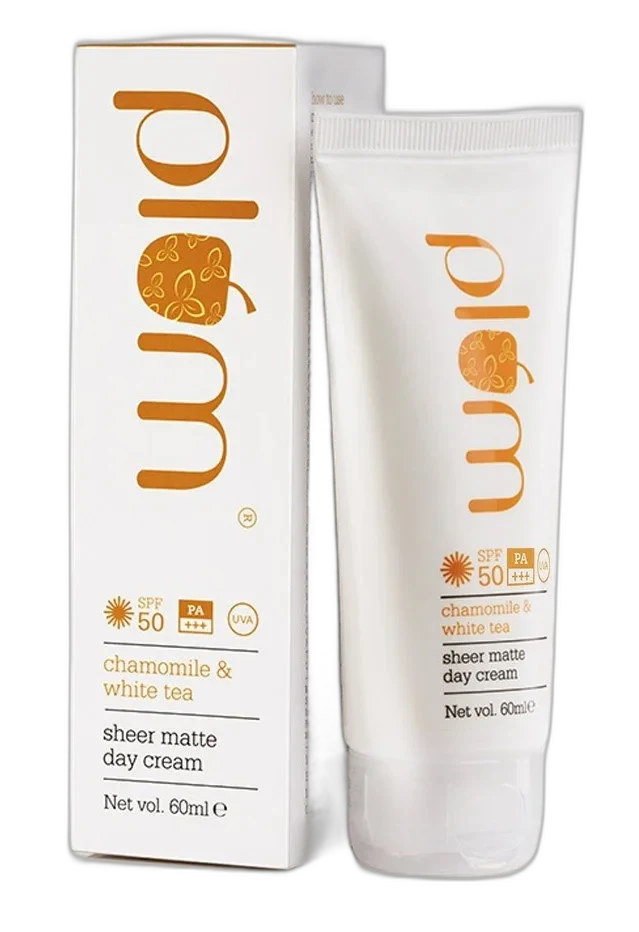
Chamomile & White Tea Sheer Matte Sunscreen SPF 50
Tropical-Climate Matte Pick
 Verified reviewer
Pros & cons.
- +Modern UV filter system with Tinosorb S and Uvinul A Plus
- +Genuinely matte silica-based finish suited to humid climates
- +No white cast — works across the full range of skin tones
- +Niacinamide and panthenol support under daily sunscreen use
- +Affordable chemical sunscreen with modern broad-spectrum coverage
- +Works well as a makeup base for most foundation types
- −Added fragrance limits use for sensitive or rosacea-prone skin
- −Not water-resistant — unsuitable for swimming or heavy sweat
- −50ml tube is modest for daily twice-application use
- −Contains octocrylene, which some users prefer to avoid
- −Occasional pilling reported under heavy full-coverage foundation
The full review.
Anyone living in Mumbai, Chennai, or Bangalore has a list of sunscreens they’ve abandoned. Some leave a visible white cast on camera. Others turn greasy by 10 a.m. or sting when mixed with sweat. A formula that feels fine in a Delhi winter often becomes unwearable in June. Tropical climates test sunscreen brutally. For years, Indian consumers chose between expensive imported Asian formulas or domestic brands using outdated filter systems. Plum’s Chamomile & White Tea Sheer Matte SPF 50 launched in 2021 to solve this, and it worked for much of the Indian skincare market.
The formulation drives the results. Most affordable Indian sunscreens historically used avobenzone and basic UVB filters, leaving UVA1 coverage—the long-wavelength UVA that penetrates deepest and causes photoaging and pigmentation—thin. Plum’s filter selection uses Bis-Ethylhexyloxyphenol Methoxyphenyl Triazine (Tinosorb S) and Diethylamino Hydroxybenzoyl Hexyl Benzoate (Uvinul A Plus). Both are newer-generation filters providing robust broad-spectrum protection across the full UVA range. This formula uses a coherent filter stack with good photostability rather than one filter doing all the work, using octocrylene to keep the avobenzone stable.
Tinosorb S and Uvinul A Plus have been approved and used widely in Europe and Asia for over a decade. They are not FDA-approved in the United States, which keeps American consumers using older filters. Indian regulatory standards allow them, and more Indian brands have used them recently. Plum was an early adopter at a budget-friendly price, which built its reputation.
The sensory profile is the second reason it succeeds. The matte finish is the main feature—silica does the work, creating a powdery, shine-free dry-down within about a minute. Under fluorescent lights or on a Chennai afternoon in August, this sunscreen does not turn into an oil slick like older chemical sunscreens. Thousands of user reviews consistently praise this. Supporting ingredients—glycerin, niacinamide, and panthenol—prevent the skin from feeling parched, a common issue with matte sunscreens that only use silica.
The cast-free finish is another advantage. Chemical filters do not produce the white or purple undertones that zinc oxide and titanium dioxide mineral sunscreens leave on deeper skin tones. For the Indian market, where skin tones vary widely and white cast is a common complaint with Western sunscreens, an invisible formula is a major benefit. This product applies and disappears.
The fragrance is a limitation. Plum added a light herbal-floral scent from chamomile and white tea extracts. This is a dealbreaker for users with rosacea or fragrance sensitivity. The fragrance is subtle compared to perfumed body lotions, but it is present. For a daily-use product, even subtle fragrance matters. A fragrance-free version would be stronger.
Water resistance is the second limitation. Plum does not market this as a water-resistant sunscreen. It will run and requires reapplication during swimming, sweating, or intense outdoor activity. It works for office wear, daily commutes, and errands, but you need a different product for the beach or long workouts.
The 50ml tube is small for daily use. Standard guidance—two finger-lengths for face and neck, reapplied every 2-3 hours—means one tube lasts roughly 5-6 weeks. The price is reasonable for restocking, but the per-ounce math is less impressive on a pure value basis than it seems.
For users in warm climates with oily or combination skin seeking a cast-free, matte-finish, broad-spectrum chemical sunscreen at an accessible price, this is a top option in India. It is not perfect, but it is better than previous Indian market options, and the filter selection beats many imported sunscreens using older systems. It works as a daily driver.
Formula
### About Plum### Texture### Scent### Packaging### Best for### Works for### Not ideal for### Common Praise### Common Complaints### Pairs Well With### Conflicts With### AM routine### PM routineIngredient analysis.
Full INCI list · pH 6.5
Aqua, Ethylhexyl Methoxycinnamate, Butyl Methoxydibenzoylmethane, Diethylamino Hydroxybenzoyl Hexyl Benzoate, Ethylhexyl Salicylate, Bis-Ethylhexyloxyphenol Methoxyphenyl Triazine, Octocrylene, Propylene Glycol, Silica, Glycerin, Cyclopentasiloxane, Dimethicone, Cetearyl Alcohol, Glyceryl Stearate, PEG-100 Stearate, Chamomilla Recutita (Matricaria) Flower Extract, Camellia Sinensis (White Tea) Leaf Extract, Tocopheryl Acetate, Allantoin, Panthenol, Niacinamide, Xanthan Gum, Phenoxyethanol, Ethylhexylglycerin, Disodium EDTA, Fragrance
Skin match.
The science.
The Science
The filter system is the most scientifically meaningful part of this sunscreen. Bis-Ethylhexyloxyphenol Methoxyphenyl Triazine, marketed as Tinosorb S by BASF, is a highly photostable broad-spectrum UV filter. Research in journals like the British Journal of Dermatology shows it maintains protection during long sun exposure and absorbs strongly across UVB and UVA ranges. Adding it to a formulation typically increases UVA protection significantly compared to formulas using only avobenzone.
Diethylamino Hydroxybenzoyl Hexyl Benzoate, or Uvinul A Plus, is another photostable, long-wavelength UVA filter. Clinical studies show that combining Tinosorb S and Uvinul A Plus delivers higher PPD (Persistent Pigment Darkening) values—a UVA protection measure—than older filter systems. The UVA range, especially UVA1 (340-400 nanometers), causes most photoaging, deep dermal damage, and pigmentation. This makes UVA protection a central focus of recent sunscreen development.
Octocrylene stabilizes avobenzone (butyl methoxydibenzoylmethane), which degrades quickly in sunlight. Research shows octocrylene-avobenzone combinations stay stable for several hours, while avobenzone alone loses efficacy within the first hour. However, octocrylene can degrade into benzophenone in aging products, leading some formulators to use alternative stabilization. This is not a practical concern for fresh sunscreen within its PAO date.
Silica provides a matte finish by absorbing surface oil, and niacinamide provides barrier support and sebum regulation. The filter stack provides the sun protection, but both ingredients improve how the formulation feels and wears all day.
Dermatologist Perspective
Dermatologists call daily broad-spectrum sunscreen use the most effective anti-aging intervention. Filter selection is now a key part of that recommendation. Board-certified dermatologists note that older sunscreens using only avobenzone for UVA coverage are less photostable than those with Tinosorb S or Uvinul A Plus. This sunscreen includes both filters, placing it in the category dermatologists consider well-designed for daily use. For oily or combination skin in humid climates, the matte finish improves compliance because uncomfortable sunscreens aren't applied consistently. Dermatologists advise against fragranced sunscreens for patients with known sensitivities and recommend a fragrance-free alternative instead.
Where it fits in your routine.
Apply this as the final step of your morning routine, after moisturizer and other treatments. Use about two finger-lengths (roughly 1/4 teaspoon) on the face and neck to reach the labeled SPF level — underapplication causes most sunscreen failures in real use. Let it dry for 30-60 seconds before applying makeup. Reapply every 2-3 hours during outdoor exposure or after heavy sweating. One morning application works for office or indoor use.
At roughly $16 for 50ml, this sunscreen is affordable for the Indian market. Broad-spectrum filter systems from European pharmacy brands like La Roche-Posay or Avène cost twice as much per ounce. The 50ml size is small; a larger size would increase value. However, the filter quality, matte finish, and niacinamide support make the per-use cost reasonable for daily wear. It is an easy recommendation to replace older or less photostable sunscreens. Users applying sunscreen twice daily to the face and neck will restock every 5-6 weeks.
Oily, combination, or normal skin in warm or humid climates needs a matte, no-white-cast daily sunscreen with modern filter coverage. This works for anyone upgrading from older Indian sunscreens with dated filter systems. It suits users who want broad-spectrum protection at a budget-friendly price.
Fragrance-sensitive users, rosacea-prone skin, or anyone with a compromised barrier. People needing water resistance for swimming or intensive outdoor activity. Users who prefer mineral sunscreens or reef-safe formulations.
Product details.
Lightweight lotion that dries down to a smooth, powdery matte finish
Light herbal-floral fragrance from chamomile and white tea infusion
Plastic tube with flip-top cap
Applies creamy and dries matte in 30-60 seconds. First-time users often find the shine-free finish more effective than other Indian sunscreen options.
Approximately 5-6 weeks with daily face and neck application at adequate dosing
12 months
All Year
The backstory.
Plum developed this sunscreen to address a specific Indian market complaint: most affordable domestic sunscreens either left a white cast, felt heavy in humid weather, or used outdated filter systems. The launch in 2021 positioned it as the brand's answer to both imported Asian sunscreens and mineral-based options that didn't suit warmer climates.
About Plum
Emerging Brand (2–5 years)Plum launched its sunscreen line because Indian consumers want lightweight, non-white-cast options for warm tropical climates. The brand has good domestic reviews, but its sunscreen formulations lack PPD or critical wavelength testing required in regions like the EU.
Common myths.
SPF 50 is always better than SPF 30.
SPF 50 blocks about 98% of UVB rays, while SPF 30 blocks 97%. The real difference is UVA protection and filter stability. These depend on the specific filter mix, not just the SPF number.
Matte sunscreens dry out the skin.
Silica absorbs surface oil to create the matte effect without dehydrating the skin. Glycerin and niacinamide in this formula keep the underlying skin hydrated.
FAQ.
Does it leave a white cast?
No. This feature made it popular in the Indian market. The formula uses chemical filters instead of zinc oxide, so it applies and dries without visible residue.
Is it reef-safe?
Octocrylene and octinoxate in the formula fail current Hawaiian reef-safe regulations. Use a mineral sunscreen if reef safety is a priority.
Can I wear it under makeup?
Yes. The matte finish works as a primer-like base, but some users report pilling under heavy full-coverage foundation. Layering a setting spray between sunscreen and foundation helps.
Is it water-resistant?
No, the brand does not market it as water-resistant. Use a dedicated water-resistant formula or reapply frequently for swimming or heavy sweat.
How often should I reapply?
Apply every 2-3 hours during sustained sun exposure. One morning application works for indoor office wear with limited direct sun exposure.
Can I use it if I have acne?
Yes, the matte finish and niacinamide make it a reasonable choice for acne-prone skin. The formulation is not fungal-acne safe because of certain emollients.
Does it sting the eyes?
Chemical sunscreens can sting if the product migrates into the eye area when you sweat. Apply just above the upper eyelid to avoid this.
Community
What the community says.
"genuinely matte finish"
"no white cast"
"lightweight feel"
"works in humid weather"
"fragrance bothers some users"
"tube is small"
"can pilling under heavy makeup"
People also looked at.