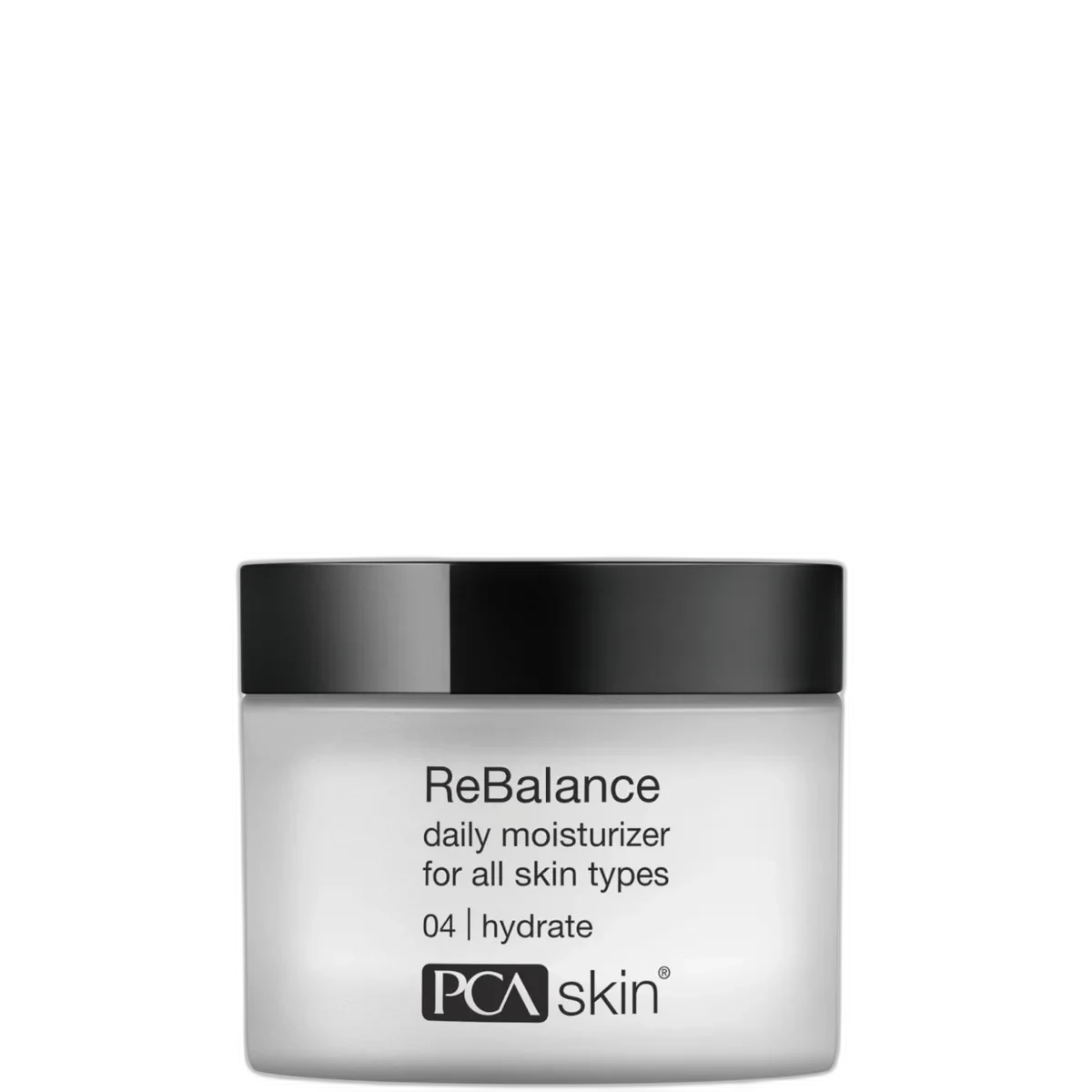
ReBalance
Sensitive Skin Sanctuary
 Verified reviewer
Pros & cons.
- +Zero known irritants or allergens in a truly clean formula
- +Dual GLA-rich oils address the root cause of barrier weakness in sensitive skin
- +Niacinamide strengthens barrier function and reduces transepidermal water loss
- +Bisabolol provides immediate anti-inflammatory calming without allergenic risk
- +Over 1600 five-star reviews confirm exceptional tolerability across all skin types
- +Lightweight texture layers perfectly under sunscreen and makeup without heaviness
- +Excellent companion to retinoid treatments buffering irritation and dryness
- −Too lightweight for chronically dry skin especially during winter months
- −Jar packaging is less hygienic than pump or tube alternatives
- −Formula is simple relative to the $63 price point
- −Not a treatment product — won't deliver dramatic anti-aging or brightening results
- −Niacinamide concentration not disclosed which limits dosing precision
The full review.
People with chronically reactive skin show intense loyalty to products that don’t cause pain. They don’t need miracles or overnight transformations. They need a product they can use daily without a flare, sting, flush, or breakout. PCA Skin’s ReBalance has earned this loyalty, with over 1,600 five-star reviews from users whose skin rejects almost everything else.
The formula uses restraint. It has twenty ingredients, mostly functional rather than active. It contains no fragrance, no alcohol, no essential oils, no retinoids, no acids, and no known sensitizers. While PCA Skin built its reputation on aggressive chemical peels, ReBalance follows the opposite philosophy: sometimes the best way to help damaged skin is to stop aggravating it.
Restraint does not mean inactivity. ReBalance focuses on essential fatty acid delivery. Evening primrose oil and borage seed oil are both high in gamma-linolenic acid—an omega-6 fatty acid that maintains the lipid barrier. Sensitive and rosacea-prone skin often lacks GLA, which weakens the lipid matrix and lets irritants, allergens, and moisture loss in more easily. ReBalance uses two plant oils to deliver concentrated GLA, addressing a root cause of sensitivity instead of just masking symptoms.
Niacinamide supports the barrier alongside GLA. It boosts ceramide synthesis, reduces transepidermal water loss, and has anti-inflammatory activity. At its concentration (seventh on the INCI list), it provides clinically meaningful barrier support without the flushing risk high niacinamide concentrations cause in sensitive individuals.
Bisabolol—the isolated active compound from chamomile, used because whole chamomile extract can cause allergic reactions—calms skin immediately. Sodium hyaluronate adds lightweight hydration. Tocopheryl acetate provides antioxidant protection. Aloe vera completes the soothing formula.
The texture is a lightweight gel-cream that absorbs within seconds. It is not heavy, greasy, or filmy. It sits invisibly on the skin and layers under sunscreen and makeup. For sensitive skin that cannot tolerate heavy, occlusive creams, this thin texture is a feature; it delivers what the skin needs without trapping heat or irritants.
Performance is gradual. The immediate effect is comfort, replacing tightness and reactivity with calm, hydrated relief. Within one to two weeks of consistent use, redness decreases. Skin flares less. Products that used to sting no longer do. Over four to six weeks, the barrier strengthening from the GLA oils and niacinamide becomes measurable—the skin is less reactive, not just soothed.
The limitations stem from its gentleness. This is not a treatment product. It does not dramatically brighten, resurface, or rejuvenate. It lacks enough moisture for seriously dry skin, especially in winter. The jar packaging is less hygienic than a pump, and at $63 for 1.7 oz, you pay a premium for a simple, though perfectly calibrated, formula.
Simplicity is the goal. ReBalance exists because PCA Skin knows that for the sensitive, reactive, rosacea-prone, and post-procedure markets, the most valuable product works every time without fail. No surprises. No reactions. No drama. Just reliable, calming hydration from a formula that treats skin that has already been through enough.
Texture
The texture is a lightweight gel-cream that absorbs within seconds. It is not heavy, greasy, or filmy. It sits invisibly on the skin and layers under sunscreen and makeup. For sensitive skin that cannot tolerate heavy, occlusive creams, this thin texture is a feature; it delivers what the skin needs without trapping heat or irritants.
Best for
The sensitive, the reactive, the rosacea-prone, the post-procedure
Works for
Reliable, calming hydration from a formula that treats skin that has already been through enough.
Not ideal for
Seriously dry skin, especially in winter.
Common Complaints
The jar packaging is less hygienic than a pump, and at $63 for 1.7 oz, you pay a premium for a simple, though perfectly calibrated, formula.
Ingredient analysis.
Full INCI list
Water/Aqua/Eau, Ethylhexyl Isononanoate, Glycereth-26, Butylene Glycol, Hydroxyethyl Acrylate/Sodium Acryloyldimethyl Taurate Copolymer, Phenoxyethanol, Niacinamide, Carbomer, Polyisobutene, Caprylyl Glycol, Bisabolol, Sodium Hydroxide, Ethylhexylglycerin, Hexylene Glycol, PEG-7 Trimethylolpropane Coconut Ether, Tocopheryl Acetate, Oenothera Biennis (Evening Primrose) Oil, Borago Officinalis Seed Oil, Aloe Barbadensis Leaf Juice, Sodium Hyaluronate
Skin match.
The science.
The Science
ReBalance uses an essential fatty acid approach based on research into barrier lipid composition and sensitive skin pathology. Studies in the British Journal of Dermatology show that patients with atopic dermatitis and chronic skin sensitivity have lower gamma-linolenic acid levels in their stratum corneum lipids. This deficiency impairs barrier function and increases transepidermal water loss.
Evening primrose oil has about 8-10% GLA, and borage seed oil has 20-26% GLA. ReBalance combines them to deliver this barrier-critical fatty acid at high concentrations. A 2005 clinical study in the International Journal of Cosmetic Science found that topical borage oil improved skin barrier function and reduced erythema in subjects with irritated skin, which supports using the formula for sensitivity and rosacea.
Niacinamide's barrier-strengthening mechanism is well-documented. A 2005 study in the Journal of Cosmetic and Laser Therapy shows that topical niacinamide at concentrations as low as 2% increases ceramide and free fatty acid levels in the stratum corneum. This addresses the lipid deficiency that causes sensitive skin. A 2000 study in the British Journal of Dermatology shows that 4% niacinamide reduced transepidermal water loss and improved skin barrier function over 4 weeks.
Multiple studies confirm Bisabolol's anti-inflammatory activity. Research in the European Journal of Pharmacology shows bisabolol inhibits pro-inflammatory cytokines and reduces edema. It is a reliable topical anti-inflammatory that lacks the sensitization risk found in whole chamomile preparations.
References
- Effect of borage oil on skin barrier function in subjects with irritated skin — International Journal of Cosmetic Science (2005)
- Niacinamide increases biosynthesis of ceramides and other stratum corneum lipids — British Journal of Dermatology (2000)
Dermatologist Perspective
Dermatologists specializing in sensitive skin and rosacea often recommend moisturizers with the ReBalance profile: fragrance-free, minimal ingredient lists, proven anti-inflammatory compounds, and essential fatty acid delivery. Board-certified dermatologists note that niacinamide combined with GLA-rich oils treats both symptoms (redness, irritation) and the underlying pathology (barrier lipid deficiency) of chronic skin sensitivity. Clinicians often recommend the formula as the moisturizer layer in post-procedure care regimens, such as after chemical peels, microneedling, and laser treatments, when the skin's barrier is temporarily compromised and needs gentle, non-irritating support.
Where it fits in your routine.
Apply a dime-sized amount to clean skin every morning and evening. Use it as the last step before sunscreen (AM) or as the final step (PM). Massage gently onto the face and neck. You can layer ReBalance over any serum or treatment product; apply treatments first. For post-procedure care, apply liberally as often as needed for comfort. Use clean hands or a spatula to keep the jar packaging hygienic.
At $63 for 1.7 oz, ReBalance costs more than its ingredients suggest. However, the jar lasts 3-4 months with regular use. Its value comes from what it lacks: the complete absence of irritants is a rare quality that sensitive-skin sufferers pay for after years of products that disappoint or aggravate. PCA Skin's professional reputation and the product's massive review count back the formulation. For sensitive and rosacea-prone skin, removing flare triggers adds value beyond the ingredient cost — fewer reactions mean fewer rescue products, fewer wasted purchases, and less cumulative skin damage.
ReBalance works for sensitive, rosacea-prone, or reactive skin needing a daily moisturizer that won't cause reactions. It works well with active treatments like retinoids, vitamin C, or post-procedure care to calm skin used to aggressive products.
ReBalance lacks enough moisture for very dry skin — PCA Skin's Collagen Hydrator works better. This gentle formula prioritizes calming over active correction if you want anti-aging or brightening benefits.
Product details.
Unscented — no detectable fragrance of any kind
Jar with screw-top lid Finish lightweight, satin, non-greasy What to Expect on First Use Applies smoothly and feels comfortable immediately — skin feels hydrated, calm, and less reactive within minutes. There is no tingling, stinging, or adjustment period. Even sensitized skin tolerates this formula without incident. The lightweight texture may feel insufficient for very dry skin, especially in winter.
3-4 months with twice-daily application
12 months
All Year
The backstory.
PCA Skin formulated ReBalance for the clients who walked into the treatment room already reactive — the ones whose skin flared from products other brands called gentle. Estheticians needed a moisturizer they could use on literally anyone, including clients recovering from aggressive peels and laser treatments. ReBalance had to be the universal safety net — the product that never caused a reaction. That constraint produced one of the cleanest, most tolerable moisturizers in professional skincare.
About PCA Skin
Established Brand (5–20 years)An aesthetician founded PCA Skin in 1990, developing it with dermatologists. PCA Skin is the number-one professional chemical peel brand for estheticians, with over one million peels performed globally each year. PhD chemists develop its formulations in-house.
Common myths.
Sensitive skin requires thick, occlusive moisturizers to protect the barrier.
Over-occluding sensitized skin traps irritants and heat, which worsens reactivity. ReBalance uses a lightweight approach. It delivers barrier-repairing GLA fatty acids and niacinamide without heavy occlusion. This lets the skin breathe while providing necessary lipids and calming agents.
If a moisturizer doesn't sting, it's not doing anything.
Stinging means irritation, not efficacy. ReBalance's zero-sting formula uses niacinamide, GLA-rich oils, and hyaluronic acid in a vehicle that does not trigger reactions. No sensation is a feature, not a sign of inactivity.
FAQ.
Is PCA Skin ReBalance good for rosacea?
Yes — ReBalance is a top rosacea-friendly moisturizer. This fragrance-free, alcohol-free formula uses bisabolol (anti-inflammatory chamomile derivative), evening primrose oil, and borage seed oil to calm redness and irritation. The lightweight texture prevents the trapped-heat feeling heavier creams cause on flushed skin.
How does PCA Skin ReBalance compare to Clearskin?
ReBalance targets sensitive, normal, and reactive skin to calm and repair the barrier. Clearskin targets oily and acne-prone skin to control oil and post-acne pigmentation. Both use niacinamide; ReBalance uses GLA-rich oils to soothe, while Clearskin uses lightweight, non-comedogenic hydration.
Can I use PCA Skin ReBalance with retinol?
ReBalance works well with retinol treatments. Its calming, barrier-supportive formula buffers retinoid-induced irritation and dryness. Apply retinol first, let it absorb, then layer ReBalance on top for anti-inflammatory support and moisture retention.
Is PCA Skin ReBalance moisturizing enough for dry skin?
ReBalance is lightweight. It hydrates normal and slightly dry skin but lacks enough moisture for chronically dry or winter-compromised skin. For more moisture, PCA Skin's Collagen Hydrator has a thicker formula and similar calming properties.
Why is PCA Skin ReBalance so popular?
ReBalance has over 1,600 five-star reviews and a devoted following because it never causes a reaction. The fragrance-free, irritant-free formula uses calming ingredients like bisabolol and GLA-rich oils. This makes ReBalance safe for reactive skin and post-procedure recovery.
Community
What the community says.
"Calms sensitive and rosacea-prone skin effectively"
"Lightweight yet hydrating without greasiness"
"Zero irritation even on the most reactive skin"
"Excellent base layer under sunscreen and makeup"
"Noticeably reduces redness and reactivity over time"
"Not moisturizing enough for very dry skin"
"Jar packaging less hygienic than pump alternatives"
"Price is high for the relatively simple ingredient list"
"May feel too lightweight for winter use"