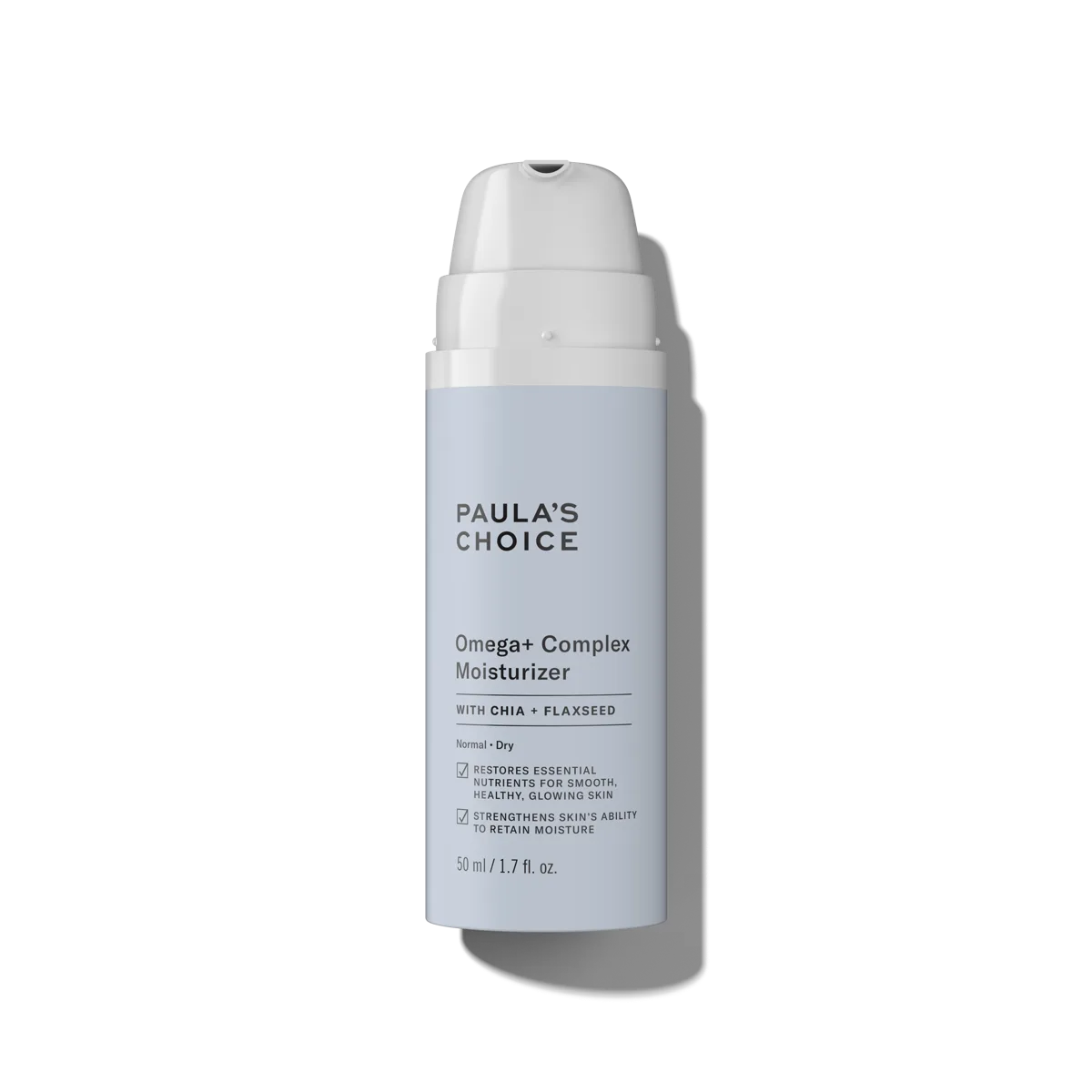
Omega+ Complex Moisturizer
Barrier Rescue Cream
 Verified reviewer
Pros & cons.
- +Full-spectrum omega-3, -6, and -9 fatty acids from five plant oil sources
- +Complete ceramide complex with cholesterol and phytosphingosine for genuine barrier repair
- +Amino acid blend replicates the skin's natural moisturizing factor for multi-mechanism hydration
- +Fragrance-free and silicone-free formula is gentle on sensitized and eczema-prone skin
- +Excellent companion for retinol and chemical exfoliant users who need barrier support
- +Competitive pricing for the level of ingredient complexity and quality
- +Squalane and adenosine add anti-aging benefits beyond simple moisturization
- −Too rich for oily skin and potentially overwhelming for combination skin in warm weather
- −Jar packaging exposes the cream to air and bacteria with each opening
- −Takes longer to absorb than lighter moisturizers due to oil-heavy formulation
- −Not suitable for fungal acne-prone skin due to multiple plant oil sources
- −Dewy finish may feel too shiny for those who prefer a matte look
The full review.
About Paula’s Choice
Most moisturizers add a ceramide and claim barrier repair. That is like giving someone a blueprint without building materials. Paula’s Choice Omega+ Complex Moisturizer works differently. It reflects how skin barrier biochemistry works by supplying the structural lipids and the fatty acid raw materials needed to function.
Texture
The texture either delights or deters you. There is no middle ground. It is thick. You can feel it working. The cream is buttery, takes a moment to massage in, and leaves a dewy finish that settles into a satin glow. For dry skin in winter—the condition this was designed for—this thickness feels like relief. For oily skin in July, it feels like an unwanted weighted blanket.
Packaging
The jar is practical for accessing the thick cream, but it exposes the product to air and bacteria with each use. This is an odd choice for a brand that usually uses tubes and pumps.
Common Praise
In daily use, this moisturizer excels as the final PM routine step, especially after chemical exfoliants or retinol leave the skin slightly compromised. The omega fatty acids and ceramides support barrier recovery overnight. Users consistently report that flaking, tightness, and rough texture from active treatments diminish within one to two weeks. The skin responds to this cream because it knows what it is doing.
Best for
The formula’s weakness is also its strength: the silicone-free, oil-heavy base makes it effective for barrier repair but limits its audience. This is not a democratic moisturizer. It targets dry, damaged, or weather-beaten skin that needs rebuilding. Combination skin may find it workable in winter but excessive in summer. Oily skin will almost certainly find it too much year-round.
PM routine
Shea butter is listed second after water, signaling this is not a lightweight formula. The thickness serves a purpose beyond emollience. Shea butter’s stearic and oleic acid content creates a breathable occlusive layer that holds everything underneath in place without the suffocating feel of petrolatum. Beneath that, five omega-rich plant oils work: linseed (flax) delivers omega-3, chia seed provides omega-3 and omega-6, passion fruit seed oil is rich in linoleic acid, borage oil supplies gamma-linolenic acid, and olive oil provides omega-9. Each oil was selected for its specific fatty acid profile, not for trends. Together, they cover the essential fatty acids the skin needs for barrier integrity.
These fatty acids are the raw materials. The ceramide complex—ceramides AP, EOP, and NP alongside cholesterol and phytosphingosine—provides the structural framework. This distinction elevates the formula. Ceramides organize fatty acids into the lamellar bilayer structures that form the barrier between your skin and the outside world. Without fatty acids, ceramides have nothing to organize. Without ceramides, fatty acids sit on the surface without integrating into the barrier architecture. This moisturizer supplies both, as dermatological barrier repair research dictates.
The third layer of sophistication is the amino acid complex—serine, alanine, glycine, proline, arginine, threonine, lysine, and glutamic acid—which replicates components of the skin’s natural moisturizing factor. These hygroscopic amino acids attract and hold water through a different mechanism than hyaluronic acid (also present as sodium hyaluronate). This adds a humectant dimension so the rebuilt barrier has moisture to retain.
At approximately thirty-four dollars for 1.7 ounces, the price is competitive for the ingredient complexity. Five omega-rich botanical oils, three ceramides with cholesterol and phytosphingosine, an amino acid complex, squalane, adenosine, sodium hyaluronate, and resurrection plant extract—most brands would charge significantly more for this ingredient list. The value is strong, especially for those needing multiple products for similar barrier repair coverage.
Adenosine adds subtle anti-aging support, and the resurrection plant extract (Anastatica hierochuntica) is a clever addition. This desert plant survives complete dehydration and revives when water returns; early research shows its extract improves skin hydration and resilience. It is a typical Paula’s Choice touch: an ingredient with actual science included at a functional level rather than for marketing.
Seven years of market presence shows who loves this product and who does not. Devotees include retinol users, eczema sufferers, winter skin survivors, and anyone with a barrier compromised by acids or harsh environments. Detractors find it too heavy, too slow to absorb, or too rich for their skin type. Both groups are right. This is a specialist moisturizer, not a generalist. Understanding that distinction is key to deciding if it belongs in your routine.
Ingredient analysis.
Full INCI list
Water (Aqua), Butyrospermum Parkii (Shea) Butter, Ceteareth-6 Olivate, Butylene Glycol, C13-15 Alkane, Glycerin, Glyceryl Stearate, Polyglyceryl-4 Laurate, Decyl Oleate, Linum Usitatissimum (Linseed) Seed Oil, Salvia Hispanica (Chia) Seed Oil, Olea Europaea (Olive) Fruit Oil, Passiflora Edulis (Passion Fruit) Seed Oil, Borago Officinalis Seed Oil, Hydrogenated Olive Oil, Psidium Guajava (Guava) Fruit Extract, Olea Europaea (Olive) Oil Unsaponifiables, Limnanthes Alba (Meadowfoam) Seed Oil, Linoleic Acid, Linolenic Acid, Oleic Acid, Euterpe Oleracea (Acai) Sterols, Ceramide AP, Ceramide EOP, Ceramide NP, Serine, Alanine, Glycine, Proline, Lysine HCl, Threonine, Arginine, Squalane, Cholesterol, Phytosphingosine, Anastatica Hierochuntica Extract, Lecithin, Sodium Hyaluronate, Sodium Lactate, Boerhavia Diffusa Root Extract, Adenosine, Phytic Acid, Glutamic Acid, Betaine, Pullulan, PCA, Sodium PCA, Carbomer, Sodium Polyacrylate Starch, Sclerotium Gum, Xanthan Gum, Sodium Lauroyl Lactylate, Phenoxyethanol, Ethylhexylglycerin
Skin match.
The science.
The Science
This formula uses the lipid replacement theory of barrier repair, a standard in dermatological research. A 1999 study by Elias and colleagues in the Journal of Clinical Investigation shows that optimal barrier recovery needs a complete mix of ceramides, cholesterol, and free fatty acids in roughly equimolar ratios. Applying only one component — even ceramides alone — delays barrier repair compared to the complete lipid mixture.
This formula meets that requirement. The three ceramides (AP, EOP, NP), cholesterol, and phytosphingosine provide structural lipids, while omega-rich plant oils supply the fatty acids. Linoleic acid, found in chia seed and passion fruit seed oils, is key. Research in the British Journal of Dermatology (1998) shows that linoleic acid-deficient skin has impaired barrier function and increased transepidermal water loss, and topical linoleic acid-rich oils correct this deficit.
Borage oil's gamma-linolenic acid (GLA) adds anti-inflammatory support. A 2003 study in the British Journal of Nutrition shows that topical GLA application reduced skin inflammation and improved barrier function in subjects with atopic dermatitis. In this formula, the GLA works with the ceramides to address both the structural and inflammatory parts of barrier dysfunction.
The amino acid complex mimics natural moisturizing factor (NMF), the skin's endogenous humectant system. Research in the International Journal of Cosmetic Science shows that NMF depletion correlates with barrier dysfunction, creating a cycle of dehydration and damage. Replenishing these amino acids topically breaks that cycle through a mechanism that complements the lipid repair pathway.
Adenosine adds evidence-based anti-aging support. Multiple studies document its role in stimulating fibroblast activity and collagen production, extending this moisturizer's benefits beyond pure barrier repair.
References
- Basis for the barrier abnormality in atopic dermatitis: outside-inside-outside pathogenic mechanisms — Journal of Allergy and Clinical Immunology (2009)
Dermatologist Perspective
Dermatologists often recommend omega fatty acid-rich moisturizers for patients with compromised barriers, especially for eczema, post-procedure recovery, or retinoid-induced dryness. Board-certified dermatologists note that this formula's combination of three ceramides, multiple omega sources, and amino acids aligns with current barrier lipid biochemistry better than most consumer products. The fragrance-free, silicone-free profile works for sensitive and reactive skin types. Dermatologists advise patients with severely compromised barriers to use this type of multi-lipid moisturizer as a cornerstone product while titrating active treatments, as the barrier support improves tolerability of retinoids and chemical exfoliants.
Guidance
Where it fits in your routine.
Apply a nickel-sized amount to clean skin as your final skincare step. In the AM, follow with sunscreen. In the PM, apply after all serums and treatments absorb. Massage gently into the face, neck, and dry areas. For dry or eczema-prone skin, apply more or layer over a hydrating serum to support the barrier. Use morning and evening for best results, or at least every evening.
At about $34 for 1.7 ounces, this moisturizer offers high value for its complex ingredients. Five omega-rich botanical oils, three ceramides, an amino acid complex, squalane, adenosine, and sodium hyaluronate cost more if bought as separate products. A travel size exists for lower-risk testing. Paula's Choice uses transparent, research-backed formulation, which shows the ingredients are at functional concentrations, not trace amounts. For dry or barrier-compromised skin, this is one of the best value options in the Paula's Choice moisturizer lineup.
People with chronically dry, damaged, or barrier-compromised skin need lipid replenishment, not just hydration. Retinol users with flaking and tightness can use it. It works for skin suffering in winter or air-conditioned environments. Eczema-prone skin can use this fragrance-free, science-backed daily moisturizer.
Oily skin types needing lightweight, mattifying hydration will find this too thick. Those prone to fungal acne should avoid the multiple plant oils. Users preferring a fast-absorbing, invisible moisturizer will find the dewy finish and longer absorption time frustrating. If your barrier is healthy and you only need basic daily moisture, this provides more than you need.
Product details.
fall winter
The backstory.
Launched in 2019 as part of Paula's Choice Omega+ collection, this moisturizer was designed to fill a gap in the brand's lineup for a truly nourishing, oil-rich cream that didn't sacrifice the evidence-based formulation philosophy Paula's Choice is known for. The 'superfood' oil trend was peaking, and rather than dismiss it, the brand embraced it with scientific rigor — selecting oils specifically for their fatty acid profiles rather than their marketing appeal.
About Paula's Choice
Established Brand (5–20 years)Paula Begoun, a beauty journalist, founded Paula's Choice in 1995. The brand builds its reputation on ingredient transparency and evidence-based formulations. Skincare communities cite Paula's Choice for its research-driven approach, and the brand publishes detailed ingredient explanations for every product.
Common myths.
If you use a ceramide moisturizer, plant oils in skincare are unnecessary.
Ceramides organize the lipid barrier, but they require fatty acids. This formula's omega-rich oils supply linoleic, linolenic, and oleic acids. Ceramides use these raw materials to build the lamellar structures that prevent water loss. Both components are necessary for complete barrier repair.
Thick, oil-based moisturizers clog pores and cause breakouts.
Comedogenicity depends on specific oils, not oil presence. This formula uses linoleic acid-rich oils (chia, passion fruit, borage) that are non-comedogenic and help regulate sebum in acne-prone skin when used appropriately. However, people with very oily skin may find the thickness excessive.
FAQ.
Is Paula's Choice Omega+ Complex Moisturizer good for eczema?
The multi-omega fatty acid complex, complete ceramide system, and amino acids make this an excellent choice for eczema-prone skin. The formula targets the lipid depletion and barrier dysfunction typical of eczema from multiple angles. This fragrance-free, silicone-free formulation minimizes irritation risk, but those with severe eczema should patch test and consult their dermatologist.
Can I use this moisturizer with retinol?
Yes — this is an ideal retinol companion. The omega fatty acids and ceramides repair the barrier damage retinol causes, while shea butter and squalane provide occlusive support to prevent excessive dryness. Apply your retinol first, let it absorb, then follow with this moisturizer to buffer and protect.
Is this too heavy for combination skin?
Usage depends on the season and your barrier health. In fall and winter, combination skin types often tolerate and benefit from the thick texture, especially when using active treatments. In hot, humid weather, it feels too heavy on the T-zone. People with combination skin can apply it to drier areas only or mix a small amount with a lighter moisturizer.
What is the difference between the Omega+ Moisturizer and the Omega+ Serum?
The moisturizer is thicker and more occlusive; shea butter provides emollience. It works as a standalone moisturizer. The serum is lighter and layers under another moisturizer to deliver omega fatty acids without a heavy cream base. Use the moisturizer for dry skin or standalone use; use the serum for omega benefits in a lighter format.
Does this moisturizer contain any fragrance?
No added fragrance. The only scent comes from the natural plant oils in the formula — linseed, chia, passion fruit, olive, and borage oils each carry a subtle botanical smell. This dissipates quickly upon absorption and is mild enough that most fragrance-sensitive users report no issues.
Community
What the community says.
"Rich but absorbs without feeling greasy"
"Dramatically improves dry, flaky skin"
"Calms irritation and redness within days"
"Luxurious texture feels like a treat"
"Works beautifully on retinol-irritated skin"
"Too rich for oily or acne-prone skin in humid weather"
"Some find it takes time to fully absorb"
"Slightly divisive texture — not everyone likes the richness"
"Jar packaging exposes product to air and bacteria"