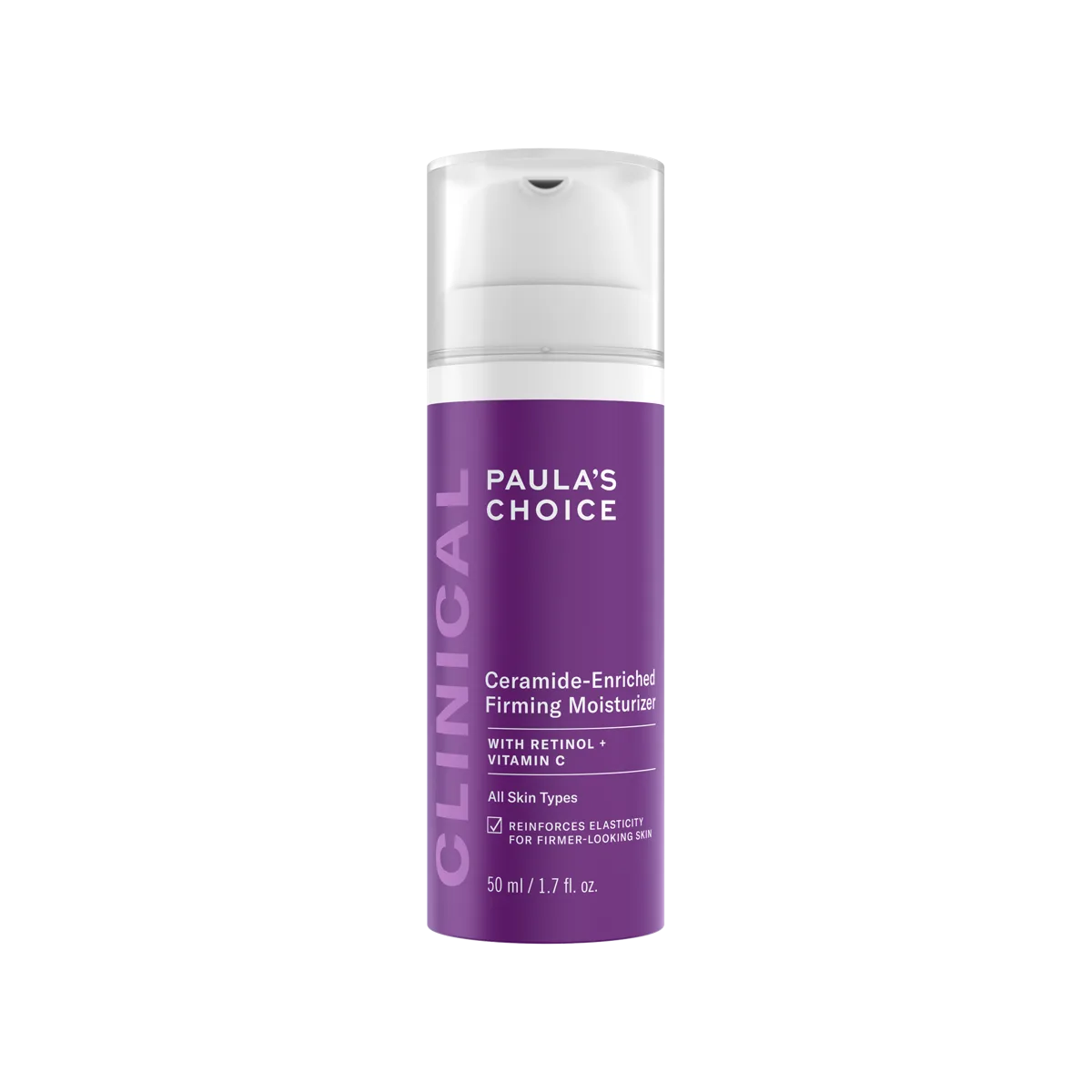
Clinical Ceramide-Enriched Firming Moisturizer
Multi-Active Night Treatment
 Verified reviewer
Pros & cons.
- +Combines retinol, two vitamin C forms, and five ceramides in one intelligently designed formula
- +Low-dose retinol with ceramide buffering makes this genuinely comfortable for retinol beginners
- +Stabilized vitamin C forms are pH-compatible with retinol — no stability compromise
- +Fragrance-free, alcohol-free formula suitable for sensitive and reactive skin types
- +Rich, hydrating texture that treats dry skin while delivering actives
- +Licorice root and pomegranate extract add targeted brightening support
- −0.1% retinol may be too gentle for users seeking visible anti-aging transformation
- −Jar packaging raises stability concerns for light- and air-sensitive retinol
- −$63 price point is steep when separate retinol and ceramide products offer higher concentrations
- −Texture feels heavy or sticky for some skin types, particularly in warm weather
- −3.8-star rating suggests inconsistent user satisfaction with results
The full review.
Trying to fit everything into one product is optimistic. It is the skincare version of a Swiss Army knife—theoretically perfect, but practically a compromise. Paula’s Choice Clinical Ceramide-Enriched Firming Moisturizer is the brand’s most ambitious attempt, and the ingredient list looks impressive on paper.
It contains 0.1% retinol. Two forms of stabilized vitamin C are present: sodium ascorbyl phosphate sits high in the formula, suggesting a meaningful concentration, plus oil-soluble tetrahexyldecyl ascorbate for deeper penetration. It also has five ceramides, cholesterol, squalane, pomegranate extract, grape seed extract, licorice root, and panthenol. This formula aims to turn over cells, brighten skin, fight free radicals, and rebuild the barrier it disrupts.
The logic behind this combination is clever. Retinol is the anti-aging gold standard, but it temporarily compromises the skin barrier, causing the dryness and peeling that lead many to stop use. By embedding low-dose retinol within a five-ceramide matrix alongside cholesterol, this formula delivers anti-aging benefits while reinforcing the barrier retinol disrupts. It acts as a built-in safety net.
The vitamin C adds sophistication. Sodium ascorbyl phosphate works because it is stable at the near-neutral pH where retinol also performs well. L-ascorbic acid would not work here; it requires a pH below 3.5, which would destabilize the retinol. The formula’s pH-matching of compatible actives shows formulation expertise.
The texture is the first thing you notice. It is thicker than expected for a product with many water-soluble actives high in the formula. It takes about ninety seconds to absorb. In humid conditions, some users report a slight tackiness that does not fully dissipate. This thickness works for dry skin in cold climates. For combination skin in summer, it may feel like wearing a mask to bed.
Results are real but measured. At 0.1% retinol, you will not see the dramatic peeling-then-revelation cycle of a 0.5% or 1% retinol serum. With eight to twelve weeks of consistent use, you will see subtle improvements in skin texture, gradual brightening of the complexion, and skin that feels firmer and more resilient. The vitamin C provides a general luminosity that develops over time rather than an overnight transformation.
The 3.8-star average rating—lower than the brand’s typical 4.2-4.5 range—is telling. Some users love this product as a comfortable, non-irritating introduction to retinol with serious ingredient depth. Others feel shortchanged by the subtle results, expecting more dramatic anti-aging from a $63 product in the CLINICAL line. The jar packaging also affects perception; retinol in a jar raises stability concerns, and the premium price sets expectations the gentle formula does not always meet.
The licorice root extract and pomegranate extract are notable supporting players. Glycyrrhiza glabra has documented skin-brightening properties through tyrosinase inhibition, which complements the vitamin C’s melanin-suppression pathway. These are targeted additions that reinforce the brightening goal, not filler botanicals.
This product excels as a low-commitment entry point for retinol-curious consumers with dry or normal skin. If you avoid retinol because of feared peeling and redness, this is a gentle on-ramp. The ceramides buffer the retinol, the vitamin C provides extra anti-aging benefits, and the experience feels more like using a thick moisturizer than an active treatment.
That gentleness is also its limit. If you already tolerate retinol and want visible results, 0.1% may not work. Also, comparing the $63 price to buying a separate retinol serum and a separate ceramide moisturizer often favors the two-product approach; you get higher concentrations of each active and more control over your routine.
Formula
Ingredient analysis.
Full INCI list
Water (Aqua), Sodium Ascorbyl Phosphate, Cetyl Alcohol, Neopentyl Glycol Diheptanoate, Potassium Cetyl Phosphate, Glyceryl Stearate, PEG-100 Stearate, Glycerin, PEG-12 Glyceryl Dimyristate, Bis-Diglyceryl Polyacyladipate-2, Dimethicone, Glyceryl Ascorbate, Tetrahexyldecyl Ascorbate, Retinol, Ceramide NP, Ceramide NS, Ceramide AP, Ceramide EOP, Ceramide EOS, Cholesterol, Caprooyl Phytosphingosine, Caprooyl Sphingosine, Squalane, Punica Granatum (Pomegranate) Fruit Extract, Pongamia Glabra Seed Oil, Glycyrrhiza Glabra (Licorice) Root Extract, Vitis Vinifera (Grape) Seed Extract, Tocopheryl Acetate, Carnosine, Panthenol, Sodium PCA, Butylene Glycol, Sodium Citrate, Ceteareth-25, Polysorbate 20, Ethylhexyl Stearate, Sodium Hydroxide, Trideceth-6, Propyl Gallate, Ammonium Acryloyldimethyltaurate/VP Copolymer, Sodium Polyacrylate, Behenic Acid, Disodium EDTA, Phenoxyethanol, Caprylyl Glycol, Chlorphenesin
Skin match.
The science.
The Science
This formula combines three evidence-backed anti-aging actives. Retinol — the most studied over-the-counter anti-aging ingredient — increases collagen synthesis, reduces fine lines, and improves skin texture in clinical trials. A 2007 study in the Archives of Dermatology confirmed that 0.04% retinol applied three times weekly for 24 weeks improved fine wrinkles and performed like 0.1% tretinoin in the same study period.
The dual vitamin C system uses sodium ascorbyl phosphate and tetrahexyldecyl ascorbate. These stabilized derivatives avoid the rapid oxidation seen in pure L-ascorbic acid. Sodium ascorbyl phosphate provides antioxidant, anti-inflammatory, and antimicrobial functions; a 2005 study in the International Journal of Cosmetic Science shows it reduces acne lesions. Tetrahexyldecyl ascorbate is oil-soluble and penetrates deeper into the dermis. Some comparative studies show it stimulates collagen synthesis more effectively than water-soluble vitamin C forms.
The five-ceramide and cholesterol system addresses retinol-induced barrier disruption. Retinol accelerates cell turnover, which can temporarily thin the stratum corneum and increase transepidermal water loss. This formula uses a ceramide-cholesterol-fatty acid matrix based on research by Elias et al. showing that topical application of these three lipid classes in appropriate ratios accelerates barrier recovery. Embedding retinol within this barrier-repair matrix mitigates the side effects retinol causes.
References
- Retinol and retinyl esters: biochemistry and physiology — Archives of Dermatology (2007)
- Optimal ratios of topical stratum corneum lipids improve barrier recovery in chronologically aged skin — Journal of Clinical Investigation (1997)
Dermatologist Perspective
Board-certified dermatologists note that combining retinol and vitamin C in a stable formula is difficult, so most advise using them separately. However, the stabilized vitamin C derivatives in this formula (sodium ascorbyl phosphate and tetrahexyldecyl ascorbate) work with retinol at near-neutral pH, making co-formulation scientifically sound. Dermatologists often recommend this low-dose retinol product for patients new to retinoids, especially those with dry or sensitive skin who cannot tolerate prescription-strength tretinoin. The ceramide-cholesterol complex addresses the barrier compromise inherent to retinoid use.
Where it fits in your routine.
Apply this as your last moisturizing step at night, after cleansing and water-based serums. Use a pea-to-nickel-sized amount for the face and neck. Do not use in the morning because the retinol content requires nighttime application. Apply broad-spectrum SPF 30 or higher the next morning. If new to retinol, use it every other night for the first two weeks to check tolerance.
At $63 for 1.7 ounces, this is the most expensive product in the Paula's Choice moisturizer range. The ingredient list justifies the price — it contains retinol, two vitamin C forms, five ceramides, cholesterol, and multiple antioxidant extracts. However, the value drops if you compare it to a 0.3% retinol serum ($20-30) and a ceramide moisturizer ($25-42), which provide higher concentrations of both actives for a similar total cost. This product offers convenience and gentleness — one jar, one step, and minimal irritation risk.
Retinol beginners with dry or normal skin want anti-aging benefits without a complicated multi-product routine. This also works for those who found stronger retinol products too irritating — the ceramide buffering makes this one of the most comfortable retinol experiences available.
Experienced retinol users seeking fast, visible results will find 0.1% too gentle. Skip this if you prefer a lighter texture, have oily skin, or are pregnant (retinol is contraindicated in pregnancy).
Product details.
Thick cream with a medium-rich texture. It absorbs fully in about 90 seconds. It leaves a subtle dewy finish that some users find sticky in humid conditions.
No fragrance. Neutral, slightly waxy scent from the base ingredients.
Jar with a screw-top lid. A spatula allows hygienic dispensing, but the jar format affects retinol stability because retinol degrades when exposed to air and light.
No stinging or irritation occurs on first application. The low retinol concentration and ceramide buffering make this comfortable for retinol beginners. The texture is thicker than expected and takes a moment to absorb. Morning skin looks plumper after the first night.
2-3 months with nightly face and neck application
12 months
fall winter
The backstory.
Positioned in Paula's Choice CLINICAL line — the brand's premium tier — this moisturizer represents an attempt to create an all-in-one nighttime anti-aging treatment. The thinking is that many consumers want retinol and vitamin C benefits but find multi-step routines with separate products for each active too complicated or expensive.
About Paula's Choice
Established Brand (5–20 years)Paula Begoun founded Paula's Choice in 1995, and Unilever acquired it in 2021. The Clinical line uses the brand's most advanced formulations, pairing pharmaceutical-grade actives with their signature evidence-based approach.
Common myths.
Retinol and vitamin C can't be used together
This formula uses stabilized forms of both that work at its pH. Sodium ascorbyl phosphate is stable at the slightly alkaline pH where retinol is also comfortable. Pure L-ascorbic acid requires a much lower pH that would destabilize retinol.
0.1% retinol is too weak to make a difference
Clinical studies show visible improvements in fine lines and skin texture with 0.025% retinol over 12-24 weeks. At 0.1%, the effect is modest but real. This low concentration allows daily use with minimal irritation, often yielding better long-term outcomes than higher concentrations used inconsistently.
FAQ.
Is 0.1% retinol enough to see anti-aging results?
Yes, but results take time. Clinical research shows sub-0.1% retinol concentrations improve fine lines and skin texture after 12-24 weeks of consistent use. This low concentration allows nightly use without the irritation that causes many people to stop using higher-strength retinol products.
Can I use this if I'm already using a retinol serum?
Use caution. Layering this over a separate retinol serum doubles your retinol exposure, which causes irritation, dryness, or peeling. If you use a retinol serum, this moisturizer's main appeal is its ceramide and vitamin C content. Use it on nights you skip your retinol serum.
Why is this only recommended for nighttime?
UV exposure degrades Retinol and increases photosensitivity. The vitamin C in this formula provides antioxidant protection, but the retinol component works best when applied at night, followed by sunscreen the next morning.
Is the jar packaging okay for retinol?
Jar packaging is not ideal for retinol because air and light degrade it. Paula's Choice likely uses stabilized retinol that resists degradation better, but a tube or airless pump protects the active ingredients more effectively. Use the included spatula and close the lid promptly after each use.
Why is the rating lower than other Paula's Choice products?
With 3.8 stars, this product's rating shows mixed user feedback on the texture (some call it heavy or sticky) and the subtle results of 0.1% retinol. Users expecting dramatic retinol-level transformation may find the effects too slow. The formula is technically excellent, but satisfaction depends on expectations.
What the community says.
"Noticeable improvement in skin firmness and radiance over time"
"Impressive ingredient list at a reasonable price for clinical-grade actives"
"Good introduction to retinol for sensitive skin types"
"Skin feels plumper and more hydrated"
"Texture can feel heavy or sticky on some skin types"
"Results are subtle — retinol concentration may be too low for advanced aging concerns"
"Some users experience breakouts during adjustment"
"Price is high for a moisturizer from this brand"