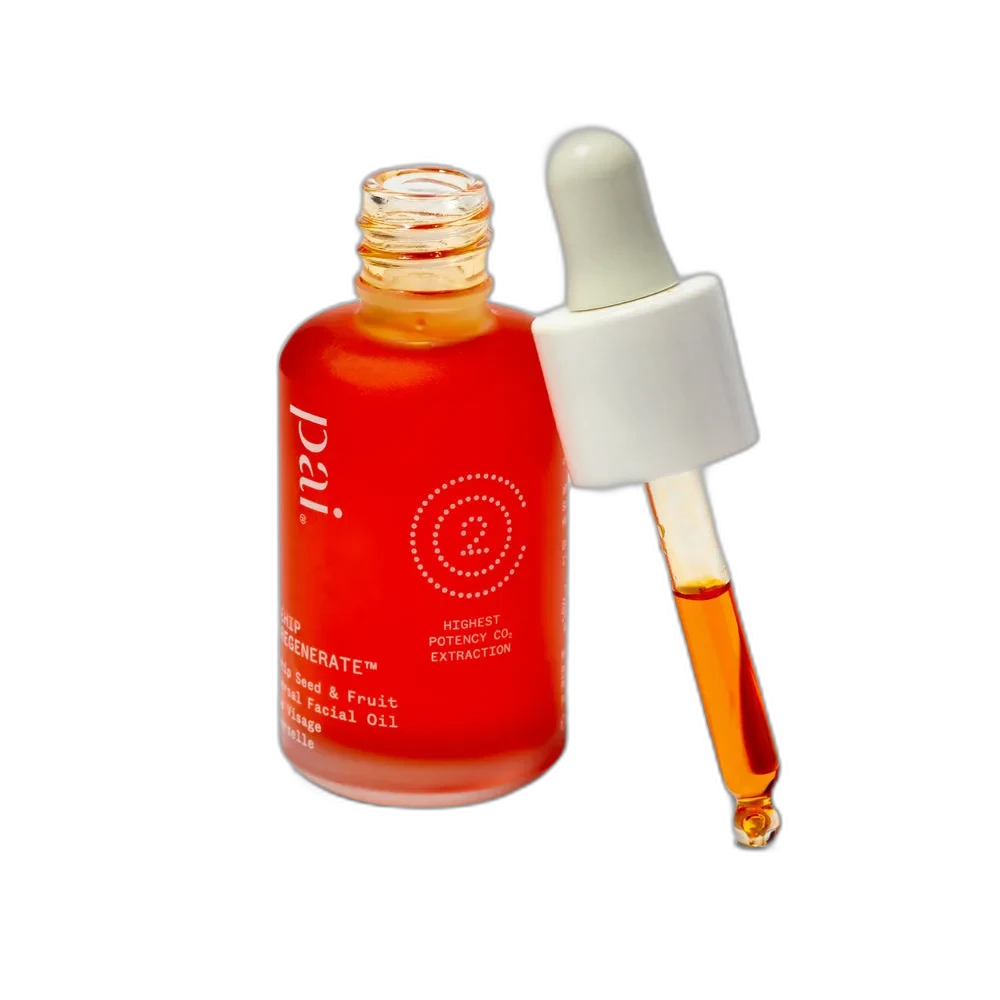
Rosehip BioRegenerate Oil
Clean Beauty Rosehip Gold Standard
 Verified reviewer
Pros & cons.
- +CO2-extracted rosehip fruit delivers 700% more antioxidants than standard seed-only rosehip oils
- +Minimalist four-ingredient formula with zero fillers, carriers, or essential oils
- +No allergen declarations — one of the cleanest irritation profiles in any skincare product
- +COSMOS organic, Leaping Bunny, Vegan Society certified, and pregnancy safe
- +High linoleic acid content makes it suitable for combination skin — unusual for a facial oil
- +Visible brightening and tone-evening results within 2-3 weeks of consistent nightly use
- −Deep orange color can leave faint stains on light-colored pillowcases if over-applied
- −Premium price compared to basic rosehip seed oils
- −Results require 6-8 weeks of consistent use for significant improvements
- −Not suitable for fungal acne-prone skin due to oleic acid content
- −Short 6-month PAO period means larger stockpiling is impractical
The full review.
Most brands ignore a key rosehip oil detail: the seed and the fruit are different. Most market rosehip oils use only cold-pressed seed. This provides a respectable oil with linoleic acid, alpha-linolenic acid, and some vitamin A. It moisturizes and softens like any decent facial oil. However, the fruit—the fleshy outer part—contains the highest carotenoid concentrations: lycopene, beta-carotene, and zeaxanthin. These antioxidant compounds turn rosehips red and are mostly missing from seed-only extractions.
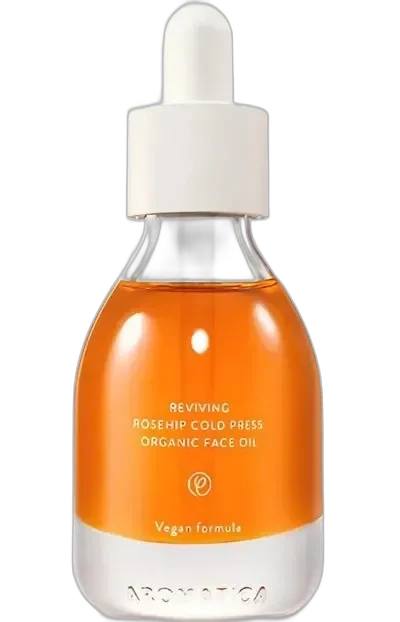
Pai’s Rosehip BioRegenerate Oil uses both. Cold-pressed Rosa canina seed extract forms the fatty acid base. CO2-extracted Rosa canina fruit extract is layered in via supercritical extraction, capturing carotenoids without heat degradation. The result looks different from other rosehip oils: a deep, vivid amber-orange like liquid sunset. This is not a dye or additive. It is concentrated carotenoid pigment. Pai claims it delivers 700% more protective antioxidants than competitor rosehip oils.
The ingredient list is four lines: Rosa canina seed extract, Rosa canina fruit extract, Tocopherol, and Rosmarinus officinalis leaf extract. That is all. No carrier oils dilute the actives. No essential oils change the fragrance. No dimethicone fakes a slip. No preservative system exists beyond the antioxidant vitamin E and rosemary extract. It is a very honest facial oil formula in certified organic skincare.
This simplicity works well. Without essential oils, there are zero allergen declarations on the label—something even Pai’s other sensitive-skin products lack. Without carrier oils, every drop is pure rosehip. Because CO2 extraction preserves the fruit’s bioactive compounds, the antioxidant density per drop is higher than a fifteen-dollar bottle of seed oil.
The texture is a middle ground. It is lighter than most 100% plant oils and absorbs on the face within two to three minutes without the slickness that limits many facial oils to nighttime use. Because it lacks essential oils, the scent is essentially null—just a faint, earthy, nutty aroma from the raw rosehip.
Performance sets this oil apart. Nightly users see improved skin luminosity within two to three weeks; carotenoids add a subtle warmth to the complexion that reduces dullness. Over two to three months, the linoleic acid, natural trans-retinoic acid traces, and concentrated antioxidants improve fine lines, uneven tone, and minor hyperpigmentation. It is not a retinol-level transformation, but the trajectory is impressive for a natural product safe for use during pregnancy.
The main concern is staining. The orange color comes from the carotenoids. While the oil absorbs fully into skin without discoloration, applying a large amount before bed can tint light-colored pillowcases. Using two to three drops and waiting a few minutes to absorb prevents this for most users.
Rosehip oil has high linoleic acid and low oleic acid, so combination and mildly oily skin types often tolerate it without breakouts. The lack of coconut-derived fractions and oleic-heavy oils also reduces comedogenic risk. It is not for severely oily or fungal acne-prone skin, but its compatibility range is wider than most facial oils.
At fifty-four dollars for one ounce, this is not a budget rosehip oil. However, one bottle lasts three to four months with nightly use, as two to three drops covers the face. The monthly cost of roughly fourteen to eighteen dollars is reasonable for a certified organic treatment oil with high antioxidant content. COSMOS certification, Leaping Bunny, and Vegan Society stamps provide accountability that cheap rosehip oils lack.
Pai’s Rosehip BioRegenerate Oil shows what happens when a brand extracts, formulates, and certifies an ingredient properly. It does not need seventeen supporting ingredients. Four is enough.
Ingredient analysis.
Full INCI list
Rosa Canina Seed Extract, Rosa Canina Fruit Extract, Tocopherol, Rosmarinus Officinalis Leaf Extract
Skin match.
The science.
The Science
Clinical studies examine Rosehip (Rosa canina) oil's effects on photoaged and scarred skin. A 2015 randomized double-blind study in Clinical Interventions in Aging shows rosehip powder (with similar carotenoid and fatty acid compounds) improves crow's feet wrinkle severity, skin moisture, and elasticity after 8 weeks versus placebo.
Seed and fruit extraction differ scientifically. Rosehip seeds contain mostly polyunsaturated fatty acids (linoleic and alpha-linolenic acid), but the fruit flesh concentrates carotenoids—specifically lycopene, beta-carotene, and zeaxanthin. A 2012 Food Chemistry study found Rosa canina fruit flesh has significantly higher concentrations of these compounds than the seeds, which justifies Pai's dual-extraction approach.
Linoleic acid is essential for skin health. As the main polyunsaturated fatty acid in the stratum corneum, it maintains barrier integrity and ceramide synthesis. Applying linoleic-rich oils improves barrier function in subjects with compromised skin. Rosehip oil also contains trace trans-retinoic acid; while too low for retinoid-level efficacy, it helps mild cell turnover stimulation and collagen synthesis support.
The CO2 extraction method uses temperatures below 40°C. This preserves thermolabile compounds like carotenoids and polyunsaturated fatty acids that degrade during steam distillation or conventional pressing. This matters for lycopene, one of the most potent singlet oxygen quenchers among naturally occurring carotenoids.
Dermatologist Perspective
Dermatologists view rosehip oil as a well-tolerated, antioxidant-rich facial oil for most skin types. Board-certified dermatologists note the high linoleic acid content makes this product better for combination skin than most facial oils. The CO2-extracted fruit component provides carotenoid concentrations standard seed oils cannot match, though dermatologists note topical carotenoid delivery is less efficient than dietary intake. For patients seeking a natural, fragrance-free treatment oil—especially during pregnancy when retinoids are contraindicated—dermatologists consider this high-quality rosehip oil a reasonable option for mild anti-aging and brightening support.
Where it fits in your routine.
Apply 2 to 3 drops to clean skin after serums and moisturizer as your final evening step. Warm the oil between fingertips and press it into your face and neck. Wait 2-3 minutes for absorption before touching a pillowcase. You can mix it with moisturizer for a lighter application. Use nightly. Store away from direct sunlight to preserve carotenoid integrity.
At $54 for 1 fl oz, this rosehip oil costs 3-4x more than basic rosehip seed oils. A 0.3 fl oz travel size is available. One bottle lasts 3-4 months using 2-3 drops nightly, making the monthly cost $14-18. The price reflects the dual extraction method (seed press + CO2 fruit extraction), COSMOS organic certification, and higher antioxidant content. For users who find cheap rosehip oils underwhelming, the higher carotenoid density justifies the upgrade.
This certified organic facial oil brightens, fights aging, and nourishes skin. It works for dry, normal, and combination skin types seeking pure rosehip oil. It suits users who want minimal ingredient lists, fragrance-free formulations, and pregnancy-safe products.
People with oily or fungal acne-prone skin who react to facial oils. Budget-conscious shoppers happy with basic rosehip seed oils. Anyone who cannot tolerate even light oiliness on their face at bedtime.
Product details.
This medium-weight oil has a deep amber-orange color from concentrated carotenoids. It is less viscous than many facial oils and absorbs within 2-3 minutes without excessive greasiness.
Minimal — a faint, natural rosehip seed scent that is earthy and slightly nutty. No added fragrance or essential oils. Most users find it odorless.
Amber glass dropper bottle protects the carotenoid-rich oil from light degradation. Pai branding is clean and minimalist.
The deep orange color is striking; this is not a clear, pale rosehip oil. Skin feels nourished and soft after one application. A visible glow shows the next morning. No irritation or breakouts occur, even on first use with sensitive skin.
3-4 months with nightly use (2-3 drops per application)
6 months
All Year
The backstory.
The Rosehip BioRegenerate Oil is Pai's approach to the rosehip oil category — a space dominated by cheap, poorly preserved seed oils that oxidize quickly. By combining seed and fruit extraction methods and keeping the formula to just four ingredients, Pai created a premium rosehip oil that justifies its price through measurably superior antioxidant content. The product's deep orange color — from the concentrated carotenoids — has become its visual signature.
About Pai Skincare
Established Brand (5–20 years)Sarah Brown founded Pai Skincare in 2007 in London. This rosehip oil is a bestseller with over 2,600 reviews. The product has COSMOS organic certification, uses CO2 extraction for the rosehip fruit component, and claims 700% more antioxidants than competitor rosehip oils.
Common myths.
All rosehip oils are basically the same.
Rosehip oils vary in antioxidant and fatty acid content based on species, growing conditions, and extraction method. Standard cold-pressed rosehip seed oil has mostly fatty acids and modest carotenoid content. This product's CO2-extracted fruit component adds higher concentrations of lycopene and beta-carotene — antioxidants mostly absent in seed-only oils.
Facial oils will cause breakouts on combination skin.
Rosehip oil has high linoleic acid levels, which acne-prone sebum lacks. Research shows topical linoleic acid application reduces comedone size. This formula lacks oleic acid-heavy oils, so it clogs pores less than coconut or olive oil.
FAQ.
Is Pai Rosehip BioRegenerate Oil worth the premium over cheaper rosehip oils?
The premium price stems from a dual extraction method. It combines seed-pressed oil with CO2-extracted fruit oil to concentrate carotenoids (lycopene, beta-carotene). Pai claims 700% more antioxidants than standard rosehip oils. Higher antioxidant levels change the function if you use rosehip oil for brightening and anti-aging. A cheaper seed-only oil works if you only want basic moisture.
Myth
Reality
How to Use
Who Should Buy
Best for
Works for
Not ideal for
AM routine
PM routine
Can I use Pai Rosehip Oil on acne-prone skin?
Rosehip oil has high linoleic acid levels, which research shows helps acne-prone skin. This four-ingredient, fragrance-free formula reduces irritation risk. But any facial oil can worsen fungal acne (Malassezia folliculitis). Most users with standard acne-prone combination skin tolerate this well — start with 1-2 drops every other night.
Myth
Reality
How to Use
Who Should Buy
Best for
Works for
Not ideal for
AM routine
PM routine
Why is Pai Rosehip Oil so orange?
CO2 extraction of rosehip fruit yields concentrated carotenoids—lycopene and beta-carotene—which create the deep amber-orange color. These antioxidant compounds also color tomatoes and carrots. Paler rosehip oils have fewer carotenoids because they use only the seed instead of the fruit.
Myth
Reality
How to Use
Who Should Buy
Best for
Works for
Not ideal for
AM routine
PM routine
Will the orange color stain my skin or pillowcase?
The oil absorbs fully and rarely stains skin. If you apply a heavy layer right before bed, the carotenoid-rich oil leaves a faint orange tint on light pillowcases. Use 2-3 drops and wait a few minutes to absorb before laying down to minimize this. Use a dark or dedicated pillowcase.
Myth
Reality
How to Use
Who Should Buy
Best for
Works for
Not ideal for
AM routine
PM routine
Can I use Pai Rosehip Oil during pregnancy?
Yes — Pai confirms this product is pregnancy safe. The rosehip oil has only trace amounts of natural trans-retinoic acid (far below therapeutic concentrations), and the four-ingredient formula lacks all commonly flagged pregnancy ingredients. The COSMOS organic certification ensures clean sourcing standards.
Myth
Reality
How to Use
Who Should Buy
Best for
Works for
Not ideal for
AM routine
PM routine
Community
What the community says.
"Noticeable brightening and more even complexion over time"
"Lightweight and absorbs better than expected for an oil"
"Just four ingredients — minimal and trustworthy"
"Significantly improved dry, dull skin"
"Beautiful deep orange color from natural carotenoids"
"Strong orange color can stain lighter fabrics and pillowcases"
"Takes several weeks to see significant results"
"Premium price compared to basic rosehip oils"
"May not be rich enough for very dry skin in winter"
People also looked at.