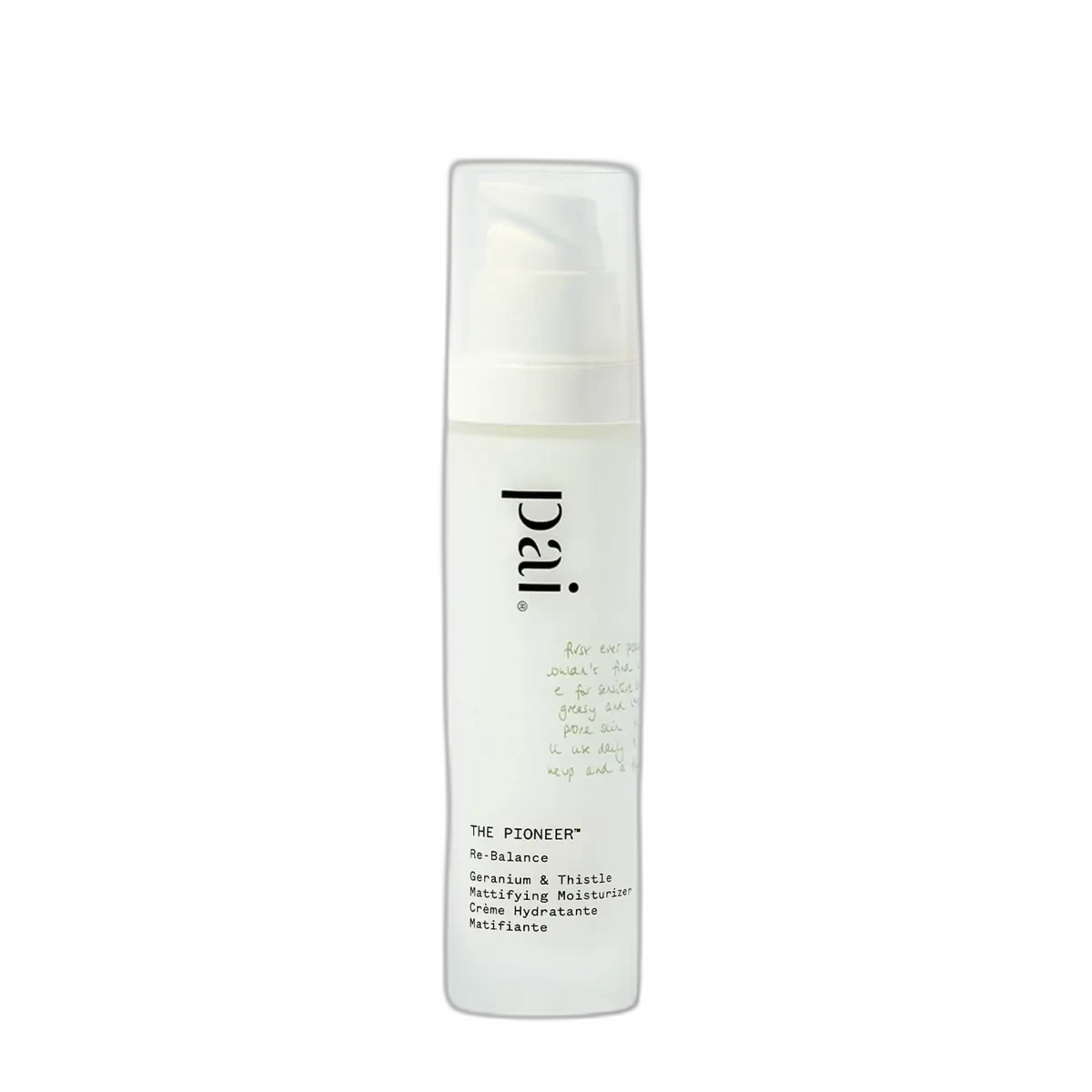
Geranium & Thistle Rebalancing Day Cream
Oily-Sensitive Skin Solution
 Verified reviewer
Pros & cons.
- +High-linoleic oil blend (safflower, borage, jojoba) works with oily skin's sebum chemistry rather than against it
- +Genuinely mattifying finish without silicones or synthetic mattifying agents
- +Certified COSMOS Organic with Leaping Bunny and Vegan Society credentials
- +Fills a genuine gap — very few organic moisturizers target oily-sensitive skin
- +Lightweight texture absorbs quickly and works well under makeup
- +Borage oil provides anti-inflammatory GLA alongside sebum-balancing benefits
- −Essential oil allergens present despite positioning for sensitive skin types
- −May not control oil sufficiently for very oily skin in hot, humid conditions
- −Premium price of $59 for a moisturizer with relatively simple active ingredients
- −Glass jar packaging is less hygienic than a pump dispenser
- −Not suitable for dry skin types — the lightweight formula won't provide enough emollience
The full review.
About Pai’s Geranium and Thistle Rebalancing Day Cream
Now rebranded as The Pioneer.
The organic skincare market has a clear bias. Check any clean beauty retailer and compare moisturizers for dry, sensitive skin against those for oily, sensitive skin. The ratio is about ten to one. Organic brands mostly use rich oils, heavy butters, and nourishing emollients. These work for dry skin but fail if your T-zone is oily by noon.
Pai’s Geranium and Thistle Rebalancing Day Cream, now rebranded as The Pioneer, targets this underserved group. It is a mattifying moisturizer made from certified organic ingredients. It hydrates combination and oily skin without the greasy feel of most natural moisturizers. It achieves this through fatty acid chemistry rather than silicones or synthetic mattifiers.
The formula uses three high-linoleic botanical oils: safflower (the thistle in the product name), jojoba, and borage. This choice is intentional. Research shows the sebum of oily and acne-prone skin has too much oleic acid and too little linoleic acid. This imbalance causes comedones and breakouts. By applying linoleic-rich oils, the cream uses the skin’s lipid chemistry to balance sebum composition. This is more effective than simply stripping oil away.
Borage oil is notable. It is a top botanical source of gamma-linolenic acid (GLA), an omega-6 fatty acid with anti-inflammatory properties. For oily skin that also experiences redness and irritation, GLA manages sebum and calms inflammation.
Texture
The texture proves the concept. Most organic moisturizers feel oily, but this one absorbs in under a minute to a matte finish. It is not the powdery, tight matte of a silicone primer; it is a natural, comfortable absence of shine. Skin feels hydrated without surface slickness. Makeup applies cleanly without the slip caused by residual oil.
Scent
Geranium essential oil provides the scent. Pelargonium graveolens gives a fresh, herbaceous-floral aroma that is brighter than the chamomile-forward Anthemis. Geranium oil also contains geraniol, which has mild antibacterial properties that support the cream’s blemish-prevention goal. It does not replace targeted acne treatment, but it adds microbial management.
The usual Pai debate regarding essential oils applies here. The product contains geraniol, citronellol, linalool, citral, and limonene. These occur naturally in the essential oil blend and require EU-mandated allergen declarations. These concentrations are harmless for most oily-sensitive skin users. However, people with oily skin and diagnosed contact dermatitis to these compounds still lack an organic option.
How to Use
Lemon fruit water replaces plain water in the aqueous phase. This adds mild vitamin C and a fresh feel, though the functional benefit at this position is mostly sensory.
Works for
This cream earns loyalty through long-term performance. Users report less visible pores and more balanced oil production within one to two weeks. Many see fewer blemishes at the three to four week mark. This likely results from linoleic acid normalization and hydration reducing compensatory sebum overproduction.
Price
At fifty-nine dollars for 1.7 ounces, this costs less than the Anthemis but remains in the premium category. The certification stack — COSMOS Organic, Leaping Bunny, Vegan Society, pregnancy safe — meets the same rigorous standards. One jar lasts two to three months. For oily-skinned consumers seeking organic skincare, this cream offers intelligence and integrity.
Ingredient analysis.
Full INCI list
Aqua, Citrus Limon Fruit Water, Carthamus Tinctorius Seed Oil, Simmondsia Chinensis Seed Oil, Glycerin, Cetearyl Alcohol, Borago Officinalis Seed Oil, Cetearyl Glucoside, Pelargonium Graveolens Flower Oil, Sodium Stearoyl Glutamate, Citrus Aurantium Amara Leaf/Twig Oil, Tocopherol, Lavandula Angustifolia Oil, Sodium Levulinate, Sodium Anisate, Sodium Dehydroacetate, Lactic Acid, Geraniol, Citronellol, Linalool, Citral, Limonene
Skin match.
The science.
The Science
Dermatological research has linked linoleic acid deficiency to acne for decades. A foundational study by Downing et al. (1986) in the Journal of the American Academy of Dermatology found that acne patients' sebum has significantly lower linoleic acid concentrations than non-acne controls. Later research confirms this deficiency causes follicular hyperkeratinization — a precursor to comedone formation.
Safflower (Carthamus tinctorius) seed oil contains about 75% linoleic acid, one of the highest plant concentrations. Applying linoleic acid-rich oils improves the linoleic acid content of skin surface lipids. A study in Clinical and Experimental Dermatology (1998) shows that topical linoleic acid application reduces comedone size by approximately 25% over one month.
Borage (Borago officinalis) seed oil has approximately 20-26% gamma-linolenic acid (GLA), the highest concentration of any seed oil. The body metabolizes GLA to dihomo-gamma-linolenic acid (DGLA), which produces anti-inflammatory prostaglandins (PGE1). A study in the British Journal of Dermatology shows that topical GLA application improves skin barrier function and reduces trans-epidermal water loss in subjects with impaired barrier function.
Jojoba oil's structural similarity to human sebum is well-documented. As a liquid wax ester instead of a triglyceride, it provides emolliency that signals sebaceous glands to moderate production. This 'sebum mimicry' helps prevent the compensatory overproduction caused by overly stripping skincare regimens.
Dermatologist Perspective
Dermatologists know oily and combination skin still needs moisturization — a concept many patients resist. Board-certified dermatologists note that dehydrated-oily skin often occurs when low water content triggers compensatory sebum overproduction. This formula's linoleic acid-focused approach aligns with dermatological understanding of acne-prone sebum composition. Dermatologists typically recommend this lightweight, non-comedogenic moisturizer alongside active acne treatments (benzoyl peroxide, salicylic acid, or retinoids) to maintain hydration and prevent the barrier compromise caused by aggressive acne regimens.
Where it fits in your routine.
Apply a thin layer to clean skin morning and evening, after serums. A small amount spreads easily; start with a pea-sized amount and add more if needed. The matte finish sets within 1-2 minutes, then you can apply sunscreen and makeup. In very humid weather, use this as the sole moisturizing step without additional serums.
At $59 for 1.7 fl oz, this premium moisturizer costs less than the Anthemis. One jar lasts 2-3 months using it twice daily, making the monthly cost $20-30. COSMOS organic certification, UK manufacturing, and clinical testing on sensitive skin drive the price. The specialized formulation justifies the cost for oily-sensitive skin types seeking organic moisturizers. Users wanting oil control without organic certification can find effective mattifying moisturizers for less.
Oily and combination skin types want a certified organic moisturizer that controls shine without silicones. It works for oily-sensitive skin often ignored by organic brands focused on dry skin. Normal skin can also use it as a lightweight daily moisturizer in warm weather.
Dry skin types needing more emolliency and occlusion. People with confirmed contact allergies to geraniol, linalool, or limonene. Very oily skin types in hot climates needing aggressive mattifying — this cream provides moderate oil control, not extreme.
Product details.
Lightweight, fast-absorbing cream with a soft matte finish. It is much lighter than the Anthemis — designed to feel like nothing on the skin while still delivering hydration.
Fresh, floral geranium notes pair with lavender and petitgrain. It is brighter and more herbaceous than the chamomile-forward Anthemis. The scent fades quickly.
Recyclable glass jar with Pai's minimalist design. Same format as the Anthemis but with green accenting to distinguish the product line.
Skin feels hydrated immediately without heaviness or greasiness. The matte finish shows within minutes of application. It causes no tingling or discomfort. Makeup applies smoothly over it.
2-3 months with twice-daily use
6 months
spring summer
The backstory.
Now rebranded as The Pioneer, this cream was Pai's answer to a gap in the organic skincare market: oily and combination skin types who also experience sensitivity. Most organic brands focus on nourishing dry skin with heavy oils and butters, leaving oily-sensitive consumers with few options. The Geranium and Thistle formula was designed to hydrate and rebalance without exacerbating oiliness or triggering reactive skin.
About Pai Skincare
Established Brand (5–20 years)Sarah Brown founded Pai Skincare in 2007 in London. The brand's range has COSMOS certification and undergoes clinical testing on sensitive skin. This product, also known as The Pioneer, targets combination and oily sensitive skin — a niche most sensitive-skin brands miss.
Common myths.
Oily skin doesn't need a moisturizer.
Oily skin can be dehydrated, meaning it lacks water despite overproducing oil. Skipping moisturizer triggers more sebum production to compensate. This cream's glycerin-and-oil formula provides hydration that signals the skin to reduce its own oil production over time.
Oils in a moisturizer will make oily skin worse.
The oil type matters. Safflower and borage oils have high linoleic acid levels. Research shows oily and acne-prone skin sebum is often deficient in linoleic acid. Adding linoleic acid helps normalize sebum composition and reduces breakouts.
FAQ.
Is the Pai Geranium & Thistle Cream good for acne?
The formula uses high-linoleic oils (safflower, borage, jojoba) that research shows can normalize sebum composition in acne-prone skin. Geranium oil provides mild antibacterial support. The cream is not a targeted acne treatment, but it maintains hydration without clogging pores, which can reduce blemish frequency over time.
Will this moisturizer make my oily skin more oily?
No — the formula uses high-linoleic oils designed for oily skin to match your sebum chemistry. Safflower oil has high linoleic acid levels, which research shows oily skin types lack. Replenishing this acid helps reduce excess sebum production. The finish is matte, not dewy.
Is the Pai Pioneer the same as the Geranium & Thistle Cream?
Yes — Pai rebranded the Geranium & Thistle Rebalancing Day Cream as The Pioneer. The formula is the same mattifying, rebalancing moisturizer for oily and combination sensitive skin.
Can I use this cream under makeup?
Yes — the lightweight, matte finish works well as a makeup primer for oily skin. It absorbs fast without a greasy film, and foundation applies smoothly without slipping or pilling.
Is the Pai Geranium & Thistle Cream pregnancy safe?
Yes — Pai confirms this product is pregnancy safe. It excludes retinoids and other common pregnancy ingredients, using COSMOS certified organic ingredients and a gentle preservation system.
What the community says.
"Controls shine without drying out the skin"
"Lightweight and absorbs quickly"
"Effective at reducing blemishes over time"
"Pleasant geranium scent"
"Good base under makeup"
"Contains essential oil allergens"
"May not be mattifying enough for very oily skin"
"Premium price for a moisturizer"
"Safflower and borage oils may not suit everyone"