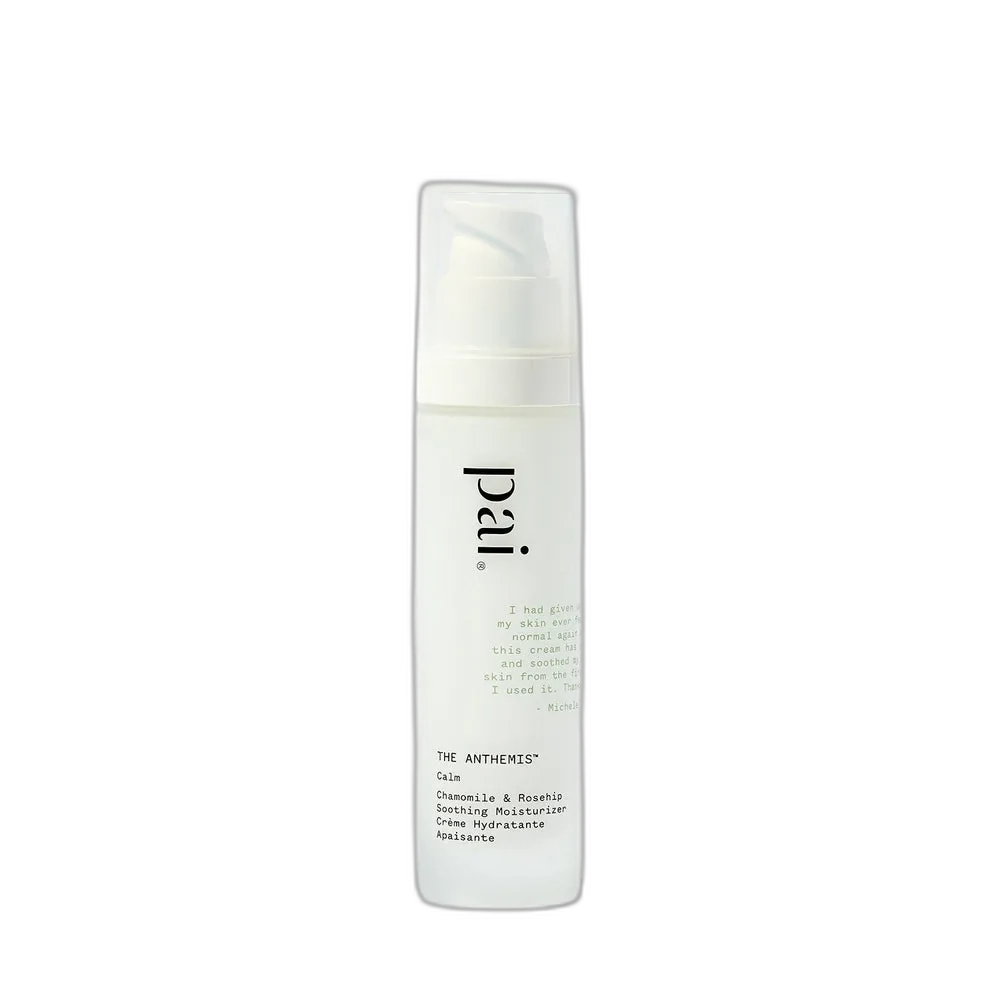
Calming Day Cream
Rosacea & Redness Rescue
 Verified reviewer
Pros & cons.
- +CO2-extracted chamomile preserves anti-inflammatory compounds lost in standard extraction methods
- +Clinically tested on sensitive skin with 24-hour hydration claim
- +Velvety texture melts into skin without greasiness and layers beautifully under sunscreen
- +COSMOS Organic certified with Leaping Bunny and Vegan Society credentials
- +Confirmed pregnancy safe with rigorous organic sourcing standards
- +Over 1,300 reviews with a 4.7-star average demonstrate consistent real-world performance
- −Premium price of $69 for 1.7 oz is significant for a daily moisturizer
- −Essential oil allergens (citronellol, geraniol, linalool) are present despite sensitive-skin positioning
- −Glass jar packaging lacks the hygiene benefits of an airless pump
- −May be too rich for oily skin types, particularly in warm weather
- −Limited US retail distribution compared to mainstream alternatives
The full review.
Pai began with a medical crisis rather than a business plan. When Sarah Brown developed chronic hives, her existing products caused stinging, burning, and increased redness. She created The Chamomile and Rosehip Calming Day Cream, now rebranded as The Anthemis, to solve her own skin issues. It remains Pai’s bestseller nearly two decades later. This longevity in the fast-moving clean beauty space shows the formula works.
The extraction method is the key. Most organic brands use steam-distillation or solvent extraction. Pai uses supercritical CO2 extraction for both the chamomile and rosehip. This more expensive process preserves heat-sensitive compounds. For chamomile, CO2 extraction retains matricine and chamazulene at natural concentrations. These blue-tinted compounds provide chamomile’s anti-inflammatory effects, but their bioactivity degrades under heat. For rosehip, CO2 extraction preserves the full spectrum of fatty acids, including omegas 3, 6, 7, and 9, plus traces of natural trans-retinoic acid—the same molecule as prescription tretinoin, but at cosmetic concentrations.
The base formula targets dry, sensitive skin. Apricot kernel oil and jojoba oil provide lightweight emolliency. Safflower seed oil adds linoleic acid for barrier support. Shea butter creates a thicker occlusive layer. Glycerin acts as the humectant. Orange fruit water replaces plain distilled water to add mild vitamin C and a gentle citrus scent. The base is well-executed.
Texture
The texture drives daily use. Despite the shea butter and oils, it feels neither heavy nor greasy. It melts on warm skin and spreads in a thin, velvety layer that absorbs within a minute. It leaves no shine, no film, and requires no waiting before sunscreen. It sits under makeup without pilling or sliding. Because it comes in a glass jar instead of an airless pump, the texture stays consistent from the first scoop to the last.
Common Praise
The calming effect shows after the first application. Skin that feels tight or irritated gets immediate relief; the heated feeling common with rosacea and eczema quiets down. Users consistently report less baseline redness over two to four weeks. This is not makeup coverage; it is a shift in the skin’s inflammatory state caused by the chamazulene in the CO2 chamomile extract.
Scent
The scent serves a purpose beyond aesthetics. A gentle chamomile note, with lavender and rose geranium, creates a calming experience that matches the product’s soothing identity. The scent is subtle enough to vanish within minutes but present enough to feel intentional.
Common Complaints
The lavender and rose geranium essential oils contain allergen compounds that EU regulation requires to list on the label: citronellol, geraniol, linalool, citral, and limonene. These trace amounts are harmless for most sensitive skin types. However, eczema patients with confirmed contact sensitivities to these specific molecules may find a product for their condition containing them frustrating. Pai uses minimal concentrations that most sensitive-skin customers tolerate, but it remains a factor for the small percentage who cannot.
Packaging
The certifications are rigorous: COSMOS Organic, Leaping Bunny, Vegan Society, and pregnancy safe. These require independent auditing. The product is clinically tested on sensitive skin and carries a 24-hour hydration claim. With over 1,300 reviews and a 4.7-star average, real-world validation is high.
Price
At sixty-nine dollars for 1.7 ounces, this is a premium moisturizer. The price covers the CO2 extraction, COSMOS certification, UK manufacturing, and clinical testing. One jar lasts two to three months with twice-daily use. For those with rosacea or chronic redness, the monthly cost of twenty-three to thirty-five dollars may feel like a bargain. For milder sensitivity, cheaper chamomile-based moisturizers exist, though few match this extraction quality and certification rigor.
Ingredient analysis.
Full INCI list
Aqua, Prunus Armeniaca Kernel Oil, Simmondsia Chinensis Seed Oil, Carthamus Tinctorius Seed Oil, Cetearyl Alcohol, Glycerin, Rosa Canina Seed Extract, Butyrospermum Parkii Butter, Citrus Aurantium Dulcis Fruit Water, Cetearyl Glucoside, Chamomilla Recutita Flower Extract, Sodium Stearoyl Glutamate, Rosmarinus Officinalis Leaf Extract, Tocopherol, Pelargonium Graveolens Flower Oil, Sodium Levulinate, Sodium Anisate, Lavandula Angustifolia Oil, Sodium Dehydroacetate, Lactic Acid, Citronellol, Geraniol, Linalool, Citral, Limonene
Skin match.
The science.
The Science
Chamomile (Matricaria chamomilla/Chamomilla recutita) is a top studied botanical anti-inflammatory agent in dermatology. Studies show its key bioactive compounds — chamazulene, alpha-bisabolol, and matricine — inhibit pro-inflammatory cytokines and reduce erythema. A 2000 study in the European Journal of Medical Research shows topical chamomile extract reduces inflammatory markers similarly to 0.25% hydrocortisone in humans.
Pai uses CO2 extraction because chamazulene is thermally labile and degrades during steam distillation. Supercritical CO2 extraction works at lower temperatures (31-40°C) to preserve the full phytochemical profile. This results in higher matricine and chamazulene concentrations than conventional chamomile extraction.
Rosa canina (rosehip) seed oil aids wound healing and skin regeneration. A 2015 randomized clinical trial in the Journal of Cosmetics, Dermatological Sciences and Applications shows rosehip oil improves skin elasticity, perceptual brightness, and appearance in subjects with facial photoaging. Its fatty acid profile — including alpha-linolenic acid (omega-3) and traces of trans-retinoic acid — supports the barrier and provides mild retinoid-like benefits.
Combining anti-inflammatory chamomile with regenerative rosehip addresses both symptoms (redness and irritation) and causes (barrier dysfunction and lipid deficiency) in rosacea and eczema-prone skin.
Dermatologist Perspective
Dermatologists often recommend chamomile-based moisturizers for rosacea and sensitive skin because bisabolol and chamazulene work as topical anti-inflammatory agents. Board-certified dermatologists note that CO2 extraction preserves bioactive compounds at higher concentrations than standard methods, affecting efficacy. For rosacea patients, dermatologists typically suggest this product as a daily moisturizer alongside prescription metronidazole or azelaic acid. The organic certification and lack of synthetic fragrances, preservatives, and silicones meet dermatological standards for barrier-compromised skin. Dermatologists specializing in contact dermatitis note the essential oil allergens but find concentrations well below typical sensitization thresholds.
Where it fits in your routine.
Warm a pea-sized amount between fingertips and press it into clean, slightly damp skin. Apply morning and evening as the last step before sunscreen (AM) or as the final step (PM). Layer it over hydrating serums for more moisture. A small amount spreads far; do not use too much. Close the jar tightly after each use to preserve the formulation.
At $69 for 1.7 fl oz, the Calming Day Cream is a premium organic moisturizer. One jar lasts 2-3 months using it twice daily, making the monthly cost $23-35. The CO2 extraction of both chamomile and rosehip is an expensive process most organic brands skip, which drives the price. COSMOS certification, clinical testing, and UK manufacturing also add to the cost. For rosacea and chronic redness sufferers who tried cheaper alternatives, the targeted formulation and positive reviews justify the cost.
People with rosacea, eczema, chronic redness, or reactive sensitive skin need a daily moisturizer that calms skin instead of just hydrating it. This works for anyone who wants certified organic formulations, cruelty-free standards, and pregnancy-safe ingredients.
Oily skin types needing a lighter, oil-free moisturizer. People with confirmed contact allergies to limonene, linalool, geraniol, or citral. Budget-conscious shoppers seeking effective chamomile moisturizers at lower prices, though these have less rigorous certification and extraction quality.
Product details.
Gentle, herbaceous chamomile notes feature subtle lavender and rose geranium undertones. This natural, calming scent dissipates within a few minutes of application.
Recyclable glass jar has a minimal, clean design. This matches Pai's understated branding.
The cream provides immediate comfort and soothing on first application. Tight or irritated skin feels relief within seconds. The cream warms on contact and spreads easily. It causes no stinging, tingling, or reactivity. The chamomile scent provides a calming sensory experience.
2-3 months with twice-daily use
6 months
All Year
The backstory.
Originally called the Chamomile & Rosehip Calming Day Cream, now rebranded as The Anthemis (Anthemis being the genus name for chamomile), this is one of Pai's original formulations and remains its most popular product. It was formulated specifically for the kind of reactive, redness-prone skin that founder Sarah Brown experienced herself — skin that needs moisture and calm in equal measure.
About Pai Skincare
Established Brand (5–20 years)Sarah Brown founded Pai Skincare in 2007 in London after she developed chronic hives. The entire Pai Skincare range is COSMOS organic certified and clinically tested on sensitive skin, and has Leaping Bunny and Vegan Society certifications. This specific product, also known as The Anthemis, is one of Pai's most popular formulations.
Common myths.
Organic moisturizers can't provide clinical-grade soothing for rosacea.
Chamomile's anti-inflammatory compounds, specifically chamazulene and bisabolol, reduce erythema and skin irritation. This CO2 extraction method keeps these compounds at higher concentrations than standard chamomile extracts. Clinical tests show the product provides 24-hour hydration.
Rich creams will clog pores and worsen combination skin.
This formula uses jojoba oil (a wax ester that mimics sebum) and safflower oil (high in linoleic acid) as primary non-comedogenic emollients. The cetearyl glucoside emulsifier is one of the gentlest available. Most combination skin types tolerate this cream well, though very oily skin may prefer a thinner texture.
What the community says.
"Instantly soothes redness and irritation"
"Rich yet non-greasy texture"
"Genuinely helps eczema and rosacea symptoms"
"Beautiful chamomile scent"
"Certified organic with rigorous standards"
"Expensive at $69 for a moisturizer"
"Essential oil allergens despite sensitive-skin claims"
"May be too rich for oily skin in summer"
"Limited availability at US retailers"