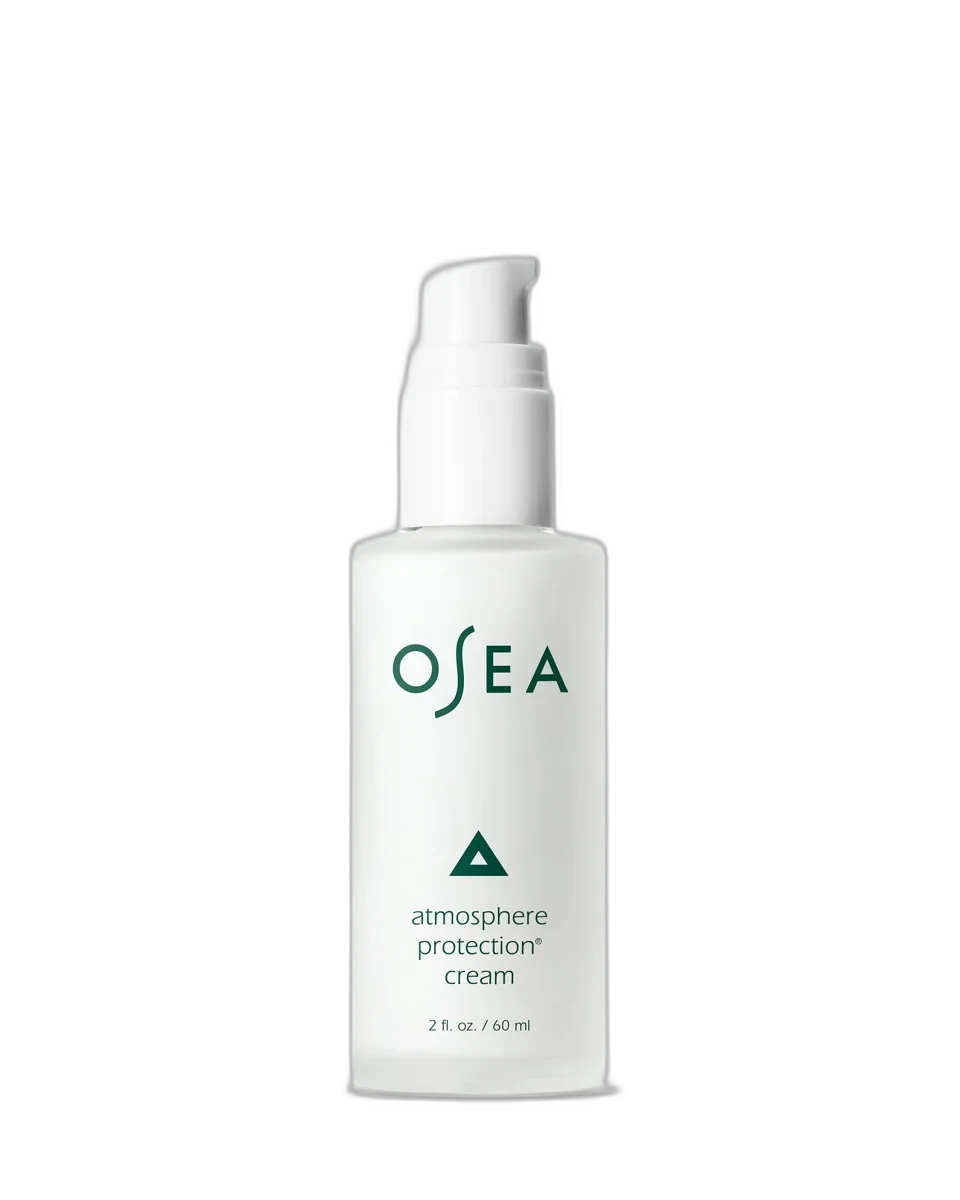
Atmosphere Protection Cream
Clean Daily Essential
 Verified reviewer
Pros & cons.
- +Unique anti-pollution amino acid complex chelates heavy metals and pollution particles
- +Dual seaweed extract system provides hydration and barrier-protective polysaccharide film
- +Lightweight, fast-absorbing texture works beautifully under sunscreen and makeup
- +Silicone-free, paraben-free, vegan formula with clean ingredient sourcing
- +Versatile enough for normal, combination, dry, and even oily skin types
- +Ginkgo biloba and vitamin E add multi-layered antioxidant defense
- −No SPF despite 'Protection' in the name — requires separate sunscreen
- −Contains essential oils that may irritate very sensitive or reactive skin
- −Lacks clinical powerhouse actives like retinoids or high-concentration vitamin C
- −Glass jar packaging exposes product to air and bacteria with each use
- −Some users find it insufficiently moisturizing for very dry skin types long-term
The full review.
We worry about UV damage, and we should. But air pollution is another simultaneous environmental assault that gets less attention. Particulate matter, heavy metals, and volatile organic compounds penetrate the skin, generate free radicals, and accelerate aging. Sunscreen blocks light, not particles, so it does nothing to prevent this. OSEA’s Atmosphere Protection Cream is one of few moisturizers built specifically to address this threat.
L-lysine lauroyl methionine drives this cream’s anti-pollution claims. This plant-derived amino acid complex has chelating properties. It binds to heavy metal ions and pollution particles on the skin surface, preventing the oxidative stress that breaks down collagen and causes premature aging. This differs from standard antioxidants, which neutralize free radicals after they form. Chelating works upstream, addressing pollutants before they trigger the damage cascade.
The seaweed extract—listed second in the INCI, same as in OSEA’s Advanced Protection Cream—provides hydration and barrier support. The dual algae system uses the brand’s signature extract and Laminaria algae to create a polysaccharide-rich film that hydrates and acts as a physical barrier against environmental particles. Ginkgo biloba adds antioxidant benefits via high flavonoid content, while vitamin E completes the protective shield.
Weight and versatility separate this cream from the Advanced Protection Cream in OSEA’s line. The Advanced Protection Cream is rich, oil-heavy, and best for dry skin, while the Atmosphere Protection Cream is lighter. The texture is almost whipped—it sinks into skin within seconds and leaves a smooth, matte-adjacent finish that works under sunscreen, makeup, or both. This makes it an everyday moisturizer rather than a treatment-night indulgence.
The supporting ingredients are solid. Macadamia oil, jojoba oil, and avocado oil provide essential fatty acids. Shea butter adds enough richness to nourish without heaviness. Calendula and chamomile extracts offer soothing, anti-inflammatory benefits. The clean ingredient list prioritizes skin comfort and environmental defense.
The limitation is what this cream lacks. At $54 for 2 ounces, you might expect clinical actives like retinoids, high-percentage vitamin C, or peptide complexes. This cream has none of those. Its value is environmental protection and daily hydration, not aggressive anti-aging correction. If you want visible wrinkle reduction or dramatic skin transformation, pair this with targeted serums; the cream is a protective daily base, not a results-driven treatment.
The absence of SPF is the other major factor, made obvious by the word “Protection” in the product name. This cream protects against pollution, not ultraviolet radiation. Use a dedicated sunscreen on top of this in the morning. OSEA does not make an SPF product, so you must look elsewhere for that step.
Lavender, geranium, and grapefruit essential oils are present but at lower levels than in OSEA’s body products. The scent is subtle and fades quickly. However, sensitive skin types should note the citrus essential oil, which can be a photosensitizer, and patch test.
At $54 for 2 ounces, the value is moderate—less expensive per ounce than OSEA’s Advanced Protection Cream and comparable to other prestige clean moisturizers. The lightweight formula means a little goes a long way; one jar lasts 2-3 months with twice-daily use. For the clean beauty consumer wanting a daily moisturizer that actively defends against environmental aging factors, this is one of the most thoughtfully designed options.
Ingredient analysis.
Full INCI list
Aqua, Algae Extract, Coco Caprylate/Caprate, Macadamia Ternifolia Seed Oil, Sorbitan Olivate, Cetearyl Glucoside, Butyrospermum Parkii (Shea Butter), Simmondsia Chinensis Seed Oil, Persea Gratissima Oil, Tocopherol (Vitamin E), Calendula Officinalis Extract, L-Lysine Lauroyl Methionine, Xanthan Gum, Laminaria Algae Extract, Ginkgo Biloba Leaf Extract, Chamomilla Recutita Flower Extract, Lavandula Angustifolia Oil, Pelargonium Graveolens Oil, Magnesium Aluminum Silicate, Citrus Grandis Peel Oil, Potassium Sorbate, Glycine
Skin match.
The science.
The Science
This formula uses L-lysine lauroyl methionine, a lipophilic amino acid derivative that chelates metals. Research shows amino acid-based chelators bind divalent metal ions, like those in combustion and industrial particulate matter. This stops them from catalyzing the Fenton reaction that creates hydroxyl radicals on the skin surface. This upstream method differs from traditional antioxidants, which neutralize free radicals after they form.
Epidemiological evidence links air pollution to skin aging. A 2010 study in the Journal of Investigative Dermatology by Vierkotter et al. showed that traffic-related particulate matter exposure associates with lentigines (age spots) and deep nasolabial folds, regardless of UV exposure. A 2016 study in the same journal confirmed pollution causes skin aging via oxidative stress and inflammatory pathways.
The dual seaweed system uses polysaccharides to form a hydrating, protective film on the skin surface. Research in Marine Drugs shows marine polysaccharides from brown and red algae form barriers and reduce transepidermal water loss (TEWL) against particulate matter.
Ginkgo biloba leaf extract contains flavonoids, mainly quercetin and kaempferol glycosides, which scavenge free radicals. Skin Pharmacology and Physiology published findings showing its antioxidant capacity protects against oxidative stress-induced cellular damage.
References
- Airborne Particle Exposure and Extrinsic Skin Aging — Journal of Investigative Dermatology (2010)
Dermatologist Perspective
Dermatologists recognize environmental pollution as a cause of extrinsic skin aging alongside UV exposure. Board-certified dermatologists note that anti-pollution skincare is a growing category backed by evidence linking particulate matter to skin aging. The chelating amino acid approach in this formula is a scientifically plausible mechanism for pollution-related skin damage, though the evidence for topical anti-pollution ingredients is less established than for sunscreens and retinoids. Dermatologists say this cream should complement, not replace, daily sunscreen use.
Where it fits in your routine.
Apply a dime-sized amount to clean skin after cleansing and serums, morning and evening. In the morning, layer a dedicated broad-spectrum sunscreen SPF 30+ on top — this cream does not provide UV protection. The lightweight texture absorbs quickly, allowing immediate application of sunscreen or makeup. For best environmental defense, reapply the cream if washing the face mid-day in heavily polluted environments.
At $54 for 2 ounces, this cream costs more than most clean beauty moisturizers. Twice-daily use over 2-3 months costs roughly $0.90-1.00 per application, matching prestige moisturizers with similar clean-ingredient commitments. The value comes from seaweed expertise and anti-pollution technology, not clinical-grade actives. The price is reasonable for users prioritizing environmental defense and hydration; for those seeking anti-aging correction, dedicated treatment serums provide more potency per dollar.
Urban dwellers facing daily air pollution who want a moisturizer that defends against environmental aging instead of just hydrating. It works for normal-to-combination skin types and anyone needing a lightweight daily cream that layers under sunscreen and makeup.
People with very dry skin needing thicker moisture can use OSEA's Advanced Protection Cream. Those sensitive to essential oils should patch test first. Users expecting clinical anti-aging results from the moisturizer alone should use it with targeted treatment serums.
Product details.
Lavender, geranium, and grapefruit essential oils provide a subtle botanical scent — softer and more understated than OSEA's body care line
Frosted glass jar with OSEA branding matches the brand's premium, eco-conscious aesthetic
The cream feels cool and lightweight on first application and melts into skin almost immediately. A faint botanical scent fades within a minute. Skin feels smooth and hydrated without tackiness or heaviness. It works under sunscreen without pilling.
2-3 months with twice-daily facial application
12 months
All Year
The backstory.
The Atmosphere Protection Cream was developed as OSEA's answer to the growing body of research linking urban air pollution to accelerated skin aging. While most anti-pollution skincare focuses on antioxidants alone, OSEA added L-lysine lauroyl methionine — a chelating amino acid that can bind to heavy metal particles — to create a moisturizer that actively addresses environmental damage rather than just reacting to it.
About Osea
Legacy Brand (20+ years)Jenefer Palmer founded OSEA in 1996 in Malibu, California, using three generations of women's knowledge of sea-based healing. Co-founder and CEO Melissa Palmer now leads the brand. OSEA has nearly 30 years of seaweed-centric formulation expertise and received a strategic investment from General Atlantic to expand globally.
Common myths.
Air pollution only affects skin in heavily industrialized cities.
Particulate matter, ozone, and volatile organic compounds exist in suburban and rural areas too. Indoor air quality also stresses skin via heating systems, cooking emissions, and off-gassing from furniture and materials.
'Atmosphere Protection' means this cream has SPF and protects against the sun.
This cream lacks UV filters or SPF. The 'protection' describes how the amino acid complex, seaweed extracts, and antioxidants defend against pollution and environmental stressors. You must apply a dedicated sunscreen over this cream for UV protection.
FAQ.
Does Osea Atmosphere Protection Cream have SPF?
No — despite the name 'Protection', this cream lacks UV filters or SPF. The protection comes from the chelating amino acid complex and antioxidant ingredients against pollution. Apply a dedicated sunscreen over this cream every morning.
What skin types is Osea Atmosphere Protection Cream best for?
This lightweight moisturizer works for normal, combination, and dry skin. The fast-absorbing, non-greasy texture works for oily skin in drier climates. Very dry skin needs a thick cream or oil on top for enough moisture.
Can I use Osea Atmosphere Protection Cream under makeup?
Yes — this is one of the cream's strengths. The lightweight, fast-absorbing texture creates a smooth base for sunscreen and makeup. It does not pill, feel greasy, or interfere with product adhesion.
How does Osea Atmosphere Protection Cream protect against pollution?
The formula uses L-lysine lauroyl methionine, a plant-derived amino acid complex. This ingredient chelates (binds to) heavy metals and pollution particles on the skin surface to stop oxidative damage. Ginkgo biloba, vitamin E, and seaweed polysaccharides add multi-layered environmental defense.
What is the difference between Osea Atmosphere and Advanced Protection Creams?
The Atmosphere Protection Cream costs $54 and has a lighter texture for daily environmental defense on all skin types. The Advanced Protection Cream costs $108; it is thicker, uses bio-retinol for anti-aging, and works best for dry and mature skin. The Atmosphere Cream is the everyday moisturizer; the Advanced Cream is the treatment-level option.
Community
What the community says.
"Lightweight texture that hydrates without feeling heavy"
"Excellent base under sunscreen and makeup"
"Skin looks more radiant and balanced with consistent use"
"Pleasant, subtle botanical scent"
"No SPF included despite protection-focused name"
"Essential oils may irritate very sensitive skin"
"Some users found it not moisturizing enough for very dry skin over time"
"Price is moderately high for 2 ounces"