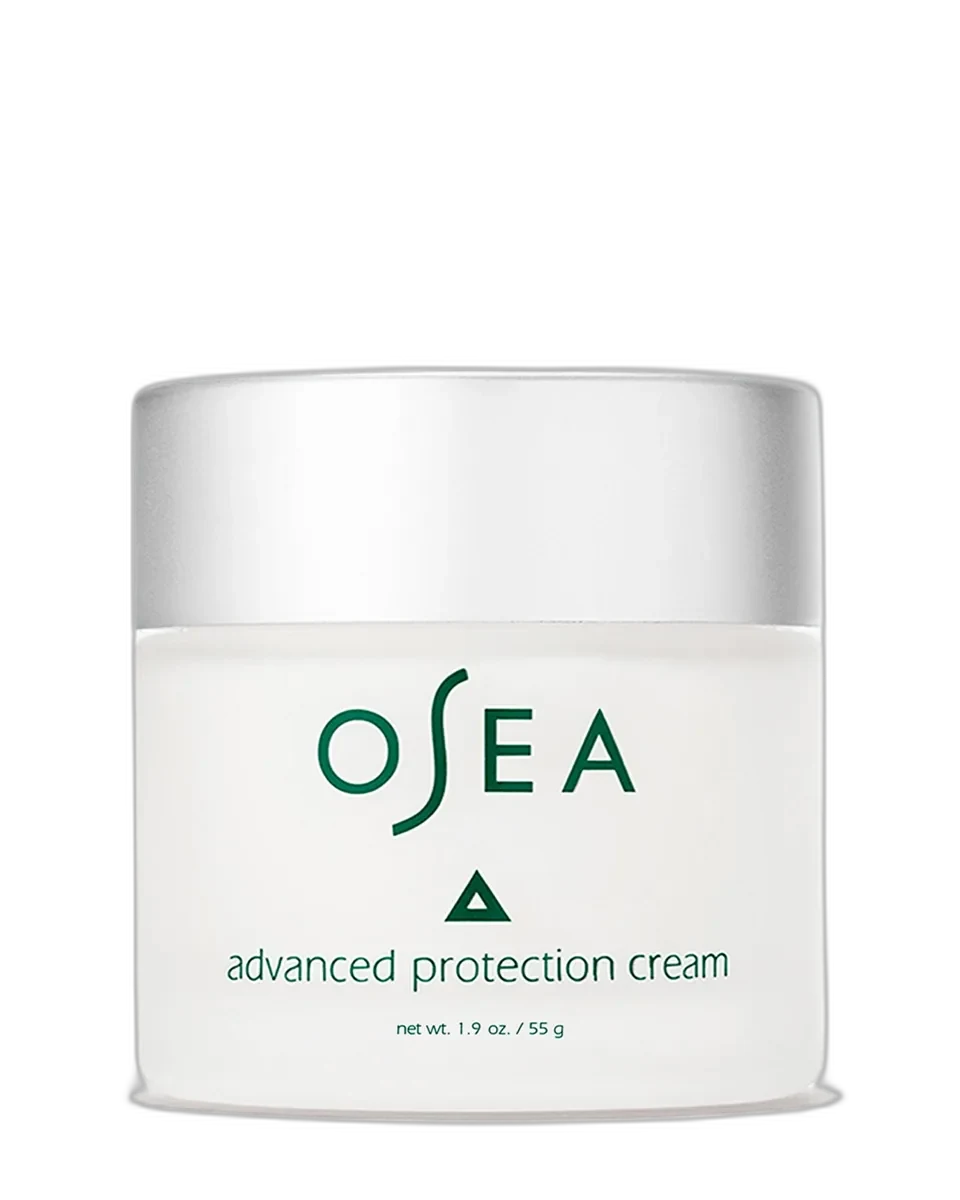
Advanced Protection Cream
Ocean-Powered Luxury
 Verified reviewer
Pros & cons.
- +Marine algae extract listed second in INCI — genuine active concentration, not token inclusion
- +Multiple certified organic botanical oils create a skin-identical lipid barrier complex
- +Silicone-free, paraben-free, vegan formula with Climate Neutral Certified status
- +Absorbs surprisingly quickly for a rich cream with a beautiful dewy finish
- +Bio-retinol alternative provides anti-aging benefits without retinoid irritation
- +Nearly 30 years of brand heritage and seaweed formulation expertise behind the formula
- −Steep $108 price for only 1.9 ounces of product
- −Contains lemon peel essential oil which can cause photosensitization
- −Too rich for oily or acne-prone skin types, especially in warm weather
- −Anti-aging claims rely on gentler actives that work more slowly than retinoids
- −Glass jar packaging exposes product to air and bacteria with each use
The full review.
Jenefer Palmer mixed seaweed into skincare in her Malibu kitchen in 1996, long before clean beauty became an Instagram hashtag or Sephora opened a dedicated clean aisle. Her daughter Melissa is now CEO. Nearly thirty years later, OSEA remains one of the few clean beauty brands that started this work before it was fashionable or profitable.
The Advanced Protection Cream is OSEA’s thickest, most treatment-oriented moisturizer. It follows the brand’s core thesis: marine algae extracts provide skin benefits that land-based botanicals cannot. Algae extract is the second ingredient, listed right after water, so the seaweed is not just a marketing addition. The Gigartina and Undaria seaweed blend delivers minerals, amino acids, and polysaccharides. OSEA’s clinical testing claims this blend increases skin hydration by 121% instantly. While instant hydration measurements often look flattering, the real-world results match: the cream makes skin feel plump and dewy after the first application.
The supporting ingredients function like a curated botanical pharmacy. Certified organic macadamia oil, grapeseed oil, jojoba oil, and avocado oil form a multi-lipid complex that mirrors the skin’s natural barrier. Olive-derived squalane adds another skin-identical emollient. Dipalmitoyl hydroxyproline handles the anti-aging claims; this biomimetic compound stimulates collagen synthesis pathways without the irritation of retinoids. It is a gentler, slower-acting alternative for those who find retinol too aggressive.
Potassium ascorbyl tocopheryl phosphate provides stabilized vitamins C and E for antioxidant protection. Calendula and chamomile extracts soothe and reduce inflammation. The formula is silicone-free, paraben-free, and uses almost entirely certified organic ingredients, which explains the price.
The texture is a major strength. Despite the high oil content, it absorbs faster than expected and leaves a dewy, luminous finish instead of a greasy film. The coco caprylate/caprate, a light emollient, helps the heavier botanical oils absorb into the skin rather than sitting on top. It feels immediately comforting on dry skin. For combination skin, it works well in winter but may feel too thick in summer humidity.
The citrus medica limonum peel oil—organic lemon essential oil—is a potential issue near the end of the ingredient list. Essential oils with limonene and linalool can cause photosensitization and contact irritation. The concentration seems low, and most users report no issues, but the cream is not fragrance-free even though it lacks synthetic fragrance. Sensitive skin types should patch test.
The value is complex. At $108 for 1.9 ounces, this is a luxury product. OSEA’s price reflects its sourcing: certified organic ingredients from traceable suppliers, seaweed from specific regions, and small-batch production in Malibu. These are real costs. However, the ingredient list lacks the powerhouse actives—like retinoids, high-concentration vitamin C, or peptide complexes—that usually justify triple-digit prices in results-oriented skincare. You pay for ingredient purity, sourcing ethics, and brand heritage alongside clinical efficacy.
For consumers who value clean, organic, silicone-free formulations and have dry-to-normal skin that responds to botanical oils and marine extracts, this cream is lovely. It does what it promises: it deeply hydrates, firms subtly over time, and leaves skin looking luminous and healthy. Whether it is worth $108 compared to a $40 moisturizer depends on how much you value the clean sourcing and the nearly thirty years of seaweed expertise.
Formula
Ingredient analysis.
Full INCI list
Aqua, Algae Extract (Certified Organic), Dipalmitoyl Hydroxyproline, Coco Caprylate/Caprate, Cetearyl Glucoside, Squalane (Olive), Glycerin, Aloe Barbadensis Leaf Juice (Certified Organic), Macadamia Ternifolia Seed Oil (Certified Organic), Vitis Vinifera Seed Oil (Certified Organic), Simmondsia Chinensis Seed Oil (Certified Organic), Capryloyl Glycine, Tocopherol (Vitamin E), Persea Gratissima Oil (Certified Organic), Carrageenan (Chondrus Crispus, Certified Organic), Undecylenoyl Glycine, Glycine, Calendula Officinalis Flower Extract (Certified Organic), Anthemis Nobilis Flower Extract (Certified Organic), Potassium Ascorbyl Tocopheryl Phosphate, Citrus Medica Limonum Peel Oil (Certified Organic), Xanthan Gum
Skin match.
The science.
The Science
Marine algae extracts, specifically Gigartina and Undaria species, form the base of this formula. Research in Marine Drugs documents the bioactive properties of brown and red seaweeds. Their polysaccharide fractions, fucoidans and carrageenans, provide moisturizing, anti-inflammatory, and antioxidant effects when applied topically. OSEA cites clinical testing showing a 121% increase in instant skin hydration, matching published research on how algal polysaccharides form hydrating films on the skin surface.
Dipalmitoyl hydroxyproline is a lipophilic derivative of hydroxyproline, an amino acid that makes up about 13% of the collagen molecule. In vitro studies show this ingredient stimulates collagen synthesis in human fibroblasts, making it a bio-retinol alternative. It is less potent than tretinoin or retinol for collagen stimulation, but it has zero irritation potential — an advantage for sensitive skin or those who cannot tolerate retinoids.
The multi-oil complex — macadamia, grapeseed, jojoba, avocado, and olive-derived squalane — provides a fatty acid profile that mimics the skin's natural lipid matrix. Macadamia oil has high palmitoleic acid content, a fatty acid that decreases in the skin with age. Jojoba oil uses a wax ester composition that resembles human sebum to integrate with the skin's existing barrier.
Potassium ascorbyl tocopheryl phosphate is a stabilized vitamin C and E complex. It provides antioxidant protection without the pH-dependent instability of pure ascorbic acid formulations. Research documents its efficacy as a topical antioxidant, though the unknown concentration in this formula makes its exact photoprotective benefit hard to quantify.
Dermatologist Perspective
Dermatologists see marine-derived ingredients as a growing research area, with studies supporting the hydrating and anti-inflammatory properties of seaweed polysaccharides. Board-certified dermatologists note this cream is a reasonable option for patients with dry or mature skin who prefer clean, plant-based formulations and cannot tolerate retinoids. However, dermatologists emphasize that the bio-retinol alternative in this formula is gentler but lacks the anti-aging magnitude of prescription retinoids or over-the-counter retinol. Some dermatologists flag the lemon peel essential oil as a potential photosensitizer, so users should use daily sunscreen with this product.
Where it fits in your routine.
Apply a pea-sized amount to clean skin after serums and treatments, morning and evening. Pat it gently onto the face and neck. Do not rub, as rubbing disrupts the delicate emulsion. Use a dedicated sunscreen SPF 30 or higher in the morning because this cream lacks UV protection. In dry climates or winter, layer a hydrating serum underneath for extra hydration. The thick formula means a little goes a long way; do not overapply.
At $108 for 1.9 ounces, this cream is a high-tier moisturizer. A 1 oz travel size exists for those who want to trial it first. The per-ounce cost is about $57 — premium by any standard. This price covers certified organic sourcing, small-batch Malibu production, and Climate Neutral certification. However, the active ingredient profile is clean and thoughtful, but lacks the high-potency clinical actives (retinoids, high-percentage vitamin C, advanced peptide complexes) that usually justify this price in results-driven skincare. You buy this cream for the ingredient quality and brand values, not for cutting-edge clinical performance.
This cream works for dry-to-normal skin types who want clean, organic, ocean-derived formulations and a thick anti-aging moisturizer without retinoids or synthetic ingredients. It suits mature skin and anyone who values brand heritage and sourcing transparency.
Oily and acne-prone skin types will find this too thick. Budget-conscious users can find comparable hydration for less. People sensitive to essential oils should patch test for the lemon peel oil. Those expecting retinoid-level anti-aging results should adjust expectations.
Product details.
Thick but lightweight cream melts into skin on contact. It leaves a dewy, luminous finish without oily residue.
Plant oils and seaweed extracts provide a subtle, natural botanical scent. This formula has no added synthetic fragrance, but essential oils mean it is not fragrance-free.
Glass jar with a screw-top lid matches OSEA's eco-conscious aesthetic and premium positioning
The cream feels thick but not heavy on first application; it absorbs faster than its creamy consistency suggests. Skin feels plumper and shows a noticeable glow immediately. Plant oils provide a subtle botanical scent that fades quickly. Most users experience no stinging or irritation.
2-3 months with twice-daily facial application
12 months
fall winter
The backstory.
The Advanced Protection Cream represents nearly three decades of OSEA's seaweed-centric formulation philosophy. Jenefer Palmer began mixing seaweed-based skincare in her Malibu kitchen in the 1990s, drawing on her grandmother's legacy as one of the first female chiropractors. This cream is the culmination of that heritage — the brand's richest, most treatment-oriented moisturizer designed for mature and dry skin.
About Osea
Legacy Brand (20+ years)Jenefer Palmer founded OSEA in 1996 in Malibu, California, based on three generations of women using sea-based healing. Co-founder and CEO Melissa Palmer now leads the brand. OSEA has nearly 30 years of seaweed-centric formulation expertise and received a strategic investment from General Atlantic to expand globally.
Common myths.
Seaweed in skincare provides no real skin benefits and is just a marketing gimmick.
Marine algae are among the most nutrient-dense natural ingredients. They contain minerals, amino acids, and polysaccharides that hydrate skin and support the barrier in cosmetic research. OSEA's use of Gigartina and Undaria species shows a 121% increase in skin hydration in clinical tests.
Clean beauty products do not match the anti-aging results of conventional formulations.
This cream uses dipalmitoyl hydroxyproline, a biomimetic collagen-supporting ingredient, with stabilized vitamins C and E and antioxidant-rich botanical oils. It lacks retinol, but these actives deliver anti-aging benefits—especially for those who cannot tolerate retinoids.
FAQ.
Does Osea Advanced Protection Cream have SPF?
No — this moisturizer lacks sunscreen protection. Apply a dedicated SPF 30 or higher sunscreen over this cream every morning. The vitamins C and E in the formula provide antioxidant photoprotection but do not replace sunscreen.
Is Osea Advanced Protection Cream good for sensitive skin?
Most sensitive skin users report good tolerance. The formula lacks synthetic fragrance, silicones, and parabens. However, lemon peel essential oil can cause irritation or photosensitivity in some people. Patch testing works best for very reactive skin.
What is the bio-retinol in Osea Advanced Protection Cream?
The bio-retinol is dipalmitoyl hydroxyproline, a plant-derived ingredient. It mimics collagen-building amino acids and stimulates collagen synthesis without the irritation of traditional retinol. This provides gentler anti-aging benefits for sensitive skin types who cannot tolerate retinoids.
How long does Osea Advanced Protection Cream last?
Using the 1.9 oz jar twice daily on the face and neck lasts 2-3 months. The thick formula requires only a pea-sized amount per application, so it lasts longer than the small jar size suggests.
Is Osea Advanced Protection Cream worth the price?
Value depends on your priorities. The certified organic ingredients, marine algae expertise, and clean formulation show genuine quality. However, the active ingredient profile is gentler than many clinical moisturizers at similar prices. This cream works for those who value ingredient purity and brand ethics alongside efficacy.
What the community says.
"Deeply hydrating without feeling heavy or greasy on the skin"
"Gentle enough for sensitive skin types"
"Quick absorption with a luminous, non-oily finish"
"Clinically proven 121% hydration increase"
"Steep price at $108 for under 2 ounces of product"
"May feel too rich for oily skin, especially in warm weather"
"Lemon peel oil may cause photosensitivity for some users"
"Scent from botanical oils may not appeal to everyone"