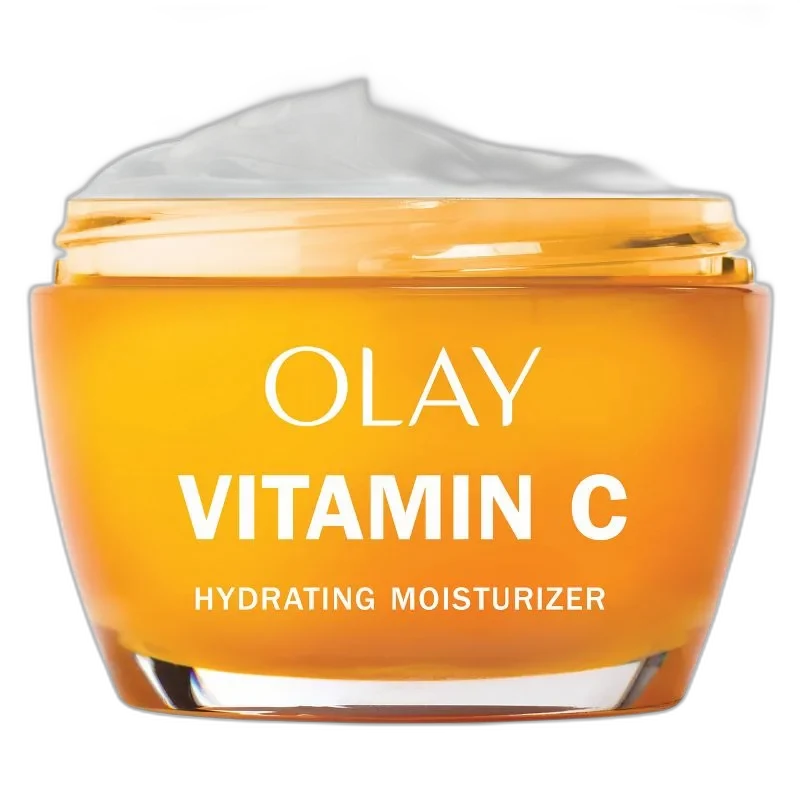
Regenerist Vitamin C + Peptide 24 Brightening Face Moisturizer
Drugstore Glow-Getter
 Verified reviewer
Pros & cons.
- +Four complementary brightening pathways attack dullness and hyperpigmentation through different mechanisms
- +Stabilized vitamin C derivative won't oxidize or turn orange in the jar like L-ascorbic acid formulas
- +Includes Matrixyl peptide for anti-aging benefits that go beyond simple brightening
- +Lightweight gel-cream texture absorbs instantly and layers beautifully under sunscreen
- +Lactic acid provides gentle exfoliation that accelerates visible brightening results
- +Paraben-free formula with niacinamide positioned high for meaningful concentration
- +Available in trial size for low-risk testing
- −Contains added fragrance — unusual for an Olay Regenerist product and unnecessary in a formula with acid
- −Ethyl ascorbic acid has a smaller evidence base than L-ascorbic acid for brightening
- −Jar packaging allows air exposure to the vitamin C with each use
- −Contains isopropyl isostearate which may be comedogenic for acne-prone skin
- −Not suitable for very sensitive skin due to combination of lactic acid and fragrance
The full review.
Vitamin C in skincare has a reputation problem. It isn’t about efficacy; it’s about the jar in your bathroom turning amber three weeks after opening. Pure L-ascorbic acid is the most clinically validated topical vitamin C, but it is unstable and oxidizes rapidly in air and light. This creates a poor consumer experience: you buy a product with proven ingredients, but the active degrades into something that stains skin yellow instead of brightening it.
Olay’s Vitamin C + Peptide 24 avoids this by using 3-O-ethyl ascorbic acid, a derivative in a more stable chemical configuration. The ethyl group attached to the ascorbic acid molecule protects it from oxidation, so the vitamin C in your last application stays as potent as the first. This choice prioritizes real-world performance over theoretical peak potency—the same philosophy behind the Retinol 24 line’s gentle approach to retinoids.
The trade-off is clinical depth. L-ascorbic acid has decades of peer-reviewed research at 10-20% concentrations. Ethyl ascorbic acid has a growing evidence base—studies confirm its tyrosinase inhibition (the enzyme pathway that produces melanin) and its antioxidant capacity—but the clinical literature is thinner. For a drugstore product designed to sit on shelves for months and work reliably, stability wins. For those chasing maximum-strength brightening backed by the deepest research, a properly formulated L-ascorbic acid serum remains the clinical gold standard.
The formula uses a multi-pathway approach to brightening. Vitamin C inhibits melanin production at the enzymatic level. Niacinamide—listed fourth in the ingredient list, suggesting a meaningful concentration—blocks melanin granule transfer from melanocytes to keratinocytes, a separate mechanism that compounds the vitamin C’s effect. Lactic acid provides gentle chemical exfoliation to remove pigmented surface cells. Finally, glycerin, panthenol, and trehalose provide hydration that makes skin look brighter by plumping it and improving light reflection.
Four mechanisms target the same outcome through different pathways. This sophisticated formulation strategy is rare at this price point. Most drugstore brightening products rely on one or two active approaches. Using four creates a compounding effect where each pathway enhances the others.
The inclusion of Palmitoyl Pentapeptide-4 adds an anti-aging dimension. The peptide’s collagen-stimulating activity, combined with the vitamin C’s antioxidant protection and niacinamide’s barrier support, addresses overall skin quality rather than just melanin control. Dull skin involves texture, hydration, and firmness, and this formula touches all three.
Texture
The texture is a major strength. This gel-cream absorbs almost instantly, leaving a dewy, non-greasy finish that works under sunscreen and makeup. It lacks the thick, occlusive heaviness found in some brightening creams. As a morning moisturizer—the primary use case given the vitamin C’s antioxidant daytime benefits—the lightweight, fast-absorbing quality is ideal.
Scent
The fragrance is the main issue. Every other Regenerist sub-line—Retinol 24, Collagen Peptide 24—is fragrance-free. This one is not. The light citrus scent is pleasant, but adding fragrance to a formula with lactic acid (an exfoliant that can sensitize skin) and a vitamin C derivative is counterintuitive. Fragrance is a common cause of contact dermatitis. Adding it to a product with mild irritation potential suggests a choice driven by consumer research regarding citrus scents rather than formulation best practices.
For most users, the fragrance won’t cause issues. But for the fragrance-sensitive subset—which overlaps with the ‘sensitive skin concerned about hyperpigmentation’ demographic this product targets—it is an unnecessary hurdle. If Olay reformulates this product, removing the fragrance would be the most impactful change.
Packaging
The jar packaging carries the same stability concerns as any open-container vitamin C product, though the ethyl ascorbic acid derivative is more forgiving of air exposure than L-ascorbic acid. The opaque container blocks light effectively. However, a pump would be better.
Common Praise
Brightening results follow a clear trajectory in daily use. Week one delivers improved radiance through hydration and light-reflecting effects. By weeks two and three, skin tone looks more even. At four weeks, dark spots and hyperpigmentation show measurable improvement, aligning with Olay’s ‘28-day’ clinical claim. These are not dramatic transformations, but consistent use produces visible cumulative effects.
Best for
At roughly $29 for 1.7 ounces, the value is strong. A trial size (0.5 oz) is available for testing. The multi-active formula—vitamin C, niacinamide, lactic acid, Matrixyl, panthenol—delivers more active brightening pathways than drugstore competitors at similar prices. The question isn’t whether this moisturizer is worth $29, but whether the fragrance should have been included.
Ingredient analysis.
Full INCI list
Water, Glycerin, Isohexadecane, Niacinamide, Dimethicone, Lactic Acid, Isopropyl Isostearate, Sodium Polyacryloyldimethyl Taurate, Stearyl Alcohol, 3-O-Ethyl Ascorbic Acid, Palmitoyl Pentapeptide-4, Panthenol, Sodium Lactate, Trehalose, Cetearyl Glucoside, Cetearyl Alcohol, Behenyl Alcohol, Cetyl Alcohol, Stearic Acid, Palmitic Acid, Dimethiconol, PEG-100 Stearate, Sodium Benzoate, Fragrance.
Skin match.
The science.
The Science
3-O-Ethyl ascorbic acid is a stable, lipophilic L-ascorbic acid derivative that researchers study more frequently. A 2021 study in the journal Cosmetics examined a serum with 3-O-ethyl ascorbic acid and found it reduced UV-B-induced DNA damage, inhibited melanin synthesis, and increased collagen production in human skin cell models. Because 3-O-ethyl ascorbic acid is lipophilic, it penetrates lipid-based cell membranes better than water-soluble L-ascorbic acid.
Research in Free Radical Biology and Medicine shows 3-O-ethyl ascorbic acid has anti-melanogenic effects through Nrf2-mediated pathways. It inhibits melanin production using a mechanism different from simple tyrosinase inhibition. This means the derivative hits multiple points in the pigmentation cascade, supporting this formula's multi-pathway brightening strategy.
Niacinamide's brightening effect is well-documented. Hakozaki et al. published in the British Journal of Dermatology (2002) that topical niacinamide significantly decreased hyperpigmentation by inhibiting melanosome transfer. This mechanism complements the vitamin C's melanin production inhibition. In this formula, the two actives target different stages of the melanin pathway.
Lactic acid's role is well-established: as an alpha-hydroxy acid, it accelerates stratum corneum desquamation to remove cells containing melanin deposits. Combined with the vitamin C and niacinamide preventing new pigment, this creates a 'push-pull' effect — the formula removes old pigment faster while new pigment forms more slowly.
Palmitoyl Pentapeptide-4 (Matrixyl) stimulates collagen through a mechanism independent of the brightening pathways, providing structural improvement alongside pigmentation control.
References
- The Anti-Ageing and Whitening Potential of a Cosmetic Serum Containing 3-O-ethyl-l-ascorbic Acid — Cosmetics (2021)
- Topical Vitamin C and the Skin: Mechanisms of Action and Clinical Applications — Journal of Clinical and Aesthetic Dermatology (2017)
Dermatologist Perspective
Board-certified dermatologists know stable vitamin C derivatives solve a major problem: product degradation. Dermatologists note that while L-ascorbic acid has the strongest clinical evidence, a stable derivative that stays active throughout the product's shelf life delivers more consistent results than an L-ascorbic acid product that oxidizes before the jar is finished. The combination with niacinamide and lactic acid is a multi-mechanism approach to hyperpigmentation. However, dermatologists note that adding fragrance to a formula containing an exfoliating acid is not ideal for patients with fragrance sensitivity or reactive skin.
Where it fits in your routine.
Apply a nickel-sized amount to clean, dry skin every morning before sunscreen. The cream absorbs in 30 seconds and creates a smooth base for SPF application. Use it in the evening if you do not use retinol or other exfoliating products. First-time users should patch test a small area for 2-3 days to rule out fragrance sensitivity.
At approximately $28.99 for 1.7 oz, this multi-active brightening moisturizer offers high ingredient complexity for the price. The four-pathway brightening approach — vitamin C derivative, niacinamide, lactic acid, and Matrixyl peptide — uses a strategy common in $50-80 products. A 0.5 oz trial size is available for testing. Daily use costs roughly $10-15 per month, making it one of the most affordable multi-active brightening moisturizers from a brand backed by P&G's formulation research.
This works for anyone with dull, uneven skin tone seeking a multi-functional brightening moisturizer. It suits people frustrated by vitamin C products that oxidize too fast and budget-conscious users wanting a multi-active brightening formula without prestige pricing.
Skip this if you are sensitive to fragrance; the added scent is unnecessary and can cause irritation. This is also not the best choice for very sensitive skin or active eczema, as the lactic acid can worsen these conditions. For maximum-strength vitamin C, a dedicated L-ascorbic acid serum delivers more potent results.
Product details.
The light gel-cream absorbs fast and leaves no sticky or greasy residue. The fragrance has a subtle citrus quality that fades within minutes.
Light citrus fragrance. Note: this product is NOT fragrance-free, unlike the Retinol 24 and Collagen Peptide 24 lines.
An opaque orange-gold jar with a twist-off lid belongs to the Vitamin C + Peptide 24 collection design. The opaque container protects the vitamin C from light, but the jar format exposes it to air every time you use it.
The first application gives an immediate hydrated, dewy glow from the glycerin, panthenol, and light-reflecting properties. Most users feel no tingling or irritation from the lactic acid. The citrus scent is subtle. Brightening results build over days and weeks; most users see a visible difference in radiance by the second week.
2-3 months with daily application
12 months
All Year
The backstory.
The Vitamin C + Peptide 24 collection was Olay's entry into the vitamin C brightening category, which had been dominated by serum-focused brands charging premium prices. Olay's approach was to use a stabilized vitamin C derivative (3-O-ethyl ascorbic acid) that wouldn't oxidize and turn orange in the jar — solving the shelf-stability problem that makes many vitamin C products unpredictable for mass-market retail.
About Olay
Legacy Brand (20+ years)Procter & Gamble owns Olay, which launched in 1952. The Regenerist line is among the most tested mass-market anti-aging ranges globally. The Vitamin C + Peptide 24 collection uses Olay's proprietary peptide research and a stabilized vitamin C derivative.
Common myths.
Vitamin C and niacinamide cancel each other out; do not combine them.
A 1960s study created this myth using conditions (high heat, extreme pH) that do not exist on skin. Modern formulations like this one combine these two ingredients, and multiple studies show they work well together. Niacinamide complements vitamin C's brightening effect through a different mechanism.
Only L-ascorbic acid works as a vitamin C in skincare — all derivatives are useless.
3-O-ethyl ascorbic acid is a stable vitamin C derivative. It works without the low pH environment L-ascorbic acid needs. L-ascorbic acid has more evidence, but peer-reviewed studies show ethyl ascorbic acid inhibits tyrosinase and has antioxidant activity. The trade-off is stability versus clinical depth of evidence.
FAQ.
Does Olay Vitamin C + Peptide 24 actually brighten skin?
Yes — the formula uses four brightening pathways: ethyl ascorbic acid (inhibits melanin production), niacinamide (blocks melanin transfer), lactic acid (exfoliates pigmented surface cells), and hydration that improves skin's light-reflecting properties. Olay's clinical data shows 2x brighter skin in 28 days compared to a basic moisturizer.
Is this moisturizer fragrance-free?
No — unlike Olay's Retinol 24 and Collagen Peptide 24 lines, this product has added fragrance. Fragrance-sensitive skin users can use the fragrance-free options in Olay's other Regenerist collections.
Can I use this with retinol?
Yes, but separate them by time of day. Use this vitamin C moisturizer in the morning to add antioxidant protection alongside sunscreen, and use your retinol product at night. This AM/PM split maximizes benefits for both ingredients and minimizes irritation.
Is ethyl ascorbic acid as good as regular vitamin C?
3-O-ethyl ascorbic acid is more stable than L-ascorbic acid and won't oxidize or turn brown in the jar. Research shows it has tyrosinase inhibition and antioxidant activity, but it has less clinical evidence than L-ascorbic acid. You trade clinical validation for better shelf stability.
Can I use this if I have sensitive skin?
Use caution — lactic acid, vitamin C, and fragrance may irritate very sensitive skin. If your skin is reactive, patch test a small area for a few days before full-face use. Olay's fragrance-free Collagen Peptide 24 line is a gentler alternative for sensitive skin types.
Do I still need sunscreen if this has vitamin C?
Vitamin C is an antioxidant, not a sunscreen. It adds protection against free radical damage but does not block UV rays. The lactic acid in this formula also increases photosensitivity. Apply broad-spectrum SPF 30+ over this moisturizer every morning.
What the community says.
"Noticeable brightening and glow within the first few weeks"
"Light, non-greasy texture that absorbs quickly"
"Skin looks more radiant and even-toned with consistent use"
"Pleasant citrus scent"
"Contains added fragrance which may irritate sensitive skin"
"Some users notice no brightening effect on darker hyperpigmentation"
"Light scent may be off-putting for fragrance-free purists"
"Jar packaging exposes vitamin C to air"