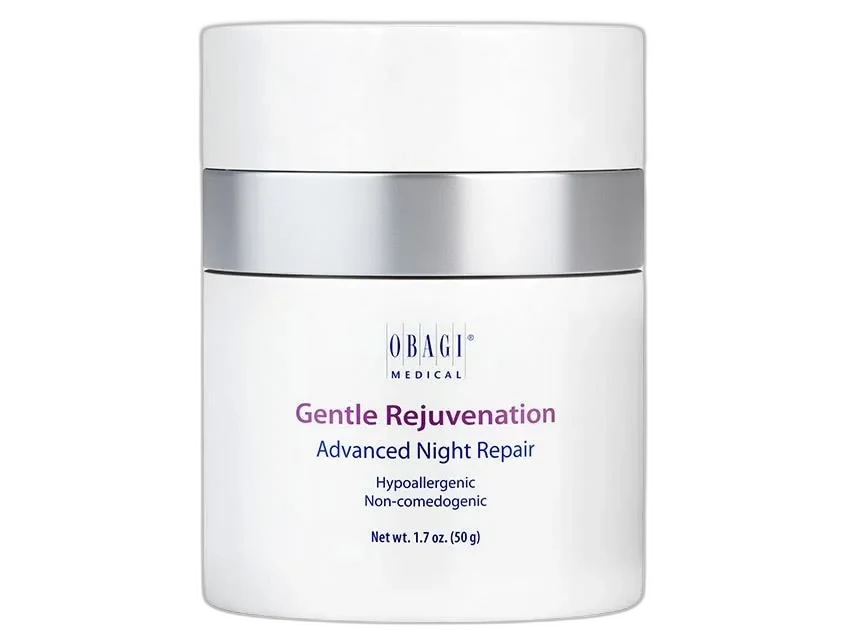
Gentle Rejuvenation Advanced Night Repair
Sensitive Skin Night Repair
 Verified reviewer
Pros & cons.
- +Kinetin-zeatin complex provides anti-aging benefits without the irritation of retinoids or acids
- +Clinical trial data showing 86% improvement in roughness and 80% reduction in rosacea symptoms
- +Three ceramides with cholesterol and phytosphingosine in a barrier-repairing lipid ratio
- +Prosome sustained-release delivery works over 12 hours during the overnight repair window
- +Fragrance-free hypoallergenic formula specifically validated for sensitive and rosacea-prone skin
- +Ergothioneine provides sophisticated mitochondrial-level antioxidant protection
- +Lightweight texture absorbs quickly without heaviness or greasiness
- −Product has been discontinued by Obagi making it increasingly difficult to find
- −At 02 per jar it sits at a premium price point even for clinical-grade night creams
- −Results require consistent use over 8-12 weeks to fully materialize
- −Not intensely moisturizing enough for very dry skin in harsh winter conditions
- −Limited independent validation beyond Obagi's own clinical trials
The full review.
There is a frustrating gap in skincare that dermatologists know well: the patient who needs anti-aging intervention but whose skin cannot tolerate it. Retinoids cause flaring. AHAs trigger burning. Even vitamin C at standard concentrations can send reactive, rosacea-prone skin into a spiral of redness and irritation. For years, the advice for these patients was essentially to moisturize and wait — or to endure the irritation period and hope the barrier eventually adapts.
Obagi’s Gentle Rejuvenation Advanced Night Repair was built to fill that gap, and for the patients who found it, it was something close to a revelation.
The formula centers on kinetin and zeatin — two cytokinins, plant growth factors originally studied for their ability to delay senescence in plant cells. When researchers turned their attention to human skin, they found something genuinely interesting: kinetin demonstrated the ability to reduce signs of photoaging — roughness, fine lines, hyperpigmentation — with minimal to no irritation. It was not as aggressive as retinol, not as dramatic as prescription tretinoin. But for skin that could not handle either, it offered a third path.
Obagi paired the kinetin-zeatin duo with their Prosome Delivery System — a liposomal encapsulation that releases the cytokinins gradually over approximately 12 hours. This is not marketing theater; sustained release is a well-established pharmaceutical approach, and applying it to a night cream means the active ingredients work throughout the overnight repair window rather than dumping their payload in the first hour and declining.
The supporting cast is where this formula truly distinguishes itself from simpler night creams. Three ceramides — NP, AP, and EOP — are included alongside cholesterol and phytosphingosine, recreating the physiological ratio of lipids found in a healthy skin barrier. This is the same structural approach used in CeraVe’s ceramide complex, and for good reason: research consistently shows that this trio, in the correct ratio, is among the most effective ways to repair and maintain barrier function. For rosacea-prone skin, where the barrier is almost always compromised, this is not a luxury — it is a necessity.
Palmitoyl tripeptide-5 adds a collagen-stimulating dimension, mimicking the body’s own TGF-beta signaling pathway. And ergothioneine — a rare mushroom-derived amino acid antioxidant — provides mitochondrial-level protection against oxidative stress. It is a sophisticated ingredient that you do not see in many night creams, and its inclusion here signals that someone was thinking carefully about what aging skin actually needs at the cellular level.
The clinical trial data, while limited in scope, is compelling. An 86% improvement in roughness is a meaningful outcome for any topical product. But the 80% reduction in rosacea symptoms over 12 weeks is the more remarkable claim — it positions this night cream as one of the very few anti-aging products with validated benefits for reactive skin. That is a claim most brands would not dare to make, and Obagi backed it up with trial data.
On the skin, the cream delivers an experience that matches its clinical positioning. It is lightweight for a night cream — not the thick, blanket-like consistency that many overnight products default to. It spreads easily, absorbs within a minute or two, and leaves a velvety finish that feels comfortable without suffocating. There is no fragrance, no tingling, no sensory indication that active ingredients are at work. For people accustomed to equating sensation with efficacy, this quiet performance might seem underwhelming. For people whose skin panics at the first sign of an active, the silence is the whole point.
Sweet almond oil and jojoba esters provide the emollient base, with glycerin and saccharide isomerate handling the humectant duties. Saccharide isomerate is an underappreciated ingredient — it actually binds to the skin’s keratin, creating a persistent moisture reservoir that outlasts typical humectants. This means the hydration you feel at night is still detectable by morning, which is more than many richer-feeling night creams can honestly claim.
The price, at 02 for 1.7 ounces, is premium but not unreasonable for the level of formulation sophistication on display. The ceramide complex alone would be respectable at this price point; adding the kinetin-zeatin technology, sustained-release delivery, and clinical trial validation creates a package that at least attempts to earn the asking price. It is not drugstore value, but it is not empty luxury either.
And then Obagi discontinued it. The Gentle Rejuvenation line has been quietly retired, with the Hydrate Luxe recommended as a replacement — a product that shares some moisturizing qualities but lacks the kinetin-zeatin complex and Prosome technology that made this cream unique. For loyal users, the discontinuation was a genuine loss.
Remaining stock can still be found through some authorized retailers and online sellers. If you have reactive, rosacea-prone, or sensitized skin and you have struggled to find an anti-aging night cream that does not trigger your skin, this is worth seeking out while supplies last. It solved a real clinical problem with genuine formulation intelligence, and the skincare market has not yet produced a clear successor.
Formula
Ingredient analysis.
Full INCI list
Water (Aqua), Prunus Amygdalus Dulcis (Sweet Almond Oil), Saccharide Isomerate, Cetyl Alcohol, Capric/Caprylic Triglyceride, PEG-20 Methyl Glucose Sesquistearate, PEG-12 Glyceryl Dimyristate, Glycerin, Methyl Glucose Sesquistearate, Jojoba Esters, Carbomer, Triethanolamine, Caprylyl Glycol, Phenoxyethanol, Ethoxydiglycol, Tocopheryl Acetate, Cholesterol, Hexylene Glycol, Kinetin, Zeatin, Tetrasodium EDTA, Allantoin, BHT, Sodium Lauroyl Lactylate, Palmitoyl Tripeptide-5, Ceramide NP, Ceramide AP, Phytosphingosine, Xanthan Gum, Sodium Hyaluronate, Ergothioneine, Ceramide EOP.
Skin match.
The science.
The Science
Researchers have studied Kinetin (N6-furfuryladenine) for anti-aging since the late 1990s. A 1999 study in the Journal of Investigative Dermatology by Rattan and Clark shows Kinetin delays several cellular aging signs in human skin fibroblasts, such as morphological changes and lipofuscin accumulation. This research started topical Kinetin use.
A 2004 clinical trial in the Journal of Cosmetic Dermatology used 0.1% topical Kinetin in a double-blind study. It found skin texture, fine wrinkles, and pigmentation improved after 24 weeks, with less irritation than retinol at similar efficacy levels. This mild side-effect profile suits patients with rosacea or reactive skin.
The ceramide complex in this formula — NP, AP, and EOP alongside cholesterol and phytosphingosine — uses the skin-identical lipid approach. Imokawa et al. published research in the Journal of Investigative Dermatology (1991) showing ceramide depletion drives barrier dysfunction. Replacing these specific ceramide species in their physiological ratio restores barrier function better than individual ceramides alone.
Palmitoyl tripeptide-5 stimulates collagen production via TGF-beta activation. Research in the International Journal of Cosmetic Science (2009) documented its ability to increase type I collagen synthesis in vitro, supporting its use in anti-aging formulations for skin firmness.
References
- Kinetin delays the onset of ageing characteristics in human fibroblasts — Biochemical and Biophysical Research Communications (1994)
Dermatologist Perspective
Board-certified dermatologists note Kinetin-based products fill a clinical niche for patients who cannot tolerate standard anti-aging actives. Dermatologists often see patients — especially those with rosacea, eczema, or post-procedure sensitivity — who need gentle alternatives to retinoids and chemical exfoliants. The clinical trial data showing rosacea symptom reduction is compelling to dermatologists, as few over-the-counter night creams show benefits for this condition. The ceramide complex adds proven barrier repair that dermatologists consider essential for compromised skin types.
Guidance
Where it fits in your routine.
Apply a small amount to clean, dry skin every evening as your final nighttime step. Massage it into your face, neck, and decolletage. The Prosome delivery system works overnight as kinetin and zeatin release gradually over 12 hours. Use it every night for best results. Layer it over retinol or other treatment serums if you tolerate them.
At 02 for 1.7 oz, this cream is priced in the upper range for night moisturizers, but the formulation complexity justifies the premium more than many products at this price point. The combination of kinetin-zeatin technology, a Prosome sustained-release delivery system, a three-ceramide barrier complex, peptides, and ergothioneine represents genuine formulation investment. The clinical trial data adds value that most competitors at this price cannot demonstrate. With discontinuation, availability is becoming an issue.
This night cream targets sensitive, rosacea-prone, or reactive skin. It provides anti-aging benefits without the irritation from retinoids and acids. It works for anyone who cannot tolerate conventional anti-aging products but wants evidence-based ingredients working overnight.
Oily skin types may find the emollient base too thick for nightly use. Users seeking rapid, dramatic results should use retinoid-based options instead — kinetin is gentler but works slower. This is a premium product for budget-conscious shoppers, and those wanting guaranteed long-term availability should consider in-production alternatives.
Product details.
All Year
The backstory.
The Gentle Rejuvenation line was Obagi's answer to a real clinical gap: patients who needed anti-aging intervention but whose skin — whether due to rosacea, sensitivity, or prior irritant overuse — could not tolerate retinoids, AHAs, or other conventional aging treatments. Kinetin, a plant growth factor originally studied for its anti-aging properties in the early 2000s, offered a gentler alternative. Though the product has since been discontinued, it remains sought after by patients who found it uniquely compatible with reactive skin.
About Obagi
Legacy Brand (20+ years)Dr. Zein Obagi, a board-certified dermatologist and skin health restoration pioneer, founded Obagi Medical in 1988. Dermatologist offices and medical spas widely distribute the brand. Decades of clinical use back its prescription-grade and OTC product lines.
Common myths.
Plant growth factors in skincare work like human growth factors.
Kinetin and zeatin are cytokinins, which are plant hormones that regulate plant cell division. In human skin, they act as antioxidants and mild cell-turnover promoters rather than true growth factors. The mechanism differs, but clinical outcomes show reduced roughness and improved texture.
Discontinued products are no longer effective or safe.
Discontinuation stems from business decisions, not safety concerns. Stock from authorized retailers is identical to what launched. The formula stays stable within its shelf life and PAO period.
FAQ.
Has the Obagi Gentle Rejuvenation Advanced Night Repair been discontinued?
Obagi discontinued this product. Authorized retailers and online sellers may still have stock. Obagi recommends the Hydrate Luxe Moisture-Rich Cream as an alternative, but it lacks the kinetin-zeatin complex that made this product unique.
Is this night cream safe for rosacea-prone skin?
Yes — clinical trials show an 80% reduction in rosacea symptoms after 12 weeks of use. The fragrance-free, hypoallergenic formula uses kinetin and ceramides for reactive skin. This makes it one of the few anti-aging night creams clinically validated for rosacea-prone skin types.
***
What does the Prosome Delivery System do?
Obagi's Prosome Delivery System uses liposomal carriers to encapsulate kinetin and zeatin. These carriers release the active ingredients over about 12 hours. This sustained-release method lets growth factors work during the overnight repair window instead of delivering everything at once.
Can I use this night cream with retinol?
Yes, you can layer this cream over retinol treatments. Its ceramide and allantoin content buffers retinol irritation. Apply your retinol first, let it absorb fully, then apply this cream last. The gentle formula complements more active treatments.
***
What is kinetin in skincare?
Kinetin (N6-furfuryladenine) is a plant-derived cytokinin studied for anti-aging benefits in human skin. Research shows Kinetin reduces photoaging signs—roughness, fine lines, and uneven pigmentation—without retinoid-related irritation. This formula pairs Kinetin with zeatin, another cytokinin, to enhance effects.
***
Community
***
What the community says.
"Lightweight cream texture absorbs easily without heaviness"
"Noticeably softer and smoother skin by morning"
"Gentle enough for sensitive and rosacea-prone skin"
"Pump dispenser is hygienic and easy to use"
"Expensive at 02 for a night cream"
"Product has been discontinued making it harder to find"
"Results are gradual and require consistent long-term use"
"Some users found it not moisturizing enough for very dry skin"