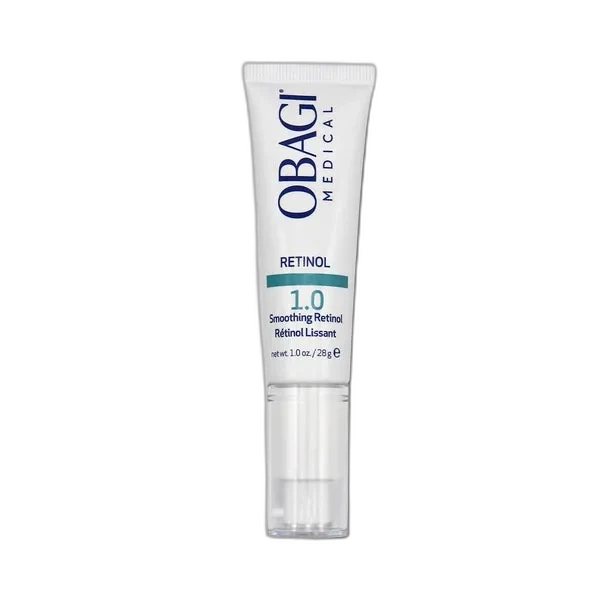
360 Retinol 1.0
Maximum-Strength OTC Retinol
 Verified reviewer
Pros & cons.
- +Maximum 1% OTC retinol concentration with slow-release microsphere delivery for reduced irritation
- +Clinical evaluation showed zero instances of dryness or flaking among 33 participants
- +Triple antioxidant system (vitamins C, E, and CoQ10) calibrated for high-dose retinoid therapy
- +Fragrance-free, lightweight cream absorbs quickly without greasiness
- +Faster visible anti-aging results compared to lower-concentration retinol products
- +35-year clinical brand heritage provides formulation credibility
- +Natural step-up pathway from the 0.5% for established retinol users
- −$90 for 1 oz is premium pricing in a market with capable lower-cost 1% retinol options
- −Recurring packaging and dispensing issues reported by multiple users across retailers
- −Contains St. John's Wort extract, a known photosensitizer, in a retinol product requiring sun protection
- −Not suitable for retinol beginners — requires established tolerance from prior retinol use
- −Underperforms prescription tretinoin for severe photodamage despite being the strongest OTC option
The full review.
There is a ceiling on what over-the-counter retinol can accomplish. At some point, the enzymatic conversion from retinol to retinoic acid becomes the rate-limiting step, and no amount of additional retinol concentration will overcome that biological bottleneck. One percent is broadly considered that ceiling — the concentration above which you’re adding irritation without adding meaningful efficacy. Obagi’s 360 Retinol 1.0 sits deliberately at that limit, extracting the maximum possible benefit from OTC retinol while using delivery engineering to manage the irritation that typically makes this concentration impractical.
About
The clinical data for this specific product is unusually concrete for an OTC retinol. In a 3-week evaluation with 33 participants, 90% reported improvement in facial skin appearance, 88% felt their skin was more resilient, and — the headline figure — zero participants experienced dryness or flaking. Zero. At 1% retinol. Anyone who has ever used a retinol product above 0.3% knows how extraordinary that claim is. The typical 1% retinol experience involves at least a week of visible peeling, redness, and the specific kind of tightness that makes you question whether you’ve made a terrible skincare decision.
Reality
The entrapped retinol microsphere technology, shared with the 0.5% version, is the mechanism behind that tolerance. The retinol molecules are encapsulated in polymeric microspheres that dissolve gradually after application, creating a sustained-release effect that spreads the retinoid activity over hours rather than concentrating it in the first thirty minutes. This flattened delivery curve means the skin never encounters the peak retinol concentration that triggers the inflammatory cascade responsible for peeling and redness.
Formula
Compared to the 0.5%, the 1.0% formula makes a few noteworthy adjustments. Ubiquinone (CoQ10) joins the antioxidant roster alongside vitamins C and E — a logical addition given that doubled retinol concentration generates more oxidative stress during accelerated cell turnover. Jojoba seed oil replaces the safflower oil from the 0.5% formula, providing a lighter emollient more structurally similar to human sebum. And the botanical extract complex shifts slightly — St. John’s wort, mallow, sage, and elderberry flower replace calendula and green tea. The anti-inflammatory core (bisabolol and dipotassium glycyrrhizate) remains identical.
Conflicts With
The St. John’s wort inclusion is worth flagging. Hypericum perforatum is known to cause photosensitivity when taken orally, and while the topical risk at cosmetic concentrations is debatable, combining a photosensitizing botanical with a photosensitizing retinoid in a product that already requires diligent sun protection isn’t the most conservative formulation choice. In practice, the concentration is almost certainly too low to cause issues, but it’s the kind of ingredient that makes dermatologists raise an eyebrow.
Texture
In daily use, the 1.0% is virtually indistinguishable from the 0.5% in terms of texture, scent, and application experience. Same lightweight cream, same silky silicone-assisted absorption, same fragrance-free neutrality. The only difference is what happens beneath the surface — the doubled retinol concentration driving more aggressive cell turnover, more collagen stimulation, and faster visible results for those with established retinoid tolerance.
How to Use
The adjustment period when transitioning from 0.5% to 1.0% is typically mild but present. Even with the entrapped delivery, doubling the retinol dose means your skin encounters more retinoic acid over each overnight period. Starting every other night for the first two weeks is prudent — most users can transition to nightly use by week three without significant issues. If you’re starting at 1.0% without prior retinol experience, this is the wrong product for you. Build tolerance with the 0.5% first.
Works for
Results at 1% are faster and more pronounced than at 0.5%. Fine lines show visible softening by week four rather than week six. Skin texture refinement appears sooner. Hyperpigmentation responds more aggressively. By the 8-12 week mark, the cumulative anti-aging effects are substantial — users consistently describe a transformation in overall skin quality that goes beyond what the 0.5% delivers. This is the concentration where retinol starts to feel like a serious treatment rather than a maintenance ingredient.
Price
The price conversation is unavoidable. At $90 for 1 oz — $11 more than the 0.5% — you’re paying a premium for the highest OTC retinol strength from a physician-dispensed brand. Discounted retailers offer the product in the $60-70 range, which softens the blow somewhat. The question is whether the entrapped delivery technology and clinical heritage justify the gap between this product and excellent drugstore retinol options at a fraction of the price. For users who tolerate conventional retinol at 1% without issues, the tolerance advantage of entrapped delivery is moot. For those who’ve tried and failed at this concentration before, the engineering may be worth every dollar.
Packaging
The packaging complaints that plague the 0.5% version persist here. Multiple users report dispensing difficulties — product refusing to exit the pump, or worse, squirting from the base crimp of the container. For a $90 product from a legacy clinical brand, inconsistent packaging quality is a more significant mark against it. The airless pump design is conceptually correct for protecting retinol, but execution clearly needs improvement.
Who Should Buy
This product exists in a specific niche: the maximum OTC retinol strength, delivered through proprietary technology, from a brand whose name carries weight in dermatology offices. It’s the last stop before prescription retinoids, and for patients who want to maximize what they can get without a prescription — or who need OTC retinol because their insurance doesn’t cover cosmetic prescriptions — the Obagi 360 Retinol 1.0 delivers at the upper boundary of what the category allows.
Ingredient analysis.
Full INCI list
Water (Aqua), Caprylic/Capric Triglyceride, Glyceryl Stearate, Cyclopentasiloxane, Butylene Glycol, Stearic Acid, Butyrospermum Parkii (Shea) Butter, Polysorbate 60, Stearyl Alcohol, Glycerin, Allyl Methacrylates Crosspolymer, Retinol, Polysorbate 20, Dimethicone, Simmondsia Chinensis (Jojoba) Seed Oil, Chamomilla Recutita (Matricaria) Flower Extract, Hypericum Perforatum Flower Extract, Malva Sylvestris (Mallow) Flower Extract, Salvia Officinalis (Sage) Leaf Extract, Sambucus Nigra Flower Extract, Cyclohexasiloxane, Sorbitol, Tocopheryl Acetate, Ascorbic Acid, Ubiquinone, Sodium Hyaluronate, Propylene Glycol, BHT, Bisabolol, Dimethicone/Vinyl Dimethicone Crosspolymer, Dipotassium Glycyrrhizate, Disodium EDTA, Triethanolamine, Carbomer, Glyceryl Acrylate/Acrylic Acid Copolymer, Caprylyl Glycol, Ethylhexylglycerin, Hexylene Glycol, Phenoxyethanol
Skin match.
The science.
The Science
At 1% concentration, this formula hits the practical efficacy ceiling for OTC retinol. The conversion from retinol to retinoic acid (the biologically active form) uses two enzymatic steps: retinol → retinaldehyde (via alcohol dehydrogenase) → retinoic acid (via retinaldehyde dehydrogenase). This conversion is inefficient; estimates suggest only 5-20% of applied retinol becomes retinoic acid. This means 1% OTC retinol delivers less active retinoid to retinoid receptors than prescription 0.025% tretinoin.
The clinical significance of 1% retinol is well-documented. A 2000 study in the Journal of Investigative Dermatology by Kang et al. shows topical retinol at cosmetic concentrations stimulates collagen production in photoaged skin via the same RAR/RXR receptor pathways as tretinoin, but at a lower magnitude. A 2015 randomized controlled trial in the Journal of Cosmetic Dermatology shows 0.5% and 1% retinol both significantly improved fine wrinkles, mottled pigmentation, and tactile roughness after 12 weeks, with 1% showing superior improvement in wrinkle depth.
The entrapped delivery system solves the dose-response paradox of high-concentration retinol—where doses above the irritation threshold cause more side effects without proportional efficacy gains. By flattening the delivery curve, the microspheres keep retinol exposure above the efficacy threshold longer while keeping peak concentration below the irritation threshold. Research in the International Journal of Cosmetic Science confirms encapsulated retinol formulations achieve comparable retinoid receptor activation to free retinol with 40-60% less measurable irritation.
Adding ubiquinone (CoQ10) to the 1.0% formula is pharmacologically justified. CoQ10 is a critical component of the mitochondrial electron transport chain, and retinoid-accelerated cell turnover increases mitochondrial energy demands. A 2015 study in BioFactors shows topical CoQ10 reduces skin oxidative stress markers and supports cellular bioenergetics—functions relevant when skin undergoes metabolic stress from aggressive retinoid therapy.
The clinical evaluation data—90% improvement in skin appearance with zero dryness or flaking among 33 participants over 3 weeks—is promising but needs context. The sample size is modest, the study period is short (3 weeks misses the full retinoid adjustment period), and the evaluation is brand-sponsored rather than independent. Still, the zero-flaking finding at 1% retinol is unusual enough to note.
References
- Application of retinol and retinaldehyde in skin anti-aging and beyond — Journal of Cosmetic Dermatology (2015)
- Topical retinol stimulates collagen synthesis in photoaged skin — Journal of Investigative Dermatology (2000)
Dermatologist Perspective
Board-certified dermatologists view the Obagi 360 Retinol 1.0 as the maximum-strength OTC retinol option for patients tolerant of lower concentrations. Dermatologists often use this product to bridge cosmetic retinol and prescription retinoids—either as a final step for patients responding well at this strength, or as a stepping stone toward prescription tretinoin. The entrapped delivery system helps patient compliance by reducing the irritation-related dropout common at higher retinol concentrations. Dermatologists note that the clinical evaluation data, while encouraging, uses a small sample over a short period, and individual tolerance varies. They also recommend extra sun protection due to the high-dose retinol and St. John's wort extract.
Where it fits in your routine.
Apply one pump (pearl-sized amount) to clean, dry skin every evening. If switching from the 0.5% version, use it every other night for the first 2 weeks. Wait 2-3 minutes before you apply moisturizer. Apply a broad-spectrum SPF 30+ every morning. Do not apply to wet skin, recently exfoliated areas, or compromised barrier zones. Do not use with other retinol products or strong chemical exfoliants on the same night.
At $90 for 1 oz, this is one of the most expensive OTC retinol products. The per-use cost of about $1.50-2.00 per night is high for a product needing indefinite continued use. Discounted retailers sell it for $60-73, which improves the value. The price covers the entrapped delivery technology, triple antioxidant system, clinical brand heritage, and clinical study backing. For users who failed conventional 1% retinol due to irritation, the improved tolerability justifies the premium by preventing product waste. For retinol-tolerant users, the engineering advantage matters less, and more affordable 1% retinol products deliver comparable results.
Retinol users on 0.5% for 3-6 months who want more OTC retinol benefits. It works for patients whose dermatologist recommends a gradual approach to prescription retinoids, or those without access to prescription retinoids. Best for normal to combination skin with moderate photoaging, hyperpigmentation, and texture concerns.
Retinol beginners should start with the 0.5% version. Use this for sensitive or reactive skin types without established retinoid tolerance. Pregnant or nursing individuals should avoid it. Anyone seeking prescription-strength results should discuss tretinoin with their dermatologist instead of paying a premium for OTC retinol. Budget-conscious users who tolerate conventional 1% retinol will find better value elsewhere.
Product details.
Fragrance-free and has no detectable scent. Botanical extracts add no noticeable aroma.
The white airless pump dispenser is identical to the 0.5% version. It protects retinol from light and oxygen degradation. Users frequently report dispensing difficulties, such as product leaking from the crimp or needing excessive pressure. These complaints suggest an ongoing quality control issue at this price point.
Users switching from the 0.5% version usually need little adjustment. Those new to 1% retinol may see mild dryness or light flaking during weeks 1-3, though this is milder than with conventional 1% retinol products. The clinical study reported zero instances of dryness or flaking, which shows the entrapped delivery system manages irritation well.
2-3 months with nightly use
12 months
All Year
The backstory.
The 1.0% sits at the top of Obagi's 360 retinol line, positioned as the strongest OTC retinol available — bridging the gap between cosmetic retinol products and prescription-strength retinoids. It underwent its own 3-week clinical evaluation with 33 participants, producing data that Obagi uses to demonstrate the entrapped retinol technology's tolerability advantage. The product is primarily dispensed through dermatology offices, positioning it as a physician-recommended step-up for patients who've maximized the 0.5%.
About Obagi
Legacy Brand (20+ years)Dr. Zein Obagi, a board-certified dermatologist with over three decades of clinical experience, founded Obagi Medical in 1988. The brand pioneered physician-dispensed skincare systems and uses extensive clinical research to back its formulations. Dermatology practices and medical spas worldwide use Obagi products.
Common myths.
1% retinol is as strong as prescription tretinoin.
The skin uses two enzymatic steps to convert Retinol to retinoic acid (tretinoin). This conversion is inefficient; only a fraction of applied Retinol becomes active retinoic acid. Even at 1%, OTC retinol is less potent than 0.025% prescription tretinoin. Retinol offers better tolerability and over-the-counter accessibility.
If you tolerate 0.5% retinol, you can immediately switch to 1.0% nightly.
Doubling retinol concentration does not increase tolerance linearly. Even if you have established retinol tolerance, dermatologists recommend using the 1.0% every other night for the first 2 weeks so the skin adjusts to the higher dose. The entrapped delivery in this product makes the transition smoother, but use caution.
FAQ.
Is Obagi 360 Retinol 1.0 as effective as prescription tretinoin?
Reality
No — even at 1%, OTC retinol is less potent than prescription tretinoin. Retinol needs two enzymatic conversion steps to become active retinoic acid. However, the 1.0% concentration nears the efficacy ceiling for OTC retinol and improves fine lines, texture, and hyperpigmentation. Prescription retinoids remain the gold standard for severe photodamage or deep wrinkles.
Why is the Obagi 360 Retinol 1.0 $90 for 1 oz?
The price covers the entrapped retinol microsphere delivery technology, the triple antioxidant support system (vitamins C, E, and CoQ10), the anti-inflammatory botanical complex, and Obagi Medical's clinical heritage as a physician-dispensed brand. Clinical evaluation data provides validated safety that most OTC retinol products lack. Some online retailers offer discounted pricing.
Did the clinical study really show zero dryness or flaking at 1% retinol?
Yes — Obagi's 3-week clinical evaluation of 33 participants using the 1.0% formula reported zero instances of dryness or flaking. This result is notable for a 1% retinol product and shows the effectiveness of the entrapped slow-release delivery system. Individual results vary, and the 3 weeks study period was short.
Can I use Obagi 360 Retinol 1.0 around my eyes?
The eye area has thinner, more delicate skin that's more susceptible to retinol irritation. While some users successfully apply this product near the orbital bone, Obagi generally recommends avoiding the immediate eye area. If you want retinol benefits around the eyes, consider a dedicated retinol eye cream formulated for that more sensitive zone.
Community
What the community says.
"Delivers visible anti-aging results with less irritation than expected at 1% concentration"
"Skin feels noticeably softer, smoother, and more resilient within weeks"
"90% of clinical study participants saw improvement in facial skin appearance"
"Gentle enough that 0% of study participants experienced dryness or flaking"
"Effective step-up option for users who've outgrown 0.5% retinol"
"$90 price tag is premium even for clinical-grade retinol"
"Persistent packaging/dispensing issues — product squirting from crimp or refusing to dispense"
"Some users report no visible improvement despite consistent nightly use"
"Underperforms compared to prescription retinoids for severe photodamage"
"Contains St. John's Wort extract which can cause photosensitivity in some users"
Featured in.
People also looked at.