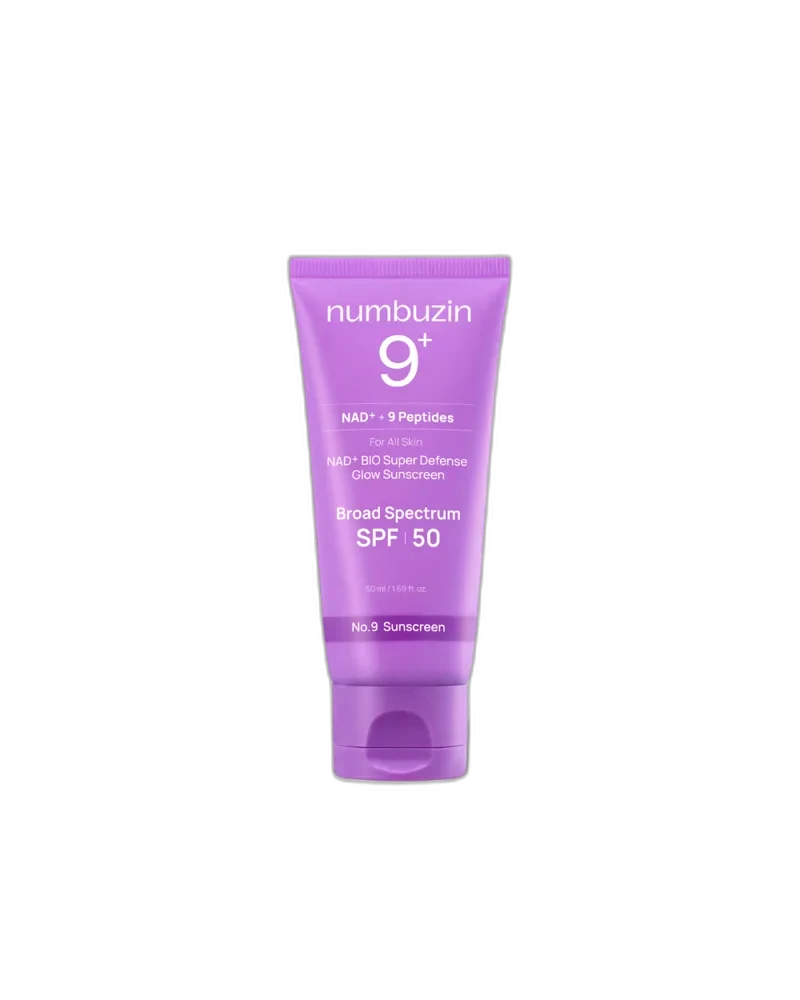
No. 9 NAD+ BIO Super Defense Glow Sunscreen
Glow Sunscreen with Anti-Aging Power
 Verified reviewer
Pros & cons.
- +FDA-registered Broad Spectrum SPF 50 with well-established four-filter chemical UV system
- +Seven-form hyaluronic acid complex prevents the drying sensation common with chemical sunscreens
- +Nine anti-aging peptides and NAD+ transform a protective step into an active treatment
- +No white cast on any skin tone — beautiful dewy glow finish
- +Fragrance-free with soothing ingredients (centella, allantoin, panthenol, licorice)
- +Exceptional value at $18 for the formulation complexity
- −Chemical UV filters may irritate sensitive skin or sting around the eyes
- −Dewy finish may be too luminous for oily skin types in warm weather
- −Very new product with limited independent reviews and real-world wear testing
- −NAD+ and peptide concentrations are undisclosed and likely low
- −Water resistance duration is not clearly specified on all listings
The full review.
Here’s a question that more sunscreen brands should take seriously: if your sunscreen is the product that sits on your face for the longest continuous stretch of any day, why shouldn’t it also be one of the most active products in your routine? Numbuzin’s No. 9 NAD+ BIO Super Defense Glow Sunscreen takes that question and runs with it, packing an ingredient list that looks more like an anti-aging serum than a UV shield.
The sun protection comes from a four-filter chemical system registered with the FDA: avobenzone at 3% for UVA coverage, homosalate at 7%, octisalate at 5%, and octocrylene at 5% for UVB protection and avobenzone photostabilization. This is a well-established filter combination used across hundreds of sunscreen formulations — it works, it’s proven, and in this formula it delivers Broad Spectrum SPF 50. Nothing experimental here. The protection is solid.
What happens beyond the UV filters is where things get interesting. Numbuzin loaded the inactive ingredient portion with their No. 9 line’s anti-aging technology, starting with NAD+ (Nicotinamide Adenine Dinucleotide). The theoretical appeal of NAD+ in a sunscreen is compelling — UV exposure depletes NAD+ in skin cells, compromising the DNA repair mechanisms that prevent photoaging. Providing exogenous NAD+ during UV exposure could theoretically support those repair pathways in real time. Whether topical NAD+ achieves this at the concentrations present here is unproven, but the logic is scientifically sound.
Nine peptides from the broader No. 9 complex are included: Acetyl Hexapeptide-8 (Argireline), Copper Tripeptide-1, Palmitoyl Pentapeptide-4 (Matrixyl), and six others targeting various anti-aging mechanisms. In a sunscreen that sits on your face for 8-12 hours, these peptides have significantly more contact time than they would in a serum that’s quickly absorbed and layered over. Whether extended surface contact translates to better peptide performance is uncertain, but the opportunity for interaction is real.
The hydration system is genuinely impressive. Seven forms of hyaluronic acid — sodium hyaluronate, hyaluronic acid, hydrolyzed HA, hydrolyzed sodium hyaluronate, hydroxypropyltrimonium hyaluronate, potassium hyaluronate, sodium hyaluronate crosspolymer, and sodium acetylated hyaluronate — create a multi-depth hydration approach that prevents the drying, tight feeling many chemical sunscreens cause. Polyglutamic acid adds another humectant layer, and glycerin provides foundational moisture. This sunscreen actively hydrates rather than simply not dehydrating, which is a meaningful distinction.
The soothing and brightening ingredients round out the formula: centella asiatica extract for anti-inflammatory support, licorice root extract for brightening, houttuynia cordata for antimicrobial calming, allantoin and panthenol for barrier support, and resveratrol for antioxidant protection. Niacinamide, positioned early in the inactive ingredient list, provides barrier strengthening and has independently demonstrated ability to reduce UV-induced immunosuppression — making it a genuinely functional sunscreen ingredient rather than a marketing add-on.
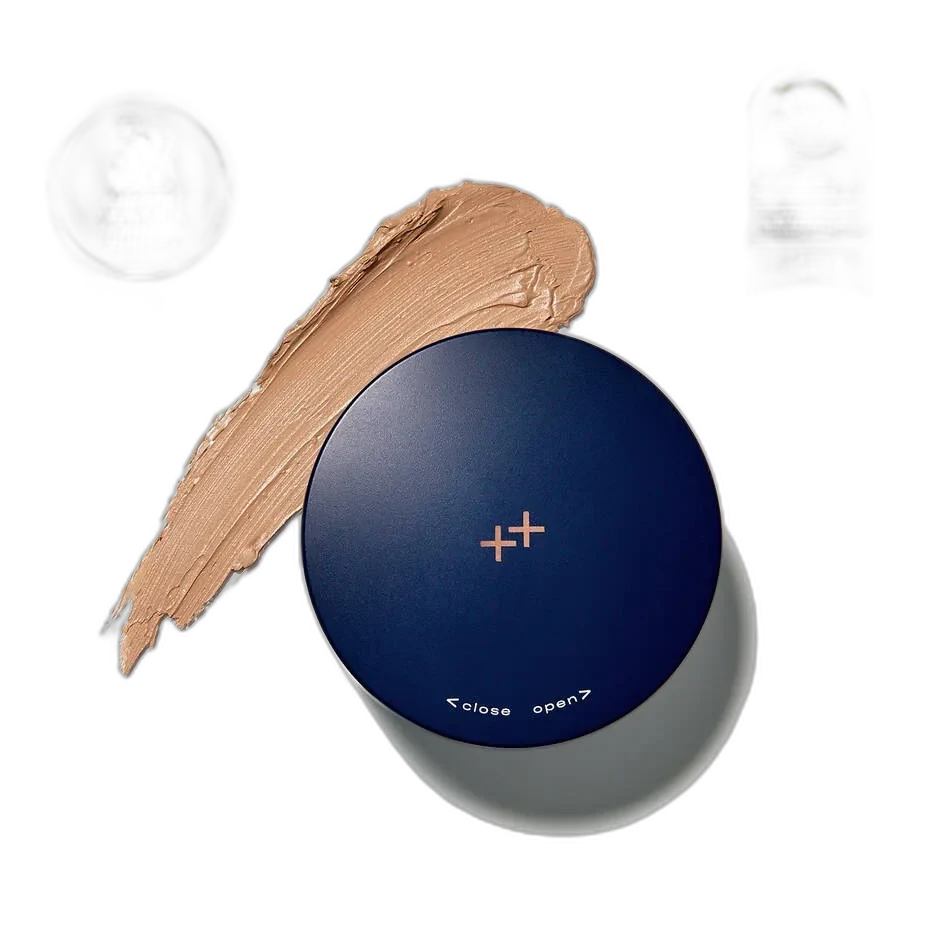
The texture is what sells this product in daily use. It applies as a lightweight cream with a slight luminosity, spreading easily without the white cast that plague mineral sunscreens. It sets to a dewy finish — not matte, not shiny, but genuinely glowy in a way that looks like healthy, well-cared-for skin rather than oily or greasy. Under makeup, it functions as a luminous primer. Without makeup, it gives a polished, bare-skin glow that photographs beautifully.
The dewy finish does come with a caveat for oily skin types, particularly in warm, humid climates. If you already produce excess sebum, the added luminosity from this sunscreen may push you into legitimately shiny territory by afternoon. Matte-finish sunscreen seekers should look elsewhere. But for normal, dry, and combination skin types — and for anyone who wants their SPF to contribute to a healthy glow — this finish is a genuine selling point.
Fragrance-free formulation is a welcome choice for a sunscreen that’s worn all day. The chemical filters themselves can cause sensitivity in some users — avobenzone in particular is known to sting around the eyes — but the soothing ingredients (centella, allantoin, panthenol, licorice) do a commendable job of buffering this potential irritation for most skin types.
At $18 for 50ml, this is aggressive pricing for a sunscreen with this level of skincare complexity. The seven-form HA complex alone would justify a higher price point. Add NAD+, nine peptides, resveratrol, centella, and licorice root, and the formulation cost must be significant. It undercuts most Western chemical sunscreens with far simpler formulas, and it outperforms them on the skincare dimension.
This sunscreen represents the direction the category should be heading: UV protection as the baseline, not the ceiling. When your SPF product also delivers meaningful anti-aging, hydrating, and soothing benefits, the distinction between ‘protection’ and ‘treatment’ dissolves. Your sunscreen becomes your hardest-working daytime product, which is exactly what it should be given how many hours it spends on your face.
Ingredient analysis.
Full INCI list
Active Ingredients: Avobenzone 3%, Homosalate 7%, Octisalate 5%, Octocrylene 5%. Inactive Ingredients: Water (Aqua), Butyloctyl Salicylate, Glycerin, Dimethicone, Poly C10-30 Alkyl Acrylate, VP/Eicosene Copolymer, Niacinamide, Cetearyl Alcohol, Sodium Stearoyl Glutamate, Ammonium Polyacryloyldimethyl Taurate, Phenoxyethanol, Hydroxyacetophenone, Tocopheryl Acetate, Panthenol, Xanthan Gum, Allantoin, Hydrolyzed Collagen, Glycyrrhiza Glabra (Licorice) Root Extract, Butylene Glycol, Propanediol, 1,2-Hexanediol, Houttuynia Cordata Extract, Sodium Hyaluronate, Acetyl Tyrosine, Betula Alba Juice, Centella Asiatica Extract, Resveratrol, Proline, Adenosine Triphosphate, Hydrolyzed Vegetable Protein, Nicotinamide Adenine Dinucleotide, Ethylhexylglycerin, Eucalyptus Globulus Leaf Extract, Polyglutamic Acid, Hyaluronic Acid, Hydrolyzed Hyaluronic Acid, Hydrolyzed Sodium Hyaluronate, Hydroxypropyltrimonium Hyaluronate, Potassium Hyaluronate, Sodium Hyaluronate Crosspolymer, Pentylene Glycol, Sodium Acetylated Hyaluronate, Acetyl Hexapeptide-8, Acetyl Octapeptide-3, Copper Tripeptide-1, Palmitoyl Pentapeptide-4, Palmitoyl Tetrapeptide-7, Palmitoyl Tripeptide-1, Tripeptide-1, Tripeptide-2, Tripeptide-3
Skin match.
The science.
The Science
The four-filter UV system in this sunscreen represents a well-validated approach to broad spectrum protection. Avobenzone is the primary UVA filter, absorbing across the 310-400nm range. Its known photolability — degradation under UV exposure — is addressed by octocrylene, which acts as a photostabilizer for avobenzone. Research published in Photochemistry and Photobiology (2002) demonstrated that octocrylene-stabilized avobenzone maintains over 90% of its UVA protection after 2 hours of simulated sun exposure.
Niacinamide's role in sun protection extends beyond general barrier support. A landmark study published in the Journal of Investigative Dermatology (2005) demonstrated that topical niacinamide reduces UV-induced immunosuppression in human skin — essentially helping the skin maintain its immune defenses under UV stress. This makes niacinamide a genuinely functional sunscreen ingredient, not merely a marketing addition.
The seven-form hyaluronic acid approach is supported by research showing different molecular weights penetrate to different epidermal depths. Notably, hydroxypropyltrimonium hyaluronate — a cationically modified HA present in this formula — has been shown to bind more strongly to skin surfaces than standard HA, providing longer-lasting surface hydration even under UV exposure conditions.
Polyglutamic acid, also present, has been shown in research published in the Journal of Microbiology and Biotechnology to increase skin moisture content by inhibiting the activity of hyaluronidase — the enzyme that breaks down hyaluronic acid. This creates a protective loop where polyglutamic acid preserves the HA complex's effectiveness throughout the day.
Resveratrol provides complementary photoprotective antioxidant activity. Research published in the Journal of Drugs in Dermatology has shown that resveratrol reduces UV-induced reactive oxygen species and inhibits UV-mediated activation of NF-kB, a key inflammatory pathway in photoaging.
References
- Photostabilization of avobenzone by octocrylene and diethylhexyl syringylidenemalonate — Photochemistry and Photobiology (2002)
- Niacinamide reduces UV-induced immunosuppression in human skin — Journal of Investigative Dermatology (2005)
Dermatologist Perspective
Dermatologists consistently emphasize that daily broad spectrum sunscreen is the single most effective anti-aging intervention. This product's SPF 50 chemical filter system is well-established and FDA-registered. Board-certified dermatologists note that the addition of niacinamide provides scientifically validated UV-protective benefits beyond the filters themselves. The NAD+ and peptide additions are viewed as interesting but unproven bonuses. For patients who struggle with sunscreen compliance due to unpleasant textures or white casts, dermatologists may view the cosmetically elegant, skincare-rich formulation as a compliance advantage — the best sunscreen is the one you'll actually wear daily.
Where it fits in your routine.
Product details.
Lightweight cream with a slight luminous tint. Spreads easily and sets to a dewy, non-greasy finish without white cast.
Unscented — no detectable fragrance.
Squeeze tube with flip cap matches Numbuzin's clean aesthetic. The 50ml size is travel-friendly.
It applies smoothly without a white cast and disappears into all skin tones. The glow is immediate, sitting between matte and glossy. Most users feel no stinging or irritation, but those sensitive to chemical UV filters should patch test.
6-8 weeks with daily use
12 months
All Year
The backstory.
This sunscreen extends Numbuzin's No. 9 anti-aging line into daytime protection, recognizing that UV damage is the primary driver of skin aging. Rather than making a basic sunscreen with token actives, Numbuzin loaded it with the same NAD+ and peptide technology from their serums — making the case that your sunscreen should work as hard on anti-aging as your treatment products.
About Numbuzin
Established Brand (5–20 years)Numbuzin launched in 2019 via Korea's Benow Inc. This sunscreen adds sun protection to the No. 9 NAD+ anti-aging line, using FDA-registered broad spectrum SPF 50 chemical UV filters alongside the brand's signature NAD+ and peptide technology.
Common myths.
K-beauty sunscreens lack the effectiveness of Western SPF products.
This sunscreen is FDA-registered and provides verified Broad Spectrum SPF 50 protection. It uses four chemical UV filters at standard concentrations. Korean sunscreen testing standards (PA rating system) are more stringent than US standards for UVA protection.
Anti-aging ingredients in sunscreen are marketing gimmicks.
Sunscreen's main anti-aging benefit is UV protection, but the niacinamide, HA complex, and peptides in this formula provide skincare benefits. Niacinamide reduces UV-induced immunosuppression and supports barrier function, adding value beyond basic filtration.
FAQ.
Does this sunscreen leave a white cast?
No — this is a chemical sunscreen using avobenzone, homosalate, octisalate, and octocrylene as UV filters. Unlike mineral sunscreens (zinc oxide, titanium dioxide), chemical filters absorb into the skin and leave no white cast on any skin tone.
Is this sunscreen water-resistant?
The product claims water resistance, but retailer listings do not specify the exact duration (40 or 80 minutes). Reapply frequently for swimming or heavy sweating, regardless of water-resistance claims.
Can I use this sunscreen under makeup?
Yes — the dewy finish creates a luminous base that works well under foundation and other makeup products. Wait 2-3 minutes for the sunscreen to set before applying makeup for best results.
Does NAD+ in a sunscreen actually do anything?
NAD+ supports DNA repair, which matters when skin faces UV-induced damage. Researchers still study topical NAD+ delivery, and this formula does not disclose its concentration. The SPF 50 protection is the primary anti-aging benefit of this product.
Is this suitable for sensitive or acne-prone skin?
Chemical UV filters, specifically avobenzone and homosalate, irritate sensitive skin and sting near the eyes. Use a mineral SPF if you have sensitive skin. The formula is fragrance-free and contains soothing ingredients like centella, allantoin, and panthenol.
Community
What the community says.
"No white cast on any skin tone"
"Beautiful dewy glow finish"
"Doesn't feel greasy or heavy despite rich formula"
"Impressive skincare ingredients for a sunscreen"
"Affordable for the formulation complexity"
"Too dewy for oily skin types in warm weather"
"Chemical UV filters may sting sensitive eyes"
"Limited availability outside of K-beauty retailers"
"Water resistance claims not specified"
People also looked at.