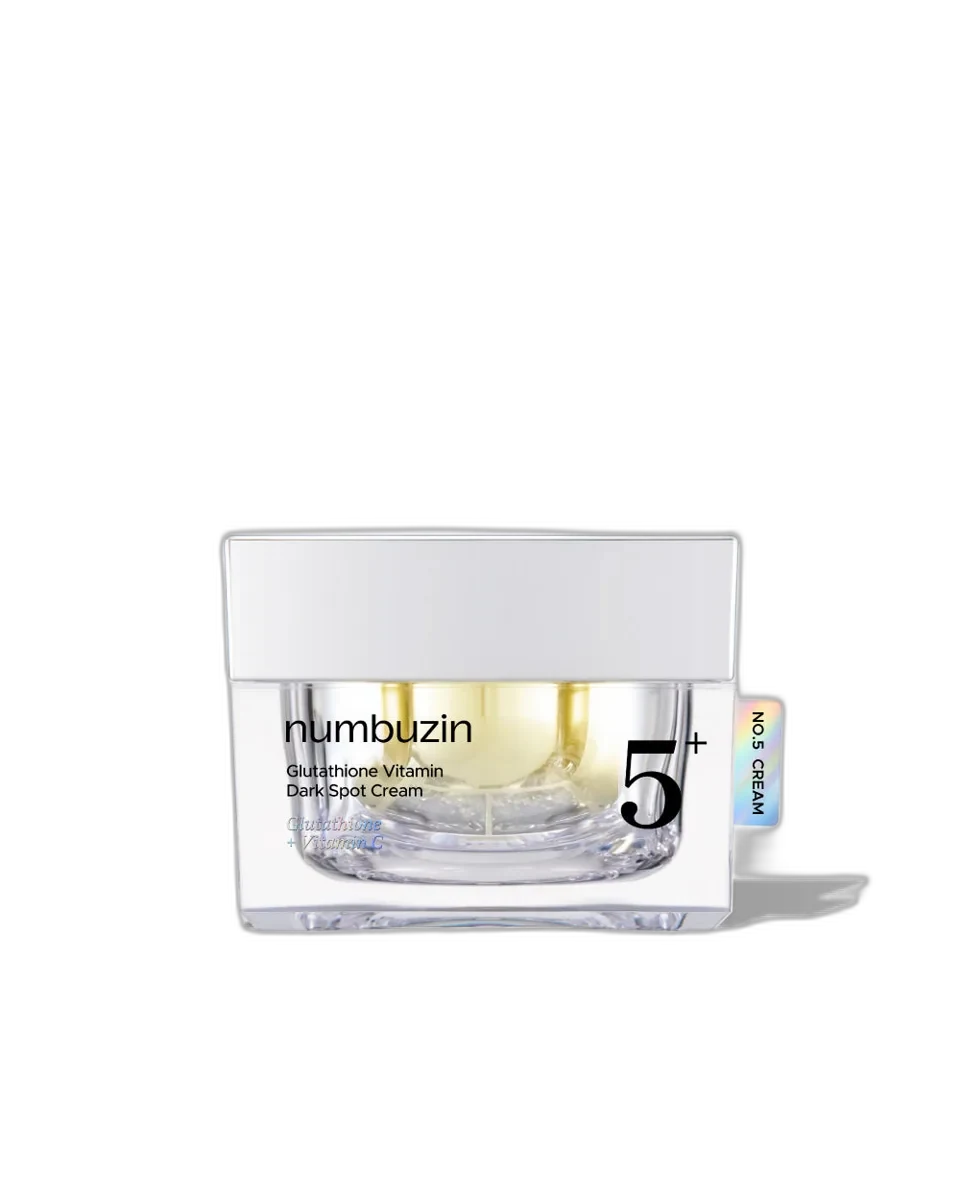
No. 5 Vitamin Glutathione Dark Spot Laser Cream
K-Beauty Dark Spot Treatment Cream
 Verified reviewer
Pros & cons.
- +Eight growth factor peptides add a unique skin renewal dimension absent from most brightening creams
- +Completely fragrance-free and essential-oil-free despite 70 ingredients — impressive restraint
- +Multi-mechanism brightening with glutathione vitamin C arbutin and niacinamide
- +Ceramide NP with cholesterol creates a skin-identical barrier repair complex
- +Lecithin-phosphatidylcholine delivery system may enhance glutathione absorption
- +Velvety soft-focus texture provides luxury feel at a K-beauty price
- +Pregnancy-safe formula valuable for hormone-related hyperpigmentation
- −70 ingredients means individual active concentrations are likely at minimal effective levels
- −Growth factor peptides are listed near the bottom suggesting very low concentrations
- −Too rich for oily skin types particularly in warm conditions
- −Jar packaging exposes light-sensitive actives to air with each opening
- −New product with limited real-world data and reviews
- −Laser Cream name overpromises relative to what any topical cream can deliver
The full review.
Seventy ingredients. That is the INCI count for the Numbuzin No. 5 Vitamin Glutathione Dark Spot Laser Cream. Most respected moisturizers use twenty to thirty ingredients. A complex serum might use forty. Numbuzin doubled that standard.
This is either K-beauty’s most comprehensive dark spot treatment or formulation maximalism run amok. After reviewing the ingredient list and the cream, the answer is closer to the former — with caveats.
The brightening strategy extends the approach Numbuzin uses across the No. 5 line. Glutathione is the main depigmenting active; it works by redirecting melanin production from dark eumelanin to lighter pheomelanin. Unlike tyrosinase inhibitors that stop melanin production, glutathione changes what the skin produces. This is a subtler, more sustainable way to brighten that works with the skin’s natural pigmentation system.
Numbuzin surrounds the glutathione with its usual brightening ensemble: high levels of niacinamide to inhibit melanosome transfer, triple vitamin C (3-O-Ethyl Ascorbic Acid, pure ascorbic acid, and ascorbyl glucoside) for staggered tyrosinase inhibition, and arbutin for controlled hydroquinone release. These are the same ingredients in the Concentrated Serum, but in a cream with a thicker texture.
The regenerative dimension sets this cream apart from the serum. Eight synthetic growth factor peptides — analogues of EGF, IGF-1, FGF, and other signaling proteins — add a cell renewal mechanism most brightening products lack. The logic holds: inhibiting melanin addresses future spots, but fading existing ones requires turning over pigmented cells. Growth factors accelerate this turnover by signaling keratinocytes and fibroblasts to renew faster, helping the skin shed pigmented cells more efficiently.
The growth factor peptides are at typical cosmetic concentrations — far below therapeutic levels, so they unlikely cause the abnormal cell growth some consumers fear. They nudge the skin’s natural renewal pace rather than overriding it.
The barrier support complex is another highlight. Ceramide NP, cholesterol, and beta-sitosterol create a three-component lipid repair system that mimics the skin’s barrier architecture. Lecithin and phosphatidylcholine provide extra lipid support and may help deliver the glutathione — a dual-purpose choice that may help the penetration of an ingredient that is notoriously hard to absorb topically.
Madecassoside and asiaticoside from centella asiatica provide anti-inflammatory calming and collagen support. Panthenol adds soothing hydration. Allantoin promotes wound healing. Bisabolol from chamomile offers gentle anti-inflammatory activity. Polyglutamic acid provides a hydration boost with better water-binding capacity than hyaluronic acid. This extensive soothing and hydrating support is necessary when using so many active ingredients at once.
The texture is thick but not heavy. A base of sunflower seed oil, argan oil, and sesame oil provides nourishment, while caprylyl methicone and polymethylsilsesquioxane add a silicone-based slip for a velvety, soft-focus finish. It absorbs well despite the thickness, leaving a satin feel instead of a greasy film. It performs well as a night cream. For daytime, use a thinner layer.
The fragrance-free formulation is important. In a 70-ingredient formula, omitting fragrance, essential oils, and unnecessary irritants is a deliberate choice. This cream could have used a luxury scent to match its positioning, but the team prioritized skin tolerance over sensory appeal.
The critique: With seventy ingredients in a fifty-milliliter jar, math creates constraints. The lower-listed actives — including the growth factor peptides, the vitamin C forms, the arbutin, and the ceramide — are each present at fractions of a percent. It is unclear if these fractional concentrations deliver clinical activity. The niacinamide, listed fourth, is likely at an effective concentration. The glutathione, listed further down, is less certain. The growth factor peptides, near the bottom, are almost certainly at the cosmetic decoration threshold rather than the therapeutic one.
This is the tension in ingredient maximalism: breadth versus depth. A cream with five actives at optimal concentrations might outperform a cream with twenty actives at minimal ones. Numbuzin bets on a synergistic-small-doses approach — the idea that many ingredients at low levels work together to produce effects. This has formulation logic, but the consumer must accept that no single active works at its full potential.
At around twenty-two dollars for fifty milliliters, the value is strong for this level of complexity. The clean, fragrance-free, irritant-free base works for sensitive skin. The cream texture provides moisture and nourishment. Even at potentially sub-optimal concentrations, the multi-mechanism brightening approach covers more of the pigmentation cascade than a single-active product.
For dry to normal skin with dark spots and hyperpigmentation, this cream is unique: it treats pigmentation through multiple pathways while supporting barrier health and skin renewal. The ‘Laser Cream’ name overpromises, as laser-adjacent names do. But underneath the marketing, this is a thoughtfully constructed treatment cream and Numbuzin’s most ambitious formulation yet.
Formula
Ingredient analysis.
Full INCI list
Water, Dipropylene Glycol, Glycerin, Niacinamide, Octyldodecanol, Helianthus Annuus (Sunflower) Seed Oil, Butylene Glycol, Trehalose, Pentylene Glycol, 1,2-Hexanediol, Eriobotrya Japonica Leaf Extract, Coptis Japonica Root Extract, Mentha Viridis (Spearmint) Extract, Sodium Hyaluronate, Theobroma Cacao (Cocoa) Extract, Centella Asiatica Leaf Extract, Argania Spinosa Kernel Oil, Sesamum Indicum (Sesame) Seed Oil, Chitosan, Serenoa Serrulata Fruit Extract, Caprylyl Methicone, Panthenol, Polymethylsilsesquioxane, Propanediol, Hydroxyethyl Acrylate/Sodium Acryloyldimethyl Taurate Copolymer, Cetearyl Olivate, Polyglyceryl-10 Behenate/Eicosadioate, Ammonium Acryloyldimethyltaurate/VP Copolymer, Sorbitan Olivate, Acrylates/C10-30 Alkyl Acrylate Crosspolymer, Tromethamine, Ethylhexylglycerin, Sorbitan Isostearate, Adenosine, Palmitic Acid, Hydrogenated Lecithin, Glutathione, Phosphatidylcholine, Polyglyceryl-10 Laurate, Dilauryl Thiodipropionate, Pentaerythrityl Tetra-Di-T-Butyl Hydroxyhydrocinnamate, Sodium Phytate, Allantoin, Madecassoside, Lecithin, Cellulose, Sodium Phosphate, Polyglutamic Acid, Dextrin, Asiaticoside, Cysteine, Tocopherol, 3-O-Ethyl Ascorbic Acid, Arbutin, Bisabolol, SH-Oligopeptide-1, SH-Oligopeptide-2, SH-Polypeptide-1, SH-Polypeptide-10, SH-Polypeptide-11, SH-Polypeptide-3, SH-Polypeptide-59, SH-Polypeptide-9, Cholesterol, Ascorbic Acid, Beta-Sitosterol, Ascorbyl Glucoside, Ceramide NP, Xanthan Gum, C12-16 Alcohols
Skin match.
The science.
The Science
The glutathione delivery challenge is central to this cream's efficacy question. Glutathione, a tripeptide (gamma-glutamyl-cysteinyl-glycine), has poor topical bioavailability due to its hydrophilic nature and enzymatic degradation. However, a 2017 study in Clinical, Cosmetic and Investigational Dermatology demonstrated that both oxidized and reduced glutathione applied topically reduced melanin index over 10 weeks. This cream addresses the bioavailability challenge through its lecithin and phosphatidylcholine delivery system, which can form liposomal structures that enhance peptide penetration through the stratum corneum.
The eight growth factor peptides draw from research on wound healing and skin regeneration. SH-Oligopeptide-1 (EGF analogue) has been studied in the International Journal of Molecular Sciences for its ability to promote keratinocyte proliferation and accelerate wound closure. While cosmetic concentrations are far below therapeutic levels, research suggests that even low doses of EGF can upregulate cell turnover markers in aging skin.
The combination of madecassoside and asiaticoside provides complementary centella asiatica activity. A 2020 review in the Journal of Ethnopharmacology documented that madecassoside primarily exerts anti-inflammatory effects by inhibiting NF-kB activation, while asiaticoside stimulates type I collagen synthesis through TGF-beta signaling. In a dark spot treatment context, the anti-inflammatory activity helps prevent post-inflammatory hyperpigmentation, while the collagen stimulation supports skin structural renewal.
The ceramide NP plus cholesterol combination reflects the established three-component barrier repair model documented in the Journal of Investigative Dermatology. Research shows that ceramides, cholesterol, and fatty acids in equimolar ratios optimize stratum corneum barrier repair — essential in a treatment product targeting compromised or photodamaged skin.
References
- Topical Glutathione for Skin Lightening: A Randomized Controlled Trial — Clinical, Cosmetic and Investigational Dermatology (2017)
- Epidermal Growth Factor in Skin Regeneration — International Journal of Molecular Sciences (2018)
- Centella Asiatica Triterpenes: Anti-inflammatory and Wound Healing Properties — Journal of Ethnopharmacology (2020)
Dermatologist Perspective
Dermatologists would view this cream with mixed assessment. The multi-mechanism brightening approach and clean, fragrance-free formulation align with evidence-based dermatological practice. The inclusion of centella-derived triterpenes, ceramides, and barrier-repair lipids reflects sound supportive care for hyperpigmented skin. However, board-certified dermatologists would likely question whether a 70-ingredient formula allows any individual active to reach clinically meaningful concentrations. The growth factor peptides, while intriguing, are at cosmetic rather than therapeutic levels. Dermatologists would recommend this cream as a well-formulated daily moisturizer with brightening benefits — particularly for patients who prefer a clean, fragrance-free formula — while noting that prescription-strength treatments like topical retinoids or hydroquinone remain more reliably effective for severe hyperpigmentation.
Where it fits in your routine.
Apply a small amount as your final cream step, after serums and treatments. Use a thick layer as a nourishing treatment cream at night. For daytime, apply a thin layer and follow with SPF 30+. Use morning and evening. For more brightening, layer over the Numbuzin No. 5 Vitamin Concentrated Serum. Let the serum absorb fully before applying the cream. Apply to the eye area to target dark circles and crow's feet.
At about $22 for 50ml, this cream offers complex ingredients at a K-beauty price. The 70-ingredient formula uses actives (glutathione, vitamin C, arbutin, niacinamide, growth factor peptides) that usually cost more in Western clinical brands. The clean, fragrance-free formulation adds value for sensitive skin consumers who often pay more for irritant-free options. The main trade-off is concentration — the formula provides broad coverage instead of concentrated depth. This cream offers strong value for users wanting one moisturizer for both hydration and brightening. Users preferring targeted, high-concentration treatments get better efficacy by pairing this cream with the No. 5 Concentrated Serum.
Dry to normal skin types with dark spots, hyperpigmentation, or dullness want a nourishing moisturizer that also brightens. This works for those who prefer one product for hydration, barrier repair, and dark spot treatment. The fragrance-free, clean formulation suits sensitive skin. It also offers growth factor skincare at an accessible price.
Oily skin types will find the oils and thick texture too heavy. For high-concentration targeted brightening, the No. 5 Concentrated Serum with its disclosed 4% tranexamic acid works better. Fungal acne-prone skin should avoid the oils in this formula. Users who prefer fewer, concentrated actives over broad ingredient rosters may find the maximalist approach unsatisfying.
Product details.
This thick, velvety cream has a smooth consistency and melts into skin on application. Silicones create a soft-focus finish without heaviness. It is slightly thicker than a standard day cream.
Unscented — no added fragrance or essential oils. Botanical oils leave a faint, neutral smell.
A 50ml jar. The cream format makes the thick texture easy to access, but a tube or airless pump protects the vitamin C and growth factors from air exposure better.
The cream applies smoothly with a velvety feel. Skin feels nourished and hydrated after one use. It causes no irritation, tingling, or adjustment period. The polymethylsilsesquioxane provides a soft-focus finish for an immediately refined skin look.
2-3 months with twice-daily use of a small amount
12 months
All Year
The backstory.
This cream represents Numbuzin's entry into the targeted treatment cream category, building on the No. 5 line's brightening expertise. The 'Laser Cream' name references the skin renewal effects associated with laser treatments — an aspirational but common naming convention in K-beauty. The inclusion of eight growth factor peptides reflects the growing interest in regenerative skincare that goes beyond simple melanin inhibition.
About Numbuzin
Emerging Brand (2–5 years)Numbuzin launched in 2019 via Korean beauty startup Benow. This Dark Spot Laser Cream is a recent release. The formula uses 70 ingredients, including 8 growth factor peptides and glutathione. No independent clinical validation exists for this specific product yet.
Common myths.
The 'Laser Cream' name means this product gives results similar to actual laser treatments.
The name uses aspirational K-beauty marketing — no topical cream replicates the precision or depth of actual laser treatments for pigmentation. This cream brightens gradually via chemical mechanisms (melanin inhibition, cell turnover) instead of the physical energy-based treatment lasers deliver.
Growth factor peptides in skincare can cause abnormal cell growth or are unsafe for long-term use.
The synthetic growth factor peptides in this formula (EGF, IGF-1, FGF analogues) use low concentrations to promote normal cell turnover instead of abnormal proliferation. These concentrations sit far below therapeutic levels and have appeared in cosmetic formulations for years without safety concerns.
FAQ.
Does the Numbuzin Dark Spot Laser Cream actually work like a laser?
No — the 'Laser Cream' name is K-beauty marketing, not a literal claim. This cream uses chemical mechanisms: glutathione redirects melanin type, vitamin C and arbutin inhibit melanin production, niacinamide blocks melanin distribution, and growth factor peptides accelerate cell turnover. Results are gradual and progressive, unlike instant laser treatments.
Is this cream safe for sensitive skin?
Yes — this cream is fragrance-free, alcohol-free, and has no essential oils. The formula uses soothing ingredients (centella asiatica, bisabolol, allantoin, panthenol) and barrier-strengthening ingredients (ceramide NP, cholesterol) to protect sensitive skin. Early reviews from sensitive skin users show good tolerance.
Pairs Well With
Can I use this cream with retinol?
Yes, but use them on alternate nights instead of layering both together. The thick emollient base of this cream buffers retinol dryness, while vitamin C and niacinamide complement retinol's anti-aging benefits. Use this cream on retinol-free nights, or apply it as the moisturizer step after retinol on treatment nights.
Works for ---
What are the growth factors in this cream?
The cream contains eight synthetic growth factor peptides: SH-Oligopeptide-1 (EGF analogue), SH-Oligopeptide-2 (IGF-1 analogue), and six SH-Polypeptide variants (FGF and other growth factor analogues). These signal skin cells to speed up turnover and renewal. This process sheds pigmented cells faster and creates fresh, evenly toned skin.
Not ideal for
Is this cream too heavy for oily skin?
The formula uses sunflower seed oil, argan oil, sesame oil, and silicones to create a thick, nourishing texture for dry to normal skin. Oily skin types will find it too heavy, especially for daytime use. If you have oily skin and want Numbuzin's brightening benefits, use the lighter No. 5 Vitamin Concentrated Serum instead.
Community
What the community says.
"Noticeably brighter skin within weeks of use"
"Rich but not greasy texture absorbs well"
"Fragrance-free formula is gentle on sensitive skin"
"Feels like a luxury product at a K-beauty price"
"Too rich for oily skin types"
"70 ingredients means individual active concentrations may be low"
"Limited availability — frequently out of stock"
"Results on deep dark spots require extended patience"