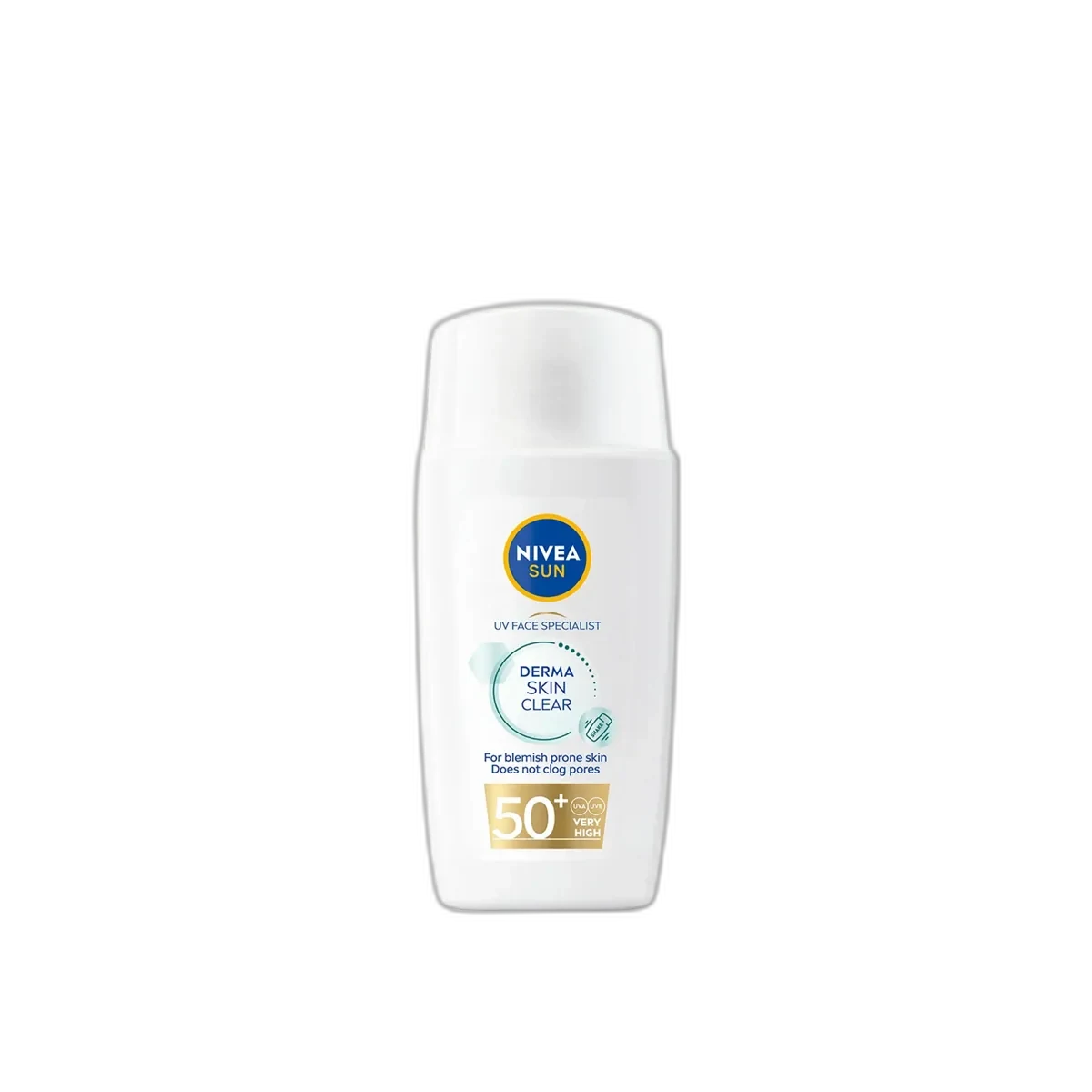
UV Face Specialist Derma Skin Clear SPF 50
Acne-Friendly Shield
 Verified reviewer
Pros & cons.
- +Five next-generation UV filters including Tinosorb S and Uvinul A Plus for photostable SPF 50
- +Ultra-light fluid absorbs in seconds — completely eliminates the 'greasy sunscreen' problem
- +Triple-starch mattifying system delivers credible 8-hour oil control
- +Anti-blemish actives (niacinamide, L-Carnitine, licorice root) add skincare value beyond protection
- +Excellent under makeup — replaces the need for a separate mattifying primer
- +Strong environmental credentials: 64% biodegradable, no oxybenzone/octinoxate/microplastics
- −Alcohol denat as second ingredient can dry and irritate dehydrated or barrier-compromised skin
- −Niacinamide concentration (~0.25-0.45%) is well below clinically studied anti-acne levels
- −Contains isopropyl palmitate — paradoxically comedogenic in a product for acne-prone skin
- −Small 40ml tube lasts only 2-3 weeks with proper daily application
- −Not available in US retail — requires import purchasing at potentially higher prices
The full review.
Sunscreen advice is often ironic for acne sufferers. Dermatologists recommend daily use, yet many breakout-prone people find greasy, pore-clogging, or sweat-trapping formulas cause new blemishes. The Nivea UV Face Specialist Derma Skin Clear SPF 50 aims to break this cycle and mostly succeeds.
Texture
The texture is a revelation. This is a fluid, not a cream or gel. It is thin and almost watery, absorbing into the skin seconds after application. If thick, white, beach-day sunscreens make you dread morning SPF, the speed and lightness of this product change the rules. The triple-starch system—tapioca, rice, and silica—creates an immediate dry-touch, matte finish. Your skin feels better after application than before, which helps with compliance.
Reality
Beiersdorf’s sun care expertise shows in the UV filter system. Five chemical filters provide broad-spectrum protection, led by 3.5% Tinosorb S and Uvinul A Plus—two next-generation filters the FDA has not yet approved for the US market. Tinosorb S absorbs both UVA and UVB radiation and stabilizes the avobenzone, which otherwise degrades in the sun. Uvinul A Plus adds more UVA coverage. This photostable protection system stays effective throughout the day instead of weakening.
Best for
UV protection is more important for acne-prone skin than most realize. Post-inflammatory hyperpigmentation—the dark spots that linger for weeks or months after a breakout—worsens with UV exposure. Without adequate sun protection, existing dark spots get darker and last longer. A high-SPF, photostable sunscreen is the most impactful product for post-acne pigmentation.
Works for
The anti-blemish actives need honest assessment. Niacinamide is the marketing headline, but at an estimated 0.25-0.45% concentration, it is below the 2-5% range typically studied for sebum regulation and anti-acne effects. It contributes to the multi-ingredient approach, but calling this a “niacinamide sunscreen” oversells it. L-Carnitine supports sebum regulation through fatty acid metabolism, and licorice root extract provides anti-inflammatory and skin-brightening properties that complement the UV protection. Together, these actives provide supportive benefits rather than primary acne treatment.
Best for
The 8-hour matte claim is credible. On oily skin, the triple-starch system holds oil longer than single-ingredient mattifiers. By 4-6 hours, very oily skin may show some shine, but normal-to-combination types report matte skin through a full workday. Under makeup, the fluid creates a smooth, pore-blurring base that replaces a separate primer.
Not ideal for
Using alcohol denat as the second ingredient is a major compromise. It enables the ultra-light fluid texture and instant absorption; without it, achieving this weightlessness at SPF 50 is difficult. However, for dehydrated or barrier-compromised skin—common in acne-prone skin treated aggressively—the alcohol can cause tightness, stinging, and irritation. The fragrance, while mild, is another potential irritation vector for reactive skin.
Not ideal for
Isopropyl palmitate in the formula is a concern for the target acne-prone audience. It has a moderate-to-high comedogenic rating, which contradicts the product’s design for breakout-prone skin. Most users report no breakouts—the fast-evaporating alcohol base likely reduces contact time with comedogenic ingredients—but those with extreme sensitivity should note it.
Reality
The 40ml size is a practical limit. At the recommended two-finger-length application for SPF 50 protection, one tube lasts about 2-3 weeks. For daily use, you need roughly two tubes per month—manageable at European retail prices but potentially expensive through import channels.
Reality
The environmental credentials are good. It is free from oxybenzone, octinoxate, octocrylene, and microplastics. The formula is 64% biodegradable. It uses 50% recycled plastic packaging and an FSC-certified outer box. These choices matter over hundreds of annual applications.
This sunscreen understands its audience. It knows acne-prone people need UV protection that does not worsen their skin concerns. The five-filter system, anti-blemish actives, triple-mattifying system, and ultra-light fluid vehicle all target this need. It is not perfect—the alcohol base, low niacinamide concentration, and comedogenic isopropyl palmitate are real compromises—but for the oily, breakout-prone audience, it is one of the most thoughtfully formulated sunscreens available.
Ingredient analysis.
Full INCI list
Aqua, Alcohol Denat., C12-15 Alkyl Benzoate, Butyl Methoxydibenzoylmethane, Butylene Glycol Dicaprylate/Dicaprate, Ethylhexyl Triazone, Isopropyl Palmitate, Bis-Ethylhexyloxyphenol Methoxyphenyl Triazine, Dibutyl Adipate, Diethylamino Hydroxybenzoyl Hexyl Benzoate, Phenylbenzimidazole Sulfonic Acid, Tapioca Starch, Polyglyceryl-6 Stearate, Distarch Phosphate, Silica Dimethyl Silylate, Glycyrrhiza Inflata Root Extract, Carnitine, Niacinamide, Decylene Glycol, Tocopheryl Acetate, Glycerin, Cetearyl Alcohol, Glyceryl Stearate, Oryza Sativa Starch, Copernicia Cerifera Cera, Polyglyceryl-6 Behenate, Hydroxypropyl Methylcellulose, Hydroxypropyl Starch Phosphate, Xanthan Gum, Sodium Hydroxide, Hydroxyacetophenone, Trisodium Ethylenediamine Disuccinate, Phenoxyethanol, Parfum
Skin match.
The science.
The Science
This formulation's UV filter system uses current European photoprotection standards, combining five organic filters with complementary absorption spectra and built-in photostability.
Bis-ethylhexyloxyphenol methoxyphenyl triazine (Tinosorb S) at 3.5% has the formula's broadest individual spectral coverage, absorbing efficiently across UVA and UVB wavelengths. Its high photostability — it does not generate reactive species upon UV absorption — is critical for acne-prone skin, where photounstable filters generate free radicals that worsen inflammatory acne. Tinosorb S also photostabilizes avobenzone (present at 4.75%), preventing the photodegradation that limits avobenzone's UVA protection in unstabilized formulations.
Diethylamino hydroxybenzoyl hexyl benzoate (Uvinul A Plus, 2%) is a newer UVA filter that extends coverage into the 320-400nm range with excellent photostability. Tinosorb S and Uvinul A Plus together provide dual UVA coverage more robust than either filter alone.
Niacinamide, at a low concentration (estimated 0.25-0.45%), helps regulate sebum by affecting sebocyte lipid synthesis. Studies in the British Journal of Dermatology (Draelos et al., 2006) show that 2% niacinamide reduced sebum excretion rate in a dose-dependent manner — suggesting lower concentrations may still provide benefit, especially with other sebum-regulating agents.
Glycyrrhiza inflata root extract contains licochalcone A, which inhibits NF-kB-mediated inflammation and tyrosinase activity. This dual anti-inflammatory and anti-melanogenic mechanism matters for acne-prone skin where post-inflammatory hyperpigmentation is a primary concern. Combined with SPF 50 UV protection that prevents UV-induced melanogenesis, this manages post-acne dark spots comprehensively.
Dermatologist Perspective
Dermatologists specializing in acne management would value this formulation's approach — building a sunscreen for blemish-prone skin instead of adapting a general formula. Board-certified dermatologists note that daily SPF 50 use is one of the most effective ways to treat post-inflammatory hyperpigmentation, and an ultra-light, matte-finish vehicle helps patients stay compliant. The five-filter system with Tinosorb S provides the photostable protection dermatologists prefer. However, clinicians would flag the alcohol denat content as a concern for patients using drying acne treatments (retinoids, benzoyl peroxide) with a compromised barrier. The low niacinamide concentration requires clear communication so patients do not use this product as their primary anti-acne treatment.
Where it fits in your routine.
Shake gently before use. Apply this as the final step of your morning skincare routine, after moisturizer or hydrating serum. Use a generous amount — two finger-lengths — and spread it evenly across the face, avoiding the immediate eye area. The fluid absorbs almost instantly. Wait 30-60 seconds before applying makeup. Reapply every 2 hours during prolonged sun exposure. Remove in the evening with an oil-based first cleanser and a water-based second cleanser to ensure thorough removal of UV filters.
At European retail prices (approximately $15 for 40ml), this is reasonably priced for a specialized five-filter SPF 50 facial sunscreen with anti-blemish actives. Through US import channels ($25-30), the value proposition weakens — the small 40ml size means approximately $50-60 per month of daily use at import prices. For consumers willing to order from European retailers, the $15 price point offers genuine value for the sophisticated filter system and targeted formulation. The environmental certifications and recycled packaging add non-monetary value for sustainably-minded consumers.
Oily or acne-prone skin types seeking a daily SPF 50 that avoids breakouts or greasy residue. It works well for post-acne hyperpigmentation patients needing UV protection and gentle brightening. Skincare enthusiasts wanting next-generation European UV filter technology for acne-prone skin will like this.
The alcohol base worsens dry, dehydrated, or barrier-compromised skin. It also suits those using aggressive drying acne treatments (high-strength retinoids, benzoyl peroxide) poorly, as these stress the barrier. US consumers seeking mainstream retail convenience should find domestically available alternatives.
Product details.
This ultra-light fluid has a thin, milky consistency and absorbs almost instantly. It is not a cream or gel; this fluid feels like a lightweight serum. The triple-starch and silica system creates a dry-touch finish within seconds.
Nivea Sun products have a clean, light fragrance. It is pleasant and does not overpower; the scent dissipates quickly after application. Parfum is the final ingredient.
Compact 40ml white squeeze tube with screw cap. Blue and green accents match the Derma Skin Clear sub-brand in the Nivea Sun line. The tube and cap use 50% recycled plastic. The outer cardboard box is FSC certified. The compact size works for travel.
The first application is a thin fluid that absorbs faster than most sunscreens. The matte finish arrives within 30-60 seconds; skin feels dry, smooth, and non-greasy. Dry skin types may feel tightness. There is no white cast. This texture makes daily use easy.
Apply a two-finger-length amount to your face daily for 2-3 weeks.
12 months
All Year
The backstory.
Born from Nivea's Derma Skin Clear range — a collection launched in 2023 specifically for blemish-prone skin — this sunscreen filled a genuine gap in the European market. Acne-prone individuals often skip sunscreen because most formulations feel greasy, cause breakouts, or worsen post-acne hyperpigmentation. Beiersdorf's approach was to build a sunscreen from scratch for this skin type: ultra-light fluid vehicle, triple mattifying system, and targeted anti-blemish actives, all wrapped around their most advanced UV filter combination.
About Nivea
Legacy Brand (20+ years)Beiersdorf AG founded Nivea in 1911 in Hamburg, Germany. The Derma Skin Clear sub-range launched in 2023, and this SPF 50 sunscreen joined in 2024 as the sun protection complement. Beiersdorf runs its own skin research center and has deep experience formulating UV filters.
Common myths.
Sunscreen causes breakouts in people with acne-prone skin.
Skipping sunscreen is one of the worst things you can do for acne-prone skin — UV exposure worsens post-inflammatory hyperpigmentation (the dark spots acne leaves behind) and can trigger additional inflammation. The key is choosing a non-comedogenic, oil-free sunscreen formulated for blemish-prone skin, like this one, rather than avoiding sun protection altogether.
Sunscreens with niacinamide provide clinical-strength anti-acne treatment.
This formula contains 0.25-0.45% niacinamide, which is below the 2-5% concentration used to study sebum regulation and anti-acne effects. The niacinamide offers secondary benefits within this multi-ingredient approach, but this is a sunscreen with anti-blemish support rather than an acne treatment with SPF.
FAQ.
Is Nivea Derma Skin Clear SPF 50 non-comedogenic?
The formula uses a lightweight fluid base and oil-absorbing starches for blemish-prone skin. Most users report no breakouts. However, it contains isopropyl palmitate, which has a moderate comedogenic rating. If you are acne-prone, patch-test a small area before daily full-face use.
How much niacinamide is in this sunscreen?
Ingredient list position analysis estimates the niacinamide concentration at 0.25-0.45%. This dose supports the anti-blemish formula but stays below the 2-5% used in studies for standalone sebum-regulating effects. The product uses a multi-ingredient approach (niacinamide + L-Carnitine + licorice root) instead of relying on niacinamide alone.
Can I buy Nivea Derma Skin Clear SPF 50 in the US?
You cannot buy this through mainstream US retailers. The formula uses UV filters (Tinosorb S, Uvinul A Plus) that the FDA has not approved for the US market. Buy it from European import retailers like CareToBeauty, YesStyle, or Amazon UK with international shipping. Prices range from $15-30 depending on the seller.
Does this sunscreen help with acne scars and dark spots?
licorice root extract brightens skin and fights hyperpigmentation, while the SPF 50 protection stops UV from darkening existing post-acne marks. Daily use over weeks helps fade post-inflammatory hyperpigmentation. For significant acne scarring, retinoids, vitamin C, or professional procedures work better.
How long does the matte finish last?
Nivea claims an 8-hour matte effect, which user reviews for normal-to-oily skin confirm. Very oily skin shows shine after 4-6 hours. The triple-starch and silica system controls oil longer than single-ingredient mattifiers.
What the community says.
"Ultra-lightweight fluid absorbs instantly with zero greasy residue"
"Excellent 8-hour matte finish that controls oil throughout the day"
"Sits beautifully under makeup without pilling"
"Does not cause breakouts on acne-prone skin"
"Five-filter broad-spectrum protection with Tinosorb S"
"Pleasant scent that disappears quickly"
"Alcohol denat as second ingredient can feel drying on dehydrated skin"
"Contains fragrance despite targeting blemish-prone sensitive skin"
"Small 40ml tube runs out quickly with daily use"
"Niacinamide concentration is lower than marketed impression suggests"
"Not available in US mainstream retail — requires import purchasing"
"Contains isopropyl palmitate which has comedogenic potential"
Featured in.
People also looked at.