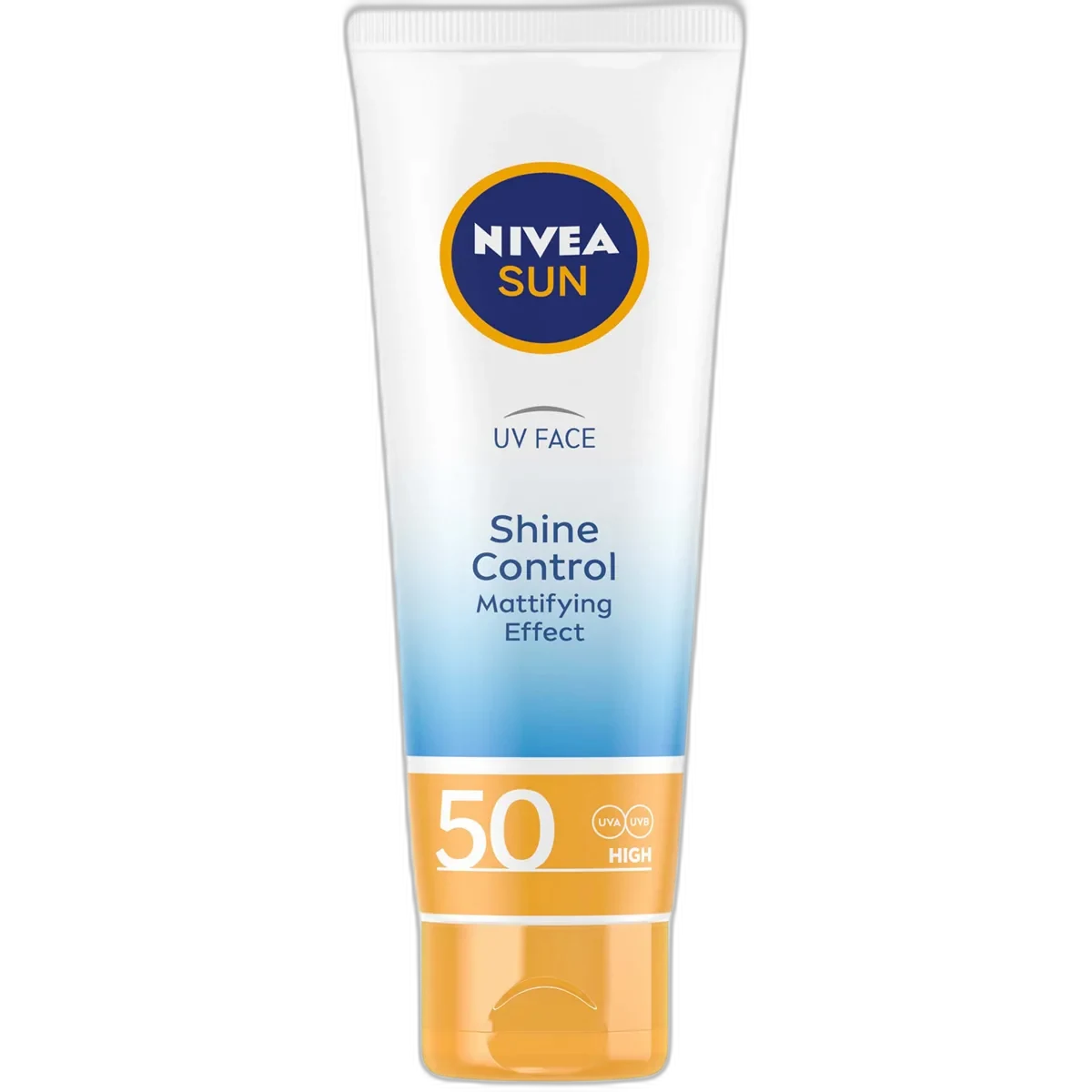
Sun UV Face Shine Control SPF 50
Matte Finish Protector
 Verified reviewer
Pros & cons.
- +Five-filter system including Tinosorb S delivers superior photostable broad-spectrum SPF 50
- +Genuinely matte finish with silica and tapioca starch — controls oil for 4-6 hours
- +Zero white cast — absorbs completely on all skin tones
- +Lightweight gel-cream texture feels like a moisturizer, not a sunscreen
- +Excellent makeup base that can replace a separate mattifying primer
- +Ocean Respect formula free from octinoxate, oxybenzone, and microplastics
- −Alcohol denat as second ingredient makes this unsuitable for dry or dehydrated skin
- −Seven fragrance allergens including coumarin — not for fragrance-sensitive users
- −Not available through mainstream US retailers — requires import purchasing
- −Small 50ml tube lasts only 3-4 weeks with daily recommended application
- −May sting eyes if product migrates during sweating or exercise
The full review.
Skincare-savvy Americans who study UV filters feel a quiet frustration. They know Tinosorb S exists. They know it provides broad-spectrum UVA/UVB protection and photostabilizes other formula filters. They know Europe, Australia, and Asia approved it years ago. They also know the FDA hasn’t approved it for the US market. The Nivea Sun UV Face Shine Control SPF 50 makes this frustration tangible—it is excellent, but only available here through import channels.
The five-filter system in this sunscreen shows modern UV protection engineering. Tinosorb S handles the broad-spectrum work, absorbing UVA and UVB while preventing avobenzone from photodegrading—a common issue in US sunscreens where avobenzone often lacks adequate stabilization. Octisalate, ensulizole, and ethylhexyl triazone add UVB coverage. This creates a protection system with redundancy: if one filter weakens, others compensate.
UV protection is vital, but it isn’t why 600+ people left reviews. The texture is the real story. This sunscreen suits people who hate sunscreen. The cream has a gel-like fluidity that spreads like a lightweight moisturizer, absorbs in under two minutes, and dries to a matte finish. No white cast. No greasy film. No visible evidence of sunscreen. Silica and tapioca starch—the same mattifying agents in top pore-blurring primers—create a smooth, oil-absorbing surface that lasts 4-6 hours before needing blotting.
This is not a sunscreen for dry skin. Alcohol denat is the second ingredient. It is functional and deliberate: it enables the fast-drying, ultra-light texture for daily wear. The alcohol evaporates on contact, leaving UV filters and mattifying agents without tacky residue. This works for oily and combination skin. For dry or dehydrated skin, it causes tightness, possible flaking, and discomfort.
The skincare bonuses are modest. Glycyrrhiza inflata root extract (licorice root) provides anti-inflammatory and skin-tone-evening properties. Tocopheryl acetate delivers vitamin E antioxidant support. Glycerin provides humectant compensation for the alcohol. These aren’t transformative, but they move this beyond pure protection into a product that cares for the skin it shields.
The fragrance is specific. It contains Parfum plus seven identified allergens: linalool, limonene, geraniol, citronellol, alpha-isomethyl ionone, coumarin, and benzyl alcohol. The scent is subtle and disappears within minutes. However, coumarin is a potent fragrance sensitizer and rare in facial skincare. People with fragrance sensitivities should look elsewhere.
This sunscreen performs well under makeup. The matte finish creates a smooth, pore-blurred canvas where foundation adheres without slipping or pilling. Some users report it replaces their mattifying primer entirely—an economic benefit when the same product provides SPF 50 broad-spectrum protection.
The Ocean Respect certification matters for the environment. The formula excludes octinoxate, oxybenzone, octocrylene, and microplastics—the ingredients most linked to coral reef damage. The packaging uses 50% recycled plastic with FSC-certified outer packaging. These environmental choices add up for a daily-use sunscreen.
Value depends on your perspective. At UK retail (approximately $10-13 USD equivalent), this is excellent value for a five-filter SPF 50 facial sunscreen with mattifying technology. Through US import channels ($13-16), it remains reasonable. At specialty import markups ($20+), the value weakens against domestic competitors, though Tinosorb S inclusion justifies the premium for those wanting next-generation UV filter technology.
The 50ml tube lasts roughly 3-4 weeks with daily application, requiring monthly repurchasing. For those willing to manage import logistics, the payoff is a daily-wear sunscreen experience most US-market products cannot match.
### Formula
Ingredient analysis.
Full INCI list
Aqua, Alcohol Denat, Butyl Methoxydibenzoylmethane, Butylene Glycol Dicaprylate/Dicaprate, C12-15 Alkyl Benzoate, Ethylhexyl Salicylate, Bis-Ethylhexyloxyphenol Methoxyphenyl Triazine, Dibutyl Adipate, Isopropyl Palmitate, Phenylbenzimidazole Sulfonic Acid, Silica, Ethylhexyl Triazone, Tapioca Starch, Behenyl Alcohol, Cetearyl Alcohol, Methylpropanediol, Glycerin, Glycyrrhiza Inflata Root Extract, Tocopheryl Acetate, Sodium Stearoyl Glutamate, Xanthan Gum, Carbomer, Acrylates/C10-30 Alkyl Acrylate Crosspolymer, Dimethicone, Sodium Chloride, Sodium Hydroxide, Trisodium EDTA, Ethylhexylglycerin, Phenoxyethanol, Linalool, Limonene, Benzyl Alcohol, Alpha-Isomethyl Ionone, Geraniol, Citronellol, Coumarin, Parfum
Skin match.
The science.
The Science
The five-filter UV protection system in this formulation represents a modern European approach to broad-spectrum photoprotection that leverages filters not yet available in the US market.
Bis-ethylhexyloxyphenol methoxyphenyl triazine (Tinosorb S) is a broad-spectrum organic UV filter that absorbs radiation across both the UVA (310-340nm) and UVB (280-320nm) ranges. Crucially, Tinosorb S is highly photostable — it does not degrade significantly upon UV exposure, unlike some older filters. Its dual functionality as both a direct UV absorber and a photostabilizer for avobenzone is the key advantage: it prevents the well-documented photodegradation of avobenzone that plagues many avobenzone-only formulations, maintaining the formula's UVA protection throughout wear time.
Avobenzone (butyl methoxydibenzoylmethane) remains the gold standard for UVA1 protection (340-400nm), the wavelengths responsible for deep dermal damage, photoaging, and melanogenesis. When stabilized by Tinosorb S — as in this formulation — avobenzone maintains its protective capacity over extended sun exposure rather than degrading within 30-60 minutes as it does in unstabilized formulations.
Ethylhexyl triazone (Uvinul T 150) is a high-extinction UVB filter with excellent photostability, requiring lower concentrations to achieve the same protection level as older UVB filters. Phenylbenzimidazole sulfonic acid (ensulizole) is water-soluble, which helps achieve the lightweight texture of the formula while contributing additional UVB absorption.
Glycyrrhiza inflata root extract provides anti-inflammatory support through glabridin and licochalcone, which inhibit tyrosinase activity and suppress UV-induced melanogenesis — a complementary mechanism to the direct UV filtration that helps prevent hyperpigmentation.
Dermatologist Perspective
Dermatologists in Europe and Australia frequently recommend high-SPF facial sunscreens with Tinosorb S for daily wear, recognizing its superior photostability compared to older filter combinations. Board-certified dermatologists would note that the five-filter system in this product provides more robust and stable protection than typical US-market two or three-filter formulations. The mattifying properties address one of the most common barriers to daily sunscreen compliance in oily-skinned patients — the greasy, heavy feel of traditional formulations. However, dermatologists treating patients with rosacea, eczema, or compromised barriers would recommend alcohol-free and fragrance-free alternatives, as the alcohol denat base and fragrance allergens may exacerbate these conditions.
Where it fits in your routine.
Apply a generous amount as the last step of your morning skincare routine, after moisturizer. Use about 1/4 teaspoon (two finger-lengths) to cover your face and neck. Wait 1-2 minutes for the mattifying finish to set before applying makeup. Reapply every 2 hours during prolonged sun exposure. Remove thoroughly in the evening using an oil-based cleanser and then a water-based cleanser (double cleansing); the UV filters and dimethicone require this.
At UK retail prices (about $10-13 USD for 50ml), this five-filter SPF 50 facial sunscreen offers exceptional value with Tinosorb S and genuine mattifying technology. Through US import channels ($13-16), it competes with domestic options that have less sophisticated UV protection. The 50ml tube lasts about 3-4 weeks with daily application. This makes the monthly cost $13-16—similar to many domestic SPF 50 options but with UV filter technology unavailable in US formulations. The 50% recycled plastic packaging adds environmental value.
Oily or combination skin types need a daily SPF 50 that stays non-greasy by midday. This works for skincare enthusiasts who want European UV filter technology (Tinosorb S) and use import channels. It also works as a combined sunscreen-primer product.
The alcohol base and mattifying agents increase dryness and irritate dry, dehydrated, or sensitive skin. This formula also fails people with fragrance allergies or US consumers who prefer mainstream retail availability over import purchasing.
Product details.
All Year Certifications Dermatologically approvedOphthalmologically approvedOcean Respect formula (free from octinoxate, oxybenzone, octocrylene, microplastics)50% recycled plastic packagingFSC Mix Certified outer packaging
The backstory.
Developed as part of Nivea's effort to make high-protection facial sunscreen a comfortable daily-wear product rather than a grudging outdoor obligation, the Shine Control variant specifically targets the European and Asian markets where SPF 50 daily wear is the cultural norm. The formulation leverages Tinosorb S — a UV filter approved in Europe, Asia, and Australia but not yet FDA-approved for US use — alongside a mattifying system designed to make oily-skinned users actually want to wear sunscreen every day.
About Nivea
Legacy Brand (20+ years)Beiersdorf AG founded Nivea in 1911 in Hamburg, Germany. The Nivea Sun range is one of Europe's most established sun care lines and uses Beiersdorf's extensive UV research program. The brand has over a century of dermatological formulation expertise and runs its own skin research center.
Common myths.
SPF 30 is enough for daily use; you don't need SPF 50. SPF 30 blocks 97% of UVB rays, but most people apply less than the tested (2mg/cm²) amount. Applying half the recommended amount of an SPF 50 product gives you SPF 25 protection, which is still adequate. Higher SPF provides a margin of error for real-world under-application.
SPF 30 blocks 97% of UVB rays, but most people apply less than the tested (2mg/cm²). Applying half the recommended amount of an SPF 50 product gives SPF 25 protection, which works. Higher SPF provides a margin of error for real-world under-application.
Alcohol-based sunscreens damage the skin barrier.
The alcohol denat in this formula evaporates during application. It works as a vehicle for even distribution and fast drying. While chronic heavy alcohol exposure can compromise the barrier, the brief contact time in a sunscreen application — especially one containing glycerin and emollients — does not cause barrier damage for most skin types. Those with compromised barriers or very dry skin should choose alcohol-free alternatives.
FAQ.
Is Nivea Sun UV Face Shine Control SPF 50 available in the US?
US mainstream retailers do not carry it because it contains Tinosorb S, a UV filter the FDA has not approved for the US market. Buy it from Amazon third-party sellers, European import shops, or online retailers like Distacart and British Essentials. The price is slightly higher than the UK retail price.
Does this sunscreen leave a white cast?
No — this is an all-chemical filter sunscreen (no zinc oxide or titanium dioxide), so it absorbs completely without any white cast. It works equally well on all skin tones, drying down to an invisible matte finish.
Can I use this sunscreen under makeup?
Yes — silica and tapioca starch create a smooth, matte base that works well under foundation. Many users find it replaces a separate mattifying primer. Let the sunscreen set for 1-2 minutes before applying makeup.
Is this sunscreen suitable for dry skin?
Not ideally — alcohol denat is the second ingredient and the silica-tapioca mattifying system targets oily-to-combination skin. Dry skin users may feel tightness or flaking. If you have dry skin but want SPF 50, choose a hydrating sunscreen formula without alcohol or mattifying agents.
What makes European sunscreens better than US sunscreens?
European sunscreens use newer UV filter technologies like Tinosorb S (used in this product) for better photostability and superior broad-spectrum UVA/UVB protection. The FDA approves these newer filters slowly, so US-market sunscreens use an older, more limited filter palette. This formulation uses five filters including Tinosorb S for more complete and stable protection.
Is this sunscreen reef-safe?
The formula has an 'Ocean Respect' designation. It excludes octinoxate, oxybenzone, octocrylene, and microplastics—the ingredients most linked to coral reef damage. No sunscreen is 100% reef-safe, but this formulation avoids the most problematic compounds.
What the community says.
"Effective mattifying finish that controls shine for hours"
"No white cast — disappears completely into skin"
"Lightweight non-greasy texture that feels like a moisturizer"
"Sits beautifully under makeup without pilling"
"Strong SPF 50 broad-spectrum protection with advanced European UV filters"
"Comfortable enough for daily wear and even workouts"
"Contains fragrance and multiple fragrance allergens"
"Alcohol denat as second ingredient can be drying for dry or dehydrated skin"
"Can sting eyes if it migrates during sweating"
"May cause breakouts in acne-prone individuals"
"Small 50ml tube runs out quickly with daily use"
"Mattifying effect fades after several hours on very oily skin"
People also looked at.