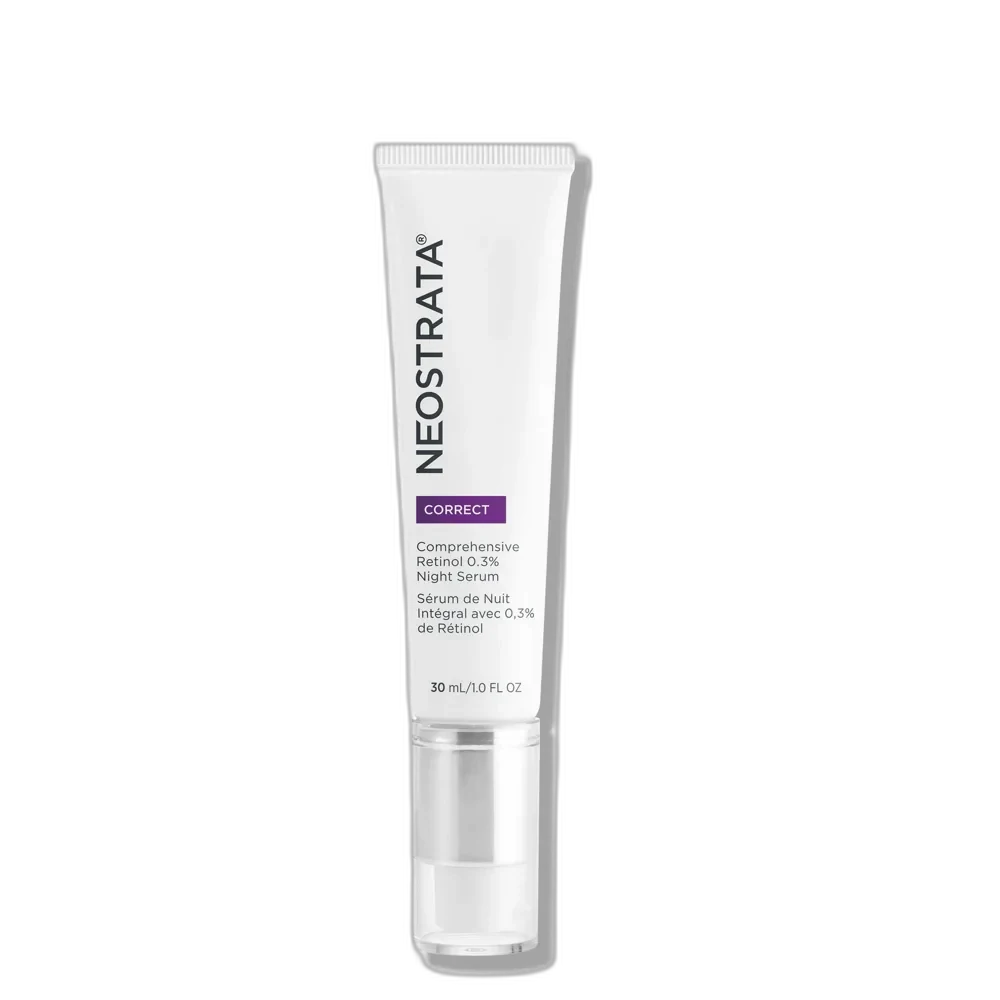
Correct Comprehensive Retinol 0.3% Night Serum
Derm-Developed Retinol Starter
 Verified reviewer
Pros & cons.
- +Dual-pathway renewal system combining retinol with proprietary NeoGlucosamine technology
- +Silicone delivery system buffers retinol absorption to reduce irritation during retinization
- +Fragrance-free and oil-free formulation suitable for sensitive and acne-prone skin
- +Silky, primer-like texture that absorbs instantly with zero greasiness
- +Bisabolol and hyaluronic acid provide built-in soothing and hydration
- +Backed by a brand with 150+ patents and 35+ years of dermatological research
- +Dermatologist and allergy tested with strong clinical tolerance data
- −At $82.50 for 1 oz, the price-to-retinol-concentration ratio is steep
- −0.3% retinol may be insufficient for experienced retinoid users seeking stronger results
- −Contains Yellow 5 dye — unnecessary cosmetic colorant in a sensitive-skin product
- −May be discontinued in favor of NeoStrata's newer Potent Retinol Complex
- −Small 1 oz bottle lasts only 2-3 months with nightly use
The full review.
Dr. Eugene Van Scott and Dr. Ruey Yu started a scientific revolution in 1988. Their 1970s research on alpha hydroxy acids changed dermatology and created the exfoliating skincare category. NeoStrata holds over 150 patents. When this company releases a retinol serum, the ingredient choices and omissions matter.
The Comprehensive Retinol 0.3% Night Serum does not use a high retinol percentage to impress. At 0.3%, it sits in the beginner-to-intermediate range—strong enough for anti-aging benefits and gentle enough for sensitive skin to build tolerance. This choice aligns with a brand philosophy of sophisticated rather than aggressive skin renewal.
The formula is distinctive because of its pairings. NeoGlucosamine (acetyl glucosamine) at 4% concentration is NeoStrata’s proprietary non-acid exfoliant. While most retinol serums use only the retinoid pathway for cell turnover, this adds a parallel mechanism: NeoGlucosamine promotes desquamation (the shedding of dead skin cells) through a biological process different from retinol or traditional AHAs. It also inhibits melanin, so this serum brightens skin from two directions.
The delivery system is important. The base uses heavy silicones—dimethicone, cyclopentasiloxane, polysilicone-11—to create a silky, primer-like texture. This serves a function: silicones modulate how retinol penetrates the stratum corneum, buffering the active to reduce skin contact intensity. This acts as a time-release mechanism to prevent the irritation spikes pure retinol causes on unprotected skin.
The supporting ingredients are well-chosen. Sodium hyaluronate provides hydration to offset retinol-induced dryness. Bisabolol—the active compound from chamomile—adds anti-inflammatory protection during the retinization period. Tocopheryl acetate (vitamin E) stabilizes the retinol against oxidative degradation and provides antioxidant defense for new cells. Glycerin adds hydration. Every ingredient either delivers the active, buffers its effects, or protects the skin during adjustment.
The texture is smooth. It applies like liquid silk—weightless with a silicone slip familiar to primer users. It absorbs in seconds without greasiness or stickiness. Nylon-12 and silica add a soft-focus, mattifying quality, making it comfortable under a night cream. It avoids the tacky feel of many retinol products.
Brand-sponsored clinical testing reports these numbers: after four weeks of nightly use, 100% of participants showed brighter, more luminous skin, and 97% reported smoother texture and a younger-looking appearance. After six weeks, 100% showed visible firmness improvement. These are self-evaluation numbers, not instrumental measurements, but the reported improvements are consistent.
The main limitation is the price-to-concentration ratio. At $82.50 for 1 fl oz of 0.3% retinol, the price per unit of active ingredient is high. Experienced users who tolerate 0.5% or 1% concentrations may find this too mild and too expensive for a maintenance dose. The product has a luxury price but a starter kit dose; this only makes sense if you value the NeoGlucosamine technology and the silicone delivery system.
The formula contains Yellow 5 dye (CI 19140), which is an odd choice for a product for sensitive skin. It is purely cosmetic. It is harmless for most, but notable for those sensitive to azo dyes.
NeoStrata has since reformulated their retinol line; the Potent Retinol Complex is the updated version. The Comprehensive Retinol 0.3% may still be available at some retailers, but stock may be limited.
For those entering retinol use or returning after skin reactivity, this serum uses a science-driven approach to retinoid therapy. The dual-pathway renewal, buffered delivery, and anti-inflammatory support design the formula to make retinol work well, not just fast. This reflects the long-game thinking of the scientists who started the skin renewal movement.
Ingredient analysis.
Full INCI list
Water/Eau, Dimethicone, Cyclopentasiloxane, Polysilicone-11, Glycerin, Butyloctyl Salicylate, Acetyl Glucosamine, Nylon-12, Silica, Tocopheryl Acetate, BHT, Retinol, Arginine, Citric Acid, Isohexadecane, PEG-10 Dimethicone, Ammonium Polyacryloyldimethyl Taurate, Sodium Hyaluronate, Bisabolol, Polysorbate 20, Allyl Methacrylates Crosspolymer, Polysorbate 40, Hydroxyethyl Acrylate/Sodium Acryloyldimethyl Taurate Copolymer, Disodium EDTA, Xanthan Gum, Caprylyl Glycol, Phenoxyethanol, Chlorphenesin, Yellow 5 (CI 19140)
Skin match.
The science.
The Science
0.3% retinol falls within the clinically validated range for visible anti-aging. A 2007 study in the Archives of Dermatology shows that 0.4% retinol applied topically for 24 weeks improves fine wrinkles, with histology confirming increased glycosaminoglycan and procollagen I expression in the dermis. The 0.3% concentration in this serum operates within this same therapeutic range, especially when paired with the exfoliation from NeoGlucosamine.
Acetyl glucosamine (NeoGlucosamine) at 4% offers a non-acid way to enhance skin renewal. Research in the Journal of Cosmetic Dermatology shows that topical N-acetyl glucosamine reduces facial hyperpigmentation and improves skin tone evenness. Unlike glycolic acid — the AHA that NeoStrata's founders pioneered — NeoGlucosamine promotes desquamation by modulating glycosaminoglycan metabolism in the epidermis instead of acid-mediated dissolution of corneodesmosomes. It enhances cell turnover alongside retinol without the irritation acid + retinol combinations often cause.
The silicone-based delivery system (dimethicone, cyclopentasiloxane) does more than provide texture. Research on silicone-encapsulated retinol delivery shows that silicone matrices slow the retinol release rate into the skin. This creates a sustained-release effect that lowers peak concentration at any given point, which minimizes irritation while maintaining efficacy.
Sodium hyaluronate at 0.1% provides hydration support critical during retinol therapy. Studies show retinol increases transepidermal water loss during the retinization period, and humectant support helps maintain barrier function during this phase.
References
- Retinol (vitamin A alcohol, vitamin A1) — increases the number of active retinol receptors in the skin — Archives of Dermatology (2007)
- Topical N-acetyl glucosamine reduces the appearance of hyperpigmentation in darker skin types — Journal of Cosmetic Dermatology (2007)
Dermatologist Perspective
Board-certified dermatologists often recommend retinol concentrations between 0.25% and 0.5% for patients starting retinoid therapy, so this 0.3% formulation works well as a starter retinol. Dermatologists note the NeoGlucosamine pairing is a distinctive feature; it offers brightening and texture-improving benefits without the pH-dependent irritation of acid-based exfoliants. Dermatological circles favor the silicone delivery matrix because it moderates retinol absorption and reduces the severity of the retinization period. Dermatologists commonly recommend this buffered formulation to patients who previously stopped using retinol due to irritation.
Where it fits in your routine.
Apply a pea-sized amount to clean, dry facial skin at night. Start with one or two applications per week. Increase frequency over 2-4 weeks until you tolerate nightly use. Always follow with a moisturizer to lock in hydration. Do not apply to wet skin, broken skin, or immediately after exfoliating treatments. Use broad-spectrum SPF 30+ sunscreen every morning while using this product.
At $82.50 for 1 fl oz, this serum sits in the premium tier. The price covers NeoStrata's dermatological heritage, the proprietary NeoGlucosamine technology, and the sophisticated silicone delivery system — not just the 0.3% retinol content. For retinol beginners seeking a gentle, well-engineered introduction to retinoids, this investment in tolerability stops the cycle of buying and abandoning cheaper, harsher retinol products. However, experienced retinol users needing straightforward, higher-concentration retinol will find better value elsewhere.
Retinol beginners, people with sensitive or reactive skin, and anyone who stopped using retinol because of irritation. It also suits those who like NeoStrata's dual-pathway approach to skin renewal and want a sophisticated, dermatologist-developed formula.
Retinol users who tolerate 0.5-1% concentrations and want stronger results. Budget-conscious shoppers seeking effective 0.3% retinol formulations at lower prices. Anyone pregnant or planning pregnancy must avoid all retinol products.
Product details.
All Year Certifications Dermatologist TestedAllergy Tested
The backstory.
NeoStrata was literally founded on the science of skin renewal — Dr. Van Scott and Dr. Yu's pioneering work on alpha hydroxy acids in the 1970s laid the groundwork for an entire category of skincare. The Comprehensive Retinol serum represents the brand's approach to retinol: pair it with their proprietary NeoGlucosamine technology (an amino sugar that promotes gentle exfoliation without acids) for a multi-pathway renewal system. It's the kind of product that only a brand with 150+ patents and decades of dermatological research would think to formulate.
About NeoStrata
Legacy Brand (20+ years)Dermatologist Dr. Eugene Van Scott and dermopharmacologist Dr. Ruey Yu founded NeoStrata in 1988. They pioneered alpha hydroxy acids (AHAs) in skincare. Johnson & Johnson acquired the brand in 2016. NeoStrata has over 150 skin science patents and sells products in 90+ countries through dermatology and medical aesthetics channels.
Common myths.
0. 3% retinol lacks the strength to provide real anti-aging results.
Clinical studies show retinol at 0.1% improves fine lines, wrinkles, and hyperpigmentation over 12 weeks. The 0.3% concentration in this serum is a clinically meaningful dose, especially alongside NeoGlucosamine's complementary exfoliation pathway.
Silicones in skincare clog pores and block active ingredients.
The dimethicone and cyclopentasiloxane in this formula are non-comedogenic and work to create a smooth delivery vehicle. This vehicle stabilizes the retinol and modulates its absorption rate to reduce irritation. Silicones do not prevent active ingredients from reaching the skin.
FAQ.
How often should I use NeoStrata Comprehensive Retinol 0.3% Night Serum?
Apply once or twice weekly to build tolerance. Over 2-4 weeks, increase to every other night, then nightly as your skin adjusts. Reduce frequency if you experience excessive dryness or irritation. The 0.3% concentration is gentle enough for most people to reach nightly use.
Can I use this retinol serum if I have sensitive skin?
The 0.3% concentration is a beginner-friendly retinol. The silicone delivery system buffers the retinol's contact with skin, and bisabolol provides anti-inflammatory soothing. Users with rosacea-prone skin report good tolerance when starting slowly. Patch-test first and introduce gradually.
What is NeoGlucosamine and why is it in this retinol serum?
NeoGlucosamine (acetyl glucosamine) is NeoStrata's proprietary 4% exfoliating ingredient. Unlike acid-based exfoliants, it uses a different mechanism to promote gentle skin cell turnover. It inhibits glycosaminoglycan production in the upper skin layers to encourage natural desquamation. It also inhibits melanin synthesis, which boosts retinol's brightening effects without acid-related irritation.
Do I need to wear sunscreen when using this retinol?
Retinol increases skin sensitivity to UV radiation. It accelerates cell turnover and exposes newer, more photosensitive skin cells. Apply a broad-spectrum SPF 30 or higher every morning—even on cloudy days—when using any retinol product. This prevents sun damage and maximizes the anti-aging benefits of retinol.
Is NeoStrata Comprehensive Retinol 0.3% discontinued?
NeoStrata reformulated its retinol line, replacing the old version with the Potent Retinol Complex. Some retailers still sell the original Comprehensive Retinol 0.3% while supplies last. Check NeoStrata's official website for the current product lineup.
What the community says.
"Gentle enough for sensitive skin despite being a retinol product"
"Lightweight, non-greasy texture that absorbs quickly"
"Visible improvements in skin texture and brightness within weeks"
"Fragrance-free formula doesn't irritate or sting"
"Good entry-level retinol for those new to retinoids"
"Expensive at $82.50 for 1 fl oz"
"0.3% retinol may be too mild for experienced retinol users"
"Contains Yellow 5 dye, which seems unnecessary"
"Small bottle runs out quickly with nightly use"
"Some wish for a higher concentration option in the same formula"
People also looked at.